

Abuse in Nursing Homes: Shocking 1 in 6 Truth
A Crisis Hiding in Plain Sight
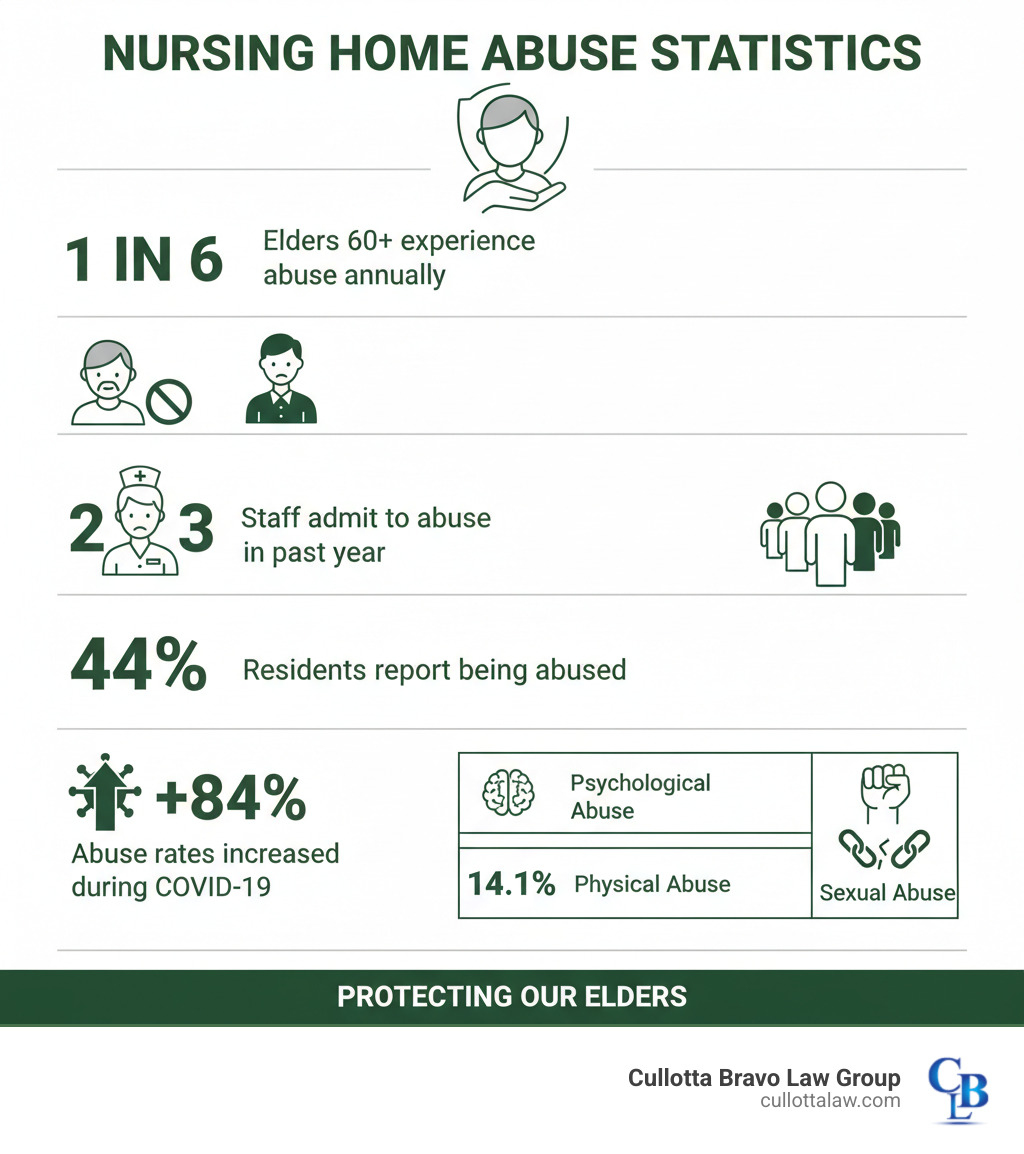
Abuse in nursing homes is a widespread problem affecting hundreds of thousands of vulnerable adults. The statistics are shocking:
- 1 in 6 people aged 60 and older experience abuse annually.
- 2 in 3 nursing home staff have admitted to committing abuse in the past year.
- 44% of nursing home residents report being abused.
- Psychological abuse is the most common type, affecting 33.4% of residents.
- Most abuse goes unreported due to fear, cognitive impairment, or inability to communicate.
When you entrust a family member to a nursing home, you expect safety and compassionate care. The reality is often far more troubling. Many facilities struggle with understaffing, inadequate training, and systemic failures that create conditions where abuse and neglect can flourish. Research shows abuse rates increased significantly during the COVID-19 pandemic, with some studies suggesting a jump of as much as 84%.
What makes this crisis so insidious is how difficult it is to detect. Many victims have dementia or cognitive impairments, making it hard for them to communicate what’s happening. Others fear retaliation if they speak up. The power imbalance between vulnerable residents and their caregivers creates an environment where abuse can continue unchecked.
This article will help you understand what constitutes abuse, why it happens, how to recognize the warning signs, and what you can do to protect your loved ones and seek justice.
As Peter Cullotta, I’ve spent over three decades representing families affected by abuse in nursing homes throughout the Chicagoland area. I’ve seen the devastating impact this mistreatment has on victims and their families. My goal is to empower you with the knowledge you need to be an effective advocate for your loved one’s safety and dignity.
What Constitutes Abuse in a Nursing Home?
When most people hear about abuse in nursing homes, they think of physical violence. But elder mistreatment comes in many forms, and some of the most damaging types leave no visible marks.
The World Health Organization defines elder abuse as actions or a lack of action causing harm or distress to an older person within a relationship of trust. While abuse can come from others, our focus here is staff-to-resident abuse, which is a fundamental betrayal of that trust.
The Many Faces of Mistreatment
Understanding the different forms of abuse is the first step toward intervention.
- Psychological abuse targets a resident’s emotional well-being through yelling, humiliation, threats, or intimidation. It’s the most common form, with 33.4% of residents reporting it.
- Physical abuse involves intentional acts causing bodily injury, such as hitting, slapping, pushing, or the inappropriate use of restraints.
- Neglect is the failure to provide necessary care, leading to malnutrition, dehydration, poor hygiene, or untreated bedsores. It can be just as devastating as deliberate abuse.
- Financial exploitation is the illegal or improper use of a resident’s money or assets, from stealing cash to forging signatures or misusing power of attorney.
- Sexual abuse includes any non-consensual sexual contact, from unwanted touching to assault. It affects an estimated 1.9% of residents.
- Systemic abuse refers to facility-wide practices, like over-medicating residents for staff convenience, that lead to substandard care.
The Sobering Statistics
The numbers surrounding abuse in nursing homes paint a disturbing picture. While many cases go unreported, the available research is deeply troubling.
What’s particularly chilling is that 2 in 3 staff members—a staggering 64.2%—admitted to perpetrating some form of abuse in the past year. These are not accusations; they are self-reports from caregivers acknowledging they’ve mistreated people in their care.
An American study found that over a third of nurses and aides had witnessed physical abuse, and over 80% had observed verbal abuse of residents by staff. These healthcare professionals saw it happening but often felt unable or unwilling to stop it.
The World Health Organization has recognized this as a global crisis. You can explore more scientific research on the prevalence of elder abuse to understand the full scope of the problem.
These statistics represent real people suffering in silence. In my three decades of practice, I’ve met hundreds of families who never imagined their loved one would become one of these statistics. That’s why understanding what constitutes abuse is so critical.
Why Does Abuse in Nursing Homes Happen? Uncovering the Root Causes
When families find abuse in nursing homes, they often ask, “How could someone do this?” While some abusers are malicious, the truth is more complex. Abuse is often the result of a perfect storm: vulnerable residents, overwhelmed staff, and facilities that prioritize profits over people. Understanding these root causes helps us demand the systemic changes needed to protect our seniors.
Resident Risk Factors
Certain conditions make some residents more vulnerable to mistreatment.
- Dementia and cognitive decline are major risk factors. Residents may not recognize abuse or be able to report it. Statistics show nearly 50% of residents with dementia experience abuse and neglect. A review of abuse in patients with dementia highlights their vulnerability.
- Physical dependency creates a power imbalance. Residents who rely on staff for daily needs may fear retaliation if they speak up.
- Social isolation and an inability to communicate leave residents without a voice or advocate, making them easy targets.
Staff and Workplace Pressures
Many staff members who commit abuse are exhausted, undertrained, and working in impossible conditions. This doesn’t excuse their actions, but it explains why abuse is often a systemic problem.
- Understaffing is a chronic, nationwide issue. It forces staff to rush, cut corners, and neglect residents’ needs. An American study found that over a third of aides had witnessed physical abuse and over 80% had observed verbal abuse by staff, often in understaffed environments.
- Staff burnout, stress, and inadequate training reduce empathy and increase irritability. When staff lack skills to manage challenging behaviors, frustration can turn into abuse.
- Low pay and job satisfaction lead to high turnover, compromising care quality as facilities rely on inexperienced workers.
Organizational Failures
Responsibility lies with nursing home management and ownership. When facilities prioritize profits, they create an environment where abuse can flourish.
- Poor facility management and a lack of oversight allow problems to fester. Some facilities cultivate a culture of silence, where staff and residents fear retaliation for reporting abuse.
- The profit-over-people mentality is a primary driver of neglect. For-profit facilities are consistently linked with higher rates of abuse. A White House study found residents in private equity-owned nursing homes were 11.1% more likely to have preventable ER visits. About 75% of for-profit nursing homes use related companies for services, potentially funneling funds away from direct patient care. This profit motive leads to chronic understaffing and cutting corners on resident safety.
Recognizing the Red Flags and Consequences of Mistreatment
When you place a loved one in a nursing home, your trust must be accompanied by vigilance. Many victims of abuse in nursing homes cannot speak for themselves, so recognizing the warning signs is your responsibility. If something feels wrong, it probably is.
Warning Signs of Abuse in Nursing Homes
The signs of mistreatment often hide in plain sight. Look for patterns and changes that don’t add up.
- Unexplained injuries: Look for bruises in unusual places (inner thighs, wrists), multiple bruises in different stages of healing, fractures, or restraint marks. Don’t accept flimsy excuses.
- Behavioral changes: Sudden withdrawal, fear, anxiety, agitation around certain staff, or depression can be non-verbal cries for help.
- Poor hygiene and bedsores: Unwashed hair, dirty clothes, or the smell of urine are signs of neglect. Bedsores (pressure ulcers) are almost always preventable and indicate that a resident isn’t being repositioned regularly.
- Unexplained weight loss: Significant weight loss, malnutrition, or dehydration point to nutritional neglect.
- Missing personal items or financial issues: Disappearing jewelry, missing cash, or strange bank account activity can signal financial exploitation.
- Signs of sexual abuse: Unexplained STIs, bruising around the genitals, or a sudden fear of being touched demand immediate investigation.
Even one red flag warrants attention. Document everything with photos, request a medical evaluation, and report it to leadership. Trust your gut.
The Lasting Impact on Victims
The consequences of abuse extend far beyond the initial harm.
- Physical health deterioration: Abuse and neglect lead to serious injuries, chronic pain, and increased vulnerability to infections, sometimes resulting in preventable death.
- Psychological trauma: Victims often experience anxiety, depression, and PTSD. The loss of trust in caregivers can be devastating.
- Increased mortality rates: Research has documented a strong link between elder mistreatment and a shortened lifespan. You can read more in this systematic review of the consequences of neglect.
- Loss of dignity and trust: Being harmed by a caregiver strips away a person’s sense of self-worth and autonomy, which can be more painful than physical injuries.
- Financial ruin: Exploitation can wipe out a lifetime of savings, leaving victims destitute.
Taking Action: How to Prevent and Report Abuse in Nursing Homes
If you suspect abuse in nursing homes, you are not powerless. You have options, resources, and rights. Your loved one’s safety depends on your willingness to act.
What to Do if You Suspect Abuse
The moment you suspect something is wrong, move quickly and strategically.
- Document everything. Take dated photos of injuries or poor conditions. Keep detailed notes of incidents, conversations, and staff names. This documentation is crucial evidence.
- Talk to your loved one privately. Find a quiet moment away from staff to gently ask about their experiences. Reassure them that you are there to help.
- Address concerns with facility management. Schedule a formal meeting with the administrator. Present your documentation and gauge their response. Follow up in writing to create a paper trail.
- Contact a Long-Term Care Ombudsman. These advocates investigate complaints and work to resolve issues on your loved one’s behalf. In Illinois, you can find your local ombudsman through the Illinois Department on Aging.
- File a formal complaint with state agencies. In Illinois, the Illinois Department of Public Health (IDPH) licenses and regulates nursing homes. They are required to investigate all complaints of abuse and neglect.
- Call 911 for immediate danger. If you suspect a crime like assault or theft has occurred, contact the police immediately.
- Seek legal counsel. An experienced attorney can investigate, hold negligent facilities accountable, and pursue compensation. At Cullotta Bravo Law Group, we’ve spent decades helping families in Aurora, Chicago, Naperville, and Joliet fight back. Learn how our nursing home abuse attorneys can help.
Prevention: Creating a Safer Environment
Preventing abuse requires systemic changes and active family involvement.
- For Facilities: Better staff education, thorough employee screening, adequate staffing levels, fair wages, and promoting person-centered care are essential. Supporting staff well-being reduces the burnout that often leads to abuse.
- For Families: Your presence is a powerful deterrent. Visit frequently and at different times. Get to know the staff. Ask questions and advocate for your loved one’s needs. Join the facility’s family council to advocate for better care alongside others.
Preventing elder abuse requires comprehensive strategies that address individual, organizational, and societal factors, as confirmed by global strategies for preventing elder abuse.
Frequently Asked Questions
We’ve worked with countless families facing the heartbreak of abuse in nursing homes. Here are answers to the most common questions we hear.
What is the most common form of elder abuse in nursing homes?
Psychological abuse is the most common type. Research shows that 33.4% of residents—roughly one in three—report experiencing it. This includes yelling, name-calling, humiliation, and intentionally ignoring a resident’s requests. While the bruises don’t show, the emotional harm is profound and can lead to fear, withdrawal, and a loss of dignity.
Are residents with dementia more likely to be abused?
Yes, tragically. Residents with dementia or other cognitive impairments face a significantly higher risk. Statistics show that nearly 50% of residents with dementia experience some form of abuse and neglect. They are more vulnerable because they may struggle to recognize or communicate what is happening. Furthermore, challenging behaviors associated with dementia can frustrate undertrained or overwhelmed staff, increasing the risk of mistreatment. You can learn more from this review of abuse in patients with dementia.
What is my first step if the nursing home isn’t helping?
If facility management is dismissive or inactive, do not wait. Take these steps immediately:
- Contact your local Long-Term Care Ombudsman Program. They are official advocates who protect residents’ rights and can investigate your complaint.
- File a formal complaint with the Illinois Department of Public Health (IDPH). This is the state agency that licenses and regulates nursing homes.
- Seek legal counsel. An experienced Illinois nursing home abuse attorney can protect your loved one’s rights and hold the facility accountable. At Cullotta Bravo Law Group, we have over three decades of experience fighting for families in this exact situation. Learn how our nursing home abuse attorneys can help.
Conclusion: Your Role in Protecting Our Seniors
The reality of abuse in nursing homes is difficult, but it must be confronted. We’ve seen that this mistreatment takes many forms and stems from systemic failures, workplace pressures, and a profit-over-people mentality. Behind every statistic is a person who deserves to live with dignity, safety, and respect.
Your role as an advocate is more critical than ever. Your vigilance—regular visits, asking questions, and documenting concerns—sends a powerful message that your loved one is not forgotten. Abusers thrive in silence; your presence creates accountability. When you speak up, you are being the voice and protector your loved one needs.
We all share a responsibility to demand better for our seniors. Nursing homes must prioritize people over profits by investing in adequate staffing, training, and a culture of respect. As family and community members, we must refuse to accept substandard care.
At Cullotta Bravo Law Group, I’ve spent over three decades standing with families throughout the Chicagoland area—in Aurora, Chicago, Naperville, and Joliet—who have faced this heartbreak. We fight for justice and hold negligent facilities accountable, treating every client with the dignity they deserve.
If your loved one has been a victim of abuse in nursing homes, you don’t have to face this alone. We understand the emotional toll and the urgent need for action. We are here to guide you through every step.
Learn how our nursing home abuse attorneys can help. Together, we can work toward a future where every senior receives the care and protection they’ve earned.