

Why You Need to Know When to Hire an Attorney for Car Accident Claims
An attorney for car accident cases can mean the difference between a fair settlement and financial hardship. Deciding on legal representation is a critical decision that can dramatically impact your financial recovery.
Hire an attorney immediately if:
- You suffered serious injuries requiring hospitalization
- Fault is disputed or unclear
- The other driver was uninsured or underinsured
- Multiple parties were involved
- Your claim was denied by the insurance company
- You’re facing permanent disability or long-term medical care
You might handle it yourself if:
- Injuries were minor with full recovery
- Fault is clear and admitted
- Insurance is covering all damages fairly
- No disputes about the accident facts
Many people regret not hiring a lawyer. The average personal injury claim is almost three times higher with an attorney than without one. In one case, a client initially offered just $13,000 received an $867,500 jury verdict with legal representation.
Insurance companies employ trained adjusters whose job is to minimize payouts, even when you weren’t at fault. They know unrepresented victims often settle for far less than their claims are worth.
This guide explains when you need an attorney, what compensation you can recover, and how to protect your rights after a car accident in Illinois.
I’m Peter Cullotta, founding partner at Cullotta Bravo Law Group. For over 35 years, I’ve helped car accident victims in the Chicagoland area secure millions in settlements. As an attorney for car accident cases, I’ve seen how proper legal representation transforms outcomes for those facing complex claims and aggressive insurance companies.
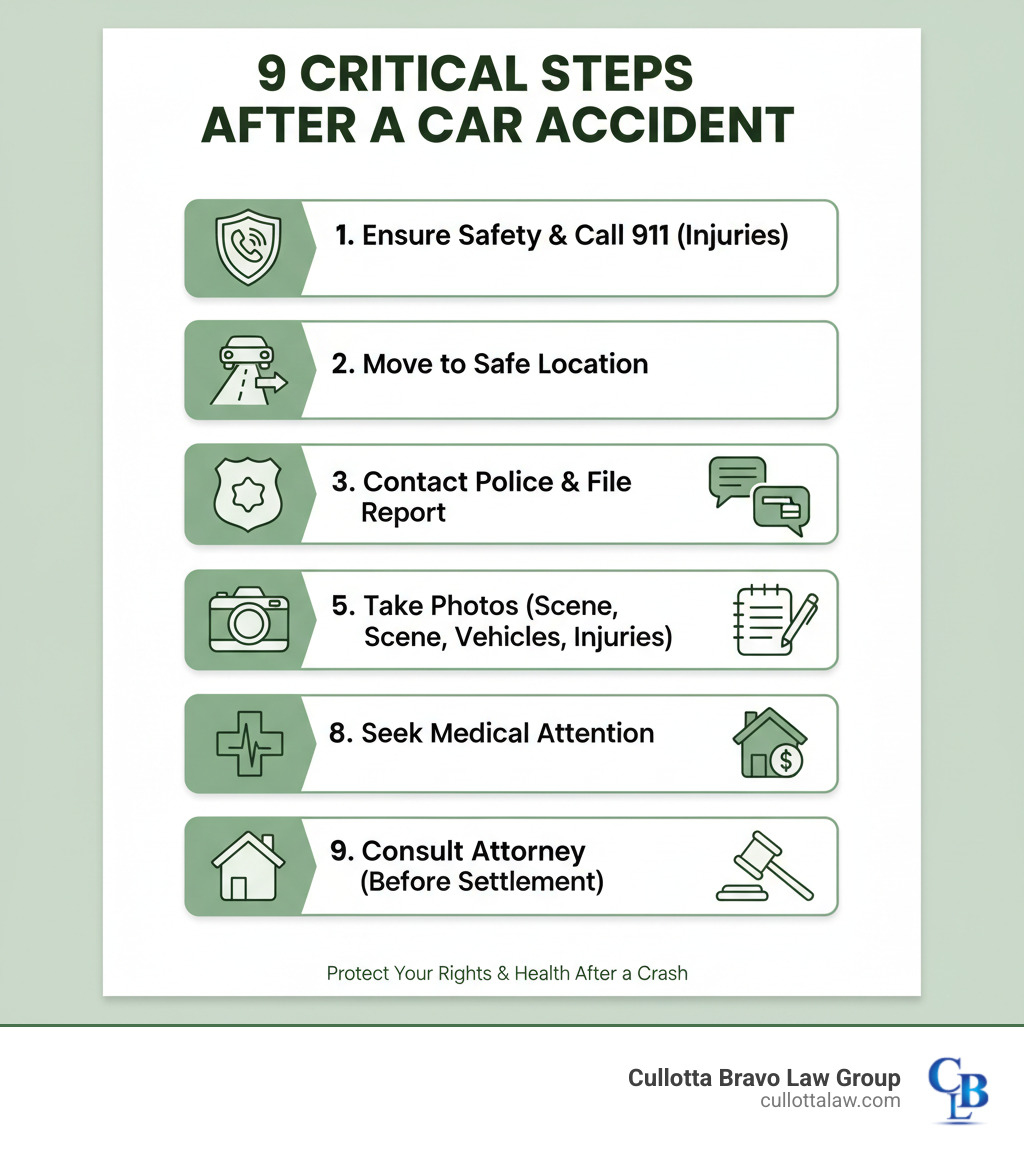
First Steps After a Crash: Protecting Your Health and Your Claim
The steps you take immediately after a car accident are critical. Your first priority is always safety. If possible, move your car to the shoulder to avoid blocking traffic.
Call 911 immediately if anyone is hurt or if there’s significant damage. Emergency responders will secure the scene and evaluate everyone for injuries. Let them check you, even if you feel fine.
Adrenaline can mask serious injuries like whiplash, concussions, or internal bleeding that may not appear for hours or days. Seek a medical evaluation as soon as possible. This creates an official record linking your injuries to the accident, which is crucial evidence for your claim.
In Illinois, you must report any accident causing injury, death, or property damage over $1,500 to the police. The police report is an objective record that insurance companies use to help determine fault. You can learn more about Illinois accident reporting requirements.
While waiting for the police, exchange information with the other driver: full name, phone number, address, driver’s license number, license plate, and insurance details. Be polite but keep conversation minimal.

Use your smartphone to document everything. If it’s safe, take photos from multiple angles showing all vehicle damage, the accident scene, visible injuries, skid marks, debris, and road conditions. Our guide on what photos to take after an accident can help.
If there are witnesses, get their contact information. Their testimony is powerful because they have no stake in the outcome.
Finally, never apologize or admit fault at the scene. An apology can be used against you by insurance companies to deny or reduce your claim. Stick to the facts when speaking with police and other drivers. Leave fault determination to the authorities and your attorney for car accident representation.
Following these steps in Aurora, Chicago, Naperville, or Joliet protects your health and legal rights, providing a strong foundation for your recovery.
Understanding the Legal Landscape of Illinois Car Accidents
After a car accident, you enter a complex legal system with rules that can significantly impact your compensation. Understanding how Illinois law works is essential to protecting your rights.
Illinois Uses a “Fault” System with a Twist
Illinois is a “fault” state, meaning the driver who caused the accident is responsible for damages. However, Illinois also uses modified comparative negligence, which recognizes that sometimes both drivers share responsibility.
Under this rule, you can still recover compensation if you were partially at fault, but your award is reduced by your percentage of fault. For example, if you have $100,000 in damages but are found 20% at fault, you would recover $80,000.
The Critical 51% Fault Bar
The catch is Illinois’s 51% fault bar. If you are found 51% or more at fault, you cannot recover any damages. This makes determining liability crucial, as a few percentage points can be the difference between fair compensation and nothing. Insurance companies will try to shift blame onto you, which is why an experienced attorney for car accident cases is invaluable. We build strong cases to establish fault and protect you from unfair blame. Learn more about Understanding comparative fault in Illinois.
Proving Negligence
To recover compensation, you must prove the other driver was negligent—that they failed to use reasonable care, and this failure caused your injuries. Common examples include distracted driving, speeding, DUI, or running a red light. We use police reports, witness testimony, and accident reconstruction experts to prove negligence. Liability can also extend to other parties, like a vehicle manufacturer for defective parts or a government entity for poor road maintenance.
The Two-Year Deadline You Cannot Miss
Illinois has a strict statute of limitations for personal injury claims. For most car accidents, you have two years from the date of the accident to file a lawsuit. If you miss this deadline, you permanently lose your right to seek compensation.
Two years passes quickly when gathering evidence, negotiating with insurers, and building a case. It is vital to consult an attorney for car accident claims as soon as possible to preserve evidence and meet all legal deadlines. For more details, visit our page on Illinois accident statutes of limitation.
When Do You Need an Attorney for a Car Accident?
While you can handle a minor fender-bender with no injuries on your own, most car accident cases benefit from professional legal representation. Here are clear signs you need an attorney for car accident cases.

- Serious or Catastrophic Injuries: If you required hospitalization, surgery, or ongoing care for injuries like Traumatic Brain Injuries or spinal cord damage, you need a lawyer. Calculating future medical needs and lost earning capacity is complex.
- Disputed Fault: If the other driver or their insurer is blaming you, get a lawyer immediately. Due to Illinois’s 51% fault bar, they will try to shift blame to avoid paying.
- Uninsured or Underinsured Drivers: An attorney can help you steer your own policy’s uninsured/underinsured motorist coverage and find other recovery options. Learn more in our guide on What to do in an uninsured accident.
- Multi-Vehicle Accidents: Determining liability in accidents with three or more vehicles is a puzzle that requires legal expertise.
- Government Entity Liability: Cases involving government vehicles or property have special rules, shorter deadlines, and governmental immunity laws that are difficult to steer alone.
- Denied Insurance Claims: A denial is often a negotiation tactic, not the final word. An attorney can help you appeal the decision.
The Benefits of Hiring an Attorney for a Car Accident Claim
Even if fault seems clear, insurance companies work to protect their bottom line, not you. Hiring an attorney for car accident cases levels the playing field.
- Legal Expertise: We use our deep knowledge of Illinois personal injury law and insurance regulations to build the strongest case for you.
- Evidence Gathering: We go beyond scene photos, obtaining police reports, tracking down witnesses, securing surveillance footage, and hiring experts. As Nolo explains, a lawyer gathers comprehensive evidence to establish fault and the full scope of your losses.
- Negotiation with Insurers: We are not intimidated by the delay tactics and lowball offers of professional insurance adjusters. Statistics show that the average personal injury claim is almost three times higher with an attorney.
- Maximizing Compensation: We ensure all damages are accounted for, including future medical bills, lost earning capacity, and pain and suffering, which are often overlooked.
- Handling All Communication: We manage all contact with insurance companies, protecting you from saying something that could harm your case.
- Avoiding Costly Mistakes: We help you avoid critical errors like missing the statute of limitations or signing away your rights.
- Peace of Mind: You can focus on healing while we handle the legal complexities.
What to Do If Your Initial Claim Is Denied
A denial letter is not the end. Insurance companies often deny valid claims, hoping you will give up. Don’t treat the denial as final.
Review the denial letter to understand their specific reasons. This tells you what issues to address in an appeal. You may need to gather additional evidence, such as more detailed medical records or expert testimony.
This is where an attorney for car accident cases is essential. We understand insurance company denial tactics and can build a strong rebuttal. We often resolve denied claims through negotiation, but we are prepared to file a lawsuit if the insurer acts in bad faith. Understanding the 8 steps of a personal injury case can clarify what to expect if litigation is needed. With the right legal help, many denied claims are successfully overturned.
What Compensation Can You Recover?
When someone else’s negligence injures you, Illinois law allows you to recover compensation to be made whole again. This compensation falls into two main categories: economic and non-economic damages.

Economic damages are tangible financial losses with clear monetary values. They include:
- Medical Bills: All costs from the ambulance ride to future physical therapy. We help with Recovering medical expenses.
- Lost Wages: Income you missed from being unable to work.
- Future Earnings: Lost earning capacity if you cannot return to your previous job.
- Property Damage: Costs to repair or replace your vehicle.
Non-economic damages compensate for the non-financial impact on your life, such as:
- Pain and Suffering: The physical pain and discomfort you endure.
- Emotional Distress: Anxiety, depression, or PTSD resulting from the accident.
- Loss of Enjoyment of Life: Inability to participate in hobbies and activities you once loved.
- Loss of Consortium: A spouse’s loss of companionship and support.
Determining a case’s worth is complex. An experienced attorney for car accident cases evaluates injury severity, permanency, total medical bills (current and future), and the impact on your ability to work. We also consider the strength of evidence and available insurance coverage. Learn more about Factors that determine settlement amounts.
The Hidden Costs: Why Delayed Injuries Matter
Serious injuries may not be apparent for days or weeks after an accident because adrenaline can mask pain. This is why immediate medical attention is vital.
- Whiplash: Pain, stiffness, and headaches from this common neck injury often appear the next day.
- Concussions: Symptoms like headaches, confusion, and memory problems can develop gradually.
- Internal Injuries: Life-threatening internal bleeding or organ damage may have no immediate external signs.
- Back and Neck Injuries: Herniated discs or pinched nerves can worsen over time, leading to chronic pain. These often result in significant settlements, as discussed in Settlements for back and neck injuries.
Getting a full medical evaluation creates an official record linking your injuries to the crash, which prevents insurance companies from arguing your injuries are unrelated. As your attorney for car accident cases, we work with medical experts to project future medical needs to ensure your settlement covers all long-term care. If the accident worsened a pre-existing condition, you can still recover compensation for that aggravation.
Frequently Asked Questions
What are the most common causes and types of car accidents?
Understanding common accident causes helps identify another driver’s negligence. The most frequent causes we see include:
- Distracted Driving: Texting, adjusting a GPS, or any other momentary lapse of attention.
- Speeding: Exceeding speed limits or driving too fast for conditions reduces reaction time and increases crash severity. We handle many speeding-related accidents.
- Driving Under the Influence (DUI): Alcohol or drugs impair judgment and coordination, leading to devastating crashes.
- Reckless Driving: Aggressive behaviors like tailgating, weaving through traffic, and improper lane changes.
Common crash types include:
- Rear-End Collisions: Frequent in traffic, these can cause serious whiplash and soft tissue injuries. Learn more about Illinois rear-end accidents.
- T-Bone (Side-Impact) Accidents: Often occur at intersections and cause severe injuries due to less vehicle protection on the sides.
- Head-On Collisions: Among the most deadly crashes, often resulting from distracted or impaired driving.
How much does an attorney for a car accident cost?
Hiring an attorney for car accident cases costs you nothing upfront. We work on a contingency fee basis, meaning our fee is a percentage of your final settlement or award. If we don’t recover money for you, you owe us nothing.
This “no fee unless you win” promise removes all financial risk, allowing you to access experienced legal representation. We offer a free initial consultation to discuss your case and our fee structure with no obligation. You can learn more about how contingency fees work.
Is it worth getting a lawyer even if the accident wasn’t my fault?
Yes. Even when fault is clear, an attorney for car accident claims makes a tremendous difference. Insurance companies will still try to deny or reduce your claim by shifting partial blame onto you. Due to Illinois’s 51% fault bar, this can cause you to lose all compensation.
An attorney proves the other party is 100% at fault, handles negotiations with trained adjusters, and protects you from their tactics. We take over all communication and ensure every damage is accounted for, including future costs and pain and suffering.
Statistics show that claims handled by attorneys result in settlements almost three times higher than those without legal representation. We have seen cases where an initial $13,000 offer became an $867,500 jury verdict after we got involved. Hiring an attorney provides peace of mind and maximizes your recovery, even when you are not at fault.
Conclusion
Navigating the aftermath of a car accident is overwhelming. The decisions you make now will shape your recovery and your future. Getting immediate medical attention, documenting the scene, and understanding your legal rights are your lifeline to fair compensation.
As this guide has shown, while you might handle a minor incident alone, cases involving serious injuries, disputed fault, or denied claims require an attorney for car accident cases. Insurance companies have teams working to minimize your payout; you deserve an advocate fighting just as hard for you.
At Cullotta Bravo Law Group, we have over 35 years of experience helping accident victims in Aurora, Chicago, Naperville, and Joliet. We have seen how aggressive representation leads to significantly higher settlements and gives clients peace of mind. You shouldn’t have to battle insurance adjusters while you’re trying to heal.
We work on a contingency fee basis, so there are no upfront costs and no fees unless we win your case. You have nothing to lose.
Time is critical after an accident—evidence disappears, and Illinois’s two-year statute of limitations is ticking. Contact an experienced car accident lawyer in Aurora for a free consultation today. Let us handle the legal fight while you focus on your recovery. We’re here to listen and secure the full compensation you deserve.