

Understanding the Car Accident Insurance Claim Process
A car accident insurance claim is your formal request to an insurance company to cover damages from a crash. After an accident, you’re not just dealing with potential injuries and vehicle damage; you’re facing a complex process that determines your financial recovery. The good news is that most claims—about 95%—are resolved without going to trial.
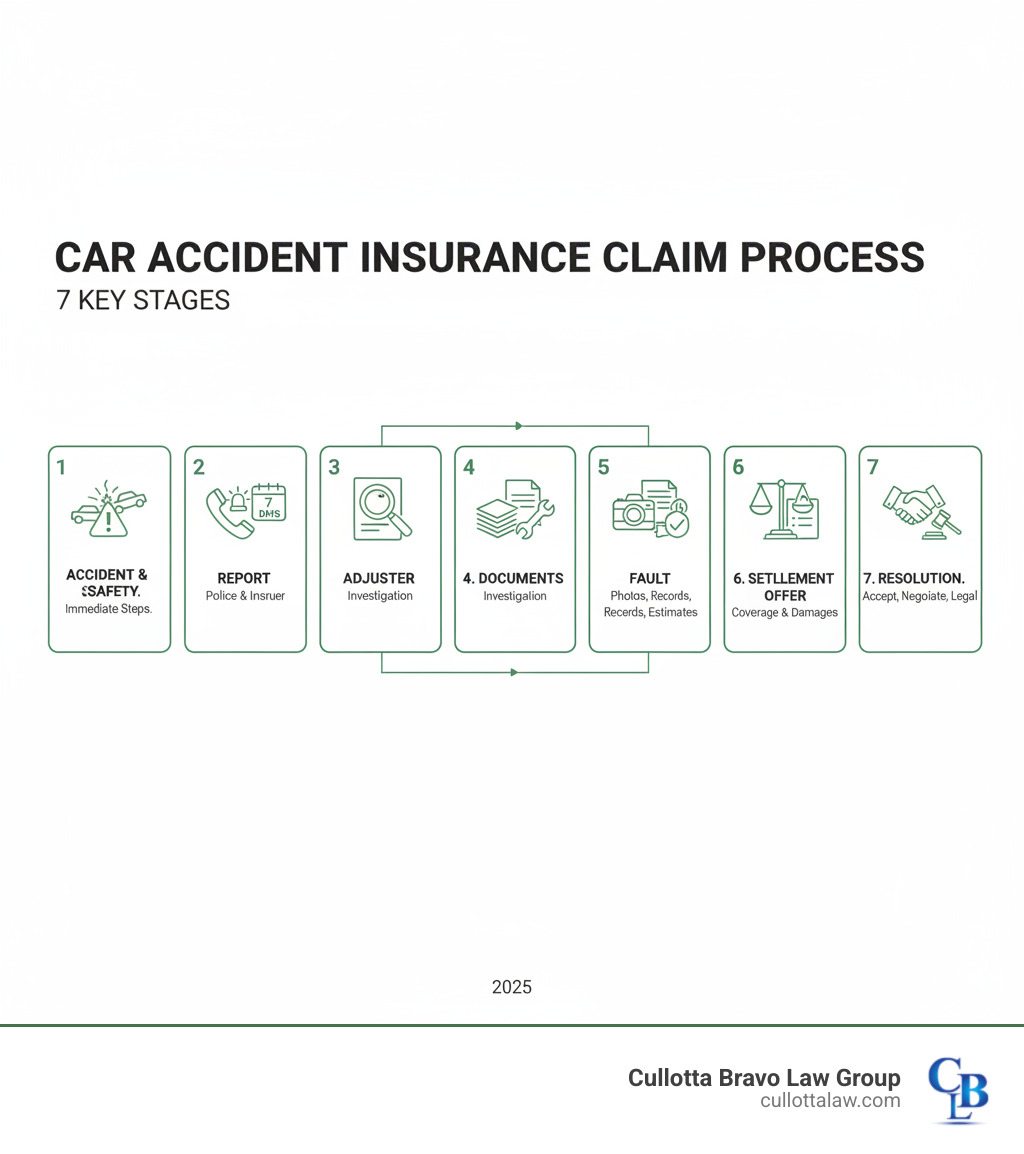
Here’s a brief overview of what to expect:
- Report the accident to your insurer as soon as possible.
- Gather documentation: police report, photos, and contact information.
- Speak with a claims adjuster who investigates the crash.
- Get repair estimates or a total loss determination.
- Receive a settlement offer based on your coverage and fault.
- Accept payment or negotiate if the offer is unfair.
Understanding this process is crucial. Mistakes made early on can impact your compensation, as insurance companies are businesses focused on minimizing payouts. They may question medical treatment, dispute fault, or make lowball offers.
This guide will walk you through each step, from the accident scene to resolving your claim, so you can protect your rights. I’m Peter Cullotta, founding partner at Cullotta Bravo Law Group, and I’ve spent over 35 years helping injured individuals with car accident insurance claims in the Chicagoland area. My experience has shown me where insurers try to shortchange victims and how to fight back.
Immediate Steps to Take at the Accident Scene
The actions you take in the minutes after a car accident can make or break your car accident insurance claim. Follow these steps to protect yourself and your case.

-
Prioritize Safety and Call 911: Check yourself and your passengers for injuries. Call 911 immediately if anyone is hurt or if there is significant vehicle damage. Adrenaline can mask pain, so medical attention is always a good idea. If possible, move your vehicle out of traffic and turn on your hazard lights.
-
Get a Police Report: A police report is essential documentation for your claim. It establishes the facts, time, location, and often a preliminary assessment of fault. In Illinois, you are required to report any accident causing injury, death, or property damage over $1,500. If police don’t come to the scene, you can file a report online or by phone.
-
Exchange Information: Collect the other driver’s full name, phone number, address, driver’s license number, insurance company, and policy number. Also, note their vehicle’s make, model, year, and license plate, along with the exact time and location of the accident.
-
Document Everything with Photos and Videos: Use your smartphone to take pictures and videos of the damage to all vehicles from multiple angles. Capture the positions of the cars, skid marks, traffic signs, debris, and weather conditions. Document any visible injuries. Dash cam footage is also incredibly valuable.
-
Talk to Witnesses: If anyone saw the accident, get their names and phone numbers. A neutral third-party account can be invaluable if fault is disputed.
-
Do Not Admit Fault: Avoid apologizing or saying “it was my fault.” You may not have all the facts, and anything you say can be used against you by the insurance company. Stick to the facts and be polite, but do not accept blame.
For a more detailed checklist, see our guide: Ask an Attorney: 10 Steps to Take Immediately After a Car Accident in Chicago.
The Step-by-Step Car Accident Insurance Claim Process
After handling the immediate aftermath, it’s time to start the formal car accident insurance claim process. Understanding these steps will give you more control.
First, notify your insurance company as soon as possible. Most policies require “prompt notice,” often within 7 days. Delaying can complicate your claim. When you call, have your policy number and the accident information you gathered ready.
Next, a claims adjuster will be assigned to your case. The adjuster works for the insurance company to investigate the accident, assess damages, and determine the payout. While they may seem helpful, their goal is to settle the claim for the lowest amount possible. Respond promptly to their requests for information and keep a log of all your conversations.
The adjuster will arrange for a vehicle inspection to estimate repair costs. This may involve an appraiser or a visit to an approved shop. Many insurers also offer tools to track a claim online, which helps you monitor its progress.
Be aware of legal deadlines. In Illinois, the statute of limitations to file a lawsuit is generally two years for personal injury and five years for property damage. However, your policy’s reporting deadline is much shorter, so act quickly.
Key Documentation for Your Car Accident Insurance Claim
Thorough documentation is the key to a fair settlement. The more organized your records, the stronger your car accident insurance claim. Gather the following:
- Police Report Number: This provides an official, unbiased account of the accident.
- Photos and Videos: Visual proof of vehicle damage, the accident scene, road conditions, and any visible injuries.
- Repair Estimates: Get one or two written estimates from reputable body shops to establish the cost of repairs.
- Medical Records and Bills: Keep every record related to your injuries, including doctor visits, therapy, prescriptions, and diagnostic tests.
- Proof of Lost Wages: Collect pay stubs and a letter from your employer to document income lost due to your injuries.
- Receipts for Other Expenses: Save receipts for towing, rental cars, and any other out-of-pocket costs related to the accident.
Strong documentation is essential. For more strategies, see our guide on steps to take to maximize a car accident settlement amount.
How Fault is Determined and Why It Matters
Who caused the accident is a critical factor in your car accident insurance claim. It determines which insurer pays and how much you can recover.
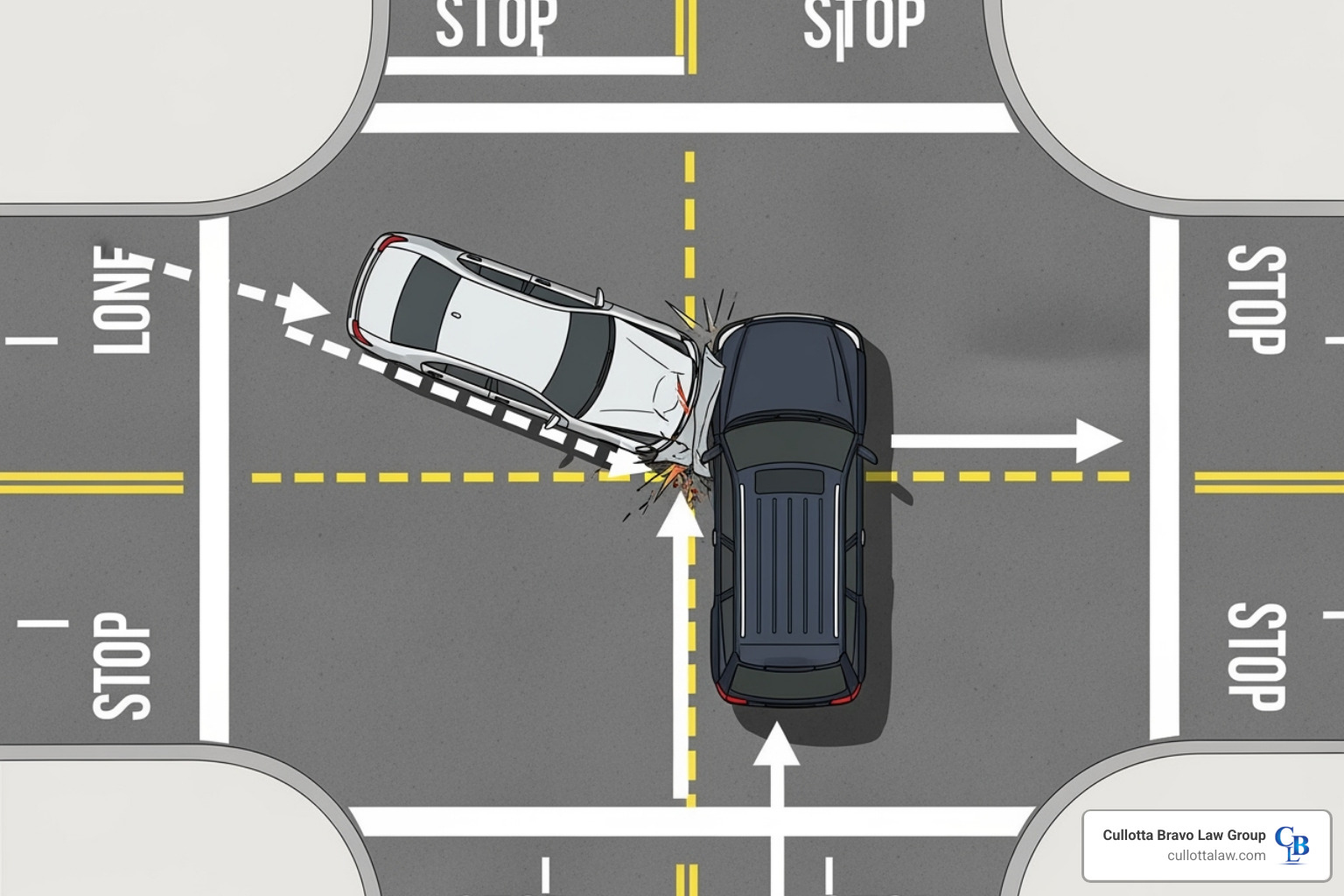
An adjuster will investigate by reviewing the police report, photos, witness statements, and driver interviews. Be honest and stick to the facts in your conversations.
Illinois uses a “modified comparative negligence” rule. This means you cannot recover damages if you are found to be 51% or more at fault. If you are 50% or less at fault, your compensation is reduced by your percentage of fault. For example, if you have $10,000 in damages but are found 30% at fault, you can recover $7,000.
- If the other driver is at fault, their liability insurance should cover your damages up to their policy limits.
- If you are at fault, your own collision coverage pays for your vehicle repairs, and your liability coverage pays for the other party’s damages. An at-fault accident will likely increase your insurance rates.
Fault determination can be complex and is sometimes disputed. If you disagree with the assessment, you have the right to challenge it with strong evidence. Learn more by reading our guide on understanding comparative fault in Illinois car accident cases.
Understanding Your Coverage: From Repairs to Total Loss
Your insurance coverage determines what gets paid in a car accident insurance claim. It’s essential to know what your policy includes.

We recommend you Check your policy for these key coverage types:
- Collision Coverage: Pays for your vehicle’s repairs after a crash, regardless of fault. It’s optional but often required for financed vehicles.
- Comprehensive Coverage: Covers non-collision events like theft, vandalism, hail, or hitting a deer.
- Liability Coverage: Mandatory in Illinois, this pays for the other party’s damages and injuries if you cause an accident. It does not cover your own vehicle.
- Deductible: The amount you pay out-of-pocket before your insurance coverage begins. A higher deductible usually means a lower premium.
- Uninsured/Underinsured Motorist (UM/UIM) Coverage: Protects you if the at-fault driver has no insurance or not enough to cover your damages. If you’re in this situation, our article Uninsured Accidents: What Can I Do? explains your options.
Getting Your Vehicle Repaired or Replaced
Once your car accident insurance claim is approved, you’ll address your vehicle’s damage.
You have the right to choose your own repair shop. While insurers may suggest “preferred” shops, you can use an independent mechanic you trust. Get at least two written estimates to ensure a fair price.
Rental car costs may be covered if you have rental reimbursement coverage on your policy. If the other driver was at fault, their insurance should pay, but having your own coverage simplifies the process.
A vehicle is declared a total loss if repair costs exceed its pre-accident value (typically 70-80%). The insurer will offer a settlement based on its Actual Cash Value (ACV), minus your deductible. If you believe the ACV offer is too low, you can dispute it. Gather evidence of your car’s true value, such as maintenance records, receipts for upgrades, and listings for comparable vehicles. If you owe more on your loan than the ACV, gap insurance (if you have it) can cover the difference.
To learn more about how settlement amounts are calculated, read our guide: What Determines My Car Accident Settlement Amount?.
Potential Complications and Disputes
Even a well-documented car accident insurance claim can run into problems. Understanding potential roadblocks will help you steer them.
Common issues include:
-
Claim Denials: An insurer may deny your claim for various reasons, such as a lapsed policy, an unauthorized driver, misleading information, or waiting too long to report the accident. If your claim is denied, you will receive a letter explaining why. You have the right to appeal this decision.
-
Disputing Fault or Low Offers: Insurance adjusters are trained to settle claims for the lowest possible amount. They may assign you an unfair percentage of fault or make a lowball settlement offer. If you disagree, you can negotiate by providing additional evidence, such as repair estimates and witness statements. To learn about common insurer tactics, read our article on Insurance Company Denial Tactics.
-
Impact on Insurance Rates: Filing a claim, especially if you are 50% or more at fault, will likely cause your insurance premium to increase at renewal. Some policies include “accident forgiveness” for a first at-fault accident, which can prevent a rate hike. However, multiple claims in a short period (usually three years) can lead to significant rate increases or even non-renewal.
When Not to File a Car Accident Insurance Claim
Sometimes, it’s smarter not to file a car accident insurance claim. Consider paying out-of-pocket in these situations:
-
The Damage is Minor: If the repair cost is less than or only slightly more than your deductible, filing a claim isn’t worth it. For example, if repairs are $600 and your deductible is $500, you’d only get $100 from the insurer, but you’d risk a future rate increase.
-
To Preserve a Clean Record: A claims-free history can earn you discounts and lower premiums. Filing a claim for minor damage can cost you more in the long run through lost discounts and potential surcharges.
Before filing, always weigh the repair cost against your deductible and the potential impact on your insurance rates.
Frequently Asked Questions about Car Accident Claims
Here are answers to common questions about filing a car accident insurance claim.
How long do I have to file a car accident claim in Illinois?
There are two key deadlines to know:
- Insurance Policy Deadline: Most policies require you to report an accident “promptly,” which usually means within a few days. Waiting too long can lead to a denial.
- Statute of Limitations: In Illinois, you have two years from the accident date to file a personal injury lawsuit. Missing this legal deadline means you lose your right to sue for compensation.
Prompt reporting is always best, as it helps preserve evidence and strengthens your claim.
What happens if the other driver’s insurance denies my claim?
A denial of your car accident insurance claim is frustrating, but you have options:
- Review the denial letter to understand the specific reason for the denial.
- Appeal the decision with the insurance company by submitting a written request with any new evidence you have.
- File with your own insurer if you have collision coverage. You’ll pay your deductible, but your company will handle repairs and then seek reimbursement from the at-fault driver’s insurer through subrogation. If they succeed, you’ll get your deductible back.
For complex cases, especially those involving serious injuries or uninsured drivers, consulting an attorney is wise. An attorney can negotiate on your behalf and ensure your rights are protected. Learn more here: Why You Need an Attorney for an Uninsured Motorist Claim.
What is the difference between a property damage claim and an injury claim?
A single crash often results in two separate claims with different processes:
-
A property damage claim covers physical damage to your vehicle and other personal property. These claims are usually straightforward and resolve relatively quickly, covering repair costs or the car’s actual cash value if it’s a total loss.
-
An injury claim covers the human cost of the accident. This includes medical bills, lost wages, and pain and suffering. These claims are more complex and take longer to resolve because the full extent of injuries and their long-term impact may not be known for months or even years. It’s crucial not to settle an injury claim too early.
You can often settle your property damage claim to get your car fixed while your injury claim remains open. For more on the legal process after an injury, see our guide: What to Expect Legally After Suffering a Car Accident Injury in Chicago.
Navigating Your Claim with Confidence
Filing a car accident insurance claim can be challenging, but with the information in this guide, you are better prepared to handle the process. Remember to stay organized, be persistent, and know your rights. Keep all your documentation, respond promptly to your adjuster, and don’t let anyone rush you into accepting an unfair settlement.
While many simple property damage claims can be handled alone, you should not have to face a difficult fight with an insurer, especially when recovering from injuries. A car accident insurance claim becomes much more complex when it involves serious injuries, disputed fault, an uninsured driver, or an insurance company that refuses to be fair.
In these situations, having an experienced attorney makes a significant difference. Insurance companies know that a lawyer understands their tactics, knows the true value of a claim, and is prepared to fight for a just outcome. At Cullotta Bravo Law Group, we have over 35 years of experience securing millions for our clients by combining aggressive representation with genuine compassion.
If you feel overwhelmed or are facing a complex claim, you don’t have to do it alone. We can take that burden off your shoulders so you can focus on your recovery. For expert legal guidance on your case, contact a Car Accident Lawyer in Aurora. We treat every client with dignity and are ready to put our experience to work for you.