

Chicago Brain Injury Lawyer: Top 2025 Guide
Why You Need a Chicago Brain Injury Lawyer After a Life-Changing Injury
A Chicago brain injury lawyer provides specialized legal representation for victims of traumatic brain injuries (TBIs). They help victims steer complex claims, prove negligence, and secure maximum compensation for medical bills, lost wages, and long-term care. This is typically done on a contingency fee basis, meaning no upfront costs for you.
Key reasons to hire a brain injury attorney in Chicago:
- Prove negligence and establish the at-fault party’s liability
- Calculate full damages, including future medical costs and lost earning capacity
- Steer Illinois’ two-year statute of limitations to protect your claim
- Counter insurance company tactics that minimize your settlement
- Access medical experts to document the severity and long-term impact of your injury
- Secure compensation for both economic and non-economic damages (pain and suffering)
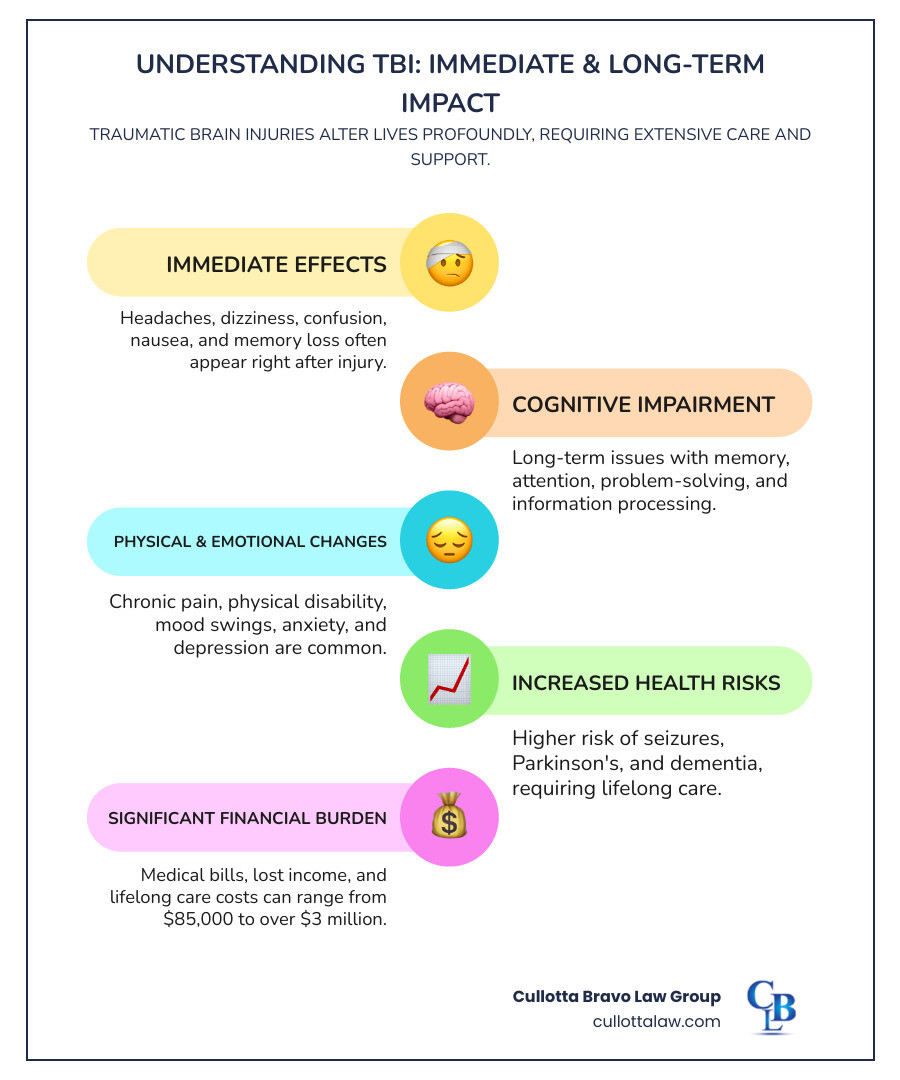
Brain injuries are devastating. The Illinois Department of Public Health reports that in 2021, nearly 30,000 people suffered TBIs, leading to almost 3,000 deaths. These injuries, often from car crashes, falls, or workplace accidents, can cause permanent cognitive impairment, physical disability, and emotional changes.
Victims face mounting medical bills and lost income while dealing with insurance companies focused on minimizing payouts. Unlike routine injury claims, brain injury cases require an attorney who understands complex neurological evidence and can prove long-term impact. The right lawyer is an advocate who secures the financial resources needed to rebuild your life.
As Peter Cullotta, I have over 35 years of experience as a Chicago brain injury lawyer, fighting for TBI victims. I know that proper legal representation is the key to securing the comprehensive compensation families need for long-term care and stability.
Understanding Brain Injuries: Types, Causes, and Symptoms

Understanding the nature of a brain injury is the first step toward recovery and securing the compensation your family needs. As a Chicago brain injury lawyer, I help families steer this difficult journey.
What Constitutes a Brain Injury?
A brain injury occurs when an external or internal event disrupts the brain’s normal function. The most common type is a Traumatic Brain Injury (TBI), caused by an external force like a blow or jolt to the head. This can happen in a car crash or a construction accident.
Brain injuries can also result from internal events, such as oxygen deprivation. An anoxic injury (no oxygen) or hypoxic injury (insufficient oxygen) can occur from cardiac arrest, near-drowning, or a stroke. Both traumatic and non-traumatic injuries can have devastating consequences, making proper medical and legal support essential. For more details, see our page on Traumatic Brain Injuries.
Common Types of Brain Injuries
Brain injuries vary in type and severity, which impacts the legal strategy.
- Concussions: Often called “mild” TBIs, they result from the brain moving inside the skull, damaging brain cells. Repeated concussions can lead to long-term degenerative diseases like CTE.
- Contusions: These are bruises on the brain tissue caused by the brain striking the skull, leading to bleeding.
- Diffuse Axonal Injury (DAI): One of the most severe injuries, where the brain’s rapid movement tears nerve fibers, often resulting in a coma and permanent damage.
- Penetrating Injuries: Occur when an object pierces the skull and enters the brain.
- Skull Fractures & Hematomas: A fractured skull indicates significant force, while hematomas (blood clots) create dangerous pressure on the brain.
For more medical details, see Hopkins Medicine’s guide to traumatic brain injuries.
Leading Causes of Brain Injuries in the Chicago Area
In Chicago, brain injuries frequently result from:
- Motor vehicle accidents: Collisions involving cars, trucks, motorcycles, and pedestrians are a leading cause of TBIs in Illinois. Learn more about what to expect legally after a car accident injury in Chicago.
- Falls: Slips on icy sidewalks, falls at work, or incidents in nursing homes account for a majority of TBI-related hospitalizations.
- Construction accidents: Falling objects, equipment malfunctions, and falls from heights are common dangers on Chicago’s construction sites. See our page on Illinois construction accidents.
- Medical malpractice: Surgical errors, birth injuries, or delayed diagnosis of a stroke can cause severe brain damage.
- Other causes: Sports injuries, other workplace accidents, and acts of violence also contribute to brain injury statistics.
Recognizing the Signs: Symptoms to Watch For
Brain injury symptoms can appear immediately or develop over days or weeks. Prompt medical attention is crucial for your health and any potential legal claim.
- Physical Symptoms: Persistent headaches, dizziness, nausea, fatigue, sensitivity to light or sound, blurred vision, and changes in sleep patterns.
- Cognitive Symptoms: Memory loss, confusion, difficulty concentrating, slowed thinking, and trouble speaking.
- Emotional & Behavioral Symptoms: Irritability, mood swings, anxiety, depression, and personality changes.
Severe symptoms like loss of consciousness, seizures, or clear fluid draining from the nose or ears require immediate emergency care. Even “mild” symptoms can be debilitating. The CDC’s guide on concussion symptoms offers more information. Proper medical documentation is vital; learn more about why you should see a doctor right away and what tests to expect. Don’t ignore any signs of a potential brain injury.
The Legal Path to Justice: Filing a Brain Injury Claim in Illinois

When someone’s negligence causes a brain injury, the legal system offers a path to hold them accountable and secure the compensation you need. A Chicago brain injury lawyer can guide you through this complex process.
Proving Negligence: The Foundation of Your Case
Every brain injury claim is built on proving negligence. This requires establishing four key elements:
- Duty of Care: The other party had a legal responsibility to act with reasonable care to keep you safe (e.g., a driver obeying traffic laws).
- Breach of Duty: The party failed to meet that responsibility (e.g., they were texting while driving).
- Causation: This breach of duty directly caused your brain injury. We use medical expert testimony to establish this crucial link.
- Damages: You suffered actual harm, including medical bills, lost income, and pain and suffering.
We gather evidence like accident reports, witness statements, and medical records to build a strong foundation for your case. Learn more about our approach on our personal injury cases page.
Illinois’ Statute of Limitations: A Critical Deadline
In Illinois, you generally have two years from the date of injury to file a personal injury lawsuit. This deadline, known as the statute of limitations, is strict. If you miss it, you lose your right to seek compensation, regardless of how strong your case is.
While there are limited exceptions (e.g., for minors), you should not rely on them. Contacting a Chicago brain injury lawyer promptly is crucial. It allows time to investigate, gather evidence, and build a powerful claim before the deadline approaches. Deadlines can be even shorter for claims against government entities. For a detailed breakdown, see our guide on statutes of limitation on accidents in Illinois.
Calculating Compensation: What Is Your Brain Injury Case Worth?
The value of a brain injury case is unique to the victim and depends on the severity of the injury, the clarity of fault, and the quality of the evidence. Our job is to calculate the full value of your claim, covering both current and future needs.
Compensation is divided into two categories:
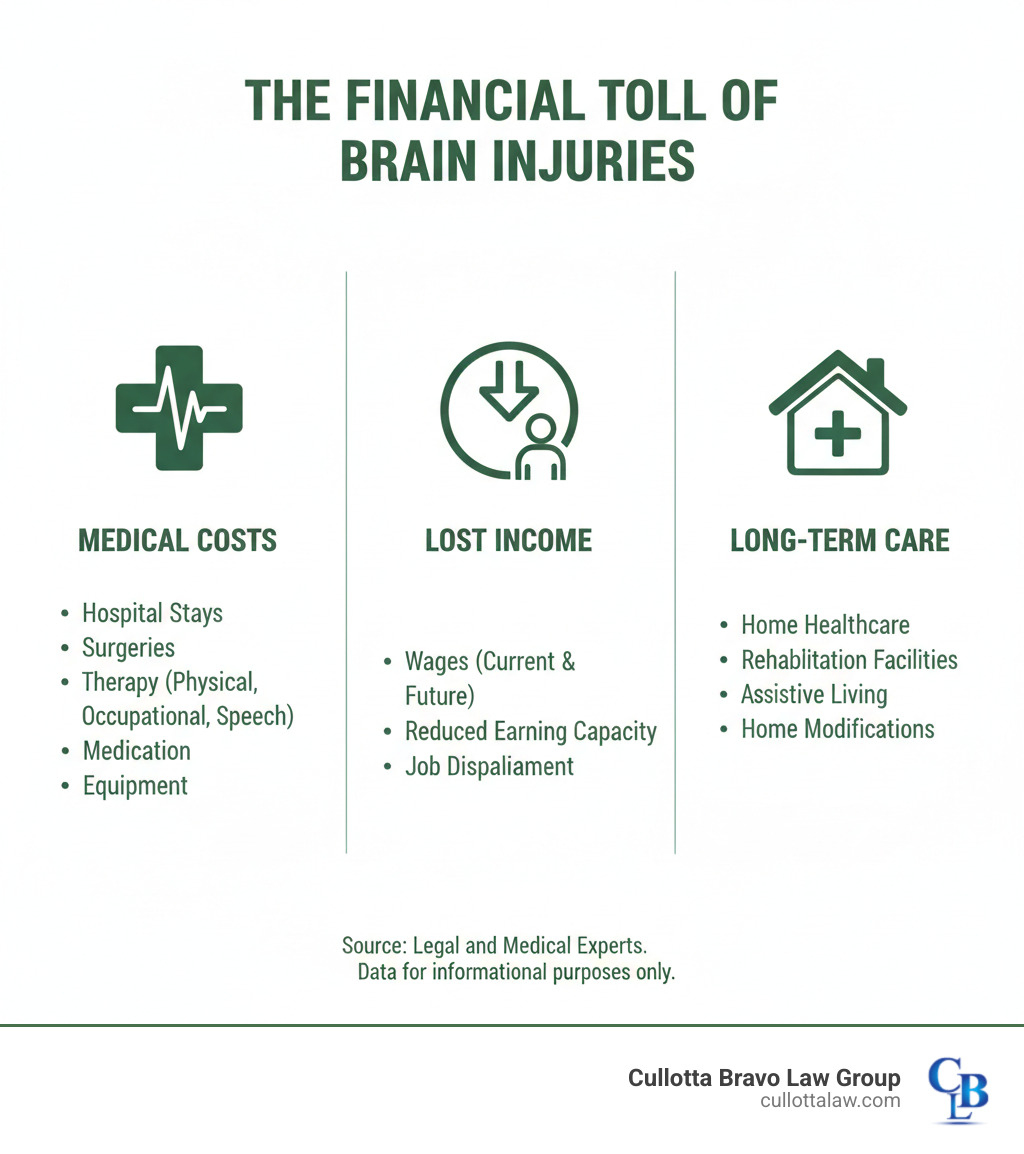
- Economic Damages: These are your financial losses. This includes all past and future medical expenses (hospitalization, therapy, medication, long-term care), which can range from $85,000 to over $3 million. It also covers lost wages and, crucially, lost future earning capacity if you cannot return to your previous work.
- Non-Economic Damages: This compensates for the non-financial impact on your quality of life. It includes pain and suffering, emotional distress (anxiety, depression), loss of enjoyment of life (inability to pursue hobbies or activities), and a spouse’s claim for loss of consortium (loss of companionship).
Calculating these damages requires experience and often the help of economic experts. Our goal is to secure every dollar you need for your future. Learn about our valuation process in our guide to calculating settlement of a personal injury claim.
The Role of an Experienced Chicago Brain Injury Lawyer

While you focus on recovery, a dedicated Chicago brain injury lawyer handles the legal battle, acting as your strongest ally in the fight for justice.
How a Chicago Brain Injury Lawyer Builds Your Case
Building a powerful brain injury case requires a strategic approach from day one.
- Investigation and Evidence Preservation: We immediately launch a thorough investigation, gathering police reports, witness statements, and video footage. We also take steps to preserve critical evidence like vehicle black box data before it disappears.
- Working with Expert Witnesses: We collaborate with top neurologists, neuropsychologists, and life care planners to document the full extent of your injury and project future medical needs. Accident reconstructionists can establish how the incident occurred.
- Negotiating with Insurers: We handle all communication with insurance companies. We know their tactics and counter lowball offers with solid evidence and expert testimony, making it clear we will not settle for less than you deserve. Learn more about Dealing with Insurance Company Denial Tactics.
- Litigation Preparation: While most cases settle, we prepare every case for trial. This readiness sends a powerful message to insurers and often results in better settlement offers.
Why Specialized Experience Matters for Brain Injury Claims
Brain injuries are not like other personal injuries. Their invisible and complex nature demands specialized legal expertise.
An experienced attorney understands the complex medical evidence involved, from interpreting MRI scans to explaining neuropsychological test results. This knowledge is critical for proving long-term impact, as brain injuries often cause permanent changes to cognitive function, memory, and personality.
A specialist knows how to conduct a future needs assessment, working with life care planners to project the costs of ongoing therapy, medication, and potential long-term care. This ensures your compensation covers a lifetime of needs, not just immediate bills. Defense attorneys often try to downplay brain injuries; a specialist knows how to counter these tactics with compelling expert evidence. For more on severe injuries, visit our page on Information on Catastrophic Injuries.
What to Look for in a Top Chicago Brain Injury Lawyer
Choosing the right lawyer is a critical decision. Look for these key qualities:
- Proven Track Record: The firm should have a history of successful verdicts and settlements specifically in brain injury cases.
- TBI Case Experience: Your attorney should have handled numerous TBI claims and be familiar with the unique medical and legal challenges.
- Contingency Fee Basis: You should not pay any upfront fees. The lawyer is paid a percentage of the compensation they recover for you. See our page on How attorneys afford to work on contingency.
- Positive Client Testimonials: Reviews from past clients provide insight into the firm’s service and results.
- Trial Readiness: Choose a firm that is prepared to take your case to trial if a fair settlement cannot be reached.
- Personalized Attention: You deserve a lawyer who treats you with dignity and provides clear, consistent communication.
For more guidance, visit our resource on How to Find the Right Personal Injury Attorney in Illinois.
Frequently Asked Questions about Brain Injury Claims
After a brain injury, it’s natural to have questions about the future. As a Chicago brain injury lawyer, I’ve provided answers to some of the most common concerns.
What are the potential long-term consequences of a brain injury?
Brain injuries can have lifelong effects that impact every aspect of daily living. These consequences can include:
- Cognitive Impairment: Difficulties with memory, concentration, and decision-making.
- Physical Disabilities: Problems with balance, coordination, weakness, or paralysis.
- Emotional and Personality Changes: Irritability, mood swings, depression, and anxiety.
- Chronic Pain: Persistent headaches or other chronic pain conditions.
- Increased Dementia Risk: A higher likelihood of developing neurodegenerative diseases like CTE later in life.
- Need for Lifelong Care: In severe cases, victims may require round-the-clock assistance and ongoing therapy.
Securing full compensation is critical to ensure you have the resources to manage these long-term challenges.
Will I have to go to court for my brain injury claim?
Most brain injury cases are settled out of court. A strong, well-prepared case often leads to a fair settlement offer from the insurance company during negotiations. However, we prepare every case as if it will go to trial. This readiness gives us leverage and shows the insurer we are serious. If a fair offer is not made, we are fully prepared to take your case to court, but the final decision to proceed to trial is always yours.
How much does it cost to hire a brain injury attorney?
There are no upfront costs. We work on a contingency fee basis, which means we only get paid if we win your case. Our fee is a pre-agreed percentage of the settlement or verdict we obtain for you. We cover all the upfront costs of building your case, such as expert witness fees and court filing costs. This ensures that everyone has access to top-tier legal representation, regardless of their financial situation. Learn more about How attorneys afford to work on contingency.
Taking the Next Step Towards Recovery and Justice
A brain injury is overwhelming, but you don’t have to face the future alone. Taking legal action now is a critical step toward protecting your family’s financial well-being. An experienced Chicago brain injury lawyer will fight to hold the negligent party accountable and secure the resources you need for medical care, rehabilitation, and long-term stability.
At Cullotta Bravo Law Group, we have over 35 years of experience representing injured individuals and their families throughout Illinois. We combine aggressive legal representation with the genuine compassion you deserve. Our track record of multi-million dollar settlements demonstrates our commitment to securing maximum compensation for our clients.
Time is critical. Illinois law limits you to two years to file a claim. Waiting can jeopardize your right to compensation. Evidence can be lost, and witnesses’ memories can fade. The sooner you act, the stronger your case will be.
We offer a free, no-obligation consultation to discuss your case and explain your legal options. We work on a contingency fee basis, so you pay nothing unless we win.
If you or a loved one has suffered a brain injury due to someone else’s negligence, contact us today. Let us handle the legal fight so you can focus on healing.
Contact a Personal Injury Lawyer in Naperville for a free consultation