

Commercial real estate attorney: 1 Essential Guide
Why a Commercial Real Estate Attorney is Essential for Your Business Investment
A commercial real estate attorney is a specialized legal professional who protects business interests in property transactions involving office buildings, retail spaces, industrial facilities, warehouses, and mixed-use developments. Here’s what they do for you:
- Conduct due diligence – Title searches, zoning compliance checks, environmental risk assessments
- Draft and negotiate contracts – Purchase agreements, lease documents, financing terms
- Steer regulations – Zoning laws, land use permits, environmental compliance
- Resolve disputes – Contract breaches, landlord-tenant conflicts, property claims
- Structure financing – Loan document review, tax-efficient transaction structuring
- Manage complex transactions – Acquisitions, dispositions, development projects, REITs
Commercial real estate transactions often involve millions of dollars and a complex web of laws, regulations, and lengthy contracts. One misstep in understanding zoning regulations can turn a promising commercial property into a legal nightmare. Disputes can arise over environmental issues, financing defaults, construction problems, or lease violations—each carrying the potential for significant financial loss.
The expertise of a commercial real estate attorney isn’t just an advantage; it’s a necessity for safeguarding your investment.
Unlike residential real estate, commercial transactions involve sophisticated leases, B2B negotiations, and higher financial stakes. Legal fees, typically ranging from $100 to $400 per hour or a flat fee of $3,000 to $10,000 for complex deals, are a small price compared to the cost of overlooked encumbrances, zoning violations, or unfavorable contract terms that could derail your entire investment.
While our primary focus at Cullotta Bravo Law Group is personal injury litigation, we understand the critical importance of experienced legal counsel in complex transactions. A commercial real estate attorney brings the same meticulous attention to protecting your interests and navigating intricate legal landscapes that we apply to our injury cases.
What is a Commercial Real Estate Attorney and Why Do You Need One?
A commercial real estate attorney is a specialized legal professional whose primary role is to guide businesses, investors, landlords, and tenants through the intricate world of commercial property. Unlike general practice lawyers, these attorneys possess deep expertise in the specific laws, regulations, and financial nuances that govern commercial properties. Their specialization is crucial because commercial real estate involves higher stakes, more complex contracts, and a broader array of legal considerations than residential property.
Our goal is to protect your business interests, mitigate risks, and ensure that your commercial real estate ventures in Illinois, whether in Aurora, Chicago, Naperville, or Joliet, are legally sound and strategically advantageous. We understand that in the high-stakes world of commercial real estate, the expertise of a commercial real estate attorney is not just an advantage—it’s a necessity.
The Critical Difference: Commercial vs. Residential Real Estate Law
While both commercial and residential real estate attorneys deal with property, their areas of focus and the complexities they handle differ significantly. Think of it this way: a family doctor and a heart surgeon both practice medicine, but their specializations are vastly different.
Here’s a quick comparison:
| Feature | Commercial Real Estate | Residential Real Estate |
|---|---|---|
| Primary Focus | Business transactions, investment properties, income-generating assets | Personal residences, family homes, consumer protection |
| Transaction Value | Often millions or billions of dollars, larger financial stakes | Typically hundreds of thousands to a few million dollars, personal investment |
| Lease Complexity | Highly complex, long-term, custom-negotiated (e.g., triple net leases, percentage leases) | Standardized, shorter terms, consumer-focused (e.g., standard residential lease agreements) |
| Zoning Issues | Critical and complex, directly impacts business operations and value (e.g., industrial, retail, mixed-use zones) | Simpler, primarily focused on residential use and community regulations |
| Client Types | Corporations, developers, investors, landlords, tenants, REITs | Individuals, families, first-time homebuyers |
| Due Diligence | Extensive: environmental assessments, zoning reports, financial projections, title searches, survey reviews, property condition reports | Less extensive: home inspections, title searches, basic property disclosures |
| Contracts | Sophisticated, heavily negotiated, often customized for specific business needs | More standardized, often boilerplate, with fewer negotiable clauses |
| Regulations | Subject to local ordinances, state laws, federal environmental regulations, business licensing, tax implications | Primarily state and local housing laws, consumer protection laws |
Commercial real estate transactions, particularly in busy areas like Chicago or developing regions around Aurora and Naperville, involve business-focused contracts, complex zoning laws, and higher financial stakes. A misstep can lead to significant financial loss or legal challenges. Understanding the unique aspects of property law is crucial. You can find more information about real estate law in general on our dedicated page: More info about Real Estate.
The Undeniable Benefits for Your Business
Hiring a commercial real estate attorney is not an expense; it’s an investment in your business’s future. The benefits are manifold and directly contribute to safeguarding your assets and ensuring profitability.
- Risk Mitigation: An attorney identifies and mitigates risks like hidden title liabilities or environmental hazards before they become costly problems.
- Financial Protection: We structure deals to be financially sound, preventing unforeseen expenses and unfavorable terms while maximizing tax efficiency.
- Peace of Mind: Knowing an expert is handling the legal complexities allows you to focus on your core business operations, especially with Illinois’s complex local regulations.
- Strategic Advice: Attorneys offer strategic insights into market trends and long-term implications, acting as trusted advisors for your investment.
- Ensuring Profitability: By securing favorable terms and ensuring compliance, an attorney directly contributes to the long-term success of your investment.
- Saving Time and Resources: An attorney streamlines the complex process, saving you valuable time and preventing costly mistakes.
The complexity of commercial real estate law, encompassing zoning, environmental regulations, financing, and contract negotiation, necessitates specialized legal expertise. The quality of your investment is directly correlated with the quality of the attorney selected.
A Blueprint for Success: Core Services of a Commercial Real Estate Attorney
A commercial real estate attorney acts as your comprehensive guide through every stage of a commercial property venture. From the initial concept to the final closing, and even beyond, their services are designed to protect your interests and ensure legal compliance.

We handle a vast array of commercial property types across Illinois, including:
- Office Buildings: From single-tenant spaces to multi-floor corporate headquarters in Chicago’s busy Loop or suburban office parks in Naperville.
- Retail Spaces: Shopping centers, individual storefronts, and retail plazas in Joliet, Aurora, and other communities.
- Industrial Facilities: Warehouses, distribution centers, manufacturing plants, and industrial parks.
- Mixed-Use Developments: Projects combining residential, commercial, and retail elements, common in urban revitalization efforts.
- Specialized Properties: Hotels, medical facilities, educational institutions, and more.
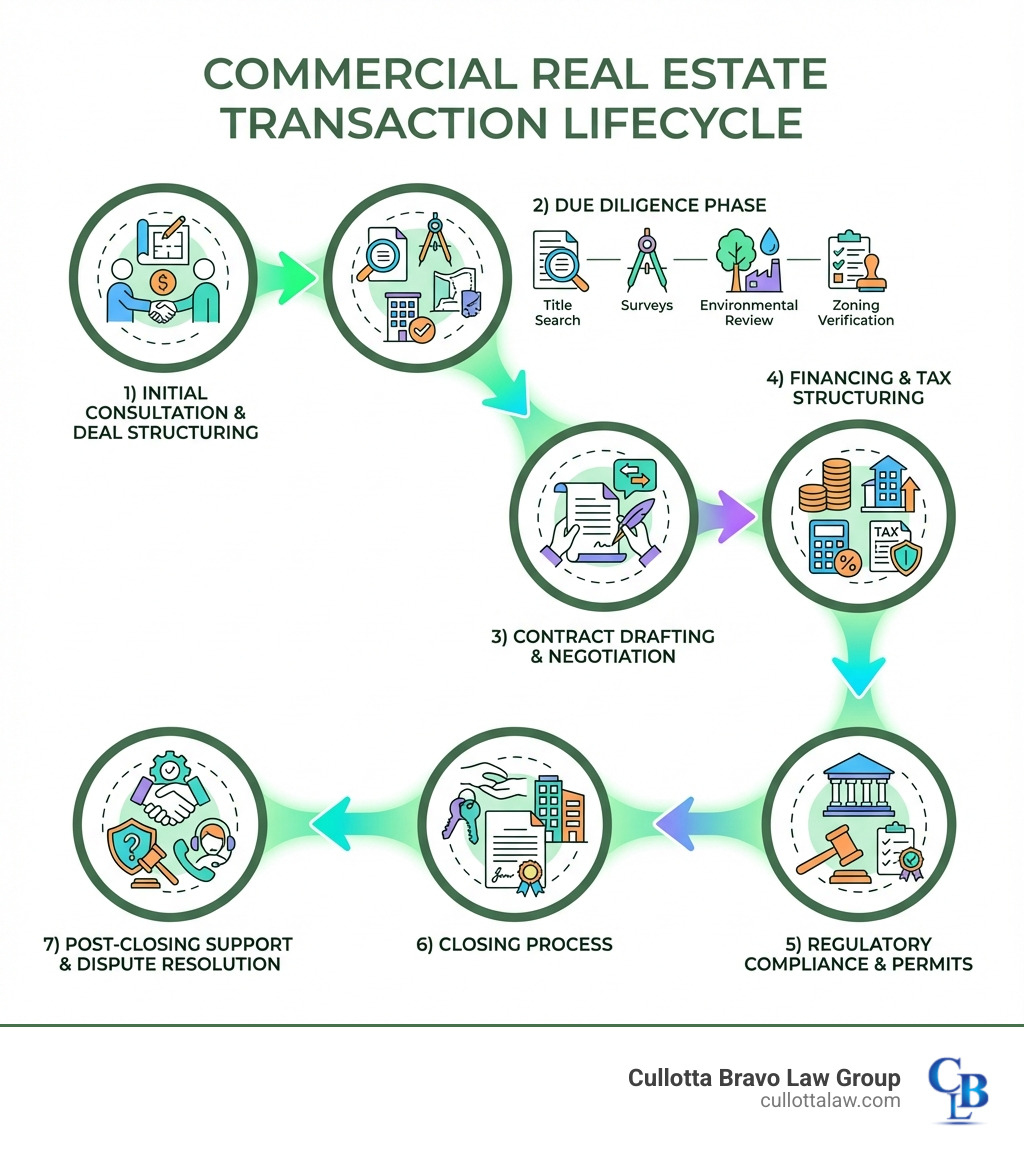
Our core services span the entire lifecycle of a commercial real estate project:
- Acquisitions & Dispositions: Representing buyers and sellers in the purchase or sale of commercial properties, from initial offer to closing.
- Leasing: Drafting, reviewing, and negotiating complex commercial leases for landlords and tenants across various sectors.
- Development Projects: Advising developers on land acquisition, zoning, permitting, construction contracts, and project financing.
- Property Management: Providing ongoing legal support for property owners, addressing tenant relations, lease enforcement, and regulatory compliance.
Mastering Due Diligence for a Secure Investment
Due diligence is the bedrock of any successful commercial real estate transaction. It’s the meticulous investigation into a property’s legal, financial, and physical condition. For a commercial real estate attorney, this means leaving no stone unturned to uncover potential liabilities or issues that could derail your investment.
Our due diligence process typically includes:
- Title Searches: Examining public records to ensure a clear title, free from undisclosed liens or ownership disputes, and advising on Title Insurance for protection.
- Survey Reviews: Analyzing surveys to verify boundary lines, easements, and potential encroachments.
- Zoning Compliance: Verifying that the intended use aligns with local zoning ordinances in cities like Aurora or Chicago to prevent costly delays.
- Environmental Risk Assessment: Identifying potential hazards (e.g., soil contamination) and ensuring compliance with environmental laws, often involving Phase I and II site assessments.
- Unresolved Liens and Encumbrances: Finding and resolving outstanding claims like tax or mechanic’s liens before closing.
- Property Condition Reports: Reviewing inspection reports to understand the property’s structural integrity and potential repair costs.
By mastering due diligence, we help you make informed decisions, mitigate risks, and secure your investment for the long haul.
Drafting and Negotiating Ironclad Contracts
The written word is paramount in commercial real estate. Every agreement, from a preliminary offer to the final closing document, must be precise, comprehensive, and legally enforceable. A commercial real estate attorney is indispensable in drafting and negotiating these critical documents, ensuring your interests are protected at every turn.
We specialize in crafting and negotiating:
- Purchase and Sale Agreements (PSAs): These complex documents outline the terms and conditions for buying or selling a commercial property, including purchase price, contingencies, closing dates, and representations and warranties.
- Lease Agreements: For landlords, we draft leases that protect your assets and ensure steady income. For tenants, we negotiate terms that are favorable to your business operations, including rent, duration, renewal options, and responsibilities. Commercial leases are far more detailed than residential ones, often covering tenant improvement allowances, common area maintenance (CAM) charges, and use restrictions.
- Development Agreements: For large-scale projects, these agreements define the relationship between developers, municipalities, and other stakeholders, outlining timelines, approvals, and financial obligations.
- Financing Documents: Working with lenders, we review and negotiate loan agreements, mortgages, deeds of trust, and other security instruments to ensure they align with your business goals and protect you from undue risk.
- Letters of Intent (LOIs): While often non-binding, a well-drafted LOI sets the framework for subsequent negotiations and can significantly influence the final deal terms.
Understanding what makes a contract legally sound is essential. For more detailed information, please see our guide on What is a Real Estate Contract?. Our expertise ensures that your contracts are not just legally compliant but also strategically advantageous.
Navigating Zoning, Land Use, and Environmental Compliance
The legal landscape for commercial real estate is a maze of local, state, and federal regulations. In Illinois, rules for zoning, land use, and environmental protection vary significantly between municipalities like Chicago, Joliet, and Naperville. A commercial real estate attorney is your indispensable guide through these complexities.
Our role includes:
- Local Ordinances and Permitting: We help you understand and comply with local zoning laws that dictate how a property can be used (e.g., retail, industrial, mixed-use). This includes securing necessary permits for construction, renovation, or changes in property use.
- Variances and Special Use Permits: If your proposed use doesn’t perfectly align with existing zoning, we can assist in applying for variances or special use permits, arguing your case before local planning boards and commissions.
- Environmental Regulations and EPA Compliance: We ensure your project adheres to federal environmental laws (like CERCLA or the Clean Water Act) and state-specific regulations. This involves conducting environmental assessments, addressing potential contamination, and securing necessary environmental clearances.
- Site Assessments: We oversee Phase I and Phase II environmental site assessments to identify and evaluate environmental risks, protecting you from future liabilities associated with contaminated properties.
Misunderstanding or failing to comply with these regulations can lead to project delays, hefty fines, or even the complete shutdown of your commercial venture. We proactively address these issues, helping you avoid legal quagmires and ensuring your project stays on track.
Navigating the Minefield: Risks, Disputes, and Litigation
Even with the most meticulous planning, commercial real estate ventures can encounter unexpected challenges. From disagreements over contract terms to complex environmental issues, disputes can arise that threaten your investment. This is where the proactive guidance and, if necessary, aggressive representation of a commercial real estate attorney become invaluable.

The potential risks in commercial real estate are substantial:
- Financial Loss: Unforeseen costs, failed investments, or unfavorable judgments can lead to significant financial setbacks.
- Legal Challenges: Breach of contract claims, zoning violations, or environmental lawsuits can tie up your property and resources.
- Contractual Disputes: Disagreements over lease terms, purchase agreements, or development contracts are common flashpoints.
- Project Delays: Regulatory problems, permitting issues, or construction disputes can push back timelines, increasing costs and impacting profitability.
The High Cost of Going It Alone
Attempting to steer the complexities of commercial real estate without expert legal representation is like sailing into a storm without a compass. The potential risks of not hiring a commercial real estate attorney are often far greater than the cost of their services.
Here are some of the high costs of going it alone:
- Overlooked Encumbrances: Hidden liens or claims against a property’s title can lead to costly legal battles or loss of ownership.
- Zoning Non-Compliance: Violating local zoning laws can result in stop-work orders, fines, and the inability to use the property as intended.
- Unfavorable Lease Terms: Without skilled negotiation, you may be stuck with a lease that has exorbitant rent increases or restrictive clauses.
- Tax Inefficiencies: Improperly structuring a transaction can lead to higher tax burdens that erode your profits.
- Costly Legal Battles: Minor disagreements can escalate into expensive litigation without experienced counsel.
- Nullified Deals: A legal flaw in a contract can void the entire deal, costing you time and significant deposits.
As one source puts it, “The expertise of a commercial real estate attorney is more than an advantage, it’s a necessity.” Choosing an inexperienced attorney or going it alone can lead to “overlooked encumbrances, zoning non-compliance, contractual disputes, and financial losses.”
How a Commercial Real Estate Attorney Handles Disputes
When disputes inevitably arise, a commercial real estate attorney steps in to protect your interests, striving for the most favorable and efficient resolution possible. Our firm, with its extensive litigation experience across Illinois, including Kane County, is well-equipped to handle even the most complex real estate disputes.
Our approach to dispute resolution includes:
- Negotiation: Often the first step, we attempt to resolve disputes directly with the opposing party through skilled negotiation, aiming for a mutually agreeable solution without resorting to formal legal proceedings.
- Mediation: A neutral third-party mediator facilitates discussions between the parties to help them reach a settlement. This is a cost-effective and confidential way to resolve conflicts.
- Arbitration: Similar to mediation but often more formal, an arbitrator (or panel of arbitrators) hears evidence and makes a binding decision, which can be a quicker alternative to court.
- Litigation: If other methods fail, we are prepared to represent you aggressively in court. Our firm has a strong track record of success in Illinois state and federal courts for real estate matters, handling cases related to:
- Breach of Contract Claims: Enforcing or defending against claims arising from violated purchase agreements, leases, or other commercial contracts.
- Landlord-Tenant Disputes: Resolving conflicts between commercial landlords and tenants over lease terms, evictions, property damage, or unpaid rent.
- Foreclosure: Representing lenders or borrowers in commercial property foreclosure proceedings.
- Eminent Domain: Protecting property owners’ rights when a government entity seeks to acquire private property for public use, ensuring they receive just compensation. Our experience includes navigating complex property acquisitions for businesses and government entities.
- Zoning and Land Use Disputes: Challenging or defending decisions made by local planning and zoning boards.
Our experienced legal team provides creative and custom advocacy, offering bold, practical, and innovative solutions to your real estate litigation needs across Aurora, Chicago, Naperville, and Joliet.
Choosing Your Legal Partner: Finding the Right Attorney
Selecting the right commercial real estate attorney is a critical decision for the success of your venture. You need a legal partner who understands the nuances of the Illinois market and your specific business needs.
Here are key factors we recommend business owners consider when choosing their legal partner:
- Experience: Look for an attorney with a proven track record in commercial real estate. Experience often translates to efficiency, foresight, and a deeper understanding of potential pitfalls. Many seasoned attorneys in Illinois have over 35 years of experience in real estate law.
- Specialization: Ensure the attorney focuses specifically on commercial real estate, not just general practice. This specialization means they are up-to-date on evolving laws and market trends relevant to your industry.
- Local Market Knowledge: Legal and market dynamics vary by location. An attorney with deep knowledge of the commercial real estate landscape in Illinois, particularly in areas like Aurora, Chicago, Naperville, or Joliet, can provide invaluable insights and connections.
- Communication: Choose an attorney who communicates clearly, promptly, and in a way that you understand. You need a partner who keeps you informed and responds to your concerns.
- Client Testimonials and Referrals: Seek recommendations from peers in the business community or look for testimonials that speak to the attorney’s professionalism, effectiveness, and client service.
- Firm Resources: Consider the resources available to the attorney, such as a team of paralegals, access to legal databases, and the ability to handle complex, multi-faceted transactions.
Understanding Fee Structures for a Commercial Real Estate Attorney
Understanding an attorney’s fee structure is essential for budgeting. Fees for a commercial real estate attorney vary based on transaction complexity, experience, and location.
Common fee structures include:
- Hourly Rates: This is the most common method. Attorneys charge a set rate for each hour they work on your case. Rates for commercial real estate attorneys typically range between $100 and $400 per hour, with some highly experienced professionals charging up to $1,000 per hour. Hourly rates are often used for complex or unpredictable cases, such as litigation or extensive negotiations.
- Flat Fees: For more straightforward transactions, such as a simple commercial lease review or a property acquisition with minimal complications, an attorney might charge a fixed flat fee. For example, flat fees for a commercial property sale might range from $1,500 to $2,000, while larger or tougher commercial deals could see legal fees ranging from $3,000 to $10,000.
- Retainer Fees: An upfront payment made to the attorney, which is then drawn down as they perform work. This ensures the attorney is compensated for their time and secures their services.
Additional costs often associated with commercial real estate legal services include filing fees, deed recording fees, title search expenses, survey costs, and environmental assessment fees. It’s crucial to get a clear estimate of all potential costs upfront. For more information on attorney fees, you can refer to this guide: Commercial Real Estate Law: Legal Guide for Business Owners.
Key Questions to Ask a Potential Attorney
When interviewing potential commercial real estate attorneys, ask these key questions to gauge their expertise and approach for your needs:
- What is your specific experience with commercial real estate transactions of this type (e.g., retail lease, industrial acquisition, development project)? Look for direct, relevant experience.
- Can you provide examples of similar cases or transactions you’ve handled recently in Illinois? This helps confirm their local market knowledge and practical experience.
- What is your typical fee structure for a project like mine, and what additional costs should I anticipate? Get a clear breakdown of hourly rates, flat fees, retainers, and other expenses.
- How do you typically communicate with clients, and what is your expected response time? Clear communication is vital for complex transactions.
- What strategies do you employ to mitigate risks and protect my interests in a commercial real estate deal? Understand their proactive approach to problem-solving.
- Who else in your firm will be working on my case, and what are their qualifications? Get a clear picture of the team supporting your attorney.
- How do you stay updated on evolving commercial real estate laws and market trends in Illinois? This ensures they provide current and relevant advice.
Asking these questions will help you choose a commercial real estate attorney who is not only skilled but also a good fit for your business goals.
Frequently Asked Questions about Commercial Real Estate Attorneys
What are the most common transactions where a commercial real estate attorney is essential?
A commercial real estate attorney is essential for almost any significant commercial property transaction. The most common include: property acquisitions (buying and selling commercial buildings or land), commercial leasing for both landlords and tenants (drafting and negotiating complex lease agreements), land development projects (from zoning and permitting to construction contracts), securing financing (reviewing loan documents and ensuring compliance), and forming real estate investment entities like REITs or joint ventures. These transactions often involve millions of dollars, making legal expertise crucial for mitigating risk and ensuring compliance.
How do attorneys assist with the financing and tax implications of a deal?
Commercial real estate attorneys play a vital role in the financial aspects of a deal. They thoroughly review loan documents, negotiating terms with lenders to ensure they are favorable and protect the client’s interests. Beyond financing, they advise on transaction structuring for maximum tax efficiency, helping to minimize tax liabilities. This can involve identifying potential tax credits, exemptions, or structuring the deal in a way that defers taxes, all while ensuring compliance with state and federal tax laws.
How much does a commercial real estate attorney cost?
The cost of a commercial real estate attorney varies widely based on the complexity of the transaction, the attorney’s experience, and the geographic location within Illinois. Hourly rates often range from $100 to $400, but highly experienced attorneys handling multi-million dollar deals might charge up to $1,000 per hour. For simpler transactions, some attorneys may offer flat fees, which can range from $1,500 to $4,000. However, large or complex commercial real estate deals requiring extensive negotiation or litigation can incur legal fees between $3,000 and $10,000, or even more. It’s always best to discuss fee structures and anticipate additional costs upfront during your initial consultation.
Conclusion: Secure Your Foundation for Growth
In the dynamic and high-stakes world of commercial real estate, the role of a commercial real estate attorney is undeniably essential. From carefully navigating due diligence and crafting ironclad contracts to expertly handling complex disputes and ensuring regulatory compliance, their expertise is the cornerstone of a secure and profitable investment. We’ve seen how their specialized knowledge mitigates risks, protects your financial interests, and provides the strategic guidance necessary for success in Illinois’s diverse commercial property market.
Ignoring the need for a skilled commercial real estate attorney can lead to overlooked encumbrances, costly zoning violations, unfavorable lease terms, and protracted legal battles that can derail even the most promising ventures. Our firm, Cullotta Bravo Law Group, understands the critical importance of aggressive and meticulous legal representation, drawing on our extensive litigation experience to protect our clients’ interests.
By partnering with an experienced commercial real estate attorney, you’re not just hiring legal counsel; you’re securing a foundation for long-term business growth and peace of mind. Proactive legal guidance transforms potential pitfalls into stepping stones, ensuring your commercial real estate empire is built on solid ground.
Secure your real estate investments with expert legal counsel: Secure your real estate investments with expert legal counsel.