

Everything You Need to Know About Hiring a Cat Bite Lawyer
What a Cat Bite Lawyer Can Do for You After a Feline Attack
A cat bite lawyer can help you recover compensation for medical bills, lost wages, and pain and suffering after being injured by someone else’s cat. Here is a quick overview of what you need to know:
- Yes, you can sue a cat owner if their cat bites you — especially if the bite was unprovoked
- Illinois law (the Animal Control Act) holds cat owners strictly liable for bites to lawful guests who did not provoke the animal
- Cat bites are more dangerous than most people realize — up to 1 in 3 victims requires hospitalization
- Act quickly — Illinois has a statute of limitations that limits how long you have to file a claim
- A lawyer can negotiate with insurers and help you avoid accepting a lowball settlement
Most people think of dog bites when they hear “animal attack.” But cats bite around 400,000 people every year in the U.S., and roughly 66,000 of those bites are serious enough to require a hospital visit. Cat teeth are narrow and needle-sharp, which means they punch bacteria deep into tissue — sometimes into joints, tendons, and bone — where infections can spiral into something life-threatening fast.
If you or someone you love has been bitten by a cat, the medical bills and lost income can pile up quickly. And if the cat belonged to someone else, you may have more legal options than you think.
I’m Peter Cullotta, founding partner of Cullotta Bravo Law Group, and with over 35 years of personal injury experience in the Chicagoland area, I’ve helped injured clients navigate exactly these kinds of animal attack claims as a cat bite lawyer. Read on for everything you need to know about protecting your rights and maximizing your compensation.
The Hidden Dangers and Medical Reality of Cat Bites
While a dog bite often results in a large, obvious tear or crush injury, a cat bite is deceptively small. Don’t let the size fool you. Because a cat’s teeth are thin and sharp—much like a hypodermic needle—they inject bacteria deep into the skin, often reaching tendon sheaths or joint capsules. Once the teeth are withdrawn, the small puncture wound quickly seals over, trapping the bacteria inside an oxygen-poor environment where it can thrive.

The primary culprit in these infections is Pasteurella multocida, a bacterium found in the mouths of 70% to 90% of cats. This specific pathogen can cause rapid-onset swelling, redness, and intense pain within hours. Another concern is Bartonella henselae, which causes “cat scratch disease.” While it sounds like a minor ailment, it can lead to swollen lymph nodes, fever, and in severe cases, complications affecting the heart or brain.
The risks of a feline attack include:
- Deep Tissue Infection: Bacteria can spread to the bone (osteomyelitis) or joints (septic arthritis).
- Tendon Damage: If a bite occurs on the hand or wrist, it can cause infectious flexor tenosynovitis, which may require emergency surgery to save the use of the hand.
- Sepsis: If the infection enters the bloodstream, it can become life-threatening.
- Permanent Impairment: Some victims suffer long-term numbness, stiffness, or loss of mobility in the affected limb.
For a deeper look at the clinical risks, you can browse legal issues related to medical complications or read our guide on cat bite and scratch injuries.
Comparing Cat Bites vs. Dog Bites
| Feature | Cat Bites | Dog Bites |
|---|---|---|
| Wound Type | Deep puncture (needle-like) | Tearing, crushing, or avulsion |
| Infection Rate | Very high (approx. 50%) | Lower (approx. 10-15%) |
| Common Bacteria | Pasteurella multocida | Capnocytophaga |
| Primary Risk | Deep-seated infection/Sepsis | Tissue loss/Scarring |
| Hospitalization | 1 in 3 victims | Varies by severity |
Legal Theories of Liability: Can You Sue for a Cat Bite?
If you are wondering whether you can sue for a cat bite in Illinois, the answer is generally yes. However, the legal “how” depends on the specific circumstances of the attack. In many states, victims must navigate a “one-bite rule,” which requires proving the owner knew the cat was dangerous. Fortunately for victims in Aurora, Chicago, and Naperville, Illinois law is much more supportive of the injured party.
Under the Illinois Animal Control Act (510 ILCS 5/16), cat owners are held to a standard of strict liability. This means you do not necessarily have to prove the owner was “negligent” or that the cat had bitten someone before. To win a case under this Act, we typically need to prove four things:
- The defendant actually owned or was responsible for the cat.
- The cat attempted to or did attack, bite, or injure you.
- You were behaving peaceably (not attacking the cat).
- You had a legal right to be where you were (you weren’t trespassing).
If you meet these criteria, the owner is responsible for your damages. If you are unsure if your situation qualifies, you can find a local attorney to review your case.
Proving Negligence with a Cat Bite Lawyer
While strict liability is the most common route in Illinois, a cat bite lawyer might also pursue a claim based on common-law negligence. This is often necessary if the strict liability statute doesn’t apply for some technical reason. In a negligence claim, we must show:
- Duty of Care: The owner had a responsibility to keep the cat restrained or away from guests.
- Breach of Duty: The owner failed in that responsibility (e.g., letting a known aggressive cat roam free during a party).
- Causation: That failure directly led to your injury.
- Damages: You suffered real losses, such as medical bills or pain.
Understanding these personal injury claims is vital for securing a fair recovery.
Common Defenses Used by Cat Owners
Even with strict liability, cat owners and their insurance companies will try to avoid paying. Common defenses include:
- Provocation: They may claim you teased, hit, or cornered the cat, causing it to lash out in self-defense.
- Trespassing: If you were on the property illegally, the owner’s liability is significantly reduced.
- Assumption of Risk: They might argue that you knew the cat was aggressive but chose to interact with it anyway.
- Contributory Negligence: This suggests you were partially at fault for the incident.
Because these defenses can be tricky to navigate, seeking legal help for animal bites is essential to protect your claim.
Why You Should Consult a Cat Bite Lawyer to Maximize Compensation
Many victims hesitate to call a lawyer because they think, “It was just a cat.” But when you’re staring at a $50,000 hospital bill for three days of IV antibiotics and surgery, it’s no longer “just a cat.”
A cat bite lawyer understands how to quantify the full scope of your losses. We don’t just look at the bills you have today; we look at the impact the injury will have on your future. Recoverable damages often include:
- Medical Expenses: ER visits, surgeries, medications, and physical therapy.
- Lost Wages: Time missed from work due to hospitalization or inability to use your hand.
- Pain and Suffering: The physical pain and emotional trauma associated with the attack.
- Permanent Impairment: Compensation for scarring or loss of function.
The Power of Professional Representation
Insurance companies are not in the business of being generous. They often offer “nuisance settlements” that barely cover the initial ER co-pay. We’ve seen cases where a victim was offered $2,000, only for an experienced attorney to later secure a six-figure settlement once the full extent of the nerve damage was documented. For example, one notable case involved a $300,000 settlement for a neighbor’s cat bite that led to a severe infection and permanent hand impairment.
To understand how these cases are handled, you can read this personal injury lawyer overview.
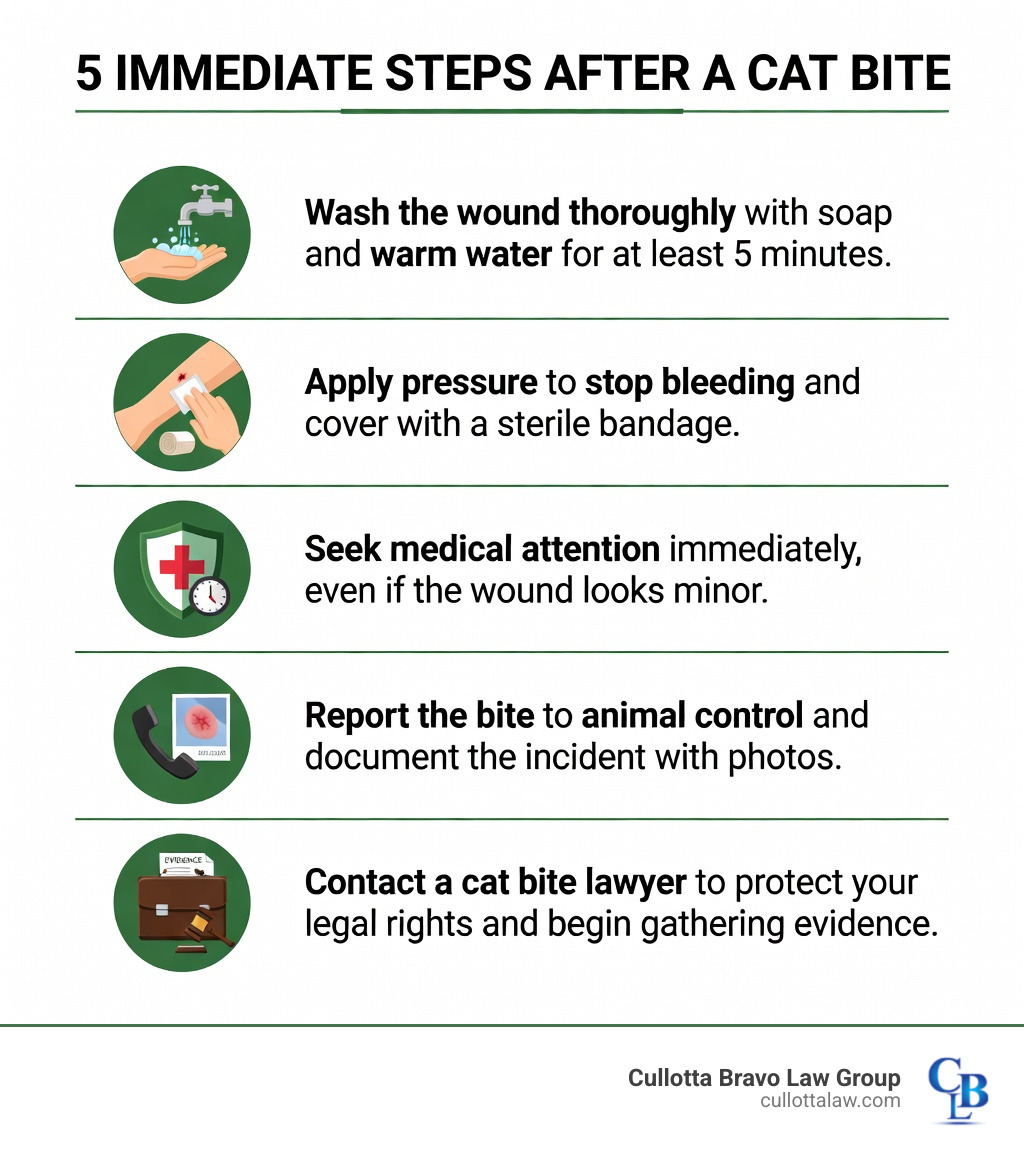
Immediate Steps to Take After a Feline Attack
Your health is the priority, but the steps you take in the first 24 hours will also dictate the success of your legal claim.
- Wound Care: Immediately wash the area with soap and warm water. If it’s bleeding, apply pressure.
- Seek Medical Attention: Go to an urgent care or ER. Tell the doctor it was a cat bite so they can start the correct antibiotics (like Augmentin) immediately.
- Report the Incident: Contact animal control in Aurora, Chicago, or Naperville. This creates an official record of the attack.
- Identify the Owner: Get the contact information of the person responsible for the cat.
- Take Photos: Document the wound, your bloody clothes, and the location where it happened.
That Illinois has a two-year statute of limitations for personal injury claims. If you wait too long, you lose your right to sue. You can find more information about dog and animal bite lawyers here to help you stay on track.
Gathering Evidence for Your Cat Bite Lawyer
To build a “bulletproof” case, we need documentation. This includes:
- Veterinary Records: These can show if the cat had a history of aggression or if it was up to date on rabies vaccinations.
- Witness Statements: Third-party accounts are incredibly powerful in refuting claims of provocation.
- Medical Bills: Every receipt, from the hospital stay to the pharmacy.
- Incident Reports: The official report from the police or animal control.
Our team provides comprehensive personal injury representation to ensure no piece of evidence is overlooked.
Frequently Asked Questions About Cat Bite Lawsuits
What is the statute of limitations for filing a claim?
In Illinois, you generally have two years from the date of the bite to file a lawsuit. There are very few exceptions to this rule. If the victim is a minor, the clock may not start until they turn 18, but it is always best to act immediately while evidence is fresh. You can browse legal issues for more details on filing deadlines.
Can I sue if a stray or feral cat bit me?
Suing a stray cat isn’t possible, but you might be able to sue a property owner. If a business or landlord knowingly allowed a colony of aggressive feral cats to live on their premises and failed to warn guests or take safety measures, you may have a premises liability claim. For more on this, see premises liability.
What if the cat belongs to a friend or family member?
This is the most common scenario, and it’s also the one that makes people the most nervous. You aren’t “taking money” from your friend; you are filing a claim against their homeowners or renters insurance. That is exactly why they pay for insurance. Most of these cases are settled quietly out of court without ever damaging the personal relationship. In fact, suing family members for pet bites is often the only way to ensure the victim’s medical bills are paid without bankrupting the family.
Conclusion
A cat bite might seem like a small accident, but the medical and financial consequences can be massive. At Cullotta Bravo Law Group, we don’t think any animal attack is “too small” if it has caused you pain and financial stress. With over 35 years of experience in Illinois, we provide the aggressive legal representation you need to take on insurance companies and win.
We treat every client with the dignity they deserve while fighting for the multi-million dollar settlements our firm is known for. If you’ve been injured in Aurora, Chicago, Naperville, or Joliet, don’t wait for the infection to get worse or the bills to pile higher.
Contact a cat bite and scratch injury expert at Cullotta Bravo Law Group today for a free, no-obligation consultation. We’ll help you understand your rights and get you the compensation you deserve.