

From Contract to Keys: The Buyer’s Guide to Legal Support
Why Knowing What a Real Estate Attorney Does for a Buyer Could Save You Thousands
What does a real estate attorney do for a buyer is one of the most important questions you can ask before signing anything on a home purchase. Here’s the short answer:
| Service | What It Means for You |
|---|---|
| Contract review | Catches unfair terms before you’re locked in |
| Title search | Confirms the seller actually owns what they’re selling |
| Title insurance | Protects you from hidden claims on the property |
| Closing representation | Ensures documents are accurate and funds transfer correctly |
| Negotiation support | Advocates for your interests at every stage |
| Dispute resolution | Handles unexpected problems like liens or boundary issues |
Buying a home is likely the biggest financial decision of your life. And yet, most buyers focus almost entirely on price, location, and mortgage rates — while the legal side of the transaction quietly carries most of the real risk.
A missed lien. A flawed title. A purchase contract with terms that favor the seller. Any one of these can cost you far more than an attorney ever would.
In some states, having a real estate attorney at closing is required by law. In others, it’s optional — but that doesn’t mean it’s a good idea to skip it.
I’m Peter Cullotta, founding partner of Cullotta Bravo Law Group, with over 35 years of experience protecting individuals’ legal rights throughout the Chicagoland area — including in real estate matters where understanding what does a real estate attorney do for a buyer can mean the difference between a smooth closing and a costly legal battle. Whether you’re a first-time buyer or navigating a complex transaction, the sections below will walk you through exactly what legal protection looks like at every step of the process.
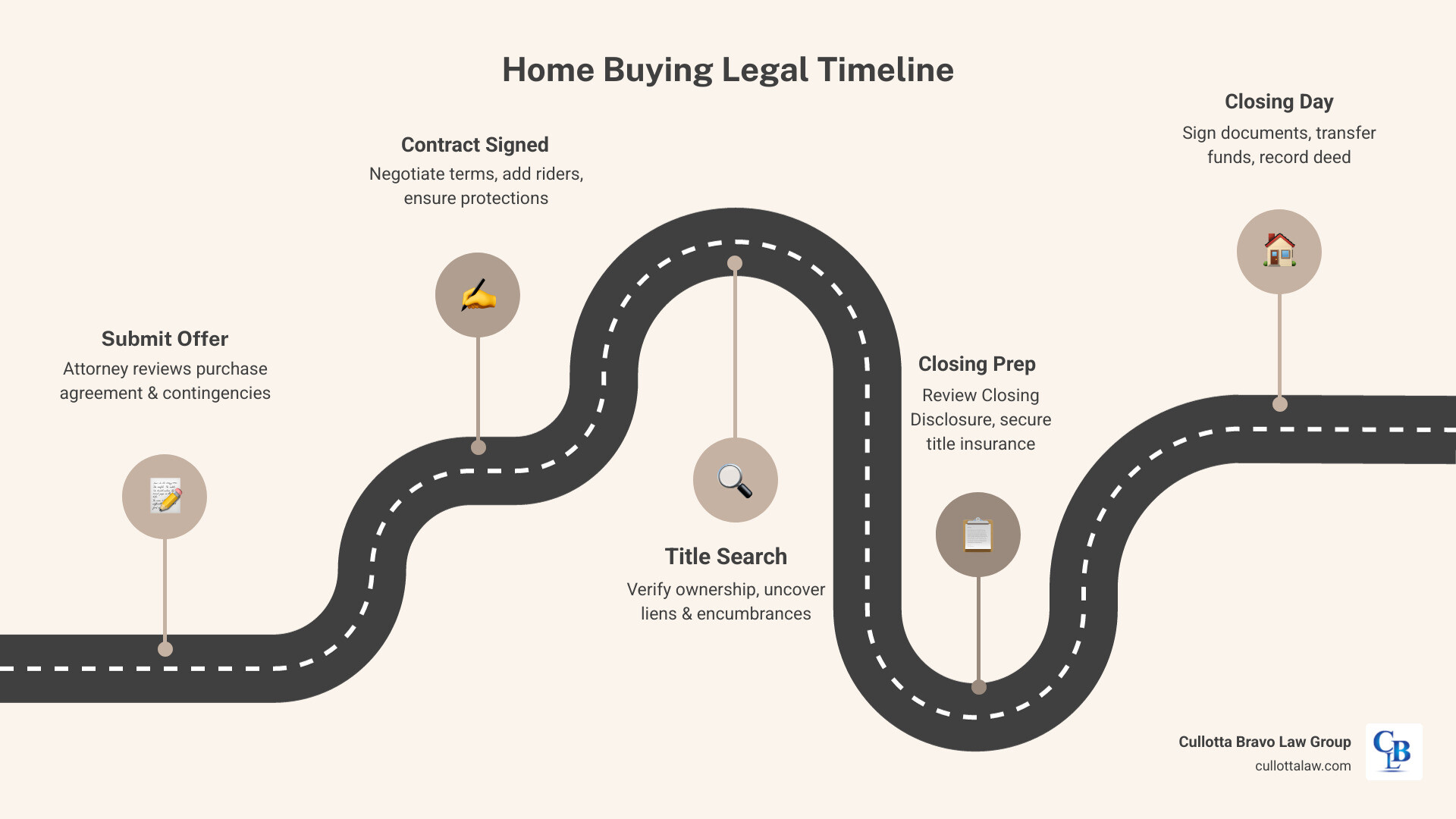
What Does a Real Estate Attorney Do for a Buyer?

When people ask us, “what does a real estate attorney do for a buyer?” they often imagine someone just sitting at a big mahogany table during the final hour of the deal. While that is part of it, our role begins much earlier. A real estate attorney specializes in the legalities of property law, ensuring that every document—from the initial offer to the final deed—is legally sound and protects your financial interests.
Essentially, we act as your legal shield. We prepare and review documents like mortgage agreements, insurance policies, and title transfers to ensure nothing is omitted or problematic. Because property laws are governed by state and local statutes, having an expert who understands the specific nuances of Illinois law is vital. We translate “legalese” into plain English so you actually know what you are signing. For more details on how we handle these cases, you can explore our Real Estate services or learn more about the general responsibilities of real estate attorneys.
How an Attorney Protects You: What Does a Real Estate Attorney Do for a Buyer During Contract Review?
The real estate contract is the blueprint for your entire transaction. Once you sign it, you are legally bound to its terms. This is where we do some of our most critical work.
Standardized forms used by real estate agents are helpful, but they don’t always cover unique circumstances. We look for:
- Contingencies: Ensuring you can walk away if the inspection reveals a crumbling foundation or if your financing falls through.
- Rider Clauses: Adding specific protections, such as requiring the seller to clear out an old shed or fix a leaky faucet before closing.
- Deadlines: Monitoring the “Attorney Review” period—which typically lasts three to seven days in Illinois—to make necessary modifications to the contract.
- Legal Jargon: Explaining terms like “as-is” or “liquidated damages” so you aren’t caught off guard by hidden liabilities.
We don’t just read the contract; we negotiate it. If the seller’s attorney inserts a clause that puts you at a disadvantage, we push back to ensure the deal remains fair.
Managing Title Searches and Insurance
You wouldn’t buy a car if you weren’t sure the seller actually owned it, right? Property is no different. A “title” is the legal right to ownership, and a title search is a deep dive into public records to ensure that “chain of title” is unbroken.
We investigate:
- Liens: Unpaid property taxes, contractor bills, or child support judgments that “stick” to the house.
- Encumbrances: Easements that might allow a utility company to dig up your backyard or a neighbor to use your driveway.
- Boundary Disputes: Ensuring the fence you see is actually on the property line.
Once the search is clear, we help you secure title insurance. This policy protects you from future claims that didn’t show up in the initial search. If a long-lost heir shows up three years from now claiming they own half your kitchen, your title insurance is what keeps you from losing your shirt.
When and Where is a Real Estate Attorney Required?
The necessity of a lawyer often depends on where you are standing. In the United States, there is a divide between “attorney states” and “escrow states.”
In many states, the law considers the closing process to be the “practice of law,” meaning only a licensed attorney can oversee it. Even if you are using a national lender, they may require an attorney to be present to protect their own investment.
| Feature | Attorney-Mandated States | Escrow/Title States |
|---|---|---|
| Who conducts closing? | Licensed Attorney | Escrow Officer/Title Agent |
| Legal Advice? | Provided to the client | Not permitted (neutral third party) |
| Document Drafting? | Handled by lawyers | Often use standardized forms |
| Primary Focus? | Legal protection & advocacy | Process efficiency & neutrality |
Mandatory States for Closing and Title Certification
Research shows that at least 8 states legally require a real estate attorney to be present during closing: Connecticut, Delaware, Georgia, Massachusetts, New York, North Carolina, South Carolina, and West Virginia.
Additionally, 7 states (Alabama, Louisiana, Mississippi, North Dakota, Oklahoma, South Dakota, and Wyoming) require an attorney to certify the title. While Illinois is not strictly a “mandatory” state by statute, it is a “customary” attorney state. In the Chicago, Aurora, and Naperville areas, it is standard practice for both the buyer and seller to have legal representation. In fact, many local lenders will not proceed without an attorney’s involvement in the closing process.
Benefits of Hiring an Attorney Even if Not Required
Even if you aren’t in a mandatory state, going solo is a massive risk. Think of it like performing surgery on yourself—just because it’s technically allowed doesn’t mean it’s a good idea.
The benefits include:
- Risk Mitigation: We catch errors in the HUD-1 or Closing Disclosure that could cost you thousands in miscalculated taxes or fees.
- Dispute Prevention: By ensuring all disclosures are properly signed, we prevent future lawsuits over “hidden” defects.
- Legal Advocacy: A real estate agent is great at finding a home, but they cannot give you legal advice. We are the only ones in the room with a fiduciary duty to protect your legal rights.
- Peace of Mind: Knowing that a professional with 35 years of experience has vetted every signature allows you to actually enjoy your new home.
Navigating the Closing Process and Complex Transactions
Closing day is the “finish line,” but it involves a mountain of paperwork. What does a real estate attorney do for a buyer at this stage? We act as the coordinator between you, the seller, the lender, and the title company.
During the closing meeting, we:
- Review the Closing Disclosure: We compare it to your initial Loan Estimate to ensure the lender isn’t sneaking in “junk fees.”
- Explain Every Signature: You will sign your name dozens of times. We explain exactly what each document—like the Note and the Mortgage—means for your future.
- Oversee Fund Transfers: We ensure your down payment and the lender’s funds go exactly where they are supposed to.
- Record the Deed: Once the ink is dry, we ensure the deed is properly recorded with the county (like Kane or Cook County) so the world knows you are the official owner.
Handling Short Sales, Foreclosures, and Unusual Deals
Standard home buys are complicated enough, but some deals are downright treacherous. If you are looking at a short sale (where the home is sold for less than the mortgage balance) or a foreclosure, the legal hurdles multiply.
In these cases, we deal with:
- Underwater Mortgages: Negotiating with banks to release liens.
- Probate Issues: If the owner has passed away, we ensure the heirs have the legal right to sell.
- Zoning and Land Use: If you plan to run a business out of the home or build an addition, we check local ordinances in Joliet or Naperville to see if it’s actually allowed.
- Investment Properties: We advise on tax implications and entity structures (like LLCs) for buyers looking to build a portfolio. For more on these complexities, check out Rocket Mortgage’s guide.
Real Estate Attorney vs. Real Estate Agent: Knowing the Difference
It is a common misconception that your agent can handle the legal stuff. While agents are experts in market trends, pricing, and neighborhood vibes, they are legally prohibited from the “unauthorized practice of law.”
- Real Estate Agent: Helps you find the house, negotiates the price based on market value, and earns a commission (usually a percentage of the sale).
- Real Estate Attorney: Reviews the legal validity of the deal, provides legal advice, handles title issues, and usually charges a flat fee or hourly rate.
Think of it this way: the agent gets you into the house; the attorney makes sure you get to keep it.
Understanding Costs and Choosing the Right Professional
One of the most common questions we hear is: “How much is this going to cost me?”
Real estate attorney fees are often more affordable than people realize, especially when compared to the cost of a legal mistake.
- Hourly Rates: Typically range from $150 to $500 per hour, depending on the complexity of the deal.
- Flat Fees: For standard residential closings, many attorneys (including us) offer a flat fee, often ranging from $500 to $1,500.
These costs are usually included in your “closing costs” and are paid at the end of the transaction. When you consider that we might save you $5,000 in unnecessary repairs or catch a $2,000 math error on your settlement sheet, the service often pays for itself.
How to Find a Qualified Professional: What Does a Real Estate Attorney Do for a Buyer in Your Area?
Don’t just pick the first name you see on a billboard. You want someone who knows the local landscape of Aurora, Chicago, and the surrounding suburbs.
- Ask for Referrals: Your REALTOR® or lender likely has a list of attorneys they trust.
- Check the Bar Association: Contact the Illinois State Bar Association for a directory of licensed professionals.
- Look for Specialization: You want a residential real estate specialist, not a “jack of all trades” who mostly does traffic tickets.
- Read Online Reviews: Look for mentions of “responsiveness” and “thoroughness.”
Frequently Asked Questions about Buyer Legal Support
Can a buyer and seller use the same attorney?
Generally, no. This is a major conflict of interest. The buyer wants the lowest price and the most repairs; the seller wants the highest price and zero repairs. An attorney cannot diligently represent both parties under American Bar Association (ABA) rules. While you might save a few dollars in fees, you lose the most important thing: an advocate who is 100% on your side.
Is a real estate attorney fee tax-deductible?
For a primary residence, attorney fees are generally not tax-deductible in the year you pay them. Instead, they are added to the “basis” of your home, which can reduce your capital gains tax when you eventually sell the property. However, if you are buying a rental property, the fees may be deductible as a business expense. Always consult with a tax professional regarding your specific situation.
What happens if I don’t hire an attorney in a non-mandatory state?
You are essentially flying without a parachute. Without an attorney, you might miss a “cloud” on the title that makes it impossible to sell the house later. You might sign a contract that allows the seller to keep your earnest money even if your loan is denied. In short, you take on 100% of the legal and financial risk yourself.
Conclusion
At Cullotta Bravo Law Group, we believe that every homebuyer deserves to walk away from the closing table with confidence, not questions. With over 35 years of experience in Aurora, IL, and across the Chicagoland area, we’ve seen every trick in the book. Our team provides aggressive legal representation while treating every client with the dignity they deserve. We aren’t just here to push paper; we are here to protect your future.
Whether you are in Naperville, Joliet, or downtown Chicago, don’t leave your biggest investment to chance. If you’re ready to move from “Contract to Keys” with the best legal protection available, contact our Real Estate team today. We’ve secured multi-million dollar settlements for our clients in injury cases, and we bring that same level of tenacity to every real estate closing. Let us handle the legal heavy lifting so you can focus on making your new house a home.