

Why Understanding the Nursing Home Lawsuit Process Matters
A nursing home lawsuit is a legal action taken when a resident is harmed by abuse, neglect, or inadequate care. Here’s what you need to know:
Key Steps in a Nursing Home Lawsuit:
- Investigation – Gathering medical records and evidence.
- Filing the Complaint – Formally starting the case in court.
- Findy Phase – Exchanging information and taking depositions.
- Settlement Negotiations – Attempting to resolve the case without a trial.
- Trial – Presenting the case to a judge or jury.
Who Can File: The resident, family, legal guardians, or estate representatives.
Time Limits: In Illinois, you typically have two years from when the harm was finded.
Potential Compensation: Medical expenses, pain and suffering, and punitive damages.
Placing a loved one in a nursing home involves immense trust, which is unfortunately sometimes broken. The World Health Organization estimates that two out of every three residents in long-term care facilities experience some form of abuse—a staggering reality.
The legal process can feel overwhelming amidst emotional trauma. Understanding your rights and the steps involved helps you make informed decisions to protect your family and hold negligent facilities accountable.
I’m Peter Cullotta, founding partner at Cullotta Bravo Law Group. With over 35 years of experience in Chicagoland personal injury cases, I’ve dedicated my career to fighting for victims of nursing home abuse, securing millions for our clients. This guide explains the lawsuit process, from recognizing abuse to understanding your legal options.
Recognizing Nursing Home Abuse and Neglect in Illinois
Placing a loved one in a nursing home means trusting them with their life. Legally, this is called the duty of care. Illinois nursing homes must provide a safe environment and meet care standards to protect residents. Failing this duty is a breach of duty. If that failure causes harm, it’s grounds for a nursing home lawsuit.
It’s crucial to understand the difference between abuse and neglect. Abuse is intentional harm, while neglect is the failure to provide necessary care, like preventing bedsores or giving medications on time. Both are serious and can be deadly. The World Health Organization reports that two out of every three nursing home residents experience mistreatment.
Spotting signs is difficult, as many victims can’t or won’t speak up due to fear or confusion. Your vigilance is their lifeline. We’ve put together detailed information about The First Subtle Signs of Nursing Home Abuse or Neglect to help you. You can also find a comprehensive overview of elder abuse for broader context.
Common Signs of Abuse
Abuse is often designed to control or punish residents when staff think no one is watching.
Physical abuse leaves visible evidence. Look for unexplained bruises, cuts, fractures, welts, or sprains. Repeated falls, flinching around certain staff, or signs of restraint are also red flags.
Emotional abuse can cause a social family member to become withdrawn, depressed, or fearful. Watch for sudden behavioral shifts, anxiety around specific staff, or expressions of worthlessness.
Financial exploitation targets a resident’s assets. Watch for missing valuables, unexplained bank account changes, or sudden modifications to wills. New credit cards or unusual withdrawals are also warning signs.
Sexual abuse is a horrific violation. Signs include unexplained STIs, bruising in intimate areas, torn or bloody clothing, or fear around certain individuals.
Common Signs of Neglect
Neglect happens when facilities prioritize profits over people, leading to understaffing and indifference.
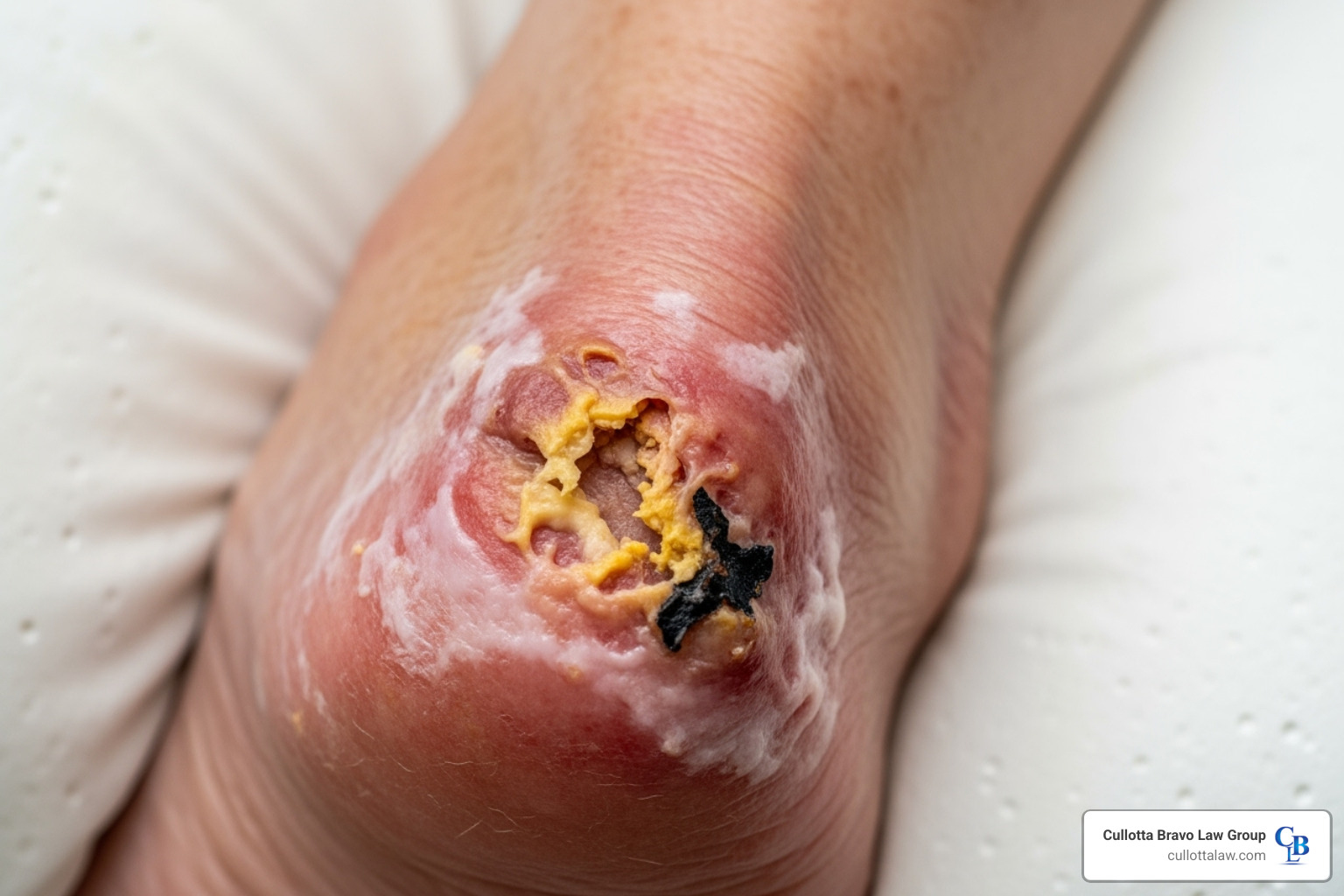
Bedsores (pressure ulcers) are a common and preventable sign of neglect. These painful wounds develop when residents aren’t repositioned regularly. They can progress to deep, infected wounds, potentially causing fatal sepsis. Learn more about Pressure Sores and Nursing Home Negligence in Aurora, IL.
Malnutrition and dehydration signs include unexplained weight loss, dry skin, sunken eyes, and confusion. This often happens when staff fail to help residents eat and drink.
Poor personal hygiene, such as infrequent bathing, dirty clothes, or strong odors, indicates a failure to provide basic, dignified care.
Frequent falls are a red flag. A pattern of falls often points to inadequate supervision, poor fall prevention, or medication issues. We have extensive information on Nursing Home Injury Falls.
Medication errors and overmedication include wrong dosages, missed medications, or incorrect drugs. A disturbing practice is chemical restraint, using antipsychotics to sedate residents. An estimated 179,000 residents receive these drugs without proper diagnosis weekly, increasing their death risk by 60-70%.
How an Illinois Nursing Home Lawsuit Works

When a loved one suffers from nursing home abuse, it’s a profound betrayal. Your family has strong legal rights. A nursing home lawsuit holds negligent facilities accountable, seeks justice, and helps prevent future harm. The legal journey can feel daunting, but we’re here to guide you through every step. We know the ins and outs of civil cases and are ready to help. For more details, visit our page on Nursing Home Abuse.
Who Can File a Lawsuit?
Several parties can file a nursing home lawsuit in Illinois to ensure a resident’s voice is heard:
- The Resident: If mentally competent, the resident can file a personal injury lawsuit.
- Legal Guardian or Power of Attorney: A court-appointed legal guardian or someone with Power of Attorney can file if the resident cannot make legal decisions.
- Family Members: Close family members (spouse, children, parents) can often file on behalf of an injured resident, especially if they have legal guardianship or power of attorney.
- Estate Representative: If abuse or neglect causes death, an estate representative (often a family member) can file a wrongful death lawsuit to seek justice for the family.
The Statute of Limitations for a Nursing Home Lawsuit
Time is critical. Illinois has a strict deadline, the “statute of limitations,” for filing nursing home lawsuits. Acting quickly is crucial!
- The Two-Year Rule: In Illinois, you generally have two years from the date of injury to file a personal injury lawsuit, or two years from the date of death for a wrongful death claim.
- The Findy Rule: The “findy rule” can sometimes extend this deadline, starting the clock from when the abuse was or should have been finded. This rule is complex and requires expert legal advice.
- Why Acting Quickly Matters: Acting fast is always best. Evidence disappears and memories fade. Starting the investigation sooner builds a stronger case and helps secure the justice your family deserves.
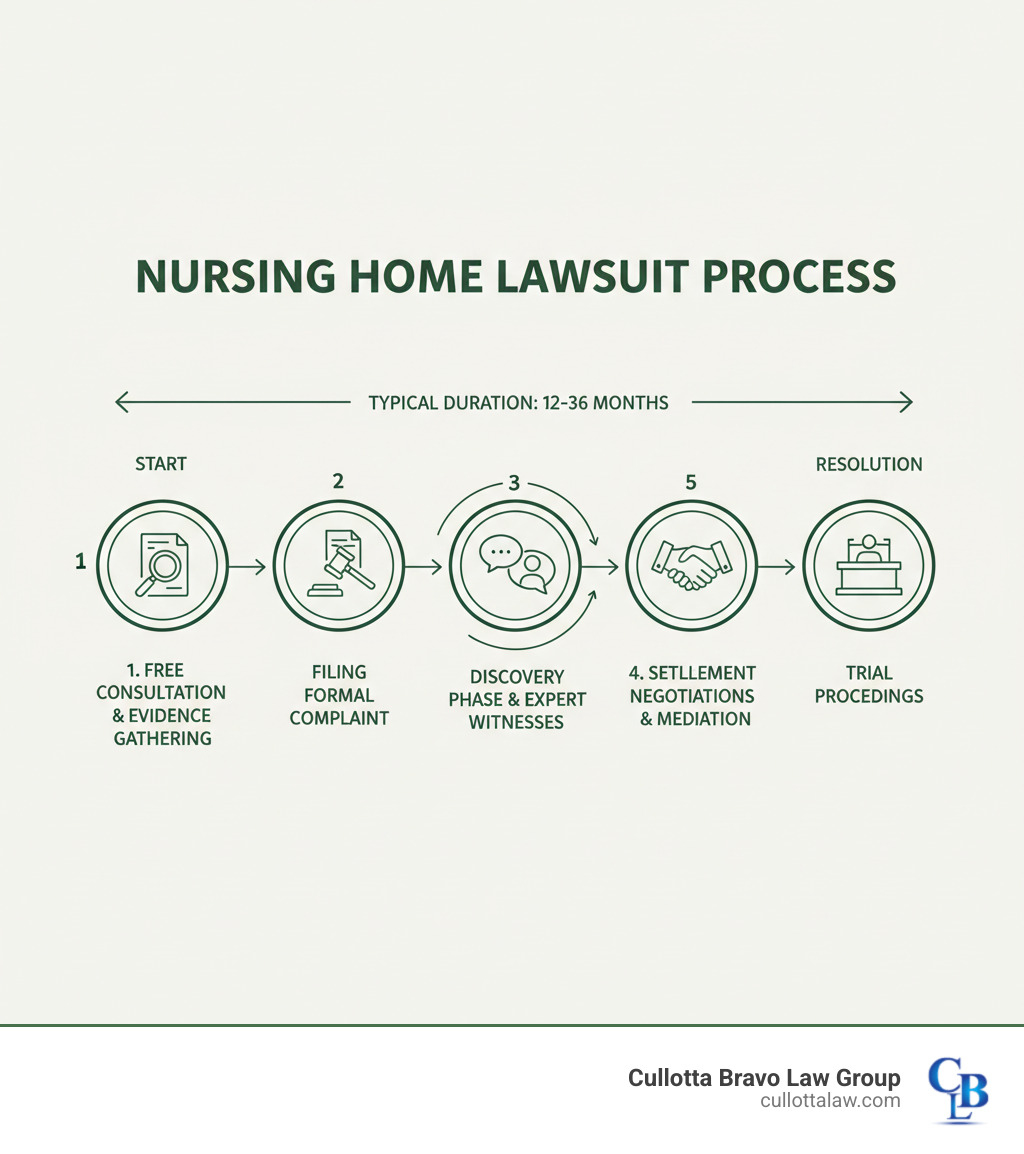
The Legal Process Step-by-Step
Navigating a nursing home lawsuit involves several clear stages. Our team is here to guide you through each one.
- Investigation and Case Preparation: This vital first step (3-6 months) involves gathering all evidence. We review medical records, nursing logs, and IDPH reports. We also interview witnesses, examine photos or videos, and consult medical experts to prove the standard of care was breached.
- Filing the Complaint: With a strong case, we file a “Complaint” in court. This document outlines the claims against the nursing home and the damages sought. This step takes a few weeks.
- Findy Phase: During this 6-12 month phase, both sides exchange information through:
- Interrogatories: Written questions that must be answered under oath.
- Requests for Production: Demands for important documents like internal policies.
- Depositions: Formal, sworn interviews with witnesses and parties.
- Settlement Negotiations and Mediation: During and after findy, both sides negotiate a settlement. Mediation, often required in Illinois, uses a neutral third party to help reach an agreement and avoid trial. Many cases resolve at this stage, which can take several weeks or months.
- Trial Verdict: If a fair settlement isn’t reached, the case goes to trial. Both sides present evidence and arguments to a judge or jury, who then deliver a verdict on fault and compensation. A trial can add 6-12+ months to the timeline.
Common Injuries and Compensation You Can Seek

Harm in a nursing home causes more than physical pain; it’s a betrayal of trust. A nursing home lawsuit provides financial compensation, holds facilities accountable, and helps prevent future harm. Financial recovery can be substantial because injuries often require extensive medical care and reduce quality of life. Settlements vary, but often reach hundreds of thousands of dollars. Severe cases can result in million-dollar verdicts.
Every case is unique, but our commitment is to seek justice and ensure negligent facilities face consequences for their actions.
Injuries That Often Lead to Lawsuits
Some injuries are particularly common in nursing home lawsuits because they are often preventable.
Falls and fractures are common and often result from poor supervision, unsafe facilities, or medication errors. Hip fractures are particularly devastating and can lead to permanent disability or death.
Severe bedsores develop when residents aren’t moved enough, progressing from irritated skin to deep, infected wounds. Advanced bedsores can cause life-threatening sepsis, which you can learn more about in our guide to Nursing Home Sepsis.
Malnutrition and dehydration are just as devastating as physical injuries. Failure to provide adequate food and water can lead to organ failure and other irreversible health problems.
Choking incidents often happen when staff fail to supervise meals or assist residents with swallowing difficulties. These can cause brain damage or death if not handled immediately.
Traumatic brain injuries often result from falls or abuse. Even a minor head bump can cause serious complications for the elderly. A concussion can lead to permanent cognitive changes or worsen dementia. Our page on Nursing Home Concussion provides more detail.
Wrongful death occurs when abuse or neglect leads to a resident’s death, a heartbreaking violation of the family’s trust.
Types of Compensation (Damages)
In a nursing home lawsuit, several types of compensation are available.
Economic damages cover financial losses. Medical expenses are the largest part, including hospital stays, surgery, and ongoing care. Funeral and burial costs are also recoverable in wrongful death cases.
Non-economic damages address the non-financial, human cost of suffering. Pain and suffering compensates for the physical agony and distress the resident endured. Emotional distress damages cover psychological trauma like anxiety, depression, and fear. Loss of a normal life compensates for the inability to enjoy previous activities and family life.
Punitive damages may be awarded in cases of extreme negligence. They are intended to punish the facility and deter future misconduct, sending a message to prioritize safety over profits.
Taking Action: Reporting Neglect and Preventing Future Harm

Finding a loved one is suffering in a trusted facility is heartbreaking. Taking action is a powerful step toward justice for them and protection for others. We believe in protecting family members in Illinois nursing homes through vigilance and knowing what steps to take. Your loved one has rights, and you are their most important advocate.
How to Prevent Negligence
Your consistent presence and advocacy can make a world of difference.
- Visit often and at varied times, including evenings and weekends. This provides a fuller picture of daily operations and care.
- Ask questions about care, medications, diet, and any changes. Persistently seek clear answers and regularly review care plans, speaking up if something seems wrong.
- Document everything. Keep a log of visits, observations, and conversations. Take photos of any concerns like bruises or unsanitary conditions, as this can be invaluable evidence.
- Build positive relationships with staff to improve communication and address issues early. Be an active advocate to show the facility that your loved one is being watched over.
Where to Report Abuse in Illinois
If you suspect abuse or neglect, report it immediately. Knowing which Illinois agency to contact is crucial for any investigation or potential nursing home lawsuit.
- Facility Administration: First, speak with the director of nursing or administrator. Document the conversation and their response. This creates a record if the issue isn’t resolved internally.
- Illinois Department of Public Health (IDPH) Hotline: For urgent matters, call the 24/7 Long-Term Care Complaint Hotline at 1-800-252-4343. The Illinois Department of Public Health (IDPH) investigates claims and can fine facilities or revoke licenses.
- Long-Term Care Ombudsman Program: An ombudsman is an independent advocate for residents. The Long-Term Care Ombudsman Program investigates complaints, mediates disputes, and offers confidential support to ensure proper care.
- Adult Protective Services (APS): Contact Adult Protective Services (APS) at 1-866-800-1409 for any suspected elder abuse, neglect, or financial exploitation.
- Local Law Enforcement: If you believe a crime like assault, sexual abuse, or theft has occurred, contact your local law enforcement agency immediately to launch a criminal investigation.
Frequently Asked Questions about Nursing Home Lawsuits
We understand that thinking about a nursing home lawsuit brings up many questions. Here, we’ve gathered answers to some of the most common questions families ask.
How much does it cost to hire a lawyer for a nursing home lawsuit?
We handle all nursing home lawsuits on a contingency fee basis, meaning you pay no upfront or hourly fees. Our fee is a percentage of the compensation we recover for you through a settlement or trial verdict. If we don’t win your case, you owe us nothing for our legal services.
We also offer a free, no-obligation consultation to discuss your case and explore your legal options without financial risk. This ensures everyone can afford to seek justice.
How long does a nursing home lawsuit take to resolve?
The timeline for a nursing home lawsuit varies depending on case complexity. A typical range is 12 to 36 months. Factors influencing the timeline include the clarity of evidence, the nursing home’s cooperation, and court schedules. Cases with clear evidence may resolve faster (6-12 months), while complex cases or those that go to trial can take longer (2-3 years).
Our goal is to resolve your case efficiently while securing the full compensation your loved one deserves.
Can we still sue if our loved one has passed away?
Yes. If nursing home abuse or neglect caused or contributed to your loved one’s death, you can file a lawsuit. These are typically wrongful death claims filed by the estate or surviving family members (like a spouse or children in Illinois). The goal is to recover damages for losses, including funeral and burial expenses, medical bills, and the family’s loss of companionship and emotional suffering.
A “survival action” may also be filed to compensate for the pain and suffering the resident endured before their death. These actions allow families to seek justice and financial compensation for their profound loss.
Conclusion
When a nursing home breaks your trust through abuse or neglect, the pain is immense. Having guided hundreds of families through this heartbreak, I want you to know you are not alone.
A nursing home lawsuit secures compensation, holds facilities accountable, and prevents future tragedies. Each victory sends a message that elder abuse will not be tolerated in Illinois, creating justice for all.
For over 35 years, Cullotta Bravo Law Group has combined aggressive representation with dignified client care. Our record includes multi-million dollar settlements for families devastated by nursing home abuse across Illinois, including Aurora, Chicago, Naperville, and Joliet.
The legal process can seem overwhelming, but you don’t have to face it alone. We handle the complex legal work so you can focus on your family.
Your loved one deserves justice. Your family deserves answers. And negligent facilities must be held accountable.
Contact our experienced Naperville personal injury lawyers for a free consultation today. There’s no cost to you unless we win, and we’re ready to fight for the justice your loved one deserves.