

Personal Injury Claim Help: Maximize Justice 2025
Why Personal Injury Claim Help Matters After an Accident
Personal injury claim help is professional legal assistance for individuals injured by someone else’s negligence. It guides you through seeking compensation for medical bills, lost wages, and pain and suffering.
Key Steps for Your Claim:
- Seek immediate medical attention to document the link between the accident and your injuries.
- Preserve evidence like photos, witness information, and police reports.
- Consult an experienced attorney; most offer free consultations and work on a no-win, no-fee basis.
- Avoid speaking with insurance adjusters or accepting quick offers without legal advice.
- Document everything, including medical records, receipts, and a journal of your symptoms.
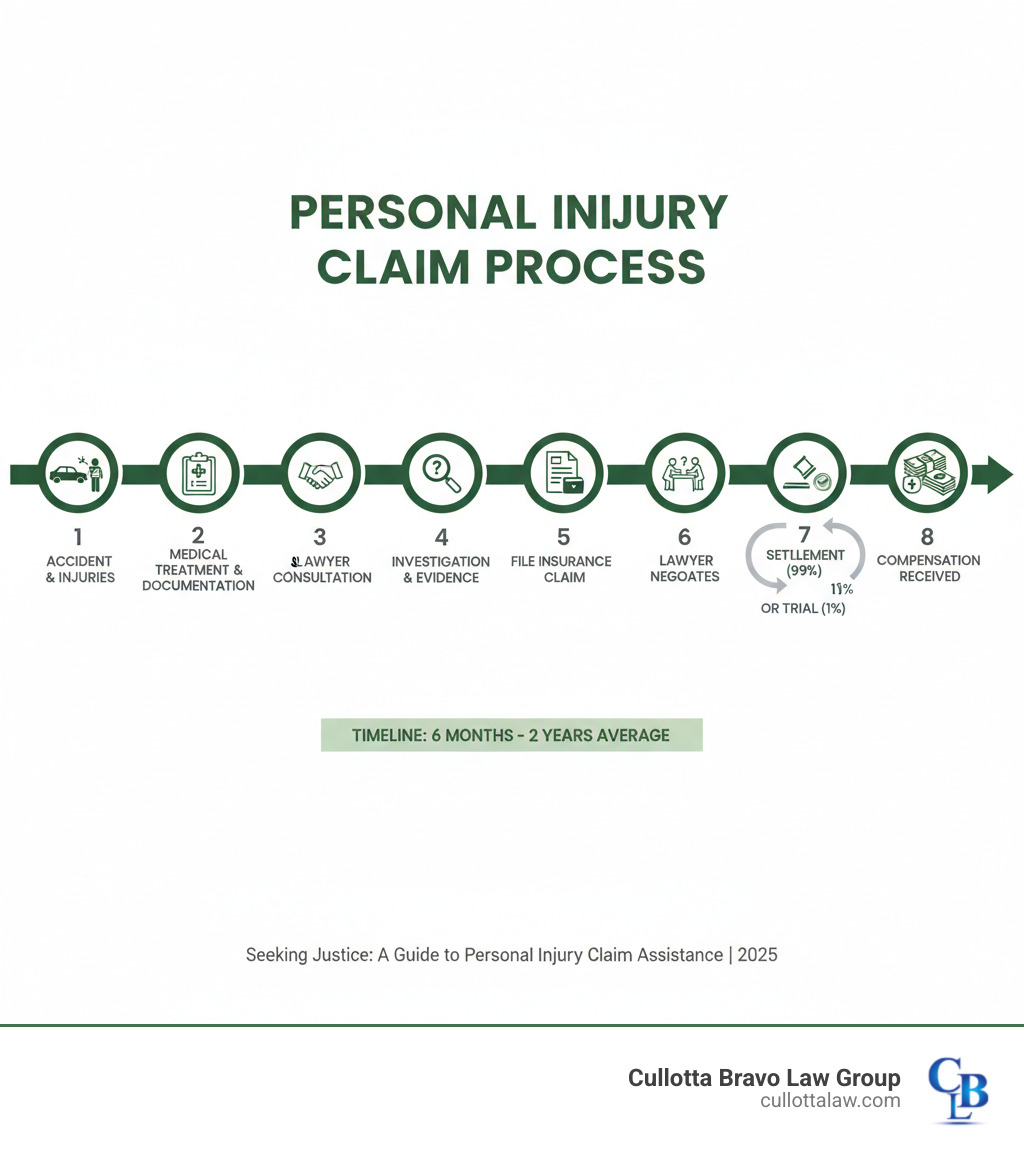
Average Timeline: Most claims settle in 6 months to 2 years, with 99% resolving before trial.
When you’re injured, you face physical pain, mounting bills, and pressure from insurance adjusters whose goal is to minimize your payout. The legal system is complex, but you don’t have to steer it alone. With the right guidance, you can secure fair compensation for all your damages—present and future.
As Peter Cullotta, I’ve spent over 35 years helping injured individuals in the Chicagoland area secure the compensation they deserve. My experience means you’ll work directly with me, receiving personal attention as we pursue justice together.
Personal injury claim help terms you need:
Understanding Your Personal Injury Claim
When someone else’s carelessness injures your body, mind, or emotions, you have a personal injury claim. These situations arise because someone had a responsibility to act with reasonable care—a duty of care—and failed. This failure is called negligence, and it’s the foundation of your right to seek compensation.
Personal injury claim help exists to hold negligent parties accountable and get you the resources you need to heal. It’s about fairness and ensuring you aren’t left paying for another’s mistake.

What Incidents Are Covered?
Personal injury law covers a wide range of incidents where carelessness causes harm.
- Car accidents: Collisions involving cars, trucks, motorcycles, pedestrians, and cyclists are the most common claims.
- Slip and fall accidents: Property owners have a duty to keep their premises safe from hazards like spills or broken steps.
- Workplace injuries: While typically covered by workers’ comp, a personal injury claim may be possible if a third party (not your employer) was negligent.
- Nursing home abuse and neglect: Facilities can be held liable for failing to provide proper care, leading to falls, malnutrition, or abuse.
- Medical malpractice: Harm caused by a healthcare provider’s substandard care, such as a surgical error or misdiagnosis.
- Defective products: Manufacturers and sellers can be liable for injuries caused by poorly designed or flawed products.
- Dog bites: Illinois law holds dog owners strictly liable for injuries their animals cause.
- Wrongful death: Families can seek justice when a loved one’s death is caused by someone’s negligence.
- Assault and sexual assault: Victims can file civil claims against perpetrators to recover damages for their suffering.
Establishing Liability and Fault
To get compensation, you must prove the other party was negligent. This requires establishing four key elements:
- Duty of Care: The other party had a legal obligation to act reasonably and avoid harming you.
- Breach of Duty: They failed to meet that obligation through careless or reckless actions.
- Causation: Their breach directly caused your injuries.
- Damages: You suffered real, measurable losses as a result.
Illinois uses a comparative fault system. If you are found partially at fault for the accident, your compensation is reduced by your percentage of fault. For example, if you are 20% at fault, your award is reduced by 20%. Insurance companies often try to shift blame to victims to pay less, which is why experienced personal injury claim help is crucial to protect your rights and maximize your recovery.
First Steps: Building a Strong Foundation for Your Claim
The actions you take in the hours and days after an accident are critical to the success of your personal injury claim. Building a strong foundation from the start can make all the difference.

The Critical Role of Medical Attention and Documentation
Get medical attention immediately, even if you feel fine. Many serious injuries, like whiplash or internal bleeding, have delayed symptoms. An immediate medical exam creates a vital record linking your injuries directly to the accident, which is crucial evidence for your claim. Insurance companies will use any delay in treatment to argue your injuries aren’t related to the accident.
Your medical records are the backbone of your case. They document your injuries, treatment plan, and potential future needs, such as surgery or rehabilitation. Follow your doctor’s advice completely—attend all appointments and complete all prescribed treatments. Gaps in care give insurers an excuse to devalue your claim. It’s also helpful to keep a personal journal detailing your daily pain levels and limitations.
How to Gather and Preserve Crucial Evidence
While seeking medical care, you must also preserve evidence before it disappears. If you are able, use your smartphone at the scene.
- Take photos and videos: Document everything—vehicle damage, skid marks, road conditions, and the specific hazard that caused a slip and fall. Photograph your visible injuries as they develop over the following days.
- Get a police report: For motor vehicle accidents in Illinois, a police report is required for accidents involving injury, death, or over $1,500 in property damage. This official report is a key piece of evidence.
- Gather witness information: Get names and phone numbers from anyone who saw what happened. Impartial testimony can be invaluable.
- Keep all records: Save every medical bill, receipt, and pay stub showing lost work hours. This documentation proves the financial cost of your accident.
- Stay off social media: Insurance investigators will scrutinize your profiles for any photos or posts they can use to argue you aren’t as injured as you claim. It’s best to avoid posting until your case is resolved.
An attorney can help by sending preservation letters to secure surveillance footage and gathering official records. The sooner you get personal injury claim help, the stronger your case will be.
Navigating the Claims Process: From Filing to Resolution
Once you’ve taken the initial steps, the formal claims process begins. With experienced personal injury claim help, you can steer this journey with confidence.

The process generally follows these steps:
- Investigation: We gather all evidence, including medical records, police reports, and witness statements.
- Demand Letter: Once your medical condition has stabilized, we send a comprehensive demand to the insurance company outlining liability and detailing your damages.
- Negotiation: We engage in back-and-forth negotiations with the insurer to counter lowball offers and fight for a fair settlement.
- Filing a Lawsuit: If negotiations stall, filing a lawsuit moves the case into formal litigation. This often prompts more serious settlement talks.
- Findy: Both sides exchange information through depositions (sworn testimony) and written questions.
- Mediation/Arbitration: Many cases are resolved through these alternative dispute resolution methods, which are less formal than a trial.
- Trial: If a fair settlement cannot be reached, we are fully prepared to present your case to a judge and jury.
Throughout this process, you must be mindful of the statute of limitations. In Illinois, you generally have two years from the date of injury to file a lawsuit. Missing this deadline will bar you from recovering compensation.
What Compensation Can You Claim?
Compensation is divided into two main categories to cover all your losses.
Economic damages are your measurable financial losses:
- Medical Expenses: All costs for past, present, and future medical care.
- Lost Wages: Income lost due to your inability to work, including diminished future earning capacity.
- Property Damage: Costs to repair or replace your vehicle or other property.
- Out-of-Pocket Expenses: Costs for things like assistive devices or travel to appointments.
Non-economic damages compensate for intangible, personal losses:
- Pain and Suffering: For the physical pain and emotional distress you’ve endured.
- Loss of Enjoyment of Life: For the inability to participate in hobbies and activities you once loved.
- Disfigurement: For scarring or permanent alterations to your appearance.
- Loss of Consortium: For the negative impact on your relationship with your spouse.
In rare cases of extreme misconduct, punitive damages may be awarded to punish the wrongdoer.
Settling vs. Going to Court
The vast majority of personal injury claims—around 95%—settle out of court. A settlement offers a guaranteed and often faster resolution, avoiding the stress and uncertainty of a trial. However, once you accept a settlement, it’s final. You can’t seek more money later if your condition worsens.
A trial becomes necessary when the insurance company disputes liability or refuses to offer a fair settlement that covers all your current and future damages. We prepare every case for trial to give us maximum leverage during negotiations. The decision to settle or go to court is a strategic one we make together, always focused on your best interests.
Why You Need Expert Personal Injury Claim Help
After an injury, facing an insurance company alone is a battle you shouldn’t have to fight. Their adjusters and lawyers are trained to pay as little as possible. Personal injury claim help from an experienced attorney evens the odds and ensures your rights are protected.

How Lawyers Counter Insurance Company Tactics
Insurance companies use a playbook of tactics to devalue your claim. We know how to counter them.
- The Quick Settlement Trap: They offer a fast, lowball settlement before you know the full extent of your injuries. We calculate the true value of your claim, including future costs, to ensure you don’t settle for less.
- The Blame Game: They try to shift fault to you to reduce their payout under Illinois’s comparative fault law. We use evidence to establish clear liability.
- Downplaying Your Injuries: They’ll argue your pain isn’t serious or is from a pre-existing condition. We use medical records and expert testimony to prove the accident’s true impact.
- Requesting a Recorded Statement: Adjusters ask leading questions to get you to say something that undermines your claim. We handle all communications to protect you from these traps.
- Delay Tactics: They drag out the process, hoping you’ll get desperate and accept a low offer. We keep the pressure on and hold them accountable to deadlines.
- Surveillance: They may monitor your activity or social media to find anything to use against you. We advise you on how to protect your privacy.
With 35 years of experience, we’ve seen every trick in the book—and we know how to win.
Is Hiring a Personal Injury Lawyer Worth It for a Serious Injury?
For a serious, life-altering injury, the answer is an unequivocal yes. Here’s why:
- Complex Cases Demand Expertise: Catastrophic injuries involving brain damage, spinal cord injuries, or wrongful death require sophisticated legal and medical knowledge that only an experienced attorney possesses.
- Calculating Future Damages: We work with medical and financial experts to accurately project the lifetime costs of your injury, including future medical care and lost earning capacity. This ensures your settlement covers you for life.
- Leveling the Playing Field: Large insurance companies have vast resources. We match them with our own network of expert witnesses, investigators, and legal professionals to build an undeniable case on your behalf.
Serious injuries deserve serious representation. Securing a multi-million dollar settlement isn’t just about a number; it’s about securing your future and ensuring you have the resources you need to live with dignity. For a serious injury, you can’t afford not to have expert personal injury claim help.
Choosing and Working With Your Lawyer
Finding the right attorney is about finding an experienced, compassionate advocate who will fight for you. When seeking personal injury claim help, you want a lawyer who combines proven results with personal attention.

Most reputable personal injury firms, including ours, offer a free initial consultation to discuss your case and answer your questions. We also work on a contingency fee basis. This “no win, no fee” promise means you pay nothing upfront. We only get paid if we win your case, with our fee being a percentage of the compensation we recover for you. This ensures everyone has access to justice, regardless of their financial situation.
What to Know Before You Hire an Attorney
To find the best fit, ask these key questions during your consultation:
- What is your experience with cases like mine? Look for a proven track record in your specific case type, whether it’s a car accident, nursing home abuse, or workplace injury.
- What is your proposed strategy? A good lawyer will outline a clear plan for your case.
- How are fees and costs handled? Ensure you understand the contingency fee percentage and how case expenses are managed. Everything should be transparent.
- What resources does your firm have? Complex cases require access to investigators, medical experts, and other professionals.
- Who will handle my case? At our firm, Peter Cullotta works directly with every client. You deserve personal attention from a senior attorney, not just junior staff.
- How will we communicate? You should expect regular updates and clear, easy-to-understand communication.
Beyond credentials, trust your instincts. You need an attorney who makes you feel heard, respected, and confident.
Understanding the Cost of Personal Injury Claim Help
The contingency fee agreement is designed to remove financial barriers to getting legal help. You pay absolutely nothing upfront. We advance all costs required to build your case, such as filing fees, expert witness fees, and investigation costs.
We are only reimbursed for these expenses and paid our legal fee if we successfully recover money for you. If we don’t win, you owe us nothing. This arrangement means our success is directly tied to yours, motivating us to secure the maximum possible compensation for you. We provide a transparent breakdown of all costs and fees, so you always know what to expect.
Frequently Asked Questions about Personal Injury Claims
When you’re dealing with an injury, you have questions. Here are clear, honest answers to some of the most common concerns we hear from people seeking personal injury claim help.
How long does a personal injury claim take?
Every case is unique, but most personal injury claims take between six months and two years to resolve. The timeline depends on factors like:
- Injury Severity: More serious injuries require longer treatment, and we must wait until your future needs are clear before resolving the claim.
- Case Complexity: A straightforward car accident case is faster than a complex medical malpractice claim.
- The Insurance Company: If the insurer negotiates in good faith, the case moves faster. If they use delay tactics or make low offers, it will take longer.
While we aim for a fair and efficient resolution, our priority is never to rush a settlement for less than you deserve.
Can a personal injury lawyer drop my case?
Yes, but it is rare and only happens under specific ethical circumstances. A lawyer may withdraw if a client is dishonest, asks the lawyer to do something illegal or unethical, or refuses to follow legal advice. The attorney-client relationship is built on trust, and if that breaks down, effective representation is impossible. If a lawyer must withdraw, they are required to give you proper notice and help you transition to new counsel without harming your case.
What are the most common mistakes that reduce compensation?
Small mistakes can cost you thousands. Here are the most common pitfalls to avoid:
- Missing the Statute of Limitations: In Illinois, you generally have two years to file a lawsuit. If you miss this deadline, your claim is void.
- Admitting Fault: Never apologize or admit fault at the accident scene. These statements can be used against you.
- Talking to the Other Party’s Insurer: Their adjusters are trained to get you to say things that hurt your claim. Direct all their calls to your attorney.
- Posting on Social Media: Insurers will use photos and posts to argue you aren’t really injured. Stay offline until your case is settled.
- Gaps in Medical Treatment: Follow your doctor’s orders completely. Gaps in care suggest your injuries aren’t serious.
- Accepting the First Settlement Offer: Initial offers are almost always too low and don’t account for future needs. Never accept an offer without legal advice.
- Not Documenting Everything: Keep meticulous records of bills, lost wages, and your daily pain and limitations. This is crucial evidence.
Having an experienced attorney from the start is the best way to avoid these mistakes and protect the value of your claim.
Conclusion: Taking the First Step Towards Justice
After an injury, it’s easy to feel overwhelmed by pain, medical bills, and pressure from insurance companies. But you have more power than you think, and you don’t have to face this challenge alone. Getting expert personal injury claim help is your roadmap to justice and financial security.
At Cullotta Bravo Law Group, we’ve stood beside injured individuals and their families for over 35 years. Serving Aurora, Chicago, Naperville, Joliet, and all of Illinois, we have a track record of securing multi-million dollar settlements through aggressive representation and personal attention. When you work with us, you work directly with Peter Cullotta—an attorney with decades of experience who is dedicated to your outcome.
We know the insurance companies’ tactics, and we fight them on a no win, no fee basis, so you pay nothing unless we win your case.
The clock is ticking. Illinois law gives you only two years to file a lawsuit. Don’t let evidence fade or your rights expire. Every day you wait is another day you carry this burden alone. You deserve full compensation for your medical care, lost income, and pain and suffering.
Take the first step. It costs nothing to find out how we can help.
Get help from an Aurora car accident lawyer today
Your journey to justice starts with a single phone call. Let’s take that step together.