

Understanding Personal Injury Types: When Accidents Happen on Someone Else’s Property
Slip and fall accidents are one of the most common types of personal injury claims, occurring when someone falls due to hazardous conditions on another’s property. These incidents are legally complex and fall under an area of law known as premises liability.
Key Facts About Slip and Fall Accidents:
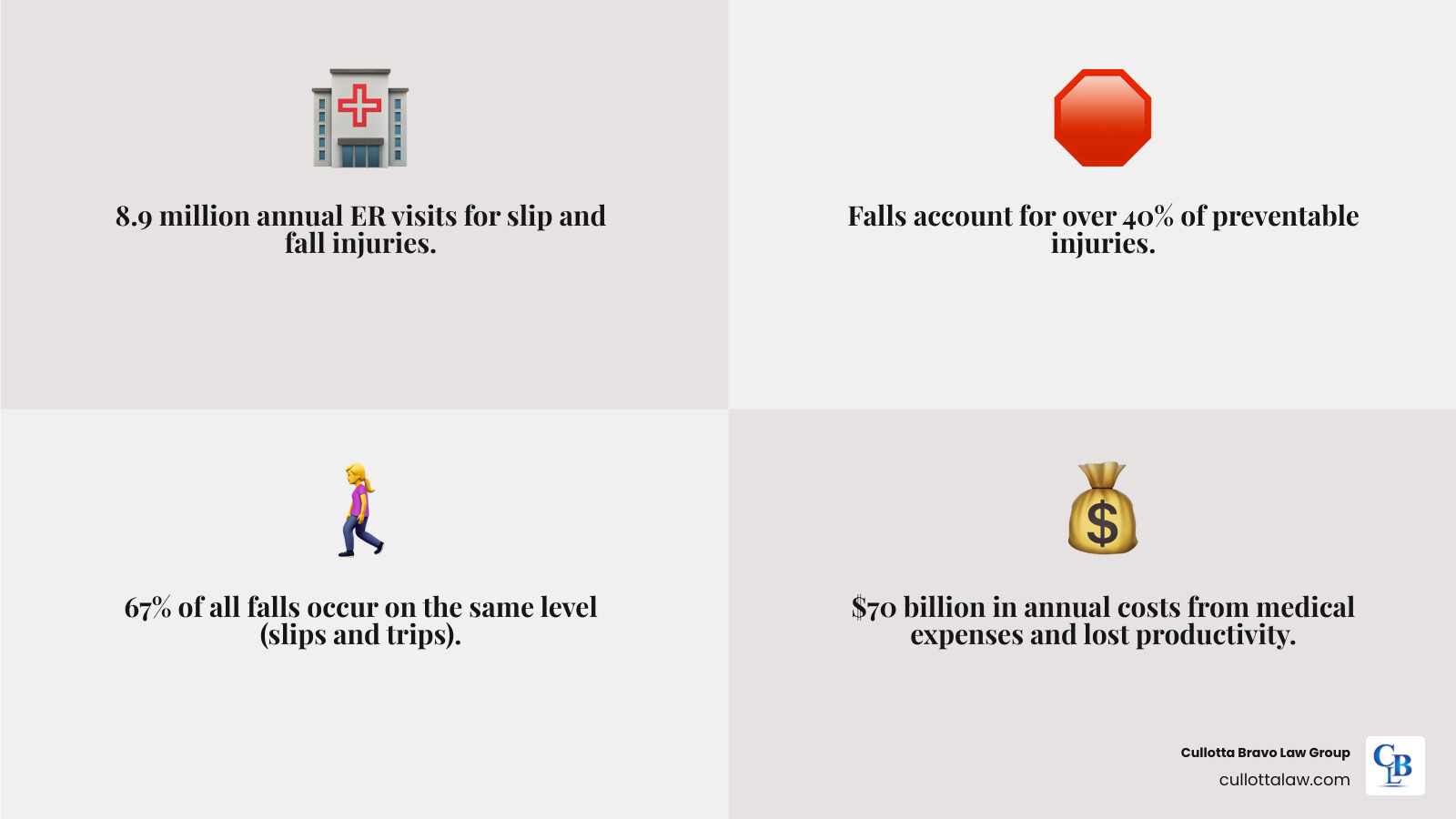
- 8.9 million people visit emergency rooms annually due to fall injuries.
- Over 40% of preventable injuries in Canada are from falls.
- 67% of falls happen on the same level (slips and trips).
- They are the second leading cause of accidental death after motor vehicle accidents.
While our firm handles various cases, including Car Accident Lawyer in Naperville matters, slip and fall cases require specialized knowledge. The financial impact is staggering, costing $70 billion annually in medical expenses and lost productivity. For victims, this means medical bills, lost wages, and long-term physical challenges.
I’m Peter Cullotta, founding partner at Cullotta Bravo Law Group. With over 35 years of experience, I’ve secured millions for clients in slip and fall cases throughout Chicagoland. I know these premises liability cases present unique challenges, and success depends on quick action, thorough documentation, and aggressive legal representation.
Understanding the Anatomy of a Slip and Fall Accident
Legally, a slip and fall is a specific type of premises liability claim. It occurs when someone is injured after slipping, tripping, or falling on another’s property due to a dangerous condition. The key legal element is that the property owner knew—or should have known—about the hazard and failed to fix it or provide a warning.
For example, if you slip on a spilled drink that’s been in a grocery store aisle for hours, the store had time to notice and clean it up, making them potentially liable. This differs from slipping on something that fell seconds before you arrived.
Falls are typically categorized in two ways. Same-level falls account for about 67% of incidents and happen when you slip or trip on flat ground. Falls from height, which make up the other 33%, involve falling from stairs, ladders, or other liftd surfaces. While falls from height can cause more severe injuries, same-level falls are far more common and can still result in devastating harm.
Common Causes of a Slip and Fall
Dangerous conditions that lead to slip and fall accidents often point to a property owner’s negligence. Common causes include:
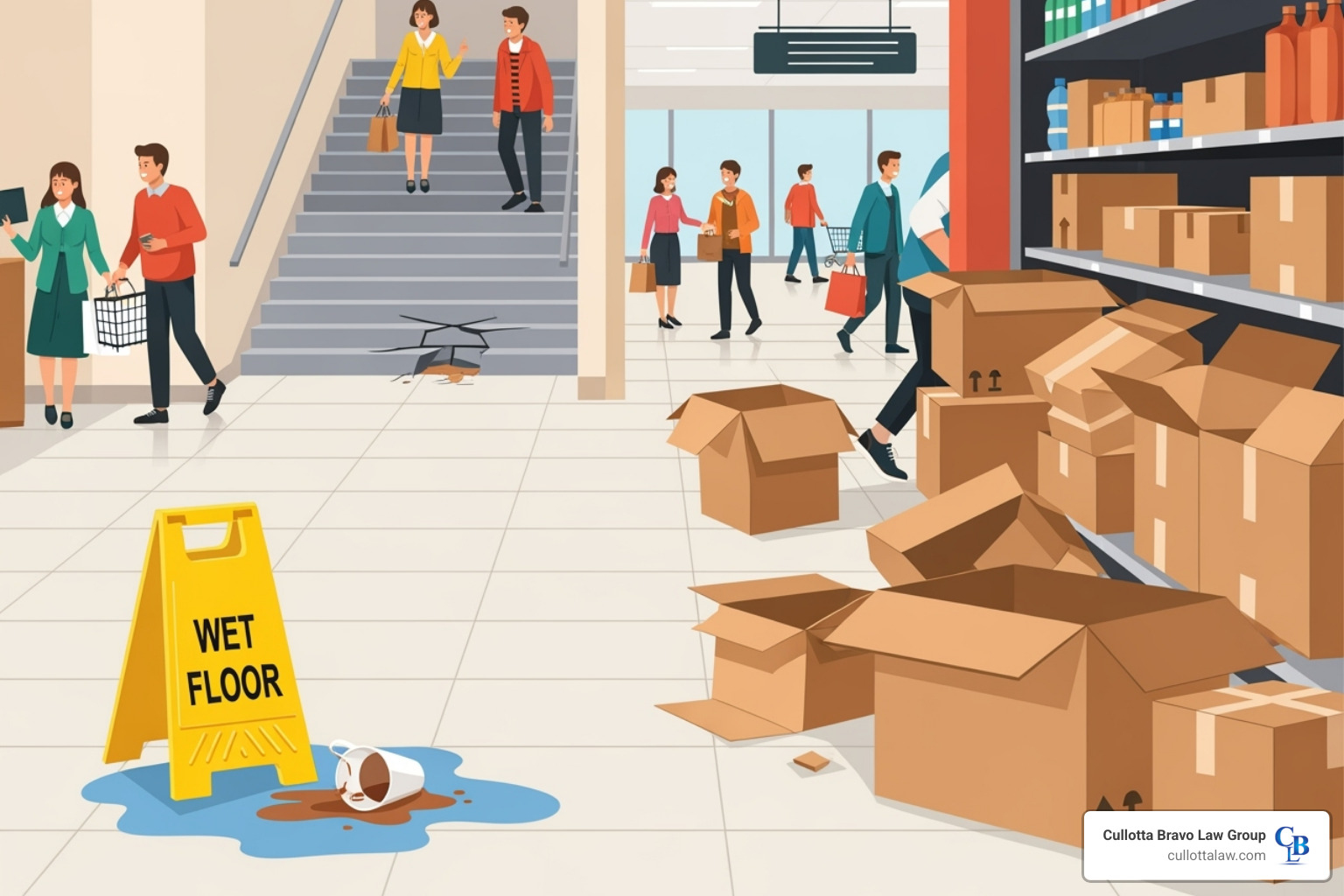
- Wet or oily surfaces from spills, mopping without warning signs, or leaks.
- Weather hazards like ice, snow, or rain tracked indoors that are not promptly addressed.
- Uneven surfaces such as cracked pavement, loose floorboards, torn carpeting, or unexpected changes in floor height.
- Poor lighting in stairwells, hallways, or parking areas that hides dangers.
- Clutter like boxes, merchandise, or tools left in walkways.
- Other hazards like wrinkled carpets, loose mats, uncovered cables, and structural defects such as broken handrails or crumbling stairs.
Types of Injuries Sustained
A sudden fall can cause injuries ranging from minor to life-changing. Even a seemingly small tumble can have major consequences.
- Soft-tissue injuries like sprains and strains are very common and can lead to chronic pain.
- Fractures frequently occur in the wrists, hips, and ankles. Hip fractures are especially dangerous for older adults.
- Head injuries, including concussions and traumatic brain injuries (TBIs), can result from hitting your head during a fall and may cause lasting cognitive or emotional problems.
- Spinal cord, back, and neck injuries like herniated discs can cause permanent pain or, in the worst cases, paralysis.
These injuries often require extensive medical treatment and time off work. It’s vital for victims to understand their rights and seek proper legal representation for all types of Personal Injury claims to get the resources they need to recover.
The Legal Responsibility of Property Owners
When you are on someone else’s property, you have a reasonable expectation of safety. The law establishes that property owners have a duty of care to maintain their premises and take reasonable steps to prevent foreseeable accidents. When they fail in this duty and someone is hurt in a slip and fall, they can be held legally responsible.
Negligence is the foundation of these cases and requires proving four elements: the property owner had a duty to keep you safe, they breached that duty, this breach caused your injury, and you suffered actual damages (medical bills, lost wages, etc.). As outlined in legal resources like Principles of Tort Law, property owners who ignore foreseeable risks can be held accountable.
Who Can Be Held Liable?
Determining who is responsible for a slip and fall can be complex, as multiple parties may share liability. A thorough investigation may identify several responsible parties, including:
- Property owners, such as the owner of a grocery store or restaurant.
- Landlords, who are often responsible for common areas like hallways and stairways. Our firm handles many cases involving landlord negligence, which you can learn more about in our guide on Understanding Landlord Liability in Chicago, Aurora, IL.
- Property managers or maintenance companies hired to oversee daily operations.
- Government entities, if the injury occurred on public property like a city sidewalk. These cases have special rules and stricter deadlines.
Illinois Premises Liability Act
Illinois law clarifies a property owner’s duties in the Illinois Premises Liability Act (740 ILCS 130/1). This act requires property owners to use reasonable care to keep their property in a reasonably safe condition for lawful visitors. The law has largely eliminated older distinctions between types of visitors (like invitees and licensees), affording most people on a property the same level of protection.
This doesn’t make property owners insurers of safety. Instead, they must act reasonably to identify, fix, or warn about hazards. A key aspect is time—a spill that just happened is different from one that has been ignored for hours.
Illinois also has a Snow and Ice Removal Act. While it offers some protection to residential property owners for natural accumulations, commercial properties have a higher duty of care. Furthermore, any property owner can be liable if their negligent snow removal creates a new, unnatural hazard. These legal nuances are why experienced representation is so important in slip and fall cases.
Building a Strong Slip and Fall Claim
Building a successful slip and fall claim requires proving how a property owner’s negligence caused your accident. The strongest cases are built on thorough preparation and smart legal strategy, which is essential when facing well-funded insurance companies. Whether you need an Injury Lawyer Chicago or representation elsewhere in Illinois, the goal is to prove negligence with solid evidence.
Essential Evidence to Collect
Evidence is the cornerstone of a slip and fall case. The moments after your fall are critical for gathering proof.
- Photographs and videos: If you can, immediately take pictures of the hazard that caused your fall from multiple angles. Also, photograph the surrounding area, noting any lack of warning signs.
- Witness information: Ask anyone who saw the accident for their name and phone number. Their testimony can be invaluable.
- Incident report: If you fall at a business, insist on filing an incident report and get a copy before you leave.
- Medical records: Seek medical attention immediately. Your medical records create a direct link between the accident and your injuries.
- Damaged clothing or shoes: Preserve the items you were wearing, as they can serve as evidence.
- Security camera footage: This is powerful evidence, but it is often erased quickly. We send legal preservation letters demanding that property owners save any relevant video.
Common Defenses and How to Counter Them
Property owners and their insurers often use a predictable set of defenses. An experienced attorney knows how to anticipate and counter them.
- The “open and obvious” defense: They may argue the hazard was so obvious you should have avoided it. We can counter this with the “distraction exception,” arguing that you were foreseeably distracted, for example, by merchandise in a store.
- “Lack of notice”: They may claim they didn’t know about the hazard. We investigate maintenance logs and employee records to prove they knew or should have known. Cases like Reed v. Galaxy Holdings, Inc., 394 Ill. App. 3d 39 (2009) show that courts consider how long a hazard existed.
- Comparative negligence: They will try to blame you for the accident to reduce their payout. Illinois uses a modified comparative negligence rule: if you are found more than 50% at fault, you recover nothing. We fight aggressively to minimize any percentage of fault assigned to you.
- The “natural accumulation” defense: For weather-related falls, owners may cite the Illinois Snow and Ice Removal Act. However, they can still be liable if their actions, like creating poor drainage that forms ice, made the condition unnatural or worse.
Critical Steps After an Accident
The moments after a slip and fall are confusing, but your next steps can significantly impact your physical and financial recovery. Property owners and their insurers begin protecting their interests immediately, so you must act quickly to protect your rights. If you’ve been injured, our Slip and Fall Attorney Aurora, IL team is ready to guide you.
Immediate Actions to Take
- Get medical help first. Your health is the priority. See a doctor immediately, even if you feel fine. Some serious injuries, like concussions or soft tissue damage, have delayed symptoms. This also creates an official medical record linking your injuries to the fall.
- Report what happened. Inform the manager or property owner right away. Ask to fill out an incident report and get a copy. Stick to the facts and do not apologize or accept blame.
- Document everything you can. Take photos of the hazard, the surrounding area, and the lighting and weather conditions. Note the date and time.
- Don’t admit fault. It’s natural to say something like, “I’m so clumsy,” but these statements can be used against you to argue you caused your own accident.
- Preserve the evidence. Keep the shoes and clothes you were wearing. If there were any witnesses, get their names and contact information.
Understanding Damages and Time Limits for Your Slip and Fall
After a fall, it’s important to understand what compensation you can seek and how long you have to act.
Damages fall into two main categories. Economic damages are your direct financial losses, including all medical bills, physical therapy costs, and lost wages from time off work. Non-economic damages compensate you for the non-financial impact on your life, such as pain and suffering, emotional distress, and loss of enjoyment of life if the injury prevents you from pursuing hobbies or activities you once loved.
Time is critical. In Illinois, you have a two-year statute of limitations to file a lawsuit from the date of your accident. If you miss this deadline, you lose your right to compensation forever. The deadline is even shorter for claims against a government entity, sometimes as little as six months to a year. An experienced lawyer ensures all deadlines are met while you focus on your recovery.
How Property Owners and Individuals Can Prevent Accidents
Most slip and fall accidents are preventable. Safety is a shared responsibility: property owners have a legal duty to maintain safe premises, and visitors should be aware of their surroundings. When both sides do their part, these painful and costly accidents can be dramatically reduced.

Best Practices for Property Owners
Proactive safety measures protect visitors and shield owners from costly lawsuits. Key practices include:
- Regular Maintenance: Conduct routine property inspections to identify and fix hazards like uneven flooring, cracked pavement, broken steps, or damaged handrails before they cause an injury.
- Immediate Hazard Response: Clean up spills immediately and use clear warning signs for wet floors. Keep walkways clear of clutter, debris, and obstacles, as required by OSHA standards like 29 CFR 1910.22.
- Proper Upkeep: Ensure adequate lighting in all stairwells, hallways, and parking lots. Secure all rugs and mats to prevent bunching or slipping.
- Winter Safety: Implement a diligent snow and ice removal plan, especially for commercial properties that have a higher duty of care than residential owners under the Illinois Snow and Ice Removal Act.
- Documentation: Keep detailed logs of all inspections, maintenance, and repairs. These records can be crucial evidence of your commitment to safety.
Understanding broader safety issues, such as those covered by Negligent Security Attorneys in Aurora and Chicago, is also part of comprehensive property management.
Safety Tips for Individuals
While property owners are primarily responsible, you can reduce your own risk of a slip and fall with a few simple precautions.
- Wear Appropriate Footwear: Choose shoes with good traction and non-slip soles, especially in wet or icy conditions. The CDC recommends low-heeled shoes with rubber soles.
- Pay Attention: Practice “defensive walking” by scanning your path for hazards. Avoid distractions like using your phone while walking in unfamiliar or busy areas.
- Use Handrails: Always use handrails on stairways for added stability.
- Report Hazards: If you see a spill, broken step, or other danger, report it to management immediately to help protect others.
- Adjust to Conditions: On slippery surfaces, take smaller, slower steps to maintain your balance.
Frequently Asked Questions about Slip and Fall Claims
After representing slip and fall victims for over three decades, I’ve found that clients often share the same questions. When you’re dealing with an injury and mounting bills, it’s natural to feel overwhelmed. Here are answers to the questions we hear most often.
What is the most important thing to do after a slip and fall accident?
Without a doubt, seek immediate medical care. Your health is the top priority. Some serious injuries, like concussions or soft tissue damage, may not show symptoms right away. Getting checked by a doctor protects your health and creates a crucial medical record that links your injuries directly to the accident, which is vital for any potential legal claim.
After seeking medical care, report the accident to the property manager, document the scene, and avoid making any statements that could be interpreted as admitting fault.
Can I still file a claim if the hazard was “open and obvious”?
Possibly, yes. While property owners use the “open and obvious” defense frequently, Illinois law has important exceptions. The law recognizes the “distraction exception,” which applies when you are foreseeably distracted—for example, by looking at products in a store—and fail to see a hazard. A hazard might also be considered unavoidable.
The landmark case Ward v. K Mart Corp. established that businesses can be liable even for “open and obvious” hazards if they create foreseeable risks. Because every case is unique, have a lawyer evaluate the specifics of your situation.
How much does it cost to hire a slip and fall lawyer?
Most personal injury lawyers, including our team at Cullotta Bravo Law Group, work on a contingency fee basis. This means you pay absolutely no upfront fees or hourly charges. Our fee is a percentage of the settlement or award we secure for you. If we don’t win your case, you owe us no legal fee.
This system allows everyone to access quality legal representation, regardless of their financial situation. It lets you focus on your recovery while we handle the legal fight against the insurance companies.
Conclusion
Slip and fall accidents are a serious, costly, and often preventable problem. With 8.9 million emergency room visits annually, these are far more than minor mishaps. As we’ve covered, holding a negligent property owner accountable requires navigating complex premises liability laws, strict deadlines, and common insurance company defenses.
The reality is that slip and fall cases demand immediate action and experienced legal guidance. Evidence like surveillance footage can disappear within days, and the two-year statute of limitations in Illinois is unforgiving. From the moment an accident occurs, property owners and their insurers are working to minimize their liability.
At Cullotta Bravo Law Group, we have spent over 35 years leveling the playing field for injured individuals across the Chicagoland area. We understand that behind every case is a person dealing with medical bills, lost wages, and the frustration of an injury that wasn’t their fault. We provide the aggressive representation needed to secure the compensation our clients deserve.
Our contingency fee structure means you pay nothing upfront. We only get paid if you do. If you or a loved one has been injured in a slip and fall in Aurora, Chicago, Naperville, or anywhere in Illinois, do not wait. Every day that passes makes building a strong case more difficult.
Don’t let a property owner’s negligence define your future. Contact a Naperville personal injury lawyer today for a free consultation to learn how we can fight for the justice you deserve.