
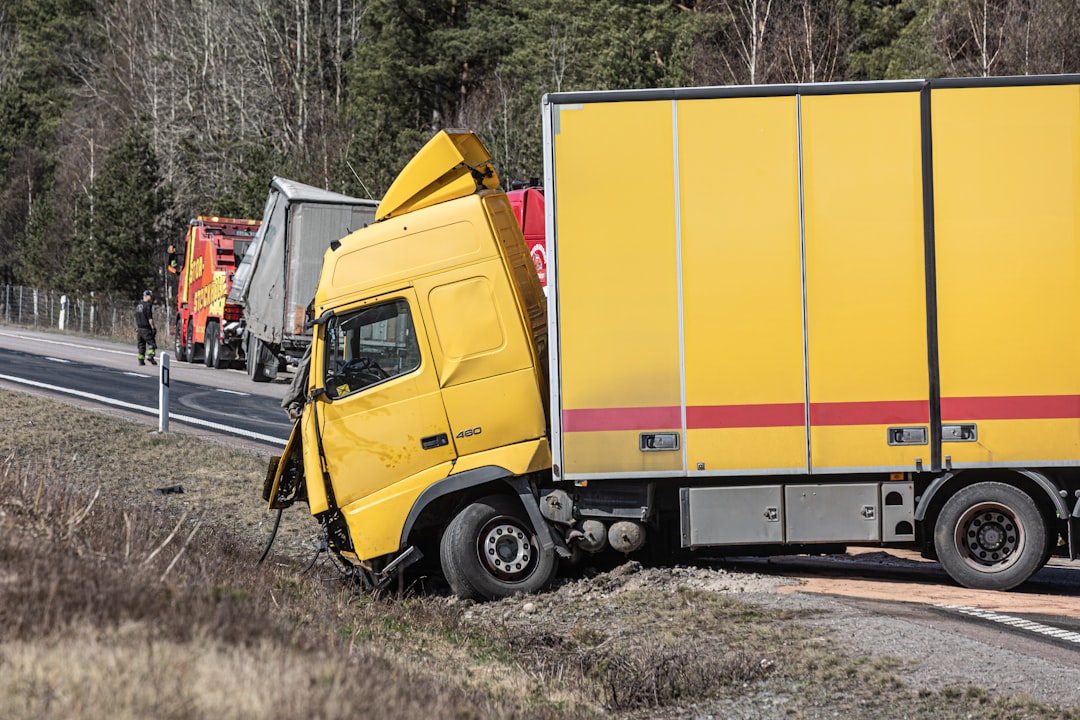
Key Differences: Why Truck Accidents Are More Complex Than Car Accidents
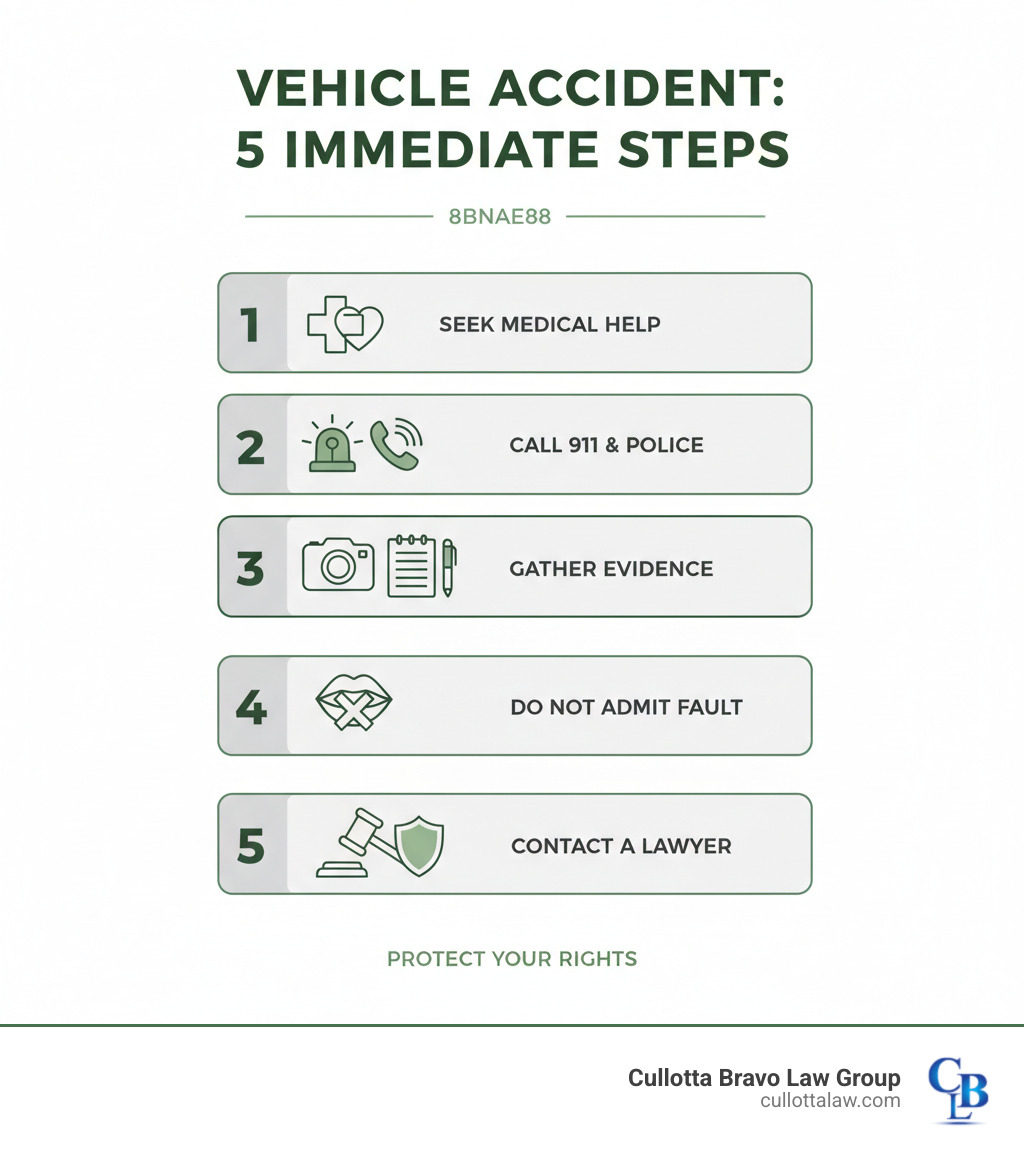
When you are involved in a truck accident, getting the right information fast can change everything. Here is crucial truck accident legal advice to help you immediately after a crash:
- Seek immediate medical attention. Your health is the priority, and some injuries are not immediately apparent.
- Contact authorities. Call 911 to get police and medical help to the scene.
- Gather evidence. Take photos of the scene and vehicle damage. Get contact information from witnesses.
- Do NOT admit fault. Any apology can be used against you, so stick to the facts.
- Contact an experienced truck accident lawyer. They will protect your rights and guide you through the complex process.
Truck accident legal advice is critical because collisions with commercial trucks, which can weigh up to 80,000 pounds, often cause devastating injuries or death. Data from the National Highway Traffic Safety Administration (NHTSA) shows that in crashes involving large trucks, the occupants of other vehicles suffer the vast majority of fatalities.
This guide provides expert legal guidance to help you understand your rights and options. Quick action is vital to protect your future. Peter D. Cullotta, founder of Cullotta Bravo Law Group, brings over 35 years of trial experience to injured individuals throughout Chicagoland, providing expert truck accident legal advice to fight for justice.
When a massive commercial truck collides with a passenger vehicle, the outcome is rarely equal. Beyond the physical devastation, truck accidents are far more complex legally than typical car accidents. Here’s why:
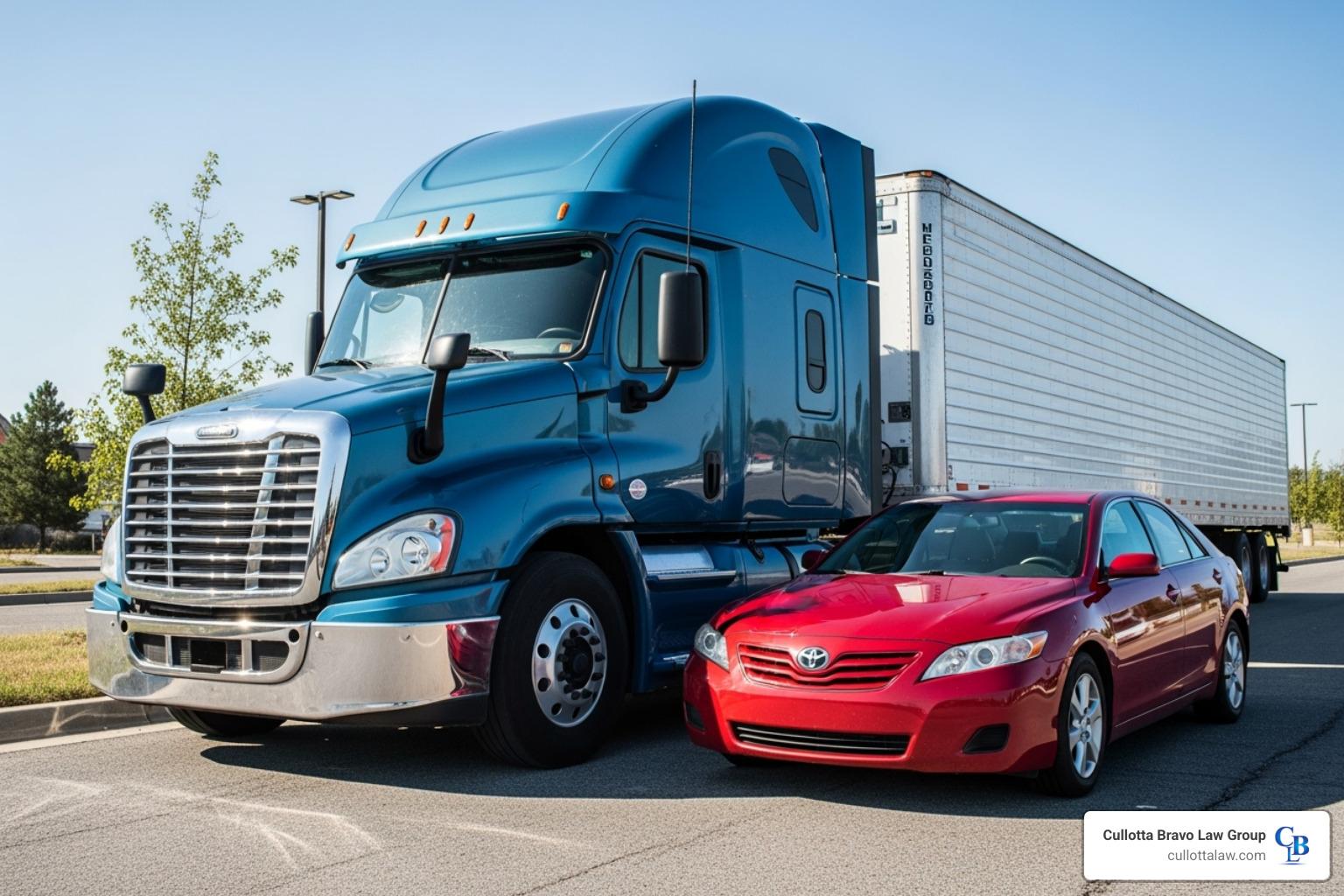
- Severe Injuries and Higher Stakes: The immense forces in truck accidents often cause catastrophic injuries like spinal cord damage or traumatic brain injuries (TBIs). These lead to extensive medical bills and long-term care needs, driving up the potential compensation.
- Multiple Liable Parties: Unlike a simple car crash, a truck accident can involve a web of responsible parties, including the driver, trucking company, parts manufacturer, maintenance company, or cargo loaders.
- Federal Regulations: The trucking industry is heavily regulated by the Federal Motor Carrier Safety Administration (FMCSA). These rules cover driver hours, vehicle maintenance, and cargo securement. A violation can be critical evidence of negligence.
- Higher Insurance Minimums: Trucking companies carry substantial insurance policies, often from $750,000 to over $5 million. This gives their insurers a massive incentive to aggressively fight claims.
- Specialized Evidence: Investigating a truck accident requires analyzing the truck’s “black box” data, driver logs, and maintenance records. This specialized evidence requires expert analysis to prove what happened.
Common Causes of Devastating Truck Crashes
Many truck accidents are preventable. Common causes include:
- Driver Fatigue: Drivers under pressure may violate federal Hours-of-Service (HOS) rules, impairing their reaction time and judgment. Learn more about Dubious Trucking Industry Practices and How They Put Drivers at Risk.
- Distracted Driving: Using cell phones or other devices is incredibly dangerous given a truck’s size and long stopping distance.
- Improper Loading: Overloaded or imbalanced cargo can cause a truck to become unstable, leading to rollovers or jackknife accidents. What Happens If You Are Injured by Cargo Falling Off a Truck?
- Poor Maintenance: Trucking companies must maintain their fleets. Faulty brakes, worn tires, or other mechanical failures can be direct causes of a crash. We can investigate Defective Tire Tread Accidents and other mechanical failures.
- Speeding: Exceeding speed limits reduces a truck’s ability to stop and increases the risk of losing control. See our insights on Speeding Accidents.
- Impaired Driving: Driving under the influence of alcohol or drugs remains a serious problem. We have experience with cases involving Impaired Drivers.
Who Can Be Held Liable?
Identifying all responsible parties is critical. Potential at-fault parties include:
- The Truck Driver: For negligent actions like speeding, distracted driving, or driving while fatigued.
- The Trucking Company: For the driver’s actions (vicarious liability) or its own negligence, such as negligent hiring, poor training, or pressuring drivers to violate safety rules.
- The Truck Owner: If separate from the trucking company, the owner may be liable for maintenance issues.
- The Parts Manufacturer: If a defective part like brakes or tires contributed to the crash. Learn more about Defective Car Software.
- The Maintenance Company: An outside company that performed negligent repairs can share liability.
- The Cargo Loading Company: If improperly loaded cargo shifted and caused the crash.
- A Government Entity: For poor road design or maintenance. We can assist with accidents from a Road in Poor Condition or Injured Due to a Broken or Malfunctioning Street Sign.
Your Legal Pathways to Compensation in Illinois

After a truck accident, you’re likely facing a mountain of medical bills, lost wages, and emotional stress. Understanding your legal options is the first step toward rebuilding your life.
Illinois operates under a fault-based system, meaning you must prove another party’s negligence caused your injuries to recover damages. Trucking companies know this and dispatch immediate response teams to crash scenes to gather evidence that protects them and pressure you into a quick, low settlement. Their insurance adjusters are trained in denial tactics and making lowball offers sound reasonable. This is why getting strong truck accident legal advice right away is so important.
Essential Truck Accident Legal Advice for Filing a Lawsuit
Filing a lawsuit is often necessary for fair compensation, especially with catastrophic injuries, liability disputes, or insufficient settlement offers. A lawsuit allows us to prove negligence and pursue several types of damages:
- Economic damages cover quantifiable losses like medical expenses (current and future), lost wages, reduced earning capacity, and property damage.
- Non-economic damages address the non-financial impacts on your life, including pain and suffering, emotional distress, mental anguish, and loss of enjoyment of life.
- Wrongful death claims can be pursued by surviving family members after a fatality to recover for funeral expenses, lost financial support, and profound grief.
Understanding Critical Deadlines: The Illinois Statute of Limitations
Time is critical. In Illinois, you generally have two years from the accident date to file a personal injury lawsuit or two years from the date of death for a wrongful death claim.
However, the deadlines can be much shorter. If a government entity is involved (e.g., for poor road maintenance), you may have only one year to provide notice of your intent to sue. Some claims against municipalities require notice in as few as 10 days.
Missing these deadlines almost always means losing your right to compensation. The importance of acting quickly cannot be overstated. Evidence disappears, memories fade, and truck data gets overwritten. Every day you wait makes building a strong case harder.
Building a Strong Case: Evidence, Experts, and Truck Accident Legal Advice
Building a winning truck accident case requires meticulous investigation and the right expertise. The evidence collected in the first hours and days is critical to showing what happened and who is responsible.
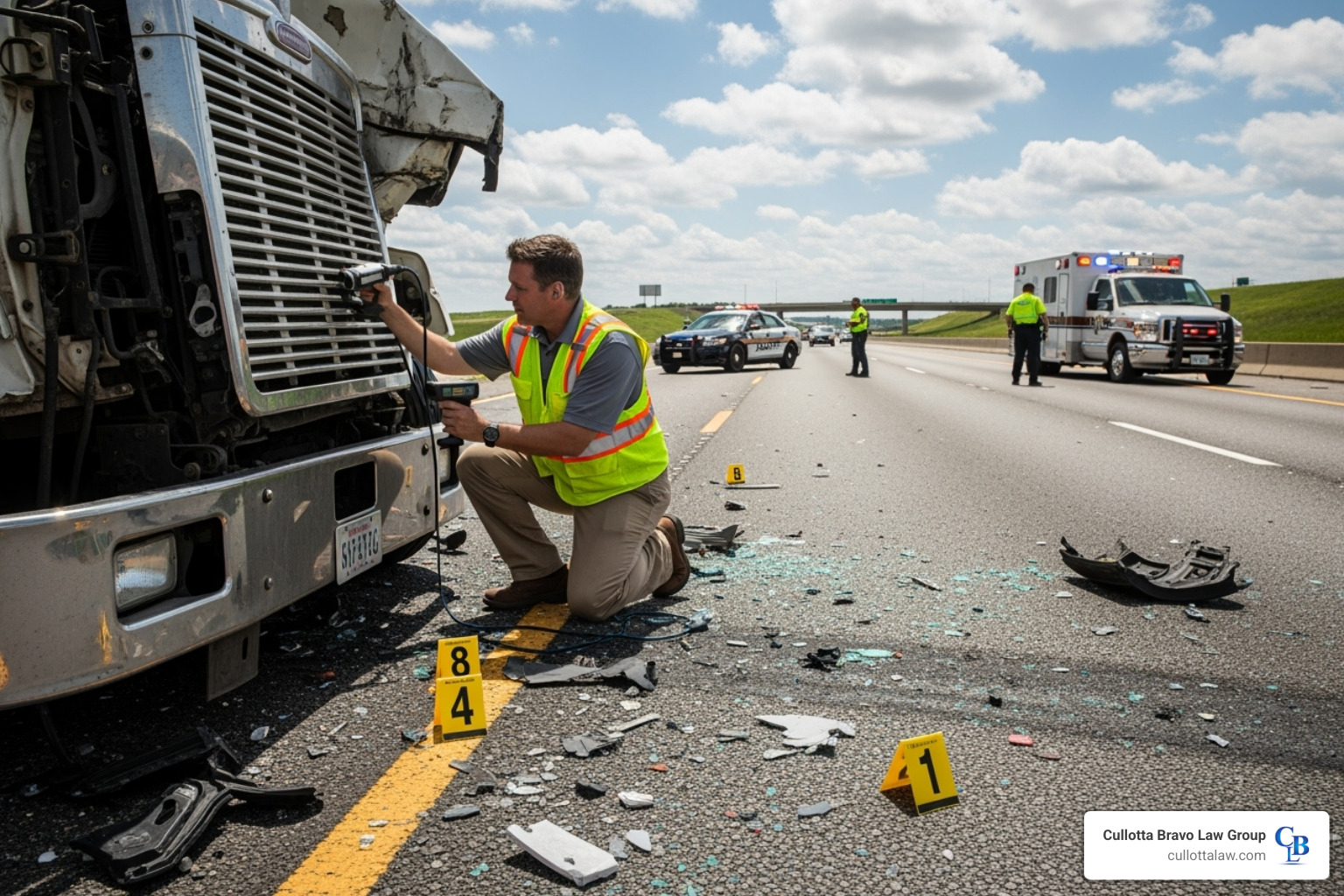
Key pieces of evidence we gather include:
- Police reports: These provide an official account of the scene, witness information, and an initial assessment of fault.
- Medical records: Comprehensive documentation connects the accident to your injuries and establishes the need for current and future care.
- Scene photos and videos: Images of vehicle damage, road conditions, and skid marks capture crucial details that disappear quickly. Our guide on Cell Phone Pictures: What Photos to Take If You’re in an Accident can help.
- Witness statements: Independent accounts can corroborate your version of events and carry significant weight.
- Driver logs and ELD data: Digital records can prove if a trucker violated hours-of-service rules, indicating fatigue.
- Truck’s “black box” data: This event data recorder captures objective information about speed, braking, and steering just before impact. Learn more about Do Commercial Trucks Have a Black Box That Can Be Used in a Personal Injury Claim?
- Maintenance records: These documents can expose a trucking company’s negligence if they cut corners on safety inspections and repairs.
The Role of Expert Witnesses
Truck accident cases are highly technical. We use expert witnesses to explain complex issues to judges and juries, adding credibility to your claim.
- Accident reconstructionists use physics and computer modeling to recreate the crash, determining speeds, impact points, and driver actions.
- Mechanical engineers analyze the truck’s components to identify brake failures, tire defects, or other mechanical issues that caused the crash.
- Medical experts explain your injuries, connect them to the accident, and project your future medical needs and costs.
- Trucking industry experts identify violations of FMCSA regulations, improper cargo loading, or inadequate driver training.
These experts are invaluable for establishing liability and maximizing your compensation, especially when facing the experts hired by the trucking company.
Why Hiring an Experienced Truck Accident Lawyer is Crucial
The aftermath of a truck accident is overwhelming. While you’re dealing with injuries and bills, trucking companies dispatch their own lawyers and investigators to the scene to protect their bottom line. Getting experienced truck accident legal advice is essential to level the playing field.
An experienced lawyer helps by:
- Navigating complex laws: We know the specific federal (FMCSA) and state regulations that govern the trucking industry and use violations to strengthen your case.
- Investigating the crash: We act immediately to preserve evidence like driver logs and black box data before it can be lost or destroyed.
- Identifying all liable parties: We dig deep to find every party that may be responsible—from the driver and trucking company to parts manufacturers and cargo loaders.
- Handling aggressive insurers: We take over all communication with insurance companies, protecting you from their tactics to devalue your claim and letting you focus on healing.
- Accessing an expert network: We work with top accident reconstructionists, medical specialists, and industry experts whose testimony can be critical to winning your case.
We work on a contingency fee basis, meaning you pay no upfront legal fees and we only get paid if we win your case. This ensures everyone can access quality legal representation.
Key Truck Accident Legal Advice for Protecting Your Rights
While your lawyer handles the legal battle, you can protect your rights by taking these steps:
- Do not admit fault: Even saying “I’m sorry” can be used against you. Stick to the facts when speaking with police.
- Avoid social media posts: Insurers will search your profiles for any post they can use to argue your injuries aren’t serious. It’s best to stay offline until your case is resolved.
- Follow medical advice: Stick to your treatment plan. Gaps in care give insurers an excuse to downplay your injuries.
- Keep detailed records: Save all bills, receipts, and documents related to the accident. Track your missed work days and how your injuries impact your daily life.
- Let your lawyer handle communications: Once you hire us, direct all calls from insurance adjusters to our office. This protects you from saying something that could harm your case.
Frequently Asked Questions about Truck Accident Claims
Here are answers to common questions we hear from clients seeking truck accident legal advice.
Can I still sue if the at-fault truck driver was an independent contractor?
Yes, often you can. Trucking companies frequently use the “independent contractor” label to avoid liability, but courts look at the reality of the relationship. What matters is the degree of control the company has over the driver. If the company sets schedules, dictates routes, or requires specific procedures, it can still be held responsible for the driver’s negligence. We investigate these relationships to hold the correct parties accountable, as many drivers are misclassified as independent contractors. Our experience with Workers Compensation for Misclassified Workers helps us identify these situations.
What if I was partially at fault for the truck accident in Illinois?
You can still recover compensation. Illinois uses a modified comparative negligence rule. This means your total compensation is reduced by your percentage of fault. For example, if you are found 20% at fault for an accident with $100,000 in damages, you can still recover $80,000. However, under the 51% bar rule, if you are found to be 51% or more at fault, you cannot recover any compensation. It is crucial to have a lawyer who can effectively argue against unfair allegations of fault. Learn more by Understanding Comparative Fault in Illinois Car Accident Cases.
How much is my truck accident case worth?
There is no simple answer, as every case is unique. However, truck accident claims are typically worth significantly more than car accident claims due to the severity of injuries and complexity of the cases. The value of your case depends on several factors:
- The severity of your injuries
- Current and future medical expenses
- Lost income and reduced future earning capacity
- Property damage
- The extent of your pain and suffering
Properly valuing a claim takes time and often requires input from medical and vocational experts to project long-term costs. Our goal is to secure the maximum compensation you deserve by accounting for every way the accident has affected your life.
Get the Expert Guidance You Deserve
When a massive truck slams into your life, everything changes in an instant. The physical pain, the mounting medical bills, the lost wages – it all feels overwhelming. But you don’t have to face this alone.
Truck accident legal advice isn’t just about knowing the law. It’s about having someone in your corner who understands what you’re going through. Someone who knows how trucking companies operate and won’t let them push you around.
The complexities we’ve discussed throughout this guide – from federal regulations to multiple liable parties to aggressive insurance tactics – aren’t just legal problems. They’re barriers designed to keep you from getting the compensation you deserve. Without experienced representation, these obstacles can feel impossible to overcome.
The clock is ticking. Illinois gives you just two years to file your claim, and sometimes even less when government entities are involved. Every day you wait is another day for crucial evidence to disappear and witnesses’ memories to fade.
At Cullotta Bravo Law Group, we’ve spent over 35 years fighting for people just like you. We’ve seen how devastating truck accidents can be, and we’ve also seen how the right legal strategy can transform someone’s future. Our aggressive representation has helped secure multi-million dollar settlements for our clients, but more importantly, it’s helped families rebuild their lives.
We believe every person deserves to be treated with dignity during their darkest hours. That’s why we handle all the legal complexities while you focus on healing. We work on a contingency fee basis, which means you pay nothing unless we win your case.
Don’t let the trucking companies and their high-powered legal teams decide your fate. You have rights, and we’re here to protect them.
Contact our experienced Truck Accident Attorney in Aurora, IL for a free consultation today. Let us help you take the first step on your road to recovery and justice.