

Why Understanding Your Slip and Fall Lawsuit Rights Matters
A slip and fall lawsuit is your pathway to recovery after a serious accident leaves you injured and facing mounting bills. These cases fall under premises liability law, which holds property owners accountable when their negligence creates dangerous conditions that harm visitors.
Key Elements of a Slip and Fall Lawsuit:
- Duty of Care – Property owners must maintain reasonably safe conditions.
- Breach of Duty – The owner failed to address known hazards or inspect properly.
- Causation – The hazardous condition directly caused your injuries.
- Damages – You suffered actual losses (medical bills, lost wages, pain).
- Time Limits – A two-year statute of limitations in Illinois for most cases.
Slip and fall accidents account for over 8 million emergency room visits each year, making them a leading cause of hospital ER visits. Proving negligence in these cases requires understanding complex legal standards and gathering the right evidence quickly.
Settlement amounts vary dramatically, from a few thousand dollars for minor injuries to millions for catastrophic cases. The difference often comes down to the severity of the injury, clear evidence of negligence, and quality documentation. Without these, you risk being shortchanged by insurance companies.
I’m Peter Cullotta, founding partner at Cullotta Bravo Law Group. With over 35 years of experience securing millions for injured clients in the Chicagoland area, I know that success in these cases depends on acting quickly to preserve evidence and build a powerful claim.
The First 24 Hours: Critical Steps After a Slip and Fall
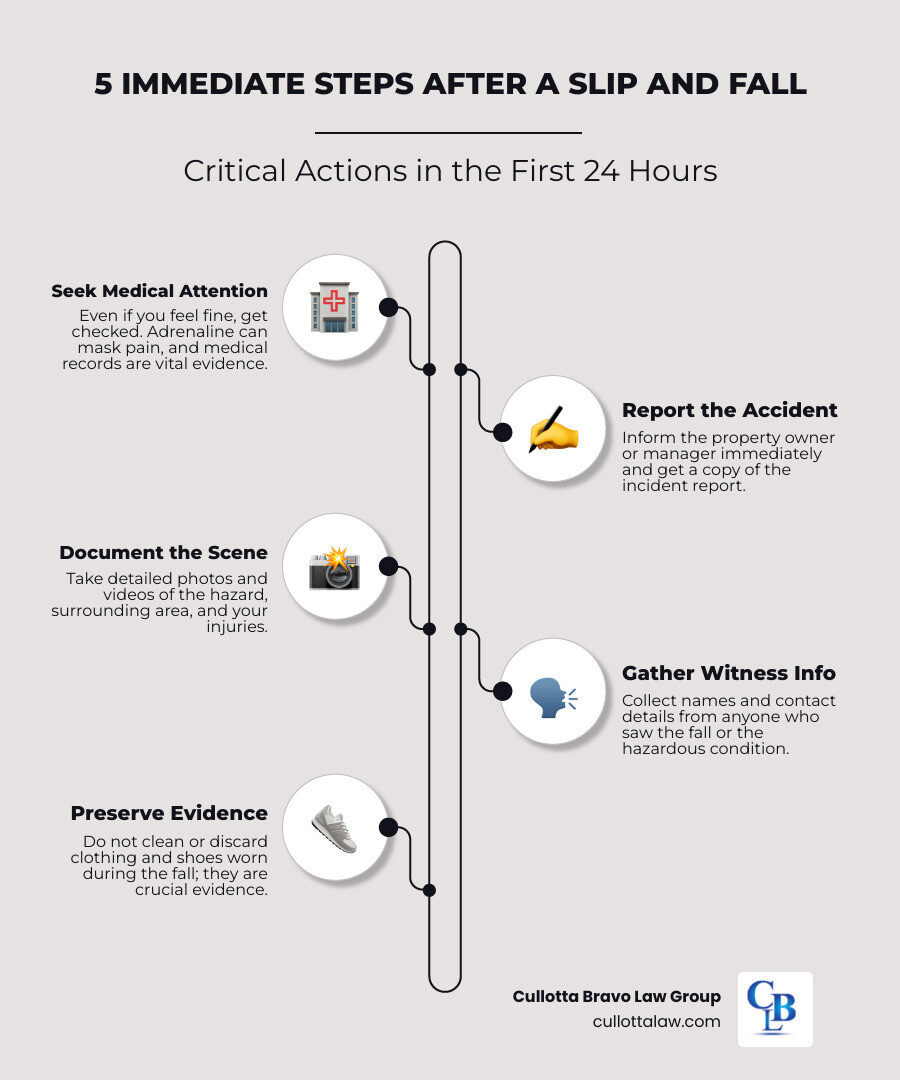
What you do in the 24 hours after a slip and fall can make or break your slip and fall lawsuit. The clock starts ticking the moment you hit the ground, and every action affects your ability to recover fair compensation.
Seek immediate medical attention, even if you feel “fine.” Adrenaline can mask serious injuries like concussions or internal bleeding. Prompt medical care protects your health and creates records that link your injuries directly to the fall, making it harder for insurance companies to dispute your claim.
Report the accident to the property owner or manager as soon as possible. Insist on filling out an incident report and ask for a copy. This creates an official record that the accident happened on their property.

Use your smartphone to document the scene with photos and videos. Capture the hazard that caused your fall—the puddle, ice patch, or broken step—from multiple angles. Take wide shots of the area and close-ups of the specific danger. Also, photograph your injuries.
If anyone witnessed your fall, gather their contact information. Unbiased accounts can be incredibly valuable, especially if they noticed how long the hazard was present.
Preserve your shoes and clothing exactly as they were. Do not clean or discard them. They are crucial evidence if the defense tries to blame your footwear for the accident.
Finally, do not admit fault. Statements like “I should have been watching where I was going” can be used against you. Stick to the facts without accepting blame.
Why Acting Quickly is Crucial
Time is everything in these cases. Evidence disappears—puddles dry, ice melts, and surveillance footage is overwritten. Memories fade, making it harder for you and any witnesses to recall key details. Furthermore, legal deadlines are strict. In Illinois, you generally have two years to file a slip and fall lawsuit, but claims against government bodies have much shorter notice periods. Missing a deadline can permanently bar you from recovering compensation.
Taking these immediate steps builds a solid foundation of evidence, showing that a dangerous condition existed and caused your injuries. This proactive approach can be the difference between a fair settlement and walking away with nothing. For more guidance, see our advice on what to do after a slip and fall.
Building Your Case: Proving Negligence and Liability
After the first 24 hours, the focus of your slip and fall lawsuit shifts to proving the property owner’s negligence. Under premises liability law, they have a duty of care to keep their property reasonably safe for visitors. The strength of this duty is highest for customers in a store (known as “invitees”), requiring owners to actively look for and fix or warn about hazardous conditions.
To win your case, we must prove the dangerous condition created a foreseeable risk of injury and that the owner failed to address it. This failure could be because they caused the hazard, knew about it and did nothing, or should have known about it through proper inspection.
Proving negligence means showing that a reasonable property owner would have identified and corrected the danger. When we establish this, we have the foundation for a strong case.
What Constitutes a Valid Slip and Fall Case?
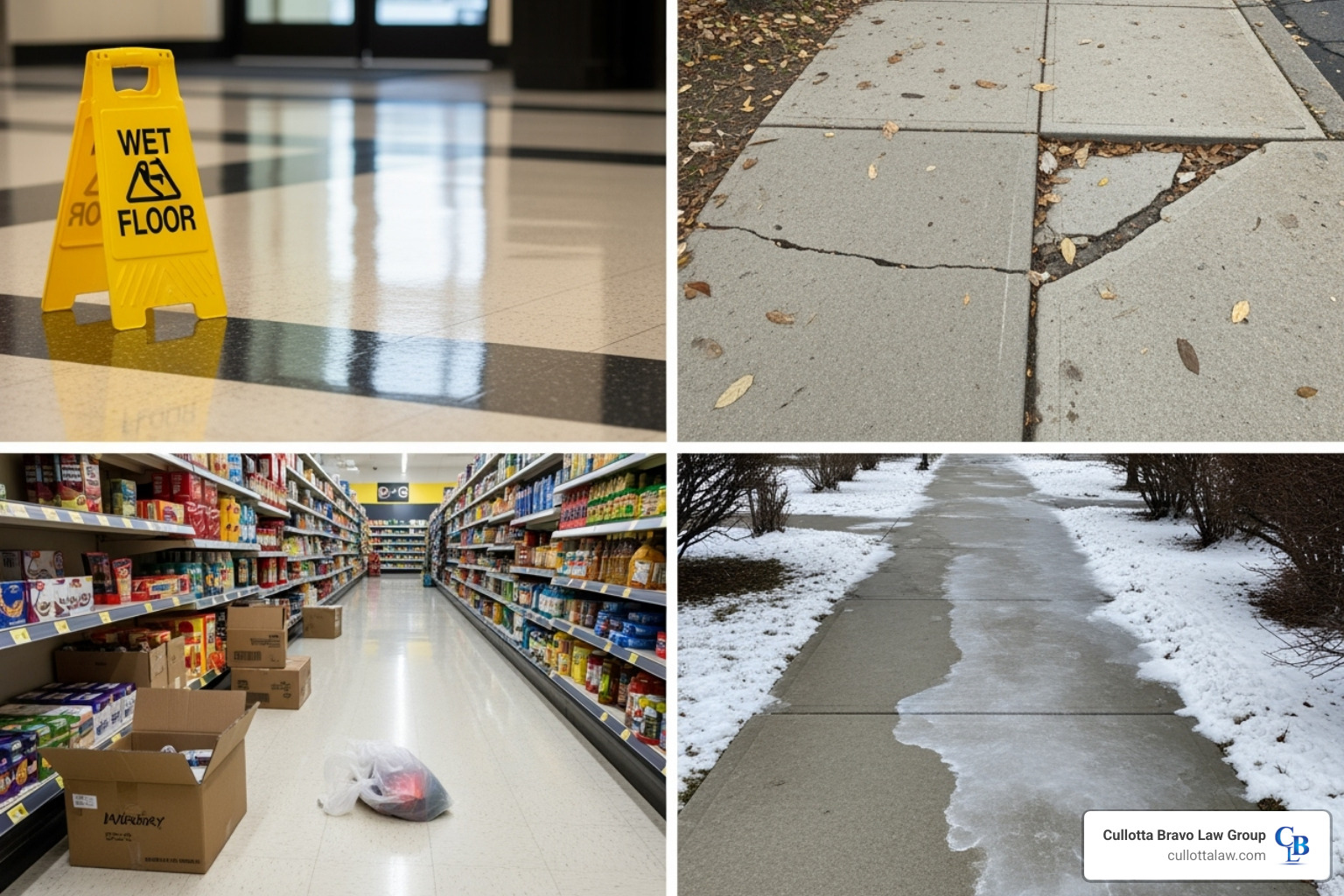
Not every fall justifies a lawsuit. According to the Illinois Premises Liability Act, your fall must be caused by a dangerous condition the property owner negligently failed to address. Common causes that lead to successful claims include:
- Wet or slippery floors from spills, mopping, or tracked-in rain, especially without warning signs.
- Ice and snow, particularly when a commercial property owner’s careless removal efforts or a structural issue creates an unnatural accumulation.
- Poor lighting in stairwells, parking lots, or walkways that hides otherwise avoidable hazards.
- Uneven surfaces or broken stairs, such as cracked sidewalks, potholes, or damaged steps. We have handled many cases involving staircase accidents and parking garage accidents.
- Clutter or obstructions like boxes in aisles or equipment blocking walkways.
The key is proving the owner’s negligence caused your injury. Even if a hazard was obvious, your case may still be valid if other factors, like poor lighting or a legitimate distraction, played a role.
The Burden of Proof: Evidence Needed for Your Slip and Fall Lawsuit
In a slip and fall lawsuit, we must prove the property owner knew or should have known about the hazard. This is often the most challenging part, but certain evidence is critical:
- Incident reports and surveillance footage can provide a real-time account of the fall and may show how long the hazard existed.
- Witness statements offer an unbiased perspective on the conditions at the time of the accident.
- Maintenance logs can reveal whether the owner was diligent in their inspection and cleaning duties.
- Medical records create the essential link between the fall and the extent of your injuries.
- Expert testimony from safety or medical professionals can explain industry standards and the long-term impact of your injuries.
- Photos, videos, and your preserved clothing/shoes serve as tangible proof of the scene and help counter defense claims.
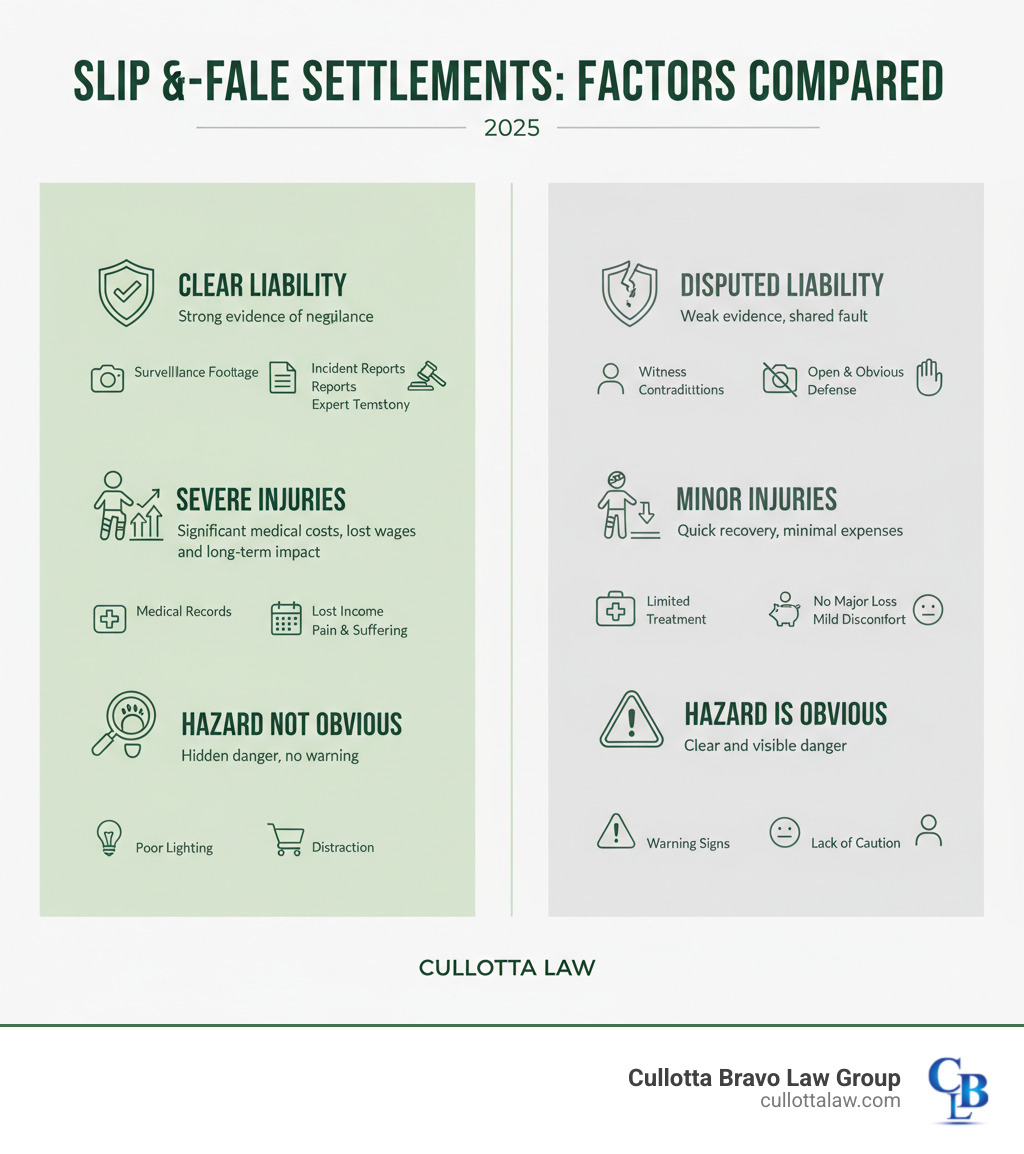
One of the biggest challenges is the “open and obvious” defense, where owners argue you should have seen and avoided the hazard. However, this defense has limits, especially if you were distracted or other conditions made the danger hard to see. Our job is to build a complete picture of the circumstances that led to your fall.
Calculating Your Claim: Understanding Damages and Settlements
After a slip and fall, the financial impact can be devastating. Understanding what you can recover in a slip and fall lawsuit is key to getting the compensation needed to rebuild your life.
The value of your claim depends on several factors. The severity and permanence of your injuries play the largest role. A sprained ankle is valued differently than a lifelong traumatic brain injury. Clear evidence of the property owner’s negligence is also crucial. A case with surveillance footage of a long-ignored spill is much stronger than one with an unclear timeline.
Insurance companies have a playbook designed to minimize payouts. They may offer a quick, low settlement before you know the full extent of your injuries or try to blame you for the fall. They might argue the hazard was obvious or that your injuries are from a pre-existing condition. This is why you need an experienced advocate who knows their tactics.
What Compensation Can You Recover?
In your slip and fall lawsuit, we fight for compensation covering two main categories: economic and non-economic damages.
Economic damages are your tangible financial losses. This includes all medical bills—from the ambulance ride to future physical therapy—and lost wages for time missed from work. If your injuries prevent you from returning to your career, we also seek damages for future loss of earning capacity.
Non-economic damages compensate you for the intangible ways the accident has affected your life. This includes:
- Pain and suffering for the physical discomfort you endure.
- Emotional distress, such as anxiety or fear resulting from the fall.
- Loss of enjoyment of life for the inability to participate in hobbies or activities you once loved.
Cases involving catastrophic injuries often result in much higher awards to account for a lifetime of medical care, home modifications, and altered life plans.
How Do Slip and Fall Settlements Compare to Other Injury Claims?
Proving liability in slip and fall cases can be more difficult than in a car accident, where fault is often clearer. Property owners and their insurers use experienced lawyers to fight these claims vigorously.
For this reason, settlement amounts vary widely. A minor injury might settle for a few thousand dollars, while cases with severe injuries and clear negligence can result in multi-million dollar verdicts. The stakes are particularly high for older adults, as falls are the leading cause of injury-related death for adults over 65, according to the CDC. A fall can lead to devastating consequences like a hip fracture or head injury, often resulting in higher settlements to account for long-term care and permanent lifestyle changes.
Permanent disability dramatically increases a settlement’s value. If a fall leaves you with chronic pain or unable to work, we fight not just for your current losses but for your entire future.
The Legal Gauntlet: Navigating Your Slip and Fall Lawsuit
Filing a slip and fall lawsuit is a complex process, which is why having an experienced personal injury attorney is so important. At Cullotta Bravo Law Group, we guide you through the entire journey, handling the legal heavy lifting so you can focus on your recovery.
We conduct thorough investigations, secure evidence like surveillance footage before it’s erased, interview witnesses, and build the strongest possible case. With 35 years of experience, we anticipate and counter the defenses that property owners and their insurance companies will use.

From day one, we prepare every case as if it’s going to trial. This approach sends a clear message to the other side that we are serious about securing fair compensation. Insurance companies know which law firms are prepared to fight and which will accept a low offer.
Settlement vs. Trial: Choosing the Right Path
The vast majority of civil cases—about 97% according to some analyses—settle without a trial. Most slip and fall lawsuit cases are resolved through negotiation, which is typically faster and less stressful than a trial.
The process begins when we send a detailed demand letter to the insurance company, outlining the property owner’s negligence and documenting your damages. The insurer will almost always respond with a lowball offer. This is where our experience is critical. We know the true value of your case and push back hard against unfair offers.
If the insurance company refuses to be reasonable, going to trial becomes necessary. While a trial can be a longer process, sometimes it’s the only way to achieve justice. We have secured multi-million dollar verdicts for our clients and are always prepared to take a case to court if it’s in your best interest.
Deadlines and Defenses in Illinois
Time is a critical factor in a slip and fall lawsuit. Illinois law imposes strict deadlines that can destroy your case if missed.
- Statute of Limitations: You generally have two years from the date of your injury to file a lawsuit. This may seem like a long time, but evidence disappears quickly.
- Municipal Claims: If your fall occurred on government property (e.g., a city sidewalk), you must provide official notice within a much shorter period, sometimes just a few months.
Illinois also uses a comparative fault rule. This means your compensation is reduced by your percentage of fault. Crucially, under Illinois’s comparative fault rule, you can only recover damages if your share of fault is 50% or less. If you are found 51% or more at fault, you receive nothing.
Insurance companies will try to use this rule to their advantage, arguing the hazard was “open and obvious” or that you were not paying attention. We know how to counter these defenses and keep the focus on the property owner’s negligence.
Frequently Asked Questions about Slip and Fall Lawsuits
Over my 35 years of practice, clients considering a slip and fall lawsuit often ask the same questions. Here are answers to the most common ones.
How long does a slip and fall lawsuit take to resolve?
The timeline for a slip and fall lawsuit varies widely, from a few months to several years. Factors influencing the duration include the complexity of your case, the severity of your injuries (as we must wait for a clear long-term prognosis), the insurance company’s willingness to negotiate a fair settlement, and local court backlogs. A straightforward case with clear liability may settle quickly, while a complex case with severe injuries may proceed to trial, extending the timeline.
How much does it cost to hire a slip and fall lawyer?
We handle cases on a contingency fee basis, which removes financial barriers to quality legal representation. This means:
- You pay no upfront costs to start your slip and fall lawsuit. We cover all expenses, from filing fees to expert witness costs.
- Our firm is paid a percentage of the settlement or verdict only when we win your case.
- If we don’t recover compensation for you, you owe us no attorney fees.
This arrangement aligns our interests with yours. We are motivated to secure the best possible outcome because we don’t succeed unless you do.
Can I sue if I was partially at fault for my fall?
Yes, in Illinois, you can still pursue a slip and fall lawsuit even if you were partially at fault. The state follows a modified comparative negligence rule.
Under this rule, your compensation is reduced by your percentage of fault. For example, if a jury awards $100,000 in damages but finds you 20% at fault, you would receive $80,000. However, there is a critical limit: you cannot recover any damages if you are found 51% or more at fault.
Insurance companies often try to exploit this rule to shift blame onto victims. Our experienced attorneys know how to present evidence that minimizes your perceived fault while highlighting the property owner’s negligence, protecting your right to compensation.
Conclusion: Your Final Step Towards Justice
Navigating a slip and fall lawsuit is a complex journey you shouldn’t face alone. As we’ve discussed, acting quickly to preserve evidence, proving the property owner’s negligence, and calculating the full extent of your damages are all critical steps toward justice.
Evidence disappears quickly, and insurance companies have teams of lawyers working to minimize your claim. They count on you not understanding premises liability law or the true value of your case.
Don’t underestimate the importance of experienced legal counsel. A successful slip and fall lawsuit requires proving that a property owner’s negligence caused your injuries. This means gathering the right evidence and countering defenses like “open and obvious” hazards.
At Cullotta Bravo Law Group, we have spent over 35 years mastering these complexities and holding negligent property owners accountable. Our aggressive representation has secured multi-million dollar results for clients across Aurora, Chicago, Naperville, and Joliet.
We fight tirelessly for the compensation you deserve, and our contingency fee structure means you pay nothing unless we win. Your path to justice starts with a single phone call. If you are suffering from a fall that wasn’t your fault, don’t let an insurance company decide your future. Contact an experienced Slip and Fall Attorney in Aurora, IL today for your free consultation.