
Wrongful death Joliet: 2025 Champion Guide
When Tragedy Strikes: Understanding Your Rights After Losing a Loved One
Wrongful death Joliet claims arise when a person dies due to another’s negligence or intentional harm. If you have lost a family member in a preventable accident, it is critical to understand your legal options.
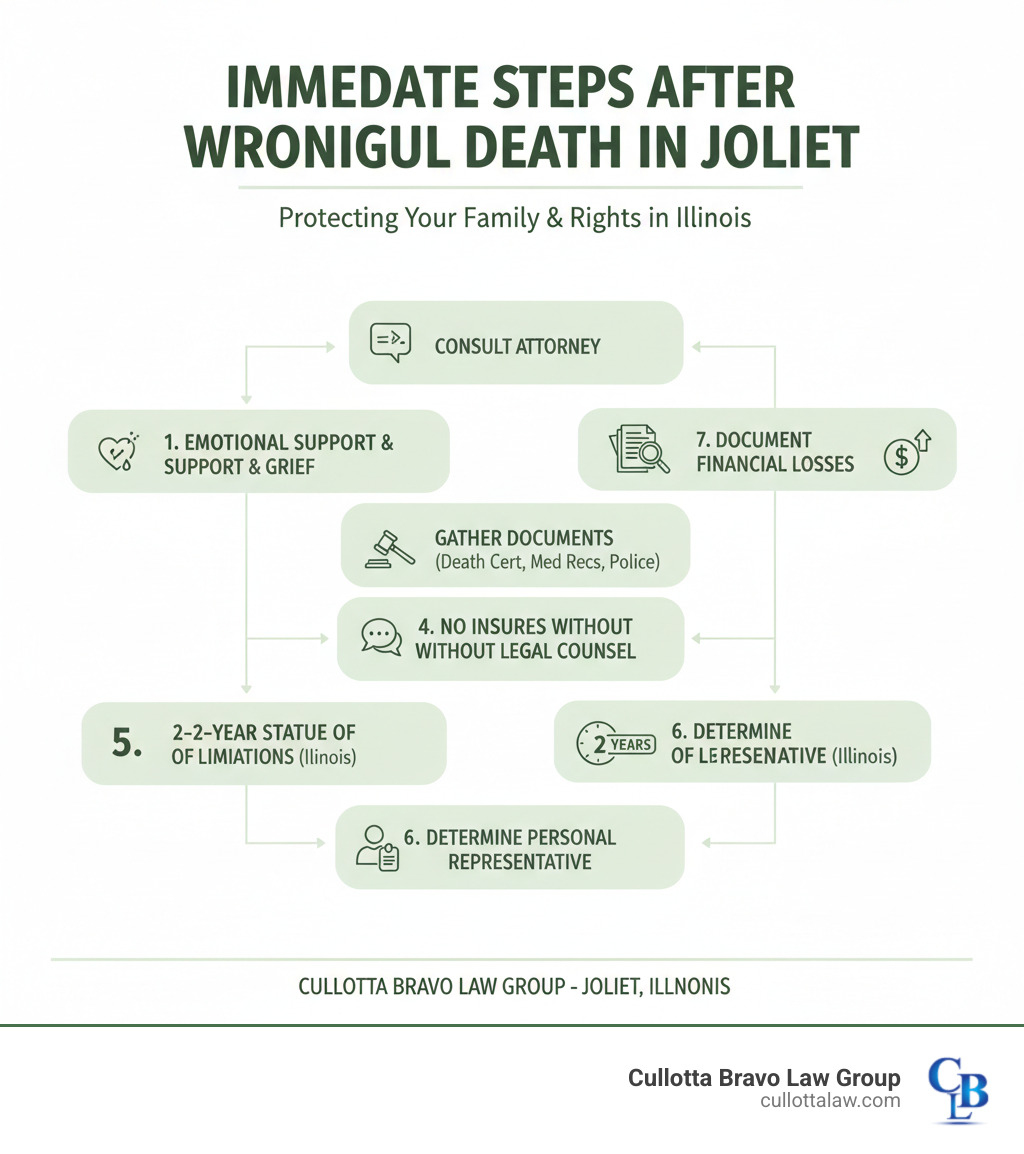
Quick Answer: Key Steps to Take After a Wrongful Death in Joliet
- Who Can File: The personal representative of the deceased’s estate files on behalf of the surviving spouse and next of kin.
- Time Limit: You have 2 years from the date of death to file a claim, with few exceptions.
- Common Causes: Car and truck accidents, medical malpractice, workplace incidents, and nursing home neglect.
- Recoverable Damages: Funeral costs, lost income, medical bills, loss of companionship, and grief.
- No Upfront Costs: Wrongful death attorneys typically work on contingency, meaning you pay nothing unless you win.
The loss of a loved one is devastating, especially when the death was preventable. In 2022, Will County had 68 fatal collisions resulting in 70 deaths. As a major transportation hub, Joliet sees a high risk of traffic accidents and other preventable tragedies.
The Illinois Wrongful Death Act (740 ILCS 180) allows surviving family members to seek compensation. However, navigating this process while grieving requires experienced legal guidance. This guide will help you understand your rights, the claims process, and the critical deadlines you must meet.
I’m Peter Cullotta, founding partner at Cullotta Bravo Law Group. For over 35 years, I have represented families in wrongful death Joliet cases, securing millions for clients facing unimaginable loss. My firm provides the compassionate yet aggressive representation your family deserves.
Understanding Wrongful Death Claims in Joliet, Illinois
When a loved one’s death is caused by another’s carelessness, Illinois law provides a path to justice through a wrongful death Joliet claim. This legal process is about holding the responsible party accountable and securing the resources your family needs to move forward.
What Constitutes a Wrongful Death?
Under The Illinois Wrongful Death Act (740 ILCS 180), a death caused by a “wrongful act, neglect, or default” creates a legal claim. Essentially, if your loved one could have filed a personal injury lawsuit had they survived, their surviving family members can now pursue a wrongful death claim.
The Critical Role of Negligence
Most wrongful death Joliet cases require proving negligence. This means establishing four key elements:
- Duty of Care: The at-fault party had a legal obligation to act with reasonable care (e.g., a driver on the road, a doctor treating a patient).
- Breach of Duty: The party violated that duty through careless actions or inaction.
- Causation: This breach directly caused your loved one’s death.
- Damages: Your family suffered measurable losses as a result.
We must prove these elements by a “preponderance of the evidence,” meaning it is more likely than not that the defendant’s negligence was the cause. You can find More info about personal injury claims on our site.
Wrongful Death Claim vs. Survival Action
Illinois law allows for two distinct claims after a fatal incident, which are often filed together:
- Wrongful Death Claim: This compensates the surviving family members for their losses, such as lost financial support, loss of companionship, and grief and sorrow. The proceeds go directly to the surviving spouse and next of kin.
- Survival Action: This compensates the deceased’s estate for the losses they suffered between the injury and death. This includes their medical bills, lost wages, and conscious pain and suffering. The proceeds become part of the estate.
A key difference involves punitive damages, which are meant to punish extreme negligence. While generally not available in wrongful death claims, they may be recovered through a survival action if the defendant’s conduct was willful and wanton (except in medical malpractice cases).
Common Causes and Local Statistics for Fatal Accidents in Joliet
As a major transportation and industrial hub, Joliet sees a high volume of traffic and workplace activity. Unfortunately, this also leads to preventable accidents that result in wrongful death Joliet claims. Understanding the common causes helps identify patterns of negligence.

Motor Vehicle Accidents in Will County
Traffic accidents are a leading cause of wrongful death. In 2022, Will County had 68 fatal collisions that claimed 70 lives, with 13 of those fatal crashes occurring in Joliet.
- Car and Truck Accidents: Distracted driving, speeding, and driver error are common causes. Due to major shipping routes, truck accidents are a significant risk, with commercial vehicles involved in 10 area fatalities in 2022.
- Motorcycle and Pedestrian Fatalities: Motorcyclists and pedestrians are especially vulnerable on busy roads.
You can review IDOT crash data for Will County for more detailed statistics.
Workplace and Construction Fatalities
Joliet’s warehouses, manufacturing plants, and construction sites can be dangerous if safety rules are ignored. In 2022, Illinois recorded 135 fatal occupational injuries, according to the U.S. Bureau of Labor Statistics data on fatal injuries. Common causes include:
- Construction Accidents: Falls, equipment malfunctions, and electrocutions.
- Industrial and Transportation Incidents: Accidents involving heavy machinery, hazardous materials, or company vehicles.
Most workplace deaths involve OSHA violations, meaning employers who fail to provide a safe environment can be held accountable.
Medical Malpractice and Nursing Home Neglect
A breach of trust by a healthcare provider can have fatal consequences. Medical errors are a leading cause of death in the U.S.
- Medical Malpractice: Fatalities can result from misdiagnosis, surgical errors (like operating on the wrong body part), and medication mistakes.
- Nursing Home Abuse and Neglect: In long-term care facilities, neglect can lead to fatal falls, untreated infections, malnutrition, and other forms of failure to treat. These cases represent a profound breach of trust.
When medical negligence or nursing home abuse leads to death, it can cause Catastrophic Injuries and a valid wrongful death claim. We fight for accountability in these sensitive cases.
Navigating the Legal Process for a Wrongful Death Joliet Claim
The legal system has strict rules and timelines that can be overwhelming while you are grieving. Missing a deadline could mean losing your right to compensation. An experienced attorney can shoulder this burden, managing your case through the Will County court system while you focus on your family.
Who Is Eligible to File a Lawsuit?
In Illinois, a wrongful death Joliet lawsuit must be filed by the personal representative of the deceased’s estate. This person is often named in a will or appointed by the court. The claim is filed on behalf of the surviving spouse and next of kin, who are the beneficiaries. Beneficiaries typically include the spouse and children first, followed by parents or other dependent relatives.
The Illinois Statute of Limitations: Why You Must Act Fast
Illinois law imposes a strict deadline for filing a wrongful death lawsuit. Missing it will bar your claim permanently.
- General Deadline: In most cases, you have two years from the date of death to file.
- Medical Malpractice: The deadline is two years from the date you knew or should have known about the injury, but no more than four years from the date the malpractice occurred (the “statute of repose”).
- Violent Crime Exception: If the death resulted from a violent crime, the deadline may be extended.
Because this timeline is unforgiving, You must act fast. Consulting an attorney immediately protects your legal rights.
Crucial Evidence for a Successful Case
A strong wrongful death Joliet case is built on compelling evidence. Our legal team knows what to gather to prove negligence and secure justice for your family. Key evidence includes:
- Official Reports: Police reports, accident reconstruction analysis, and autopsy reports.
- Medical and Financial Records: Hospital records establishing the cause of death, plus pay stubs and tax returns to prove lost income.
- Witnesses and Experts: Eyewitness statements and testimony from medical, economic, and vocational experts.
- Visual Evidence: Surveillance footage, dashcam videos, and photos from the scene.
- Company Records: Maintenance logs, safety reports, and inspection records for workplace accidents.
We handle the entire investigation, from preserving perishable evidence to hiring the right experts. Learn more about how we determine case value on our page about calculating settlement of a personal injury claim.
Recovering Damages and Securing Your Family’s Future
While no amount of money can replace your loved one, a successful wrongful death Joliet claim provides financial stability and holds the negligent party accountable. Our goal is to secure the maximum compensation your family deserves to help you rebuild. We detail our approach on our page about calculating settlement amounts.
Types of Damages You Can Recover
Illinois law allows for the recovery of both economic and non-economic damages to reflect the full impact of your loss.
- Economic Damages: These are tangible financial losses, including medical bills incurred before death, funeral and burial costs, lost future income and benefits, and the value of lost household services.
- Non-Economic Damages: These compensate for intangible, personal losses. Under Illinois law, this includes the family’s grief, sorrow, and mental suffering, as well as the loss of the deceased’s companionship, comfort, and guidance.
Juries use the Illinois Pattern Jury Instructions on damages to evaluate these profound losses, and we ensure every aspect of your family’s suffering is presented.
Understanding Punitive Damages in Illinois
Punitive damages are intended to punish a wrongdoer for egregious conduct rather than to compensate for losses. In wrongful death Joliet cases, punitive damages are generally not available under the Wrongful Death Act. However, they may be pursued through a separate survival action if the defendant’s actions were willful and wanton, such as in a case involving a drunk driver causing a fatal crash. Punitive damages are prohibited in medical malpractice claims.
How Compensation Is Distributed to Beneficiaries
After a settlement or verdict is reached, the court must approve the distribution of funds to the surviving spouse and next of kin. The compensation is divided based on each person’s level of dependency on the deceased. A surviving spouse and minor children, for example, typically receive a larger share than financially independent adult relatives. We guide families through this sensitive process to ensure a fair and lawful distribution.
How an Attorney Can Help Your Family
Navigating the legal system while grieving is an immense burden. At Cullotta Bravo Law Group, we provide the fierce legal advocacy and compassionate support your family needs. For over 35 years, we have stood beside families in wrongful death Joliet cases, fighting for justice on their behalf.
Overcoming Challenges in a Wrongful Death Joliet Case
These cases are complex and often met with resistance from insurance companies and defense attorneys. Common challenges include:
- Proving Negligence: This requires a thorough investigation to establish duty, breach, causation, and damages.
- Contributory Fault: Defense attorneys will often try to shift blame to the victim to reduce or eliminate compensation. We know how to counter these tactics.
- Insurance Company Tactics: Insurers may delay, deny, or lowball claims to protect their profits. We handle all negotiations to ensure you are treated fairly.
- Complex Litigation: Cases can involve multiple defendants and require deep knowledge of specific areas like medicine or construction.
The Role of Your Legal Advocate
When you hire our firm, we handle every aspect of your case so you can focus on healing. Our role includes:
- Immediate Investigation: We preserve evidence, interview witnesses, and obtain all necessary reports and records.
- Hiring Expert Witnesses: We work with accident reconstructionists, medical specialists, and economists to build a powerful case. We cover these costs upfront.
- Aggressive Negotiation: We build a strong case to leverage a fair settlement from the insurance company.
- Trial-Ready Litigation: If a fair settlement isn’t offered, we are experienced trial lawyers prepared to fight for you in court.
- Constant Communication: We keep you informed every step of the way, explaining your options in plain English.
Understanding Legal Costs for a Wrongful Death Joliet Case
You should not have to worry about legal fees at a time like this. We handle all wrongful death Joliet cases on a contingency fee basis.
This means you pay absolutely no upfront costs. We cover all expenses for investigating and litigating your case. We only get paid if we win a settlement or verdict for you. If we don’t win, you owe us nothing. This approach ensures everyone has access to justice, regardless of their financial situation. Learn more about How attorneys afford to work on contingency.
We offer a free, no-obligation consultation to discuss your case and explain your rights.
Frequently Asked Questions about Joliet Wrongful Death Claims
Here are answers to common questions families have about wrongful death Joliet claims.
How much is a wrongful death case worth in Illinois?
Every case is unique, so there is no average settlement amount. The value depends on factors like the deceased’s age and earning capacity, the number of dependents, the severity of the negligence, and available insurance coverage. While settlements can range from hundreds of thousands to millions of dollars, we can only assess your case’s potential value after a thorough review. Our promise is to fight for the maximum compensation your family is owed.
Do I have to go to court for a wrongful death claim?
Most likely not. The vast majority of wrongful death cases (around 90%) are resolved through a settlement before trial. However, we prepare every case as if it will go to court. This aggressive preparation puts us in a strong negotiating position and shows insurance companies we are ready to fight. If a fair settlement cannot be reached, we are experienced trial attorneys ready to advocate for you before a jury.
Can I file a claim if the person responsible is also facing criminal charges?
Yes, and you should not wait for the criminal case to conclude. A civil wrongful death claim and a criminal case are separate legal proceedings with different goals and standards of proof. The civil claim seeks financial compensation for your family, while the criminal case seeks to punish the wrongdoer. Crucially, you must file your civil claim within the two-year statute of limitations, regardless of the status of any criminal proceedings. Waiting could cause you to lose your right to compensation forever.
Conclusion
Losing a loved one to a preventable death is a tragedy. A wrongful death Joliet claim is a way to seek justice, hold the responsible party accountable, and secure the financial resources your family needs to move forward. You do not have to steer this complex legal process alone while you are grieving.
At Cullotta Bravo Law Group, we have over 35 years of experience fighting for families in Will County. We understand Illinois law and, more importantly, we understand what your family is going through. We treat every client with the dignity and respect they deserve, providing unwavering advocacy to ease the financial burden and see that justice is served.
You don’t have to worry about deadlines, fight with insurance companies, or accept a lowball offer. Take the first step toward justice today. Reach out for a free, no-obligation consultation. We work on a contingency basis, so there are no upfront costs, and we only get paid if we win your case.
Your family deserves justice and financial security. Let us be your champion.
Contact a Joliet injury lawyer for a free consultation today.