
Decoding the Code: What a Building Code Violation Lawyer Can Do For You
Why Building Code Violations Demand Serious Legal Attention
A Building code violation lawyer helps property owners and contractors defend against citations, reduce fines, steer administrative hearings, and resolve compliance disputes with municipalities. These attorneys understand technical building regulations, procedural deadlines, and enforcement processes to protect your property rights and financial interests.
Key services include:
- Defending against Orders to Comply and violation notices
- Representing clients at Building Code Commission hearings and OATH proceedings
- Negotiating penalty reductions and settlement agreements
- Managing architects, engineers, and contractors to achieve code compliance
- Challenging improper citations through statutory review processes
- Protecting against municipal liability claims for negligent inspections
Getting a notice from a building inspector can feel like a punch to the gut. You’re staring at a citation that threatens daily fines running into tens of thousands of dollars, potential criminal charges, and even jail time if you ignore it. The Building Code Act gives inspectors serious power to issue these citations—and paying the fine doesn’t make the problem go away. The violation still exists, and without proper correction, you’ll face escalating penalties.
Many property owners try to work directly with building departments, only to find that inspectors may not fully understand their own codes or may actively seek violations to generate revenue. Contractors who cut corners leave you holding the bag. Architects and engineers you hire to fix the problem might inflate costs to serve their own interests. Meanwhile, the clock is ticking on procedural deadlines that could eliminate your right to challenge an improper order.
As Peter Cullotta, founding partner at Cullotta Bravo Law Group with over 35 years of trial experience, I’ve helped clients throughout the Chicagoland area steer complex regulatory disputes—and a Building code violation lawyer brings the technical knowledge and litigation experience to turn a potential disaster into a manageable situation. Whether you’re facing citations in Aurora, Naperville, Joliet, or Chicago, understanding your legal options is the first step toward protecting your property and your wallet.
Learn more about Building code violation lawyer:
Understanding Building Code Violations and Their Consequences
Building codes are in place for a crucial reason: to ensure the safety, health, and welfare of the public. They set minimum standards for design, construction, materials, alteration, and maintenance of buildings and structures. A building code violation occurs when any part of a property fails to meet these established standards.
What exactly constitutes a violation? It can range from minor administrative errors to significant safety hazards. In Illinois, property owners in cities like Chicago, Aurora, Naperville, and Joliet are commonly cited for issues such as:
- Unpermitted work: Making improvements or alterations without obtaining the necessary permits. This is a big one, as it often means the work was never inspected for code compliance.
- Safety hazards: Obstructed entryways and exits, inadequate fire safety measures, or conditions that pose immediate danger to occupants.
- Structural issues: Crumbling and unsafe porches, foundation defects, or other problems that compromise the building’s integrity. As we’ve seen, structural collapses are almost always preventable and often a result of negligence.
- Plumbing or electrical problems: Faulty wiring, improper pipe installations, or systems that don’t meet current safety standards.
- Property condition: Buildings in an unkempt state, lack of proper maintenance, or issues like broken masonry.
- Zoning by-laws: Violations related to the use, size, or location of a building on a property, such as unpermitted signage.
Sometimes, a violation is a simple oversight. Other times, it’s a result of cutting corners during construction or neglecting maintenance. Regardless of the cause, the consequences can be severe.
| Violation Type | Description | Potential Impact | | | | | Minor Administrative (e.g., Unpermitted deck, minor zoning violation) | The structure or use is generally safe but does not fully comply with local regulations or permits. | | Major Structural Safety (e. Illegal conversion, hazardous electrical, structural defects) | The property has serious deficiencies that pose a direct threat to the safety and health of occupants or the public. |

Beyond these issues, every year, thousands of construction workers are injured or killed on the job—many from accidents that are entirely preventable. Falls are consistently the leading cause of fatalities in the construction industry, representing nearly 40% of all construction-related deaths in 2022. This is why initiatives like National Safety Stand-Down Week are so crucial; they highlight the importance of adhering to safety standards and building codes to protect lives. When codes are violated, these risks escalate dramatically.
The financial and legal consequences for property owners and contractors are significant:
- Daily fines: In cities like Chicago, sizable fines can accrue daily as long as a violation remains unaddressed, quickly running into the tens of thousands of dollars.
- Imprisonment risks: Ignoring violations can escalate to criminal court, potentially leading to jail time for repeated or severe infractions.
- Structural collapse and injury: The most tragic consequence, where code violations directly lead to catastrophic failures, causing severe injuries or even fatalities. In such cases, property owners and even municipalities could be held liable.
- Property devaluation: Uncorrected violations can significantly impact a property’s value, making it difficult to sell or refinance.
- Legal battles: Defending against charges, resolving disputes, and addressing personal injury claims stemming from violations can be lengthy and expensive.
The Critical Role of a Building Code Violation Lawyer
When you’re facing a building code violation, the stakes are high. This isn’t just about a minor inconvenience; it can impact your finances, your property’s future, and even your freedom. That’s why a Building code violation lawyer is not just helpful, but often essential. We step in to provide the legal defense, strategic guidance, and expert negotiation you need to steer these complex waters.
Our primary goal is to protect your interests. This involves:
- Legal Defense: We build a strong defense against charges or orders, ensuring your rights are protected throughout the process. This might involve challenging the validity of the citation, demonstrating compliance, or proving that the violation was due to factors beyond your control.
- Mitigation Strategies: We work to minimize the impact of violations, striving for reduced fines, dismissed charges, or more manageable compliance timelines. Our experience shows that prompt, proactive engagement can significantly mitigate penalties.
- Understanding Orders to Comply: If you receive an Order to Comply, we help you understand its implications and the proper channels for response. Ignoring these orders, or challenging them incorrectly, can lead to much worse outcomes.
- Administrative Law Expertise: Building code cases often fall under administrative law, involving hearings before municipal bodies rather than traditional courts. We are well-versed in these unique procedures and can represent you effectively.
- Expert Witnesses and Professional Engineers: To properly defend or resolve a violation, technical understanding is paramount. We frequently collaborate with and retain building and design engineers, occupational health and safety experts, and other professionals. These experts can scrutinize design drawings, as-built plans, contracts, and inspection reports to provide crucial evidence and explain complex technical issues.
- Case Assessment and Responsible Resolution: From the moment you receive a notice, we assess your position and options. Our approach emphasizes early issue assessment, careful preparation, and informed decision-making to achieve a responsible resolution, avoiding unnecessary escalation.
While we don’t directly handle cases before the specific Ontario Building Code Commission mentioned in some legal contexts, our lawyers are skilled in representing clients before similar administrative tribunals and hearing divisions in Illinois municipalities. These bodies are designed to resolve disputes about building code compliance, inspection timeframes, and permit processing. Understanding their processes is key to a successful outcome. You can review various legal decisions, even from other jurisdictions, to understand how compliance issues are judged by administrative bodies. Building Code Commission decisions can offer insight into the types of technical disputes and resolutions that occur in similar regulatory environments.
How a Building Code Violation Lawyer Defends Against Fines
The daily fines associated with building code violations can quickly become overwhelming. Our role as your Building code violation lawyer is to intervene strategically to defend against these financial penalties.
- Penalty Reduction: We negotiate with municipal authorities to reduce or waive fines. This often involves demonstrating your commitment to compliance, presenting a plan for remediation, or highlighting extenuating circumstances. We’ve seen clients achieve significant reductions in fines through skilled negotiation.
- Evidence Gathering: A strong defense relies on solid evidence. We carefully gather all relevant documents, including permits, plans, inspection reports, and any correspondence with the building department. We also work with experts to document the condition of the property and the scope of necessary repairs.
- Procedural Deadlines: Administrative hearings and appeals have strict procedural deadlines. Missing these can forfeit your right to challenge a violation. We ensure all filings are timely and accurate, protecting your ability to argue your case.
- Compliance Verification: Once repairs are made, we help ensure they meet code requirements and are properly documented. This verification is crucial for proving compliance and getting the violation officially dismissed.
Navigating Hearings with a Building Code Violation Lawyer
When informal negotiations aren’t enough, building code violations often proceed to administrative hearings. In Illinois, particularly in Chicago, the City’s Buildings Hearings Division hears cases initiated by the Building, Fire, and Zoning Departments. These hearings are designed to address violations and determine appropriate actions.
Our lawyers are experienced in representing clients in these settings. This includes:
- Tribunal Representation: We act as your advocate, presenting your case, challenging evidence, and questioning witnesses. Our goal is to demonstrate your efforts towards compliance or to dispute the validity of the violation itself.
- Cross-examining Inspectors: Building inspectors play a key role in these hearings. We can cross-examine them to identify potential errors in their inspection, their understanding of the code, or the process by which the citation was issued.
- Avoiding Court Appearances: With effective legal representation, many clients can resolve their issues at the administrative level, potentially avoiding more formal and intimidating court appearances. Our expertise helps you steer these processes with confidence.
Liability, Negligence, and Municipal Disputes
Building code violations aren’t always straightforward matters between a property owner and the city. Sometimes, negligence by other parties, including the municipality itself, can be a factor. In Illinois, it is settled law that once a municipality decides to inspect a construction site, it owes a duty of care to anyone who might be injured by a negligent inspection. This means municipalities can be held liable if their inspectors fail to identify a dangerous code violation that later leads to injury.
Here’s how municipal liability and negligent inspections can complicate building code issues:
- Duty of Care: Municipalities have a duty to ensure public safety through building code enforcement. If an inspection is conducted negligently, and a foreseeable hazard is missed, the municipality could be held responsible for resulting injuries. For example, if a structure has been inspected prior to use or is inspected periodically, it may be possible for the municipality to be held liable for injuries resulting from a structural collapse.
- Negligent Inspection: This occurs when a building inspector fails to act reasonably and prudently, missing defects that could have been detected. This doesn’t mean inspectors are insurers against all possible defects, but they are expected to perform their duties diligently.
- Joint and Several Liability: In cases involving multiple responsible parties (e.g., a negligent contractor and a negligent inspector), a municipality might be held “jointly and severally” liable. This means they could be on the hook for up to 100% of an award, even if they were only partially at fault, making them a “deep pocket” defendant.
- Policy Decisions vs. Operational Duties: Municipalities can make policy decisions (e.g., how often to inspect certain types of buildings), which might offer some immunity. However, they are generally not immune for negligence in carrying out mandatory operational duties, such as specific building inspections required by law.
- Statutory Immunity and Limitation Periods: Municipalities often have specific statutory immunities or shorter limitation periods for claims against them. We steer these complex rules to determine if a claim against a municipality is viable or how to defend against one.
- Collateral Attack Doctrine: This legal principle is crucial. If you receive an order or citation, you generally cannot ignore it and then try to challenge its validity later during a prosecution for non-compliance. You must use the specific, mandated review process to challenge the order upfront. Failure to do so can prevent you from raising defenses later, even if the original order was flawed.
- Due Diligence Defense: For property owners, demonstrating “due diligence” is a common defense. This means showing that you took all reasonable steps to comply with the code, even if a violation still occurred. This might involve proving you hired qualified professionals, followed their advice, and made good-faith efforts to rectify issues.
The differences in legal approaches for municipal clients versus private clients in zoning and building code matters are significant. For private clients, we often defend against enforcement actions and seek to mitigate penalties. For municipalities, we might defend against claims of negligent inspection or advise on enforcement actions. Our firm has experience with both, allowing us to understand the nuances from all angles.
Steps to Resolve a Building Code Citation
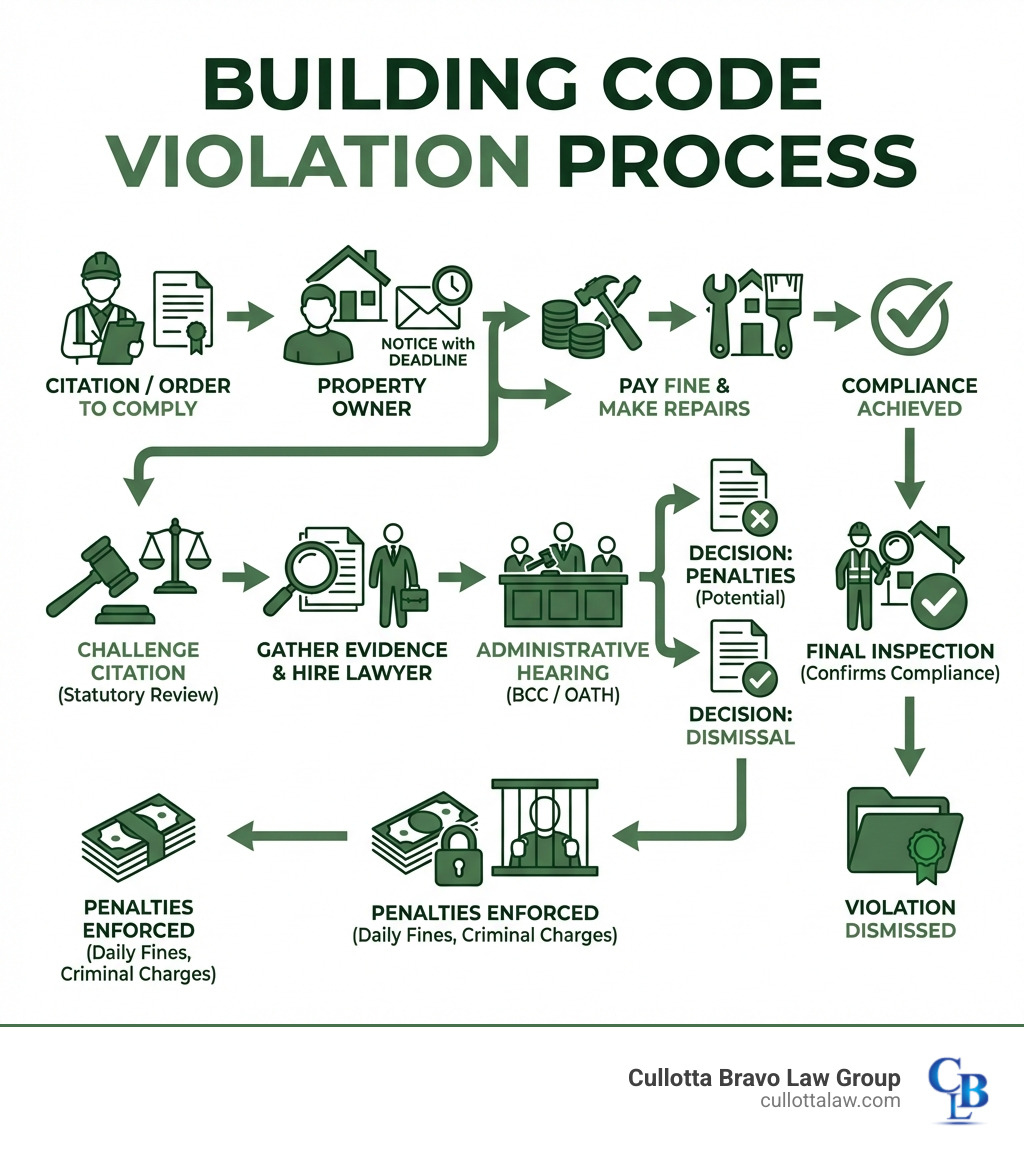
Receiving a building code citation can be daunting, but with a clear plan and the right legal support, it’s a challenge you can overcome. Here are the typical steps involved in resolving a building code violation case in Illinois:
- Immediate Action and Legal Consultation: The moment you receive a “Notice of Violation” or a summons, do not ignore it. Contact a Building code violation lawyer immediately. We will help you understand the citation, its implications, and the deadlines for response. Prompt action, even if incomplete, demonstrates your good faith to an administrative law judge and can help mitigate penalties.
- Case Assessment and Strategy: We’ll conduct an initial assessment of your case, reviewing the citation, the alleged violations, and any supporting documentation. We’ll discuss potential defenses, the likelihood of success, and the best strategy moving forward, whether that’s negotiation, remediation, or a formal hearing.
- Evidence Gathering and Expert Collaboration: We’ll gather all relevant documents: permits, plans, contracts, inspection reports, and communication with the city. If necessary, we’ll work with architects, engineers, and other building professionals to assess the violations, propose solutions, and provide expert testimony. Engaging these experts early can ensure that any repairs are not only code-compliant but also cost-effective.
- Permit Acquisition and Repairs: If repairs or modifications are needed, we’ll guide you through the process of obtaining the necessary permits. It’s critical not to perform work that requires permits without securing them first, as this can lead to further violations. We can also help manage contractors to ensure the work is done correctly and efficiently, preventing unexpected cost increases or scope creep.
- Negotiation and Settlement: Often, we can negotiate with the municipal building department to reduce fines, extend compliance deadlines, or agree on a remediation plan. Our goal is to achieve a favorable settlement that avoids a lengthy and costly hearing.
- Hearing Preparation and Representation: If a settlement isn’t possible, we’ll prepare for your administrative hearing. This involves organizing evidence, preparing witnesses (including experts), and crafting compelling arguments. We will represent you vigorously before the Buildings Hearings Division or other relevant administrative body in Illinois.
- Final Inspection and Dismissal: Once the violations are corrected, a final inspection by the building department is usually required. We ensure that all documentation is in order and that the department officially dismisses the charges, clearing your property of the violation.
Throughout this process, our team at Cullotta Bravo Law Group works hand in hand with you, providing custom guidance and strategic solutions to confidently tackle compliance issues and protect your property rights.
Frequently Asked Questions about Building Code Violation Lawyers
Navigating building codes and violations can raise many questions. Here are some of the most common inquiries we receive:
What are the most common types of building code violations?
In Illinois, particularly in areas like Chicago, Aurora, Naperville, and Joliet, we frequently see violations related to:
- Unpermitted work: This is a big one, often involving renovations, additions, or structural changes completed without the necessary permits and inspections.
- Safety hazards: Such as obstructed exits, inadequate fire safety systems, missing or damaged handrails on stairs, or unsafe porches and decks. We’ve seen crumbling and unsafe porches cited frequently.
- Structural integrity issues: Problems with foundations, roofs, walls, or other load-bearing elements that could compromise the building’s stability.
- Electrical and plumbing deficiencies: Outdated wiring, improper electrical installations, or faulty plumbing that poses a risk of fire, shock, or water damage.
- Zoning and occupancy issues: Violations related to how a property is used (e.g., illegal conversions of residential units), exceeding occupancy limits, or non-compliant signage.
These violations are serious because they directly impact the safety of occupants and the public.
Can a building code violation lead to criminal charges?
Yes, absolutely. While many initial violations result in fines, ignoring notices or failing to correct serious violations can escalate to criminal charges. Municipalities in Illinois can pursue criminal prosecution for persistent non-compliance. Repeatedly ignoring violations or failing to appear at administrative hearings can lead to increased fines, penalties, and even a summons to criminal court. In some severe cases, particularly those involving imminent danger or repeated disregard for safety, property owners can face jail time. This underscores why it’s critical to address any violation promptly and with competent legal counsel.
How long does it typically take to resolve a building code case?
The timeframe for resolving a building code violation case can vary significantly depending on several factors:
- Severity of the violation: Minor administrative errors might be resolved in a few weeks or months, while complex structural issues requiring extensive repairs and multiple inspections could take much longer, sometimes a year or more.
- Cooperation with authorities: Your willingness to engage with the building department and make necessary corrections can expedite the process.
- Legal strategy: Aggressive negotiation or a strong defense can sometimes lead to quicker resolutions, but appeals or protracted disputes can extend the timeline.
- Work required: If significant construction or renovation is needed, the time taken to secure permits, hire contractors, complete the work, and undergo final inspections will add to the duration.
While some cases are resolved quickly, it’s not uncommon for complex building code matters to take several months, or even over a year, to reach a final resolution. Having an experienced Building code violation lawyer by your side can help streamline the process and ensure you meet all deadlines efficiently.
Conclusion
Facing a building code violation can feel like an uphill battle, but you don’t have to steer it alone. The intricate web of regulations, potential for steep fines, and the risk of serious legal consequences demand the expertise of a seasoned Building code violation lawyer. We understand that these aren’t just legal problems; they are challenges that impact your property, your livelihood, and your peace of mind.
At Cullotta Bravo Law Group, we bring over 35 years of trial experience to your corner. We pride ourselves on aggressive legal representation, treating each client with the dignity and respect they deserve, and have a track record of achieving significant results, including multi-million dollar settlements in various legal areas. Whether you’re dealing with an unpermitted deck in Aurora, a structural issue in Chicago, a zoning dispute in Naperville, or a safety hazard in Joliet, we are here to help you decode the code.
Don’t let a building code violation compromise your property or your future. Contact us today for a consultation to discuss your specific situation and learn how we can help you achieve a favorable outcome. We are your dedicated legal advocates in Illinois.
For more information on how we can assist you, particularly in cases involving property safety and personal injury, visit our page on Aurora slip and fall accident attorney.