

Condominium law attorney: 2026 Expert Guidance
Understanding Condominium Law and When You Need an Attorney
A Condominium law attorney specializes in the unique legal issues that arise from shared ownership of property. Here’s what you need to know:
What a Condominium Law Attorney Handles:
- Dispute Resolution – Conflicts between owners, or between owners and the association board
- Governing Document Review – Drafting, interpreting, and amending declarations, bylaws, and rules
- Assessment Collection – Pursuing unpaid fees and filing liens against delinquent units
- Construction Defects – Representing associations or owners in claims against developers
- Compliance Guidance – Ensuring associations follow state laws and their own governing documents
- Litigation Services – Court representation when disputes cannot be resolved otherwise
When You Need One:
- You’re facing fines or violations you believe are unfair
- Your association refuses to maintain common areas or address safety issues
- You’re a board member dealing with a major legal decision
- You’re buying or selling a unit and need document review
- The association is pursuing collection action against you
Condominium living offers convenience and community, but it also comes with specific regulations and duties that can lead to serious conflicts. Disputes often stem from uncertainty regarding the rules that govern both property upkeep and community conduct. When these disagreements escalate—whether over unpaid assessments, construction defects, or governance issues—the consequences can include liens on your property, mounting legal fees, and damage to your financial security.
Why This Matters
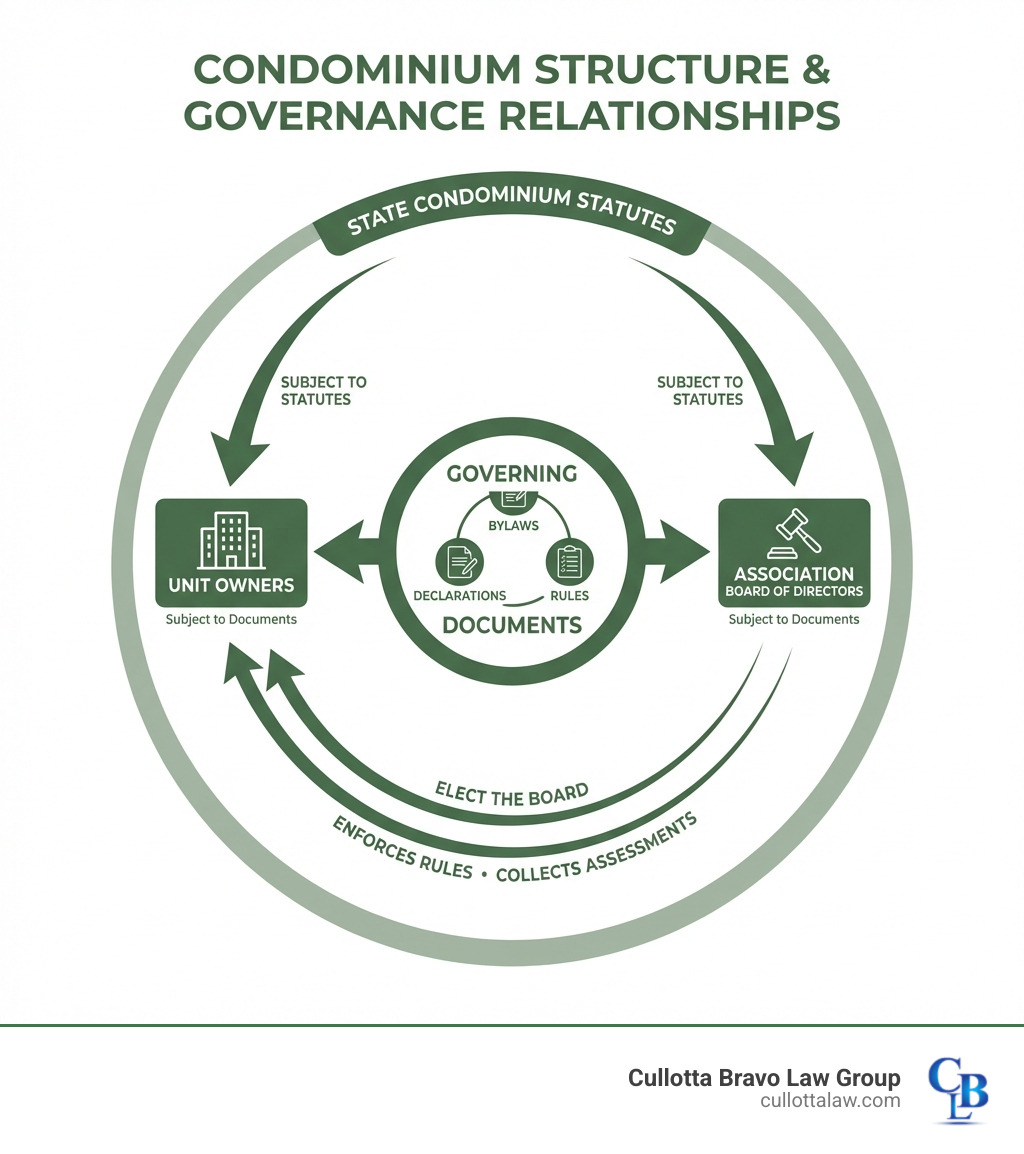
Condominiums operate under a complex web of state statutes, recorded declarations, association bylaws, and local ordinances. Unlike traditional homeownership, you share ownership of common elements with your neighbors and must contribute to collective expenses. The association board has significant power to create rules, levy assessments, and enforce compliance—but they also have legal obligations they must follow.
When something goes wrong, you need an attorney who understands this specialized area of property law.
I’m Peter Cullotta, founding partner at Cullotta Bravo Law Group, with over 35 years of experience protecting clients’ rights in complex legal matters throughout Chicagoland. While my practice focuses primarily on personal injury, workers’ compensation, and nursing home abuse cases, I understand how critical it is to work with attorneys who have deep expertise in specialized areas like condominium law—which is why our firm connects clients with the right legal resources when real estate disputes threaten their financial security and quality of life.
Condominium law attorney terminology:
The Key Players: Association & Unit Owner Responsibilities
Living in a condominium means sharing space and responsibilities with your neighbors. It’s a bit like a mini-democracy, where everyone has a stake in the community’s well-being. This unique setup involves two primary entities: the condominium association and the individual unit owners. Each has distinct roles, rights, and obligations, all governed by a set of foundational documents and, of course, state law.

At the heart of condominium living are the governing documents: the Declaration of Condominium (sometimes called the Master Deed), the Bylaws, and the Rules and Regulations. These documents are the constitution, laws, and everyday rules of your condo community. They define everything from property boundaries and common elements to how assessments are calculated and what kind of pets are allowed.
For the association’s board members, there’s a significant responsibility known as a “fiduciary duty.” This means they must act in the best financial and legal interests of the association and all its unit owners, making decisions with care, loyalty, and good faith. When disputes arise, often it’s because one party feels this duty has been breached or that the governing documents haven’t been properly applied or understood.
The Condominium Association’s Role
The condominium association, typically managed by an elected Board of Directors, is the operational backbone of the community. Think of them as the local government for your condominium. Their responsibilities are extensive and critical to maintaining property values and a harmonious living environment.
Key responsibilities of a condominium association include:
- Managing the Property: Overseeing the maintenance, repair, and replacement of common elements like roofs, hallways, and recreational facilities to protect the investment of all owners.
- Creating and Managing Budgets: Preparing annual budgets for operating expenses and future repairs, while ensuring financial transparency and accountability.
- Collecting Assessments: Collecting regular fees from unit owners to fund operations and levying special assessments for major projects or unexpected expenses.
- Enforcing Rules and Regulations: Enforcing the community’s rules and bylaws, which can involve issuing warnings, levying fines, or pursuing legal action for violations.
- Holding Elections: Facilitating regular, democratic elections for board members, allowing unit owners to participate in community governance.
- Keeping Official Records: Maintaining detailed records, including meeting minutes and financial statements. In Illinois, unit owners typically have the right to inspect these records.
Our experience working with community associations in Illinois, including those in Aurora, Chicago, and Naperville, shows that strong, legally sound governance is the key to a thriving condominium community.
Rights and Obligations of Unit Owners
While the association manages the big picture, unit owners also have crucial rights and obligations that contribute to the overall success of condominium living. It’s a two-way street, after all!
Primary obligations of condominium unit owners include:
- Paying Assessments: Timely payment of regular and special assessments is essential for the association to fulfill its duties.
- Complying with Rules: Owners must abide by the Declaration, Bylaws, and Rules and Regulations of the association.
- Maintaining Unit Interior: Owners are generally responsible for the maintenance and repair of the interior of their own units.
In return for these obligations, unit owners enjoy several important rights:
- Right to Vote: Owners can vote on key association matters, including the election of board members.
- Right to Attend Meetings: In Illinois, owners generally have the right to attend board meetings, promoting transparency.
- Access to Records: Owners have the right to inspect the association’s official records, serving as a vital check and balance.
- Quiet Enjoyment: Owners have the right to enjoy their property without unreasonable interference from the association or other owners.
Understanding these intertwined roles and responsibilities is the first step in avoiding potential conflicts. When the lines blur, or one party feels their rights are infringed, that’s often when a condominium law attorney becomes indispensable.
What Does a Condominium Law Attorney Do?
When you live in a condominium, you’re part of a unique legal ecosystem. It’s not just about owning your unit; it’s about shared governance and collective responsibility. This complexity means that when legal issues arise, they often require specialized knowledge that goes beyond general real estate law. This is where a condominium law attorney steps in.

A condominium law attorney acts as a legal guide and advocate for both condominium associations and individual unit owners. They steer the intricate web of state statutes—like the Illinois Condominium Property Act—and the specific declarations, bylaws, and rules unique to each community. Their role often encompasses everything from providing general counsel to engaging in full-scale litigation.
For associations, an attorney might serve as general counsel, advising on day-to-day operations and ensuring compliance. For individual owners, an attorney can be a powerful advocate, ensuring their rights are protected when disputes arise. Whether drafting legal documents or representing clients in court, their expertise is crucial for maintaining order and protecting investments in condominium communities across Illinois, from Chicago to Naperville and Joliet.
Core Services for Associations and Owners
The services provided by a condominium law attorney are diverse. Here are some of the core ways they assist:
- Document Drafting and Amendment: Drafting and amending clear, legally compliant declarations, bylaws, and rules to reflect the community’s needs and evolving laws.
- Assessment Collection and Lien Filing: Aggressively pursuing unpaid assessments, including sending demand letters, initiating lawsuits, and placing liens on units to secure payment.
- Contract Review: Reviewing vendor contracts for services like landscaping and maintenance to ensure they are fair and protect the association’s interests.
- Construction Defect Claims: Representing associations or owners in pursuing claims against developers and builders to recover costs for necessary repairs.
- Governance and Compliance Advice: Providing ongoing advice on proper board procedures, election processes, and compliance with fair housing laws and other regulations to avoid legal pitfalls.
- Dispute Resolution: Resolving conflicts between unit owners or between owners and the association through negotiation, mediation, arbitration, or litigation.
- Litigation Representation: Providing vigorous representation in court when disputes cannot be resolved amicably.
When to Hire a Condominium Law Attorney
Knowing when to seek legal counsel can save both associations and individual owners significant time, money, and stress.
For Associations, consider hiring a *condominium law attorney when:*
- Developer Transition: Guiding the association through the critical phase when control shifts from the developer to the unit owners.
- Amending Documents: Reviewing any significant changes to the Declaration, Bylaws, or Rules to ensure legality.
- Major Repair Projects: Overseeing large-scale projects, especially those requiring special assessments or significant contracts.
- Delinquent Owners: Initiating formal legal actions to recover unpaid assessments when informal efforts fail.
- Legal Challenges: Facing a lawsuit or needing to take legal action against a unit owner or third party.
For Owners, consider hiring a *condominium law attorney when:*
- Disputes with the Board: You believe the board is acting outside its authority, breaching its fiduciary duty, or unfairly enforcing rules.
- Unfair Fines or Violations: You’ve received a fine or violation notice that you believe is unjust or improperly levied.
- Harassment or Discrimination: You are experiencing harassment or discrimination from the association or another unit owner.
- Reviewing Sale Documents: Before buying or selling a condominium, an attorney can review association documents to identify potential issues.
- Threat of Lien or Foreclosure: The association is threatening to place a lien on your unit or foreclose due to unpaid assessments.
Benefits of an Experienced Condominium Law Attorney
Hiring an experienced condominium law attorney offers invaluable benefits:
- Niche Expertise: They possess deep knowledge of the Illinois Condominium Property Act and related statutes, which general real estate attorneys might overlook.
- Risk Mitigation: They proactively identify and mitigate legal risks, preventing costly disputes and ensuring compliance.
- Ensuring Compliance: They stay updated on changes in legislation and case law, ensuring that governing documents and association practices remain compliant.
- Protecting Financial Assets: They safeguard the financial interests of their clients, whether by recovering unpaid assessments or protecting an owner from an unjust lien.
- Objective Advice: In emotionally charged disputes, an attorney provides objective, legally sound solutions.
- Efficient Dispute Resolution: They can often resolve conflicts more efficiently through negotiation, mediation, or arbitration, saving clients time and legal fees.
Our firm, Cullotta Bravo Law Group, understands the value of specialized legal counsel. While we aggressively represent clients in personal injury, workers’ compensation, and nursing home abuse, we recognize that when it comes to condominium law, you need a legal partner whose entire practice is immersed in the specifics of Illinois property law.
Navigating Complex Condominium Legal Issues
Condominium living, while offering many advantages, isn’t always smooth sailing. The close proximity of residents and the shared governance structure can sometimes lead to complex legal issues that require a deft hand to resolve. These issues often touch upon various aspects of law, from everyday disputes to the intricacies of development and state-specific regulations.
Common Disputes and Resolutions
Many condominium disputes are, at their heart, about communal living. What seems like a minor annoyance can quickly escalate into a legal battle if not handled properly. Here are some common issues and how a condominium law attorney can help resolve them:
- Noise Complaints: Interpreting and enforcing bylaws regarding noise, and mediating disputes between neighbors.
- Parking Issues: Reviewing and enforcing parking rules regarding assigned spots, visitor parking, or unauthorized vehicles.
- Pet Violations: Assisting associations in drafting clear pet rules and helping owners challenge unfair restrictions or fines.
- Maintenance Disagreements: Clarifying whether the owner or the association is responsible for repairs and resolving disputes over costs.
- Architectural Changes: Advising on the approval process for unit modifications to ensure compliance with community guidelines.
- Demand Letters: Often, the first step in resolving a dispute is a formal demand letter from an attorney, clearly outlining the legal position and seeking a resolution.
- Mediation and Arbitration: Many bylaws require alternative dispute resolution (ADR) before litigation. Attorneys represent clients in these forums, aiming for a cost-effective resolution.
Condo Law vs. HOA Law: What’s the Difference?
While often used interchangeably, condominium law and homeowner’s association (HOA) law, though similar, have distinct legal differences that are crucial to understand, especially in Illinois. Both involve community living and shared responsibilities, but the nature of ownership and the governing legal frameworks differ.
Here’s a comparison:
| Feature | Condominium Association (Condo) | Homeowner Association (HOA) |
|---|---|---|
| Property Ownership | You own the interior of your unit and jointly own common elements (land, exterior walls, roof) with other owners. | You own your individual lot and home and jointly own common areas (parks, roads, clubhouses) with other homeowners. |
| Governing Laws | Governed by state-specific Condominium Acts (e.g., Illinois Condominium Property Act). | Governed by state-specific Common Interest Community Acts and general contract law. |
| Maintenance Responsibilities | Association typically maintains common elements; owner maintains unit interior. | Owner maintains their lot and home; HOA maintains common areas. |
| Assessment Structure | Assessments cover shared expenses for common elements and association operations. | Assessments cover shared expenses for common areas and HOA operations. |
| Structure | Units are typically attached (apartments, townhouses). | Homes are typically detached single-family houses, but can also include townhouses. |
In Illinois, both types of associations are regulated, but under different sections of law. A condominium law attorney is specifically versed in the nuances of the Illinois Condominium Property Act, whereas an HOA attorney might focus more on the Illinois Common Interest Community Act. Understanding this distinction is vital when seeking legal advice.
Understanding State-Specific Regulations
The importance of local laws cannot be overstated in condominium matters. While general principles of property law apply, the specifics of how condominiums are formed, governed, and operated are dictated by state statutes. This means that advice applicable in another state may not directly apply to a condominium in Aurora, Chicago, or Joliet.
In Illinois, condominiums are primarily governed by the Illinois Condominium Property Act (765 ILCS 605/). This comprehensive statute outlines:
- The creation of condominiums and the recording of a Declaration.
- The specific rights of unit owners and the obligations of the association.
- The authority of the association to levy assessments and enforce rules.
- Procedures for amending governing documents.
- Guidelines for resolving conflicts and managing finances.
Beyond the statewide Act, local ordinances in cities like Chicago, Naperville, and Joliet might impose additional requirements. Therefore, a condominium law attorney practicing in Illinois must have a thorough understanding of both the statewide Act and any relevant local laws to provide effective counsel. Our firm ensures that when we connect clients to a condominium law attorney, they are specialists in Illinois’ unique legal landscape.
Frequently Asked Questions about Condominium Law
We often hear similar questions from condominium owners and associations across Illinois. Let’s tackle some of the most common ones.
Can a condo association prevent me from renting out my unit?
Yes, generally, a condominium association can have rules in its Declaration or Bylaws that restrict or even prohibit the rental of units. These restrictions must be reasonable and uniformly applied. Common restrictions include minimum lease terms, requiring board approval of tenants, or capping the percentage of rental units. These rules are often put in place to maintain the owner-occupancy rate, which can impact property values and financing options. If you’re considering renting your unit, or if the association is attempting to restrict your rental rights, reviewing your governing documents with a condominium law attorney is crucial to understand your rights and the legality of the association’s rules.
What happens if I don’t pay my condo fees or a special assessment?
Failing to pay condo fees can have serious consequences. In Illinois, an association can typically:
- Charge Late Fees and Interest as outlined in the governing documents.
- Suspend Privileges to common amenities like the gym or pool.
- Place a Lien on Your Unit, which must be paid before you can sell or refinance.
- Initiate a Foreclosure Lawsuit to recover the unpaid assessments, which can lead to you losing your property.
- Sue for a Personal Money Judgment for the unpaid amounts.
It’s vital to address assessment issues promptly. If you are struggling to pay or dispute the charges, contact a condominium law attorney to negotiate with the association or represent you in legal action.
Can I sue my condominium association?
Yes, under certain circumstances, you can sue your condominium association. If the association breaches its duties or acts outside its authority, legal action may be necessary. Common reasons to sue an association include:
- Breach of Fiduciary Duty: The board fails to act in the best interests of the association or mismanages funds.
- Failure to Maintain Common Elements: The association neglects its responsibility to repair common areas, causing damage.
- Unfair or Discriminatory Rule Enforcement: Rules are applied inconsistently, unfairly, or in a discriminatory manner.
- Improperly Levied Assessments: A special assessment was not properly voted on or is otherwise illegal.
- Lack of Access to Records: The association unlawfully denies you access to official records.
Before suing, it’s often advisable to attempt alternative dispute resolution (ADR) like mediation or arbitration. Consulting a condominium law attorney in Illinois is the first step to evaluate your claim, understand the legal process, and determine the best course of action.
Conclusion: Your Partner in Navigating Condo Law
Living in a condominium offers a unique blend of community and convenience, but it also introduces a distinct set of legal responsibilities and potential challenges. From the everyday nuances of communal living to the complexities of governing documents and state statutes, condominium law is intricate and changing.
As we’ve explored, a condominium law attorney plays a vital role for both associations and individual unit owners in Illinois. For associations, they are the trusted advisors ensuring sound governance, financial stability through assessment recovery, and proactive compliance with laws like the Illinois Condominium Property Act. For unit owners, they are the fierce advocates protecting rights, challenging unfair practices, and resolving disputes that threaten peace of mind and property value.
Whether you’re a board member struggling with a major decision, a unit owner facing an unjust fine, or a developer navigating the complexities of a new project in Aurora, Chicago, Naperville, or Joliet, having specialized legal counsel is not just beneficial—it’s often essential. An experienced condominium law attorney brings niche expertise, mitigates risks, protects financial assets, and offers objective advice, ultimately contributing to a more harmonious and legally secure condominium community.
While our firm, Cullotta Bravo Law Group, specializes in aggressively representing clients in personal injury, workers’ compensation, and nursing home abuse cases, we firmly believe in connecting our clients with the best legal resources for all their needs. When it comes to the specialized field of condominium law, you need a partner who is deeply entrenched in its specifics, ready to translate complex legal jargon into clear, actionable strategies.
Don’t let condominium disputes or legal uncertainties compromise your investment or your quality of life. Proactive legal counsel can make all the difference, ensuring your rights are protected and disputes are resolved effectively.
Find out more about our real estate legal services on our website: https://cullottalaw.com/real-estate/.