

How to Choose a Boating Accident Attorney Who Won’t Leave You High and Dry
When You Need a Boating Accident Attorney: What to Know First
If you’ve been hurt on the water, finding the right boating accident attorney can be the difference between a fair recovery and getting nothing at all.
Here’s what to know right away:
- Boating accident claims involve a mix of state law and federal maritime law — it’s more complex than a typical car accident case
- Multiple parties can be liable: the boat operator, the vessel owner, a rental company, or even a parts manufacturer
- You have a limited window to file — deadlines vary by state and case type, sometimes as short as 1-3 years
- Insurance companies will move fast to minimize your payout — you should too
- A specialized attorney with maritime experience gives you a major advantage over using a general personal injury lawyer
Boating accidents are more dangerous than many people expect. According to U.S. Coast Guard data, drowning is the leading cause of death in recreational boating fatalities — and 90% of drowning victims were not wearing a life jacket. In Illinois alone, 2023 saw 70 boating accidents resulting in 12 fatalities and 37 injuries.
The financial and emotional toll can be overwhelming: mounting medical bills, lost income, and the stress of dealing with insurance adjusters — all while you’re trying to recover.
I’m Peter Cullotta, founding partner at Cullotta Bravo Law Group, and with over 35 years of trial experience handling personal injury cases throughout the Chicagoland area — including watercraft injury claims — I’ve seen how the right boating accident attorney changes outcomes for injured victims. This guide will walk you through everything you need to know to protect your rights and choose representation that will actually fight for you.
Quick boating accident attorney definitions:
Understanding Boating Accidents: Causes, Injuries, and Liability
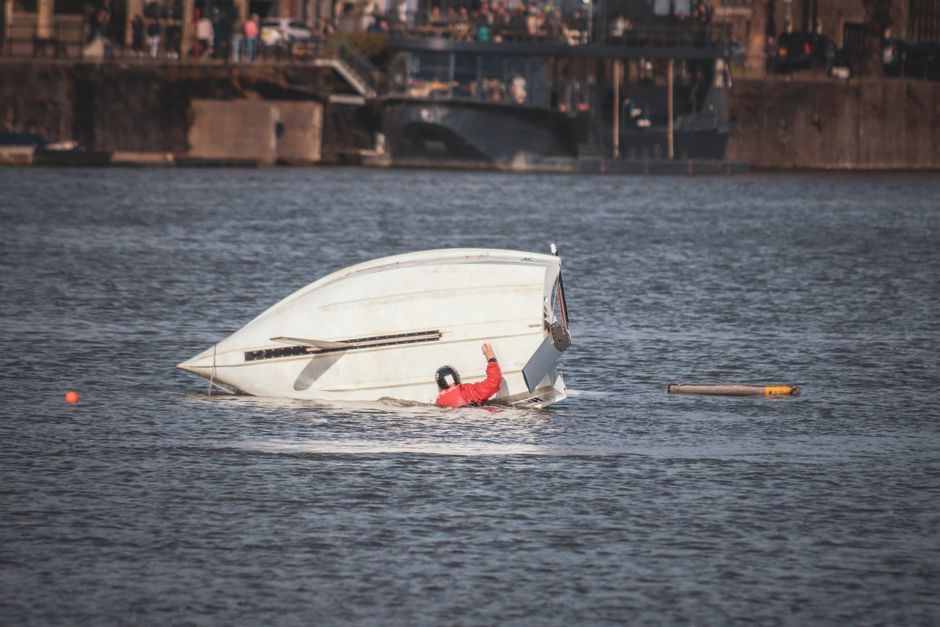
Recreational boating is one of Illinois’s favorite warm-weather pastimes. From the bustling waters of Lake Michigan to the scenic stretches of the Chicago River, the Fox River in Aurora, and the waterways around Naperville and Joliet, thousands of residents head out every summer to enjoy the sun. However, watercraft activities carry inherent risks that many operators fail to respect.
Unlike driving a car, operating a boat does not require a rigorous practical licensing exam in many jurisdictions. This lack of formal training, combined with open water and a relaxed atmosphere, often leads to severe, life-altering negligence. To understand how these cases unfold, we have to look closely at the underlying causes of these collisions, the devastating injuries they cause, and how liability is established. To put the scope of this issue in perspective, you can learn more about national boating accident statistics through the U.S. Coast Guard’s annual reporting.
Common Causes and Statistics of Waterway Collisions
When we look at the data compiled by the Illinois Department of Natural Resources (IDNR), a clear and troubling pattern emerges. In 2023, the IDNR reported 70 boating accidents across Illinois waterways, resulting in 12 fatalities and 37 injuries. Strikingly, 8 of the 12 individuals who lost their lives in these accidents were not wearing life jackets.
This local data mirrors national trends. Historically, the U.S. Coast Guard has noted that roughly 70% of boating fatalities occur on vessels where the operator had not received any formal boating safety instruction. Furthermore, nationwide statistics show that drowning is the leading cause of death in recreational boating fatalities, and 90% of those who drowned were not wearing life jackets. Beyond the tragic human cost, these incidents result in massive economic damage; nationwide boating accidents in a single historical year caused more than $43 million in property damage.
The most common catalysts for these collisions include:
- Operator Inattention: Just like distracted driving on our highways, distracted boating is a primary cause of collisions. Operators who are busy adjusting music, looking at their phones, or chatting with passengers fail to maintain a proper lookout.
- Excessive Speed: Waterways do not have painted lanes. When recreational vessels travel at excessive speeds, operators have significantly less time to react to sudden wakes, floating debris, swimmers, or other watercraft.
- Boating Under the Influence (BUI): Alcohol is a major contributing factor in fatal watercraft accidents. Operating a boat requires balance, coordination, and rapid decision-making—all of which are severely degraded by alcohol or drug consumption. If you or a loved one was injured by an impaired operator, it is critical to consult a boating under influence lawyer who understands the strict chemical testing and liability laws surrounding BUI.
Who Is Liable When a Boating Accident Occurs?
Establishing liability in a watercraft incident is rarely straightforward. Unlike a simple rear-end car accident on Route 59 in Naperville, a maritime collision can involve a web of responsible parties. To successfully recover compensation, a skilled boating accident attorney must thoroughly investigate every angle of the incident. Under Illinois personal injury law and general maritime principles, multiple parties can be held legally accountable:
- The Boat Operator: The operator has a fundamental duty to navigate the vessel safely, follow right-of-way rules, and maintain a safe speed. If they violate these rules, they can be held directly liable for negligence.
- The Vessel Owner: If the owner of the boat allows an inexperienced, unlicensed, or visibly intoxicated person to operate their watercraft, the owner can be sued for “negligent entrustment.”
- The Boat Rental Company: Rental businesses in Illinois have a strict obligation to maintain their fleets in seaworthy condition and ensure that renters receive basic safety instructions. If a rental company rents out a vessel with mechanical defects or fails to provide required safety gear, they may share fault.
- The Parts Manufacturer: If a steering system fails, a hull breaches due to a manufacturing defect, or a safety mechanism malfunctions, the manufacturer of the boat or the defective component can be held liable under product liability law.
- Passenger Liability: In rare cases, a passenger’s reckless behavior (such as physically interfering with the operator or intentionally capsizing a small craft) can make them partially or fully liable for resulting injuries.
Navigating these overlapping layers of responsibility requires deep legal insight. For a comprehensive breakdown of how fault is assigned in these unique scenarios, read our detailed guide on Boat Accidents.
Navigating State Laws vs. Federal Maritime Jurisdiction

One of the most complex aspects of watercraft litigation is determining which body of law applies to your claim. Depending on where your accident occurred, your case may be governed by Illinois state personal injury law, federal maritime law (also known as admiralty law), or a combination of both.
If an accident occurs on a landlocked, non-navigable lake in Illinois, state personal injury laws apply. However, if the accident occurs on “navigable waters”—which include Lake Michigan, the Mississippi River, and parts of the Chicago and Illinois Rivers used for commercial interstate commerce—federal maritime jurisdiction is triggered.
This jurisdictional divide changes everything: the statute of limitations, how comparative negligence is calculated, the types of damages you can recover, and even which court will hear your case.
Recreational vs. Commercial Claims under Maritime Law
Recreational boating claims are handled differently than commercial maritime claims. While a recreational passenger seeks compensation under general negligence principles, commercial maritime workers (seamen, deckhands, and harbor workers) are protected by powerful federal statutes designed to shield them from the hazards of working on the water.
To clarify these distinctions, consider the following comparison table:
| Legal Framework | Who It Covers | Key Legislation / Principles | Types of Damages Recoverable |
|---|---|---|---|
| Recreational Boating Claims | Passengers, swimmers, water-skiers, jet-ski operators | General maritime negligence / Illinois state law | Medical bills, lost wages, pain and suffering, property damage |
| Commercial Seamen Claims | Crew members, deckhands, captains, commercial vessel workers | The Jones Act (46 U.S.C. § 30104) | Maintenance and cure, lost earning capacity, pain and suffering due to employer negligence |
| Harbor / Dock Worker Claims | Shipbuilders, longshoremen, harbor workers, dock workers | Longshore and Harbor Workers’ Compensation Act (LHWCA) | Specialized workers’ compensation benefits (medical treatment and disability payments) |
| Cruise Ship Injury Claims | Paying passengers on commercial cruise liners | Contractual maritime law / Ticket contract limitations | Medical care, transport costs, pain and suffering (subject to strict forum selection clauses) |
For commercial maritime workers, the Jones Act provides a pathway to sue employers for negligence and recover damages that go far beyond standard workers’ compensation. Conversely, if you are injured while traveling as a guest on a commercial vessel, your case is subject to unique maritime rules.
For example, cruise lines often print strict, binding legal terms on passenger tickets. These contracts frequently limit the time you have to file a claim to just one year and mandate that any lawsuit must be filed in a specific federal court (often in Florida), regardless of where you bought the ticket or where the injury occurred. If you find yourself in this situation, you need to speak with a dedicated cruise ship accident lawyer immediately to avoid missing critical contractual deadlines.
To learn more about how federal courts handle these complex issues, you can review Cornell Law School’s legal encyclopedia entry on understanding maritime law jurisdiction.
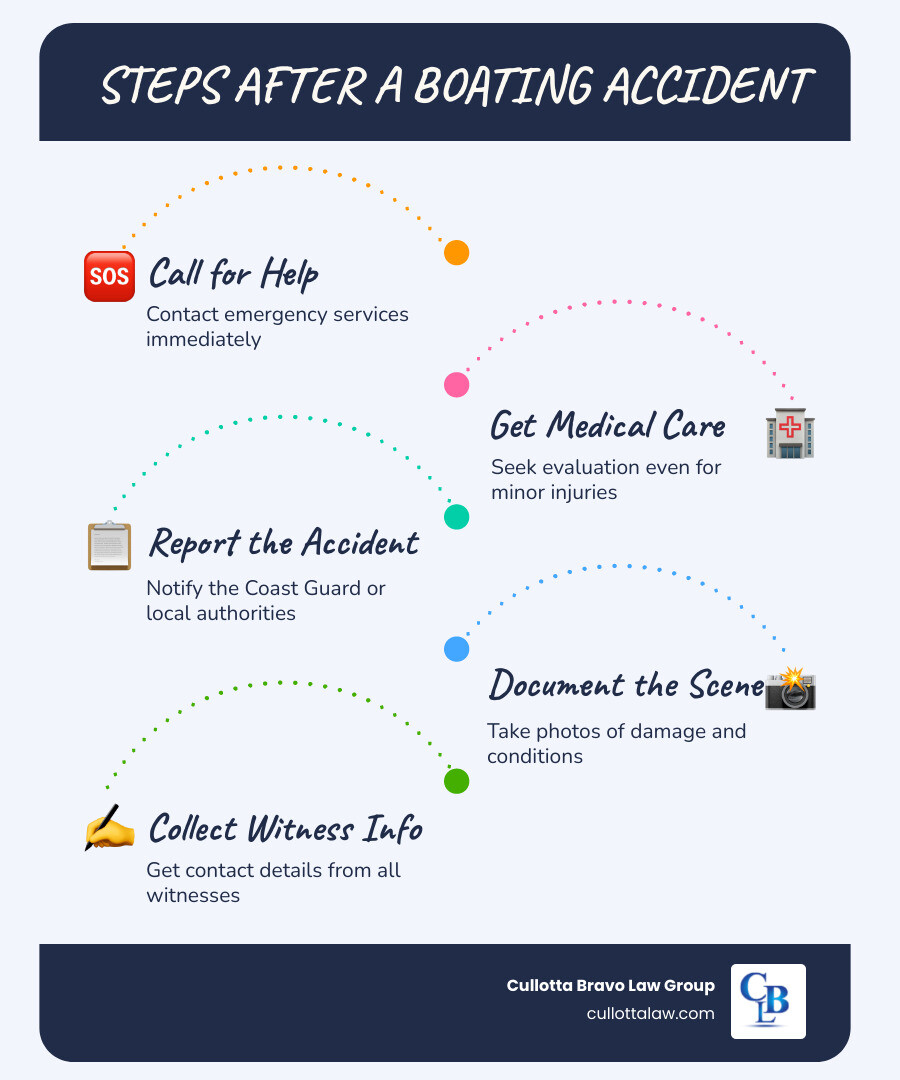
What to Do Immediately After a Watercraft Incident
The moments directly following a watercraft accident are chaotic, stressful, and physically dangerous. However, the steps you take in the hours and days after the incident will heavily dictate your physical recovery and the strength of your legal claim.
First and foremost, prioritize safety. Check everyone on board for injuries and immediately call for emergency medical assistance. If your vessel is taking on water or is in danger of colliding with other structures, take immediate steps to stabilize the situation if it is safe to do so.
Once physical safety is secured, you must report the accident. Under Illinois law, boat operators must file an official report with the IDNR if an accident results in a casualty, an injury requiring medical treatment beyond first aid, or property damage exceeding $2,000.
Next, gather as much evidence as possible. Take photos and videos of the damage to all vessels, the surrounding water conditions, navigation markers, and any visible physical injuries. Collect the names, phone numbers, and insurance details of all operators involved, as well as contact information for any witnesses onshore or in nearby boats. Keep a detailed, written record of your medical treatments, and start a daily journal documenting your pain levels, physical limitations, and emotional state.
For a step-by-step breakdown of how to protect yourself on the water, read our guide on what to do when involved in a boat accident.
How a Boating Accident Attorney Counters Insurance Defense Tactics
Do not expect the insurance companies to play fair. Insurance adjusters represent the financial interests of their employers, not your recovery. Shortly after the accident, an adjuster may call you under the guise of “helping you resolve your claim quickly.” They will likely ask you to provide a recorded statement or sign a medical release form.
Do not do this without consulting an attorney.
Adjusters are highly trained to ask leading questions designed to get you to admit fault or downplay the severity of your injuries. They may argue that you were partially responsible for the crash because you weren’t holding onto a handrail, or they might claim your injuries were pre-existing.
An experienced boating accident attorney serves as your shield against these aggressive defense tactics. We handle all communications with the insurance companies, gather objective evidence (such as GPS navigation logs, vessel maintenance records, and expert weather reconstructions), and build a solid case that clearly establishes the defendant’s liability. We ensure that your claim is negotiated from a position of maximum strength.
Key Qualifications to Look For in a Boating Accident Attorney
Choosing the right legal representation is the most important decision you will make in your recovery journey. You should never hire a lawyer who treats watercraft cases like standard car accidents. Maritime and boating cases require a highly specialized set of skills, resources, and experiences.
When interviewing a potential boating accident attorney, look for these essential qualifications:
- Proven Maritime and Boating Case Experience: Ask the attorney directly about their history with watercraft litigation. Have they successfully resolved cases involving recreational boats, Jet Skis, or commercial vessels in federal and state courts?
- Deep Knowledge of Local Waterways: Your attorney should be familiar with the specific regulations, local law enforcement agencies, and geographic layouts of Illinois waterways, including Lake Michigan and local rivers.
- A Robust Network of Expert Witnesses: Complex boating cases often require testimonies from marine surveyors, accident reconstructionists, boating safety instructors, and medical professionals. Your firm must have the financial resources to hire these national experts.
- Trial Readiness: Many personal injury firms are “settlement mills” that try to resolve cases quickly for a fraction of their true value to avoid going to court. You want a team that prepares every single case as if it is going to trial, which forces insurance companies to take your claim seriously.
- Contingency Fee Structure: You should never have to pay upfront, out-of-pocket legal fees. Look for a firm that operates on a contingency fee basis, meaning they only get paid if they successfully recover compensation for you.
For more tips on identifying top-tier legal advocates in your area, read our guide on Finding local boating accident attorneys near you.
Why You Need a Specialized Boating Accident Attorney
At Cullotta Bravo Law Group, we understand that a watercraft injury can completely derail your life. We don’t just fill out paperwork; we launch a comprehensive, aggressive investigation into your accident.
We obtain local police and Coast Guard reports, analyze GPS and navigation data, review the operator’s boating history, and examine the vessel for mechanical failures. We act as your local legal lifeline, handling the complex legal machinery so you can focus entirely on your physical healing. To learn more about how we advocate for our clients, read about Chicago Boat Accident Attorneys Your Local Legal Lifeline.
Frequently Asked Questions About Boating Injuries
What is the statute of limitations for a boating accident claim?
In Illinois, the standard statute of limitations for a personal injury claim arising from a recreational boating accident is two years from the date of the incident. However, if federal maritime law applies to your case, the statute of limitations is generally three years.
If your claim involves a government entity (for example, a collision with a state-owned vessel), the deadline to file a notice of claim can be significantly shorter—sometimes as little as one year or less. Because these deadlines are strict and missing them will permanently bar you from recovering compensation, you must consult a lawyer as soon as possible to preserve your rights.
How are damages calculated in a boating accident case?
Calculating the true value of a boating injury claim involves evaluating both economic and non-economic losses. Economic damages are tangible, quantifiable financial losses, such as:
- Past, present, and future medical expenses (hospital stays, surgeries, physical therapy, and medications)
- Lost wages and lost earning capacity if your injuries prevent you from returning to your job
- Property damage (repairing or replacing your watercraft or personal belongings)
Non-economic damages are subjective losses that impact your quality of life, including pain and suffering, emotional distress, loss of enjoyment of life, and loss of companionship. In tragic cases of fatal accidents, the surviving family members can pursue a wrongful death claim to recover funeral costs, loss of financial support, and emotional guidance. For a deep dive into how we calculate and maximize these claims, refer to Your guide to boat injury compensation.
Can I file a claim if I was injured as a non-passenger swimmer or waterskier?
Absolutely. Boat operators owe a strict duty of care not only to the passengers on their own vessels but also to everyone else sharing the water. This includes swimmers, scuba divers, kayakers, waterskiers, and tubers.
Propeller strikes and wake-related accidents can cause catastrophic, life-threatening injuries to non-passengers. If an operator fails to maintain a proper lookout, speeds through a designated “no-wake” zone, or navigates too close to a marked swimming area, they can be held fully liable for any resulting injuries.
Conclusion
A day of fun on Illinois’s beautiful waterways should never end in tragedy. If you or a loved one has been injured due to someone else’s negligence on the water, you do not have to navigate the complex legal waters alone.
At Cullotta Bravo Law Group, we provide aggressive legal representation combined with the compassionate, dignified care you deserve. Serving clients in Aurora, Chicago, Naperville, Joliet, and across Illinois, we bring over 35 years of experience and a proven history of multi-million dollar settlements to your corner.
Don’t let insurance companies leave you high and dry. Contact a Boating Accident Attorney Today for a free, no-obligation consultation, and let us help you chart a course toward the compensation and justice you deserve.