

No Fee Unless We Win: Choosing the Right Personal Injury Trial Lawyers
What Personal Injury Trial Lawyers Actually Do (And Why It Matters)
Personal injury trial lawyers are attorneys who don’t just negotiate — they build cases designed to win in court. That distinction matters more than most injured people realize.
Here’s a quick look at what sets them apart:
| What You Need | What Trial Lawyers Provide |
|---|---|
| Strong negotiation leverage | Courtroom-ready case preparation from day one |
| Fair compensation | Experience proving negligence and damages before a judge and jury |
| Protection from insurers | Willingness to litigate when insurers lowball or stall |
| No upfront cost | Contingency fee representation — no fee unless you win |
Most personal injury cases settle before trial. But how they settle — and how much — depends almost entirely on whether your attorney is truly prepared to go to court. Insurance companies know which lawyers will push back and which ones won’t.
That gap in preparation is often the difference between an early lowball offer and a full and fair recovery.
I’m Peter Cullotta, founding partner of Cullotta Bravo Law Group, and over my 35-year career as a personal injury trial lawyer in the Chicagoland area, I’ve taken cases through mediation, arbitration, and courtroom trial to secure millions in verdicts and settlements for injured clients. I’ll walk you through exactly what to look for when choosing representation that’s genuinely built for the fight.
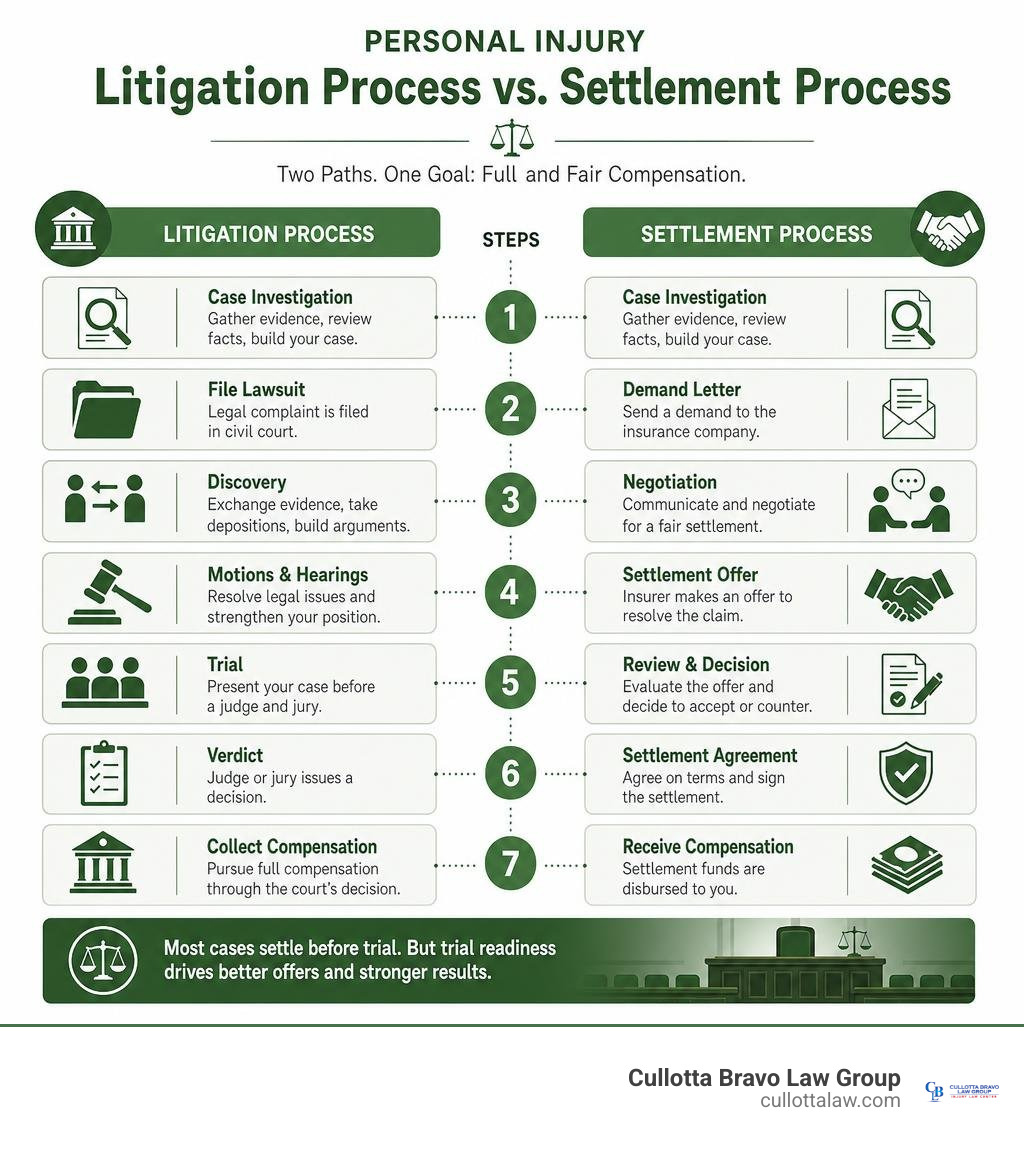
Common personal injury trial lawyers vocab:
Settling vs. Litigating: Why Trial Readiness Matters
When you get hurt in an accident, your immediate focus is naturally on healing, paying bills, and getting back to normal life. However, behind the scenes, a legal clock starts ticking, and a high-stakes financial game begins with the insurance company. This is precisely Why a Personal Injury Trial Attorney Is Your Best Bet when navigating the claim process.
Insurance adjusters are not in the business of handing out generous payouts out of the goodness of their hearts. Their primary duty is to protect corporate profits. When they evaluate an injury claim, one of the first things they check is the reputation of the attorney representing the victim. If your attorney has a track record of settling quickly and avoiding the courtroom at all costs, the insurance company holds all the cards. But when personal injury trial lawyers file appearance on your behalf, the entire legal dynamic shifts instantly.
Trial Preparation vs. Settlement Mills
To understand why trial readiness is so vital, it helps to understand the difference between dedicated courtroom litigators and what the legal industry calls “settlement mills.”
Settlement mills are high-volume law firms—often seen on massive highway billboards—that rely on turning over thousands of cases as quickly as possible. Rather than investigating individual claims deeply, these firms take initial settlement offers from insurance adjusters, skim off their fee, and move on to the next file.
Here is how settlement mills compare to true courtroom litigators:
| Feature | High-Volume Settlement Mills | Dedicated Personal Injury Trial Lawyers |
|---|---|---|
| Primary Goal | Fast turnover and high case volume | Maximum financial recovery for each client |
| Case Approach | Standardized templates and quick claims handling | Custom trial strategies built from day one |
| Courtroom Presence | Rarely step foot in a court or file lawsuits | Frequently present before juries and judges |
| Insurance Perception | Recognized as easy negotiators who will take low offers | Respected as tough advocates willing to go to trial |
| Investigation Level | Basic reliance on initial police reports | Deep technical work with experts and evidence capture |
When high-volume firms encounter resistance from insurance companies, they frequently advise clients to accept underwhelming, lowball payouts because they lack the time, resources, or trial experience to litigate. In contrast, experienced personal injury trial lawyers treat every file as though it is heading straight to a jury, ensuring that every piece of evidence, medical record, and technical detail is meticulously compiled.
Why Personal Injury Trial Lawyers Secure Higher Settlements
There is a simple truth in civil litigation: the best way to avoid a trial is to be completely ready for one. Insurance companies operate on risk assessments and cost projections. Defense attorneys track plaintiff lawyers carefully, maintaining internal databases on which firms actually go to verdict and which ones back down when trial dates approach.
When insurance providers realize they are facing personal injury trial lawyers who have the financial backing, courtroom expertise, and confidence to try a case in court, their financial equation changes. Continuing to resist a fair payout means incurring massive legal expenses for their defense counsel, expert fees, and the substantial financial exposure of an unpredictable jury verdict. Consequently, insurance carriers consistently offer far higher pre-trial settlements to trial-ready lawyers than to attorneys who settle early out of convenience.
How Personal Injury Trial Lawyers Build High-Stakes Cases
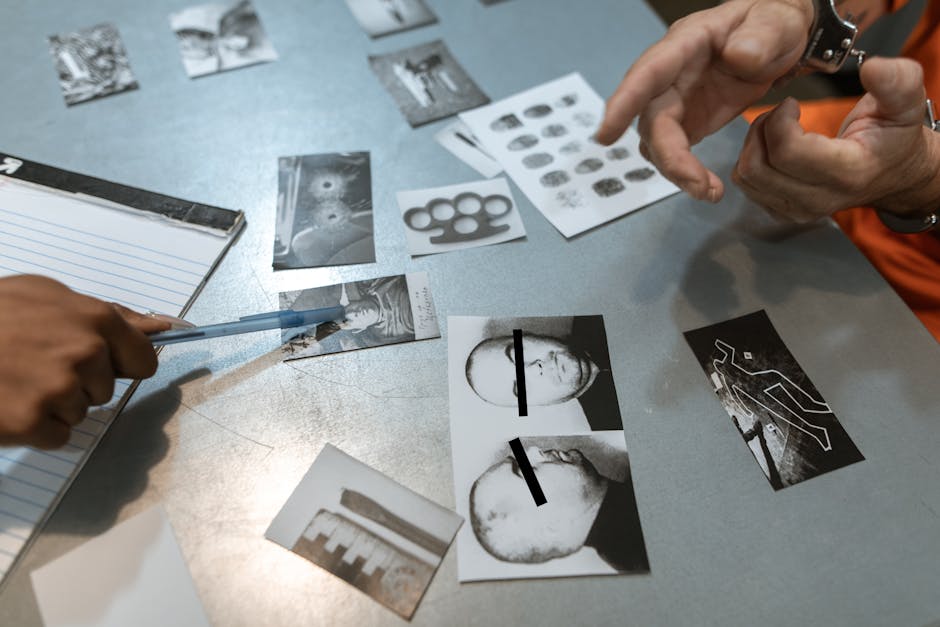
Building a winning personal injury suit requires far more than filling out paperwork and submitting medical bills. It is a systematic process of investigating, gathering physical evidence, and converting technical details into an indisputable narrative of fault and accountability.
Gathering Critical Evidence and Proving Liability
Proving liability in court hinges on proving the four core elements of negligence under civil law:
- Duty of Care: The defendant owed a legal obligation to act safely toward others.
- Breach of Duty: The legal standard of care was violated through action or inaction.
- Causation: The defendant’s breach directly caused the collision or incident.
- Damages: The victim suffered quantifiable physical, emotional, or financial harm.
To satisfy these burden-of-proof requirements, trial attorneys immediately mobilize to gather time-sensitive, concrete evidence. In vehicle crashes, for instance, modern cars and commercial tractor-trailers contain Electronic Control Modules (ECMs)—commonly known as “black boxes”—that store critical telemetry data such as vehicle speed, braking response, steering angles, and engine status right before impact. Because this digital data can be overwritten or destroyed, trial lawyers act fast to issue spoliation letters, legally compelling parties to preserve black box data, dashcam footage, and nearby commercial surveillance video.
Utilizing Expert Witnesses and Technical Reconstruction
In complex claims, presenting plain physical evidence isn’t enough; you need authoritative expert interpretation that a jury can easily digest. Trial lawyers regularly collaborate with multidisciplinary expert witnesses, including:
- Accident Reconstructionists: Engineers who examine skid marks, vehicle deformation, debris fields, and road geometry to recreate precise collision dynamics.
- Biomechanical Engineers: Specialists who explain how physical forces traveled through a vehicle frame into the human body, directly causing spinal cord, joint, or traumatic brain injuries.
- Medical Specialists: Treating physicians and independent surgeons who testify regarding the diagnosis, required treatments, and permanent physical limitations caused by the injury.
- Vocational & Economic Experts: Analysts who calculate lost earning capacity over a client’s lifetime, factoring in inflation, career advancement, and specialized care needs.
This systematic expert witness preparation eliminates reasonable doubt regarding liability, making it virtually impossible for defense attorneys to misrepresent how the injury occurred.
Complex Cases That Demand Courtroom Expertise
While minor fender-benders with minimal treatment might settle smoothly, high-stakes claims involving severe harm demand aggressive litigation. You can review our full range of Personal Injury Services to understand how specialized trial advocacy protects victims across various crash types.
Catastrophic Injuries and Wrongful Death Claims

Catastrophic injury claims—such as traumatic brain damage, spinal cord paralysis, severe burn injuries, or loss of limbs—fundamentally alter a victim’s life forever. In these tragic situations, compensation must account not only for current medical expenses, but for decades of future life-care needs, specialized medical equipment, household modifications, and permanent loss of income.
Similarly, in wrongful death lawsuits, grieving families face immense financial and emotional disruption. Trial lawyers work with life-care planners to map out long-term financial forecasts, ensuring that jury awards or settlements fully protect the surviving family members’ financial security for life.
Commercial Trucking and Product Liability Disputes
Taking on multi-billion-dollar trucking companies or global manufacturers requires navigating complex regulations and deep defense pockets. Commercial trucking claims involve extensive Federal Motor Carrier Safety Administration (FMCSA) standards, driver logbooks, maintenance histories, and multi-party liability (such as the truck driver, motor carrier, maintenance vendor, and cargo loader).
In product liability cases involving defective auto parts or dangerous machinery, manufacturers hire defense teams whose main strategy is to delay proceedings and outspend victims. Trial attorneys level the playing field by dedicating the capital and technical resources required to hold negligent corporations fully accountable.
Calculating Damages and Navigating Comparative Fault
Understanding what your case is worth requires a detailed evaluation of both immediate out-of-pocket costs and long-term physical and emotional impact.

Economic vs. Non-Economic Injury Compensation
Civil courts categorize personal injury damages into two primary categories: economic damages and non-economic damages.
Economic Damages (Quantifiable Financial Losses):
- Emergency hospital costs, surgical bills, and doctor visit copays
- Physical therapy, rehabilitation, and long-term nursing care costs
- Past lost wages and future loss of earning capacity
- Prescription medications and assistive medical devices
- Property damage and out-of-pocket transportation expenses
Non-Economic Damages (Subjective Physical & Emotional Harm):
- Physical pain and suffering experienced during and after treatment
- Emotional distress, anxiety, depression, and post-traumatic stress
- Loss of enjoyment of life and inability to participate in hobbies
- Permanent physical disability, scarring, or disfigurement
- Loss of consortium or companionship for spouses
In rare cases involving egregious negligence or intentional misconduct, courts may also award punitive damages designed specifically to punish the wrongdoer and deter similar conduct in the future.
How Comparative Negligence Affects Financial Recovery
Determining compensation isn’t just about totaling damages—it also involves evaluating fault allocation. Different states apply different legal standards regarding comparative fault. In Illinois, civil courts operate under a modified comparative negligence rule (specifically, the 51% bar rule under 735 ILCS 5/2-1116).
Under this standard:
- An injured victim can recover financial damages as long as they are 50% or less at fault for the incident.
- The victim’s total financial award is reduced in direct proportion to their percentage of fault. For example, if a jury awards $100,000 in damages but finds the plaintiff 20% at fault for the crash, the final payout is reduced by 20% to $80,000.
- If the plaintiff is found to be 51% or more at fault, they are completely barred from recovering any financial compensation whatsoever.
Insurance adjusters frequently use this rule strategically, trying to trick injured victims into making recorded statements that shift blame above the 50% threshold. Dedicated personal injury trial lawyers prevent these tactics by shielding clients from predatory questioning and proving clear defendant fault.
Evaluating Track Record and Courtroom Strategy
Selecting the right attorney is one of the most critical decisions you will make following a life-altering crash or injury. Knowing How Do I Find the Right Personal Injury Attorney in Illinois can make a substantial difference in the trajectory of your recovery.
How Personal Injury Trial Lawyers Litigate Against Large Insurers
Large corporate insurance providers rely on vast legal teams, technical delays, and low initial offers to wear down accident victims. Experienced trial lawyers push back forcefully using proven litigation strategies:
- Filing Lawsuits Early: When insurance companies stall during pre-suit negotiations, trial attorneys quickly file formal court complaints, imposing strict court deadlines on the defense.
- Conducting Thorough Discovery: Deposing corporate representatives, safety directors, and adverse drivers under oath to uncover hidden admissions and regulatory violations.
- Exposing Bad Faith Tactics: Holding insurance carriers accountable under state insurance laws when they unreasonably deny clear claims or fail to negotiate in good faith.
Key Qualifications to Review Before Hiring
When evaluating prospective legal representation, look closely at their concrete trial background rather than flashy marketing slogans. Partnering with an Experienced Personal Injury Lawyer ensures your legal team has the skills and resources required to go the distance.
Key criteria to evaluate include:
- Proven Courtroom Verdicts: Ask specifically about recent jury trial verdicts, not just out-of-court settlements.
- Financial Capital: Confirm the firm has the financial resources to front tens of thousands of dollars in expert witness fees and litigation expenses.
- Client Reviews & Peer Recognition: Review genuine client testimonials, Google reviews, and peer-rated legal honors.
- No Fee Guarantee: Ensure the firm operates under a strict contingency fee agreement—meaning you pay zero upfront retainer fees and zero legal fees unless they successfully win your case.
Frequently Asked Questions
Will my personal injury claim automatically go to trial?
No. In fact, roughly 95% of personal injury claims settle before reaching a full courtroom trial. However, preparing every claim as if it will go to trial creates maximum negotiation leverage, forcing the insurance company to make a top-dollar settlement offer out of court to avoid the risk of a high jury verdict.
How do contingency fees work for personal injury cases?
A contingency fee arrangement means you do not pay any upfront retainers, hourly rates, or out-of-pocket costs to hire your attorney. Instead, the legal team invests their own time and money into investigating and litigating your claim. The attorney’s legal fee is calculated as an agreed-upon percentage (typically around 33.3% to 40%) of the final financial recovery secured through settlement or verdict. If the lawyer fails to recover compensation for you, you owe zero legal fees.
What evidence is most critical in proving negligence in court?
The most compelling courtroom evidence typically includes:
- Detailed police crash reports and official municipal citations
- High-resolution scene photographs, skid mark measurements, and vehicle damage images
- Commercial dashcam or surveillance video capturing the moment of impact
- Unbiased third-party eyewitness statements
- Comprehensive medical treatment records, imaging scans, and expert medical testimony
- Digital telemetry data retrieved from vehicle black boxes
Conclusion
Sustaining a serious injury due to someone else’s carelessness can feel overwhelming, but you do not have to carry the legal and financial burdens alone. While insurance adjusters focus on protecting corporate profits, personal injury trial lawyers focus entirely on securing justice, dignity, and maximum compensation for you.
By choosing a law firm that prepares every case for full trial readiness, operates on a no-win-no-fee contingency model, and possesses decades of courtroom experience, you ensure your rights are protected every step of the way.
At Cullotta Bravo Law Group, we have spent over 35 years aggressively defending injury victims across Aurora, Chicago, Naperville, Joliet, and surrounding Illinois communities, recovering millions of dollars for our clients. Explore our full Personal Injury Services or contact our team today to schedule your free, confidential case consultation.