

Finding a Boating Accident Lawyer Without Getting Lost at Sea
When the Water Turns Dangerous: Finding Legal Help After a Boating Accident
If you’re wondering where can I find a lawyer for my boating accident, here’s a quick answer:
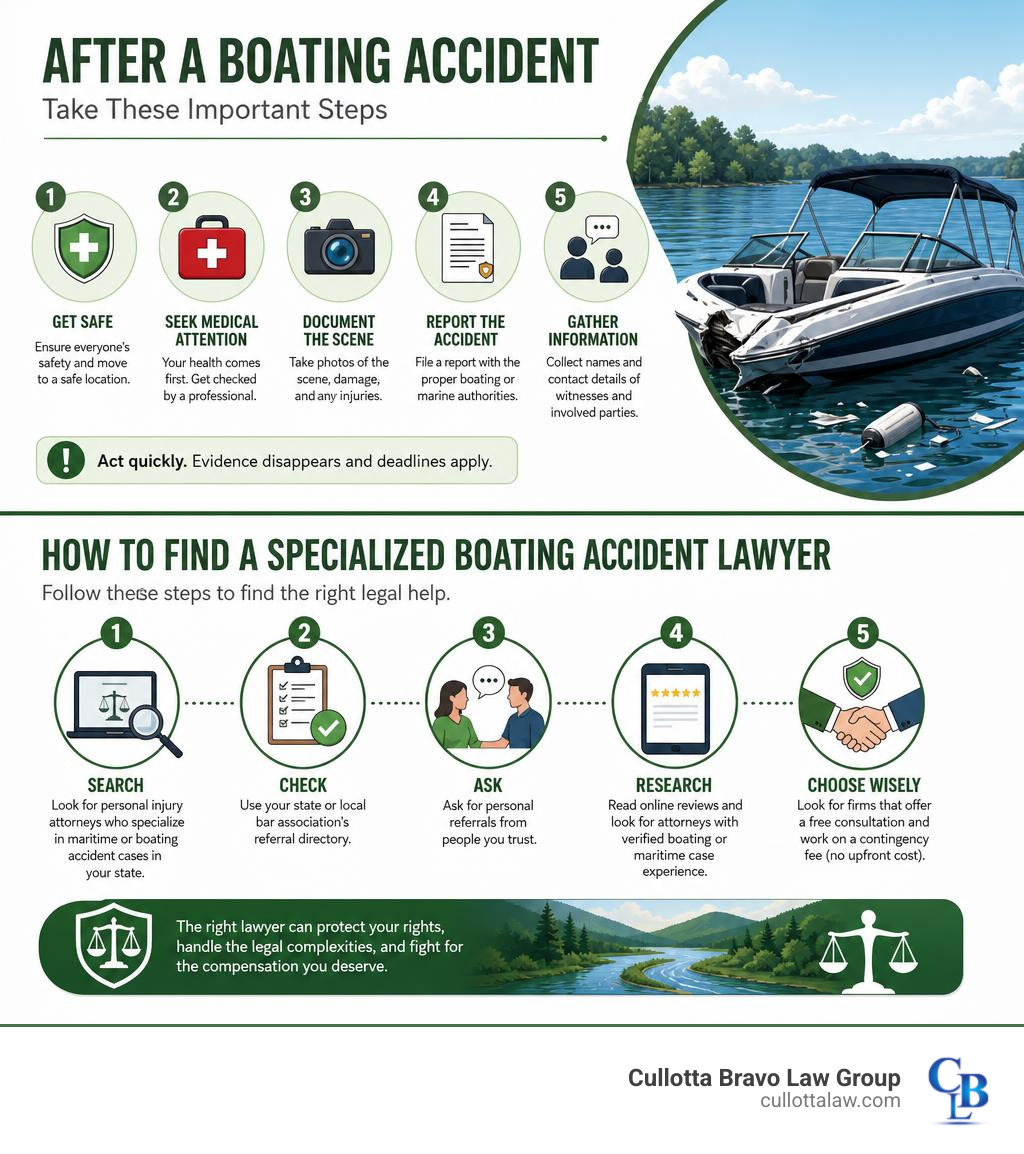
How to find a boating accident lawyer:
- Search for personal injury attorneys who specialize in maritime or boating accident cases in your state
- Check your state or local bar association’s referral directory
- Ask for personal referrals from people you trust
- Read online reviews and look for attorneys with verified boating or maritime case experience
- Look for firms that offer a free consultation and work on a contingency fee (no upfront cost)
Boating is one of America’s favorite pastimes — but accidents happen fast, and the legal fallout can be overwhelming. Florida alone reported 760 boating accidents in 2022, resulting in 65 deaths and nearly 400 injuries. Boating accident cases are often more complicated than car accidents. They can involve maritime law, overlapping agencies, multiple liable parties, and insurance companies motivated to pay as little as possible.
The good news? You don’t have to figure it out alone.
I’m Peter Cullotta, founding partner of Cullotta Bravo Law Group, and with over 35 years of trial experience representing injured clients throughout the Chicagoland area, I know how critical it is to find the right lawyer when searching for where can I find a lawyer for my boating accident — before evidence disappears and deadlines pass. In the sections below, I’ll walk you through exactly what to look for and how to act quickly to protect your rights.
Key terms for where can i find a lawyer for my boating accident:
Understanding Boating Accidents: Causes, Liability, and Immediate Steps
To successfully navigate a legal claim, we must first understand why these accidents occur and how the law determines who is at fault. Whether you are cruising along Lake Michigan, navigating the Chicago River, or enjoying the Chain O’Lakes, open water presents unique hazards.
The top contributing factors in recreational boating accidents nationwide include:
- Operator Inattention: Just like distracted driving on our highways, distracted boating is a leading cause of collisions. Operators who fail to maintain a proper lookout quickly find themselves on a collision course with other vessels or submerged hazards.
- Operator Inexperience: Many boaters do not possess the same level of training as licensed drivers. Inexperience leads to poor decision-making when weather conditions deteriorate or waterways become congested.
- Excessive Speed: Waterways do not have painted lanes. Speeding reduces the operator’s reaction time, making collisions with wakeboarders, swimmers, or docks far more violent.
- Boating Under the Influence (BUI): Alcohol is a major factor in recreational boating fatalities. Operating a boat while impaired is not only illegal but severely compromises coordination and judgment.
When an accident happens, the legal framework that applies depends heavily on where the incident occurred. Boating accidents on navigable waterways can trigger federal maritime law rather than standard state personal injury law. Under maritime law, specialized liability rules like the Pennsylvania Rule (which shifts the burden of proof to a party who violates a navigational safety rule) or the Oregon Rule (which presumes fault when a moving vessel strikes a stationary object) can completely change how a case is argued.
To protect your rights and establish a strong foundation for your claim, you must take immediate action. If you are involved in an incident, you can learn more info about boat accidents to understand your immediate exposure.
Here is the emergency protocol we recommend:
- Stop the Vessel and Check for Injuries: Safety is the absolute priority. Ensure everyone on board is accounted for and safe.
- Call for Emergency Assistance: Contact the U.S. Coast Guard, local marine police, or the Illinois Department of Natural Resources (IDNR). For federal resources, you can consult the USCG Boating Safety Resources page.
- Document the Scene: Take photos and videos of the damage to both vessels, the surrounding water conditions, and any visible injuries.
- Gather Witness Information: Collect names, phone numbers, and insurance details from all operators and passengers involved.
- Seek Medical Attention: Even if you feel fine, adrenaline can mask severe injuries, such as concussions or internal bleeding.
- Report the Accident: Under Illinois law, operators must file an accident report with the IDNR if an incident results in death, injury requiring medical treatment beyond first aid, or property damage exceeding $2,000.
| Boating Accident Metrics (Comparative Overview) | Florida (High-Traffic Benchmark) | Illinois Waterways |
|---|---|---|
| Primary Regulatory Agency | Florida Fish and Wildlife (FWC) | Illinois Dept. of Natural Resources (IDNR) |
| Top Contributing Factor | Operator Inattention / Speed | Operator Inattention / Alcohol |
| Reporting Threshold (Property Damage) | $2,000 | $2,000 |
| Common Waterway Types | Ocean Coastlines, Intracoastal | Lake Michigan, Rivers, Inland Lakes |
Where Can I Find a Lawyer for My Boating Accident?
When you ask yourself, where can I find a lawyer for my boating accident, the search can feel daunting. Unlike standard car accidents, boating accidents require an attorney who understands both local personal injury statutes and complex maritime laws.
Here are the most effective ways to locate a highly qualified attorney:
- Look for Local Personal Injury Firms with Boating Experience: Start by searching for firms in your immediate area that have a proven track record of handling watercraft and personal injury claims. If you live in Illinois, you want a firm that understands the specific local waterways of Aurora, Chicago, Naperville, and Joliet.
- Utilize Legal Directories and Bar Associations: Directories such as Avvo, Martindale-Hubbell, and the Illinois State Bar Association (ISBA) allow you to filter attorneys by their specific practice areas, including maritime law and personal injury.
- Seek Personal Referrals: Word of mouth remains one of the most reliable ways to find trusted legal help. Ask friends, family members, or even other attorneys if they can recommend a firm known for aggressive representation and compassionate client care.
- Analyze Online Reviews and Case Outcomes: Look for consistent positive feedback from previous clients. Pay close attention to how clients describe the firm’s communication, dedication, and ability to secure meaningful settlements.
- Rely on Specialized Regional Guides: To find advocates close to home, check out resources like Local Boating Accident Attorneys Near You to narrow your search to vetted professionals.
Key Qualities to Look For When Asking Where Can I Find a Lawyer for My Boating Accident
Finding a lawyer is only the first step; finding the right lawyer is what wins cases. When evaluating potential law firms, keep these essential qualities in mind:
- Extensive Trial Experience: Many personal injury cases settle out of court, but insurance companies evaluate claims differently when they know your attorney is prepared to go to trial. You want a firm with decades of courtroom experience that prepares every case from day one as if it is heading to a jury.
- Knowledge of Maritime and Waterway Regulations: Boating laws are distinct from highway laws. Your attorney must understand vessel navigation rules, Coast Guard safety requirements, and the differences between state and federal jurisdictions. For a deeper dive into these requirements, read about Why You Need a Boating Accident Attorney.
- A Contingency Fee Structure: You should never have to pay upfront legal fees to get justice. A reputable boating accident lawyer operates on a contingency fee basis, meaning their legal fees are paid as a percentage of the final recovery. If they do not win your case, you owe them nothing.
- Clear, Transparent Communication: A great lawyer treats you with dignity and respect, keeping you fully informed at every stage of your claim. Avoid firms where you are passed off to assistants and never get to speak directly with your attorney.
Questions to Ask During Your Consultation When Deciding Where Can I Find a Lawyer for My Boating Accident
Your initial consultation is a two-way street. It is your opportunity to interview the attorney and ensure they are the right fit for your legal team. To understand how they will advocate for you, you can read about The Role of a Boat Accident Attorney.
During your meeting, make sure to ask the following questions:
- How many boating or watercraft accident cases have you personally handled?
- Will you personally handle my case, or will it be handed down to an associate?
- What is your strategy for investigating this accident and dealing with the marine insurance companies?
- Do you have experience taking complex personal injury cases to trial in Illinois courts?
- How do you structure your fees and case expenses?
Essential Documents to Bring to Your Consultation:
- [ ] The official police or Illinois DNR accident report
- [ ] Medical records, discharge papers, and medical bills related to your injuries
- [ ] Photos and videos of the accident scene, vessel damage, and physical injuries
- [ ] Contact information for all parties involved and any eyewitnesses
- [ ] Insurance policy information for your boat and any other vessels involved
- [ ] A written timeline of the events leading up to, during, and after the accident
How a Specialized Attorney Builds Your Case and Recovers Damages

Once you hire an experienced attorney, they will immediately begin building a robust claim designed to withstand the tactics of insurance adjusters. This process involves a meticulous, step-by-step investigation to preserve evidence before it washes away.
First, your legal team will secure the physical evidence. Unlike car accidents, where skid marks on asphalt remain visible for days, water leaves no trace. Your lawyer will work with marine accident reconstruction experts to analyze vessel damage, GPS navigation logs, and throttle settings. They will request maintenance records for the watercraft to determine if mechanical failure or a manufacturing defect contributed to the crash. They will also subpoena cell phone records to prove if the operator was distracted at the time of the collision.
Second, your attorney will establish the full extent of your damages. This involves compiling comprehensive medical records and working with financial experts to calculate the long-term economic impact of your injuries. You can read more about this process in Your Compass to Compensation.
When we file a claim on your behalf, we pursue recovery for both economic and non-economic damages:
- Economic Damages: These are quantifiable financial losses, including past and future medical bills, rehabilitative therapy, lost wages, loss of earning capacity, and the cost of repairing or replacing your watercraft.
- Non-Economic Damages: These cover intangible losses, such as physical pain and suffering, emotional distress, loss of enjoyment of life, and the psychological trauma associated with a near-drowning experience.
A major complication in boating accidents is dealing with uninsured or underinsured boaters. Unlike auto insurance, boat insurance is not always legally mandated in every scenario, meaning you could be hit by an operator with zero liability coverage. An experienced attorney knows how to explore alternative avenues of recovery, such as pursuing a claim under your own uninsured watercraft policy, identifying third-party liability (such as a negligent boat rental company or marina), or filing a lawsuit directly against the operator’s personal assets.
To ensure your claim aligns with state safety standards, we always cross-reference the case details with the Illinois DNR Boating Safety Guidelines.
Frequently Asked Questions About Boating Accident Claims
Navigating the aftermath of a boat crash brings up many legal questions. Below are some of the most common questions we hear from injured boaters.
How long do I have to file a boating accident lawsuit in Florida and Illinois?
The time limit to file a lawsuit is known as the statute of limitations. Missing this deadline means you lose your legal right to pursue compensation forever.
- In Illinois: For personal injury claims, you generally have two (2) years from the date of the accident to file a lawsuit.
- In Florida: Following recent legislative updates, Florida’s statute of limitations for negligence claims is also two (2) years from the date of the incident.
- Federal Maritime Law: If your accident occurred on navigable waters and falls under federal admiralty jurisdiction, a three (3) year statute of limitations typically applies.
Because determining which jurisdiction applies to your accident can be highly complex, it is vital to consult a lawyer immediately to ensure you do not miss any critical deadlines. You can read more about these rules in Understanding the Legalities of Boat Accidents.
What damages can I recover in a Florida or Illinois boating accident case?
You are entitled to seek compensation for any losses directly resulting from the negligence of another party. This includes:
- Emergency medical transport and hospital stays
- Ongoing physical therapy and surgeries
- Lost income and future lost wages if you cannot return to work
- Pain, suffering, and mental anguish
- Wrongful death damages for families who have lost a loved one in a fatal boating accident
How much does it cost to hire a boating accident lawyer?
At Cullotta Bravo Law Group, we represent boating accident victims on a contingency fee basis. This means there are absolutely no upfront costs or hourly fees. We pay for the entire cost of the investigation, expert witnesses, and court filings. We only receive a legal fee if we successfully recover a settlement or jury verdict on your behalf. Our fee is a pre-agreed percentage of that recovery, meaning our interests are completely aligned with yours.
Conclusion: Navigating Your Recovery with Confidence
A serious boating accident can throw your life into chaos, leaving you with mounting medical bills, physical pain, and overwhelming stress. But finding the right legal representation does not have to feel like getting lost at sea.
At Cullotta Bravo Law Group, we treat our clients with the dignity and respect they deserve while providing the aggressive legal representation needed to stand up to powerful insurance companies. With over 35 years of experience and a history of securing multi-million dollar settlements, we have the knowledge, resources, and trial readiness to fight for the full compensation you are owed.
If you or a loved one has been injured on the water in Aurora, Chicago, Naperville, Joliet, or anywhere across Illinois, do not wait for evidence to disappear. Contact a Boating Accident Lawyer at Cullotta Bravo Law Group today for your free, no-obligation case evaluation, and let us help you navigate your recovery with confidence.