

Illinois nursing home abuse: Urgent Justice 2025
Why Speaking Up About Nursing Home Abuse Matters
Illinois nursing home abuse is a serious problem affecting thousands of vulnerable seniors. If you suspect a loved one is being abused or neglected, you must know how and where to report it immediately.
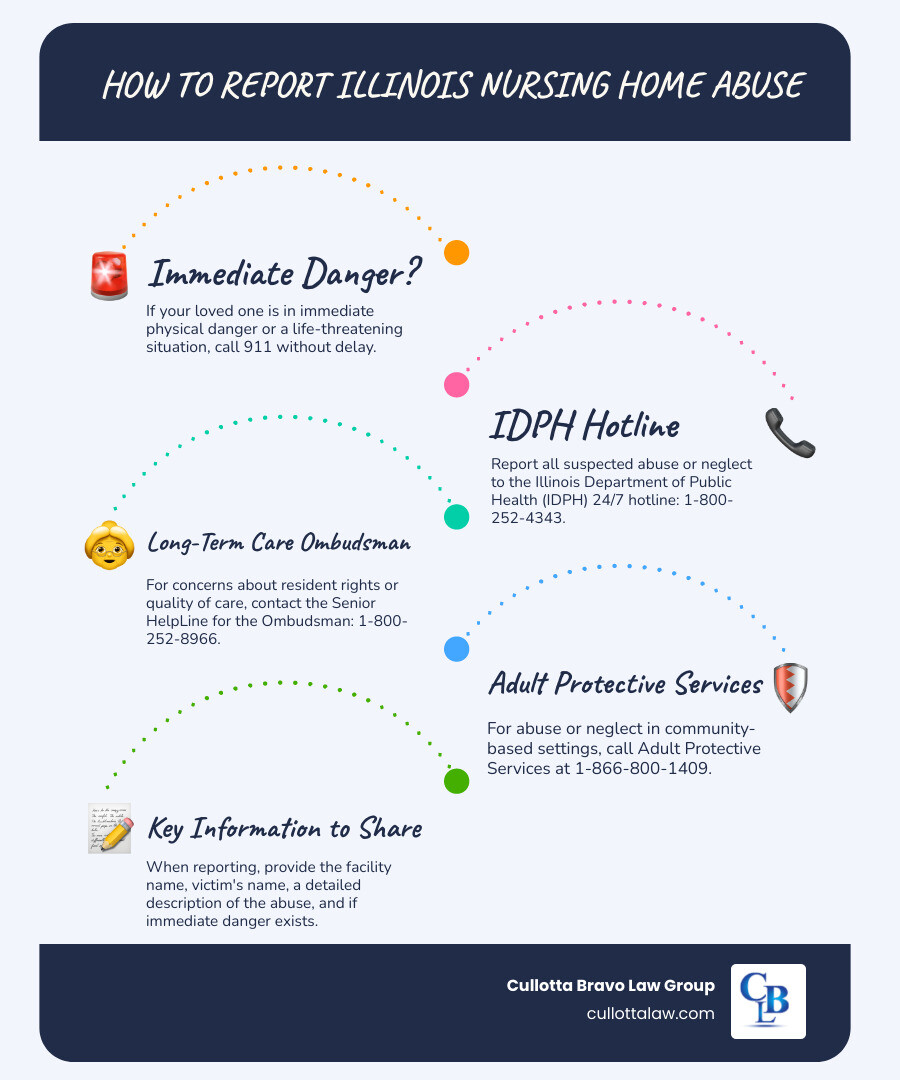
Quick Guide to Reporting Nursing Home Abuse in Illinois:
- For emergencies: Call 911 if your loved one is in immediate danger
- Illinois Department of Public Health: Call 1-800-252-4343 (24/7 hotline)
- Long-Term Care Ombudsman: Call the Senior HelpLine at 1-800-252-8966
- Adult Protective Services: Call 1-866-800-1409 for community-based settings
- Supportive Living Facilities: Call 1-844-528-8444
- Illinois State Police (Medicaid Fraud): Call 1-888-557-9503
The statistics are alarming: over 25% of nursing home residents suffer physical abuse, and more than 15% face gross neglect. Recent Illinois cases underscore this crisis, from a $25,000 fine against a Galesburg facility for sexual abuse to a $5.5 million verdict in Cook County for a wrongful death due to neglect.
Illinois also struggles with the nation’s highest rate of nursing home residents with serious mental illnesses, yet no facilities hold the state-required certification to care for them.
You don’t need proof to file a report—reasonable suspicion is enough to trigger an investigation.
I’m Peter Cullotta. For over 35 years, I’ve been dedicated to holding negligent facilities accountable and securing justice for families affected by nursing home abuse.
What Constitutes Nursing Home Abuse and Neglect Under Illinois Law?
Under the Illinois Nursing Home Care Act (210 ILCS 45/), facilities have a strict duty to provide necessary care in a safe environment. Violations of this duty can be categorized as abuse or neglect.
Defining Abuse
Abuse is the intentional infliction of harm, including:
- Physical Abuse: Hitting, pushing, or improper use of restraints.
- Emotional or Psychological Abuse: Verbal assaults, threats, intimidation, or isolation.
- Sexual Abuse: Any non-consensual sexual contact.
- Financial Exploitation: Theft or misuse of a resident’s funds or assets.
Defining Neglect
Neglect is the failure to provide necessary care, resulting in harm. This includes failing to provide adequate food, water, medication, medical care, or assistance with hygiene. The tragic Cook County case, where a resident died after missing dialysis for 13 days, is a stark example of fatal neglect. According to 210 ILCS 45/3-202, facilities must maintain a safe environment, and a breach of this duty constitutes abuse or neglect under Illinois law.
What Are the Common Signs and Indicators of Nursing Home Abuse and Neglect?
Recognizing the signs of Illinois nursing home abuse or neglect is the first step to protecting your loved one. Be vigilant for both physical and behavioral changes, as they can be subtle.
Physical Signs and Injuries
These are often the most visible indicators:
- Unexplained Injuries: Bruises (especially on wrists or torso), cuts, welts, broken bones, or fractures.
- Signs of Neglect: Bedsores (pressure ulcers), sudden weight loss, dehydration, or poor hygiene. Learn more about pressure sores and nursing home negligence.
- Medical Issues: Frequent or recurring infections, and untreated wounds or conditions. Find out more about nursing home infections.
Behavioral and Emotional Changes
Abuse and neglect can take a heavy toll on a resident’s mental state:
- Withdrawal or Fear: Becoming quiet, isolated, or showing fear or anxiety, especially around certain staff.
- Mood Swings: Sudden agitation, anger, sadness, or unexplained crying.
- Reluctance to Speak: Fear of retaliation can cause a resident to be silent about their suffering.
Environmental and Financial Indicators
Look for red flags in the resident’s surroundings or finances:
- Unsafe Environment: Unsanitary rooms, soiled bedding, high staff turnover, or general understaffing. Explore nursing home inadequate supervision.
- Financial Red Flags: Missing personal items, unpaid bills despite available funds, or suspicious bank account activity.
If you see these signs, investigate. It can be hard to distinguish an accident from abuse. Read more about accident or abuse injuries in nursing home patients.
What Are the Legal Rights of Residents and Their Families in Illinois Regarding Nursing Home Abuse?
The Illinois Nursing Home Care Act (210 ILCS 45/) grants residents extensive rights. These include the right to be free from abuse and neglect, receive proper medical care, live in a safe and clean environment, be treated with dignity, participate in care decisions, and complain without fear of retaliation.
When these rights are violated, families have legal recourse. You can file a lawsuit to seek compensation for damages like medical bills, pain and suffering, and emotional distress. In cases of gross misconduct, punitive damages may be awarded to punish the facility. Illinois law also allows for the recovery of attorney’s fees in successful cases, easing the financial burden on families seeking justice. For a complete guide on nursing home lawsuits, visit our dedicated page.
What Is the Process for Reporting Suspected Nursing Home Abuse or Neglect in Illinois?
If you suspect Illinois nursing home abuse, act immediately. You don’t need proof—only a reasonable suspicion.
Step-by-Step Reporting Process:
- Call 911 for Immediate Danger: If a resident is in immediate physical danger, call 911 first.
- Document Everything: Gather as much information as you can. Note dates, times, and specific details. Take photos of injuries or unsafe conditions. Log all communications with the facility.
- Contact the Right Agency:
- Illinois Department of Public Health (IDPH): The primary agency for licensed facilities. Call the 24/7 hotline at 1-800-252-4343 or use the IDPH Nursing Home Complaint Form.
- Long-Term Care Ombudsman: An advocate for residents. Reach them via the Senior HelpLine at 1-800-252-8966. More info is on the Illinois Department on Aging’s website.
- Adult Protective Services (APS): For abuse in community settings. Report online via the APS Portal or call the Senior HelpLine.
- Healthcare and Family Services (HFS): For complaints about Supportive Living Facilities, call 1-844-528-8444.
- Illinois State Police Medicaid Fraud Control Unit (MFCU): For suspected Medicaid fraud or related criminal abuse, call 1-888-557-9503.
- Seek Medical Attention: Have a doctor examine your loved one to document injuries or health decline.
- Consult an Experienced Lawyer: An attorney can guide you, protect your loved one’s rights, and help you pursue compensation. Protecting family members in Illinois nursing homes is our priority.
Which State Agencies and Organizations Are Responsible for Investigating Nursing Home Abuse Complaints in Illinois?
Several state agencies in Illinois are tasked with investigating Illinois nursing home abuse. Knowing who does what ensures your complaint is handled effectively.
- Illinois Department of Public Health (IDPH): The main regulator for licensed nursing homes. Their Central Complaint Registry (Hotline: 1-800-252-4343) is the primary reporting channel.
- Illinois Department on Aging (IDoA): Administers the Adult Protective Services (APS) program for abuse in community settings and houses the Long-Term Care Ombudsman Program, which advocates for residents. The Senior HelpLine (1-800-252-8966) is the main contact for both.
- Illinois State Police Medicaid Fraud Control Unit (MFCU): Investigates criminal abuse and neglect linked to Medicaid funding. Their hotline is 1-888-557-9503.
If you are unsure where to report, the IDPH or the Senior HelpLine are excellent starting points, as they can direct you to the appropriate resource.
What Evidence Is Needed to Prove Nursing Home Abuse or Neglect in Illinois?
While you don’t need proof to report Illinois nursing home abuse, building a strong legal case requires compelling evidence. We help families gather the necessary documentation to prove that a facility’s negligence caused harm.
Key evidence includes:
- Medical Records: To document injuries, illnesses, medication errors, malnutrition, or conditions like nursing home sepsis.
- Visual Evidence: Photographs and videos of injuries or unsanitary conditions.
- Testimonies: Statements from the resident, family members, visitors, and even former staff.
- Facility Documents: Staffing logs, care plans, and incident reports can reveal understaffing or a pattern of neglect.
- Expert Opinions: Testimony from medical or financial experts to establish a breach in the standard of care.
- State Inspection Reports: IDPH citations and violation histories can demonstrate a facility’s pattern of negligence.
- Personal Logs: Your own detailed notes can create a crucial timeline of events.
We work with families to gather this evidence, using our experience to build a compelling case.
What Are the Potential Legal Consequences for Nursing Homes Found Guilty of Abuse or Neglect?
When an Illinois nursing home is found guilty of abuse or neglect, it can face serious consequences. Our goal is to ensure these outcomes deliver justice and promote safer care for all residents.
Regulatory and Administrative Penalties:
State and federal agencies can impose:
- Fines: Substantial monetary penalties for violations.
- Sanctions: Official citations that become part of the facility’s public record.
- Corrective Action Plans: Mandated plans to fix deficiencies.
- License Suspension or Revocation: In severe cases, a facility can be shut down.
- Loss of Funding: Termination from Medicare and Medicaid programs, a major financial blow.
Civil Lawsuits and Financial Compensation:
Families can file civil lawsuits to recover damages, including:
- Compensatory Damages: To cover medical expenses, pain and suffering, and emotional distress.
- Wrongful Death Damages: For families who have lost a loved one due to neglect, like the $5.5 million verdict awarded to a Cook County family.
- Punitive Damages: To punish facilities for egregious conduct and deter future wrongdoing.
- Attorney’s Fees: The Illinois Nursing Home Care Act allows successful plaintiffs to recover legal fees.
Criminal Charges:
In severe cases, staff or administrators can face criminal charges, as Nursing Home Abuse, Neglect, & Fraud are Crimes in Illinois, and are investigated by the Illinois State Police Medicaid Fraud Control Unit.
What Is the Statute of Limitations for Filing a Nursing Home Abuse Lawsuit in Illinois?
When considering legal action for Illinois nursing home abuse, you must be aware of the statute of limitations—a legal deadline for filing a lawsuit. Missing this deadline can permanently bar you from seeking justice.
In Illinois, the statute of limitations for nursing home abuse and neglect claims is generally two years.
However, the clock doesn’t always start on the date of the injury. The findy rule often applies, meaning the two-year period begins when the victim or their family finds the injury, or reasonably should have finded it. This is crucial in abuse cases where harm may be hidden or not immediately obvious.
For claims involving a resident’s death (wrongful death), the statute of limitations is also typically two years from the date of death.
Because these deadlines are strict and can be complex, it is vital to contact an attorney as soon as you suspect abuse. Acting quickly allows us to preserve evidence, interview witnesses, and ensure your claim is filed on time.
How Can Hiring an Experienced Illinois Nursing Home Abuse Lawyer Help a Case?
Navigating a suspected Illinois nursing home abuse case is emotionally and legally complex. An experienced lawyer is an essential ally who can provide clarity and strength during this difficult time.
Here’s how we can help:
- Legal Expertise: With over 35 years of experience, we have a deep understanding of the Illinois Nursing Home Care Act and use it to build a powerful case.
- Investigation: We conduct thorough investigations, obtaining and analyzing medical records, interviewing witnesses, and consulting with medical experts to gather the evidence needed to win.
- Protecting Your Loved One: We advocate for your loved one’s safety and rights, protecting them from retaliation and helping ensure they are in a safe environment.
- Handling the Legal Process: We manage every aspect of the legal battle, from filing the lawsuit to negotiating with insurance companies, so you can focus on your family.
- Maximizing Compensation: We fight aggressively to secure the maximum compensation for medical bills, pain and suffering, and other damages. Our history of multi-million dollar settlements reflects our commitment to achieving justice.
- No Fee Unless We Win: We handle most cases on a contingency fee basis, so you pay no attorney’s fees unless we successfully recover compensation for you.
We treat our clients with dignity and compassion, recognizing the immense trust you place in us.
Specific Challenges and Issues Related to the Care of Residents with Serious Mental Illnesses in Illinois Nursing Homes
Illinois nursing homes face a unique and severe crisis in caring for residents with serious mental illnesses (SMI). This systemic failure puts an already vulnerable population at an even greater risk of abuse and neglect.
Key Challenges in Illinois:
- Highest Prevalence in the Nation: Illinois has the highest percentage of nursing home residents with SMI, yet facilities are often ill-equipped to handle their complex needs.
- Increased Risk of Abuse: The more residents with mental illnesses a nursing home serves, the more often inspectors tend to find abuse.
- Regulatory Failure: A 2010 Illinois law requires special certification for facilities serving residents with SMI, mandating specialized staff and training. However, the Illinois Department of Public Health has no record of any facility in the state holding this certification.
- Systemic Issues: Many nursing homes have become “de facto” housing for individuals with mental illness due to a lack of community-based alternatives. This problem is often compounded by severe understaffing, which makes providing adequate care impossible.
These systemic failures demand accountability. We are committed to fighting for the rights of all residents, especially those who are most vulnerable.
What Are the Financial Implications and Potential Compensation for Victims of Nursing Home Abuse and Neglect in Illinois?
The impact of Illinois nursing home abuse is profound, and victims deserve full compensation for their suffering. We fight to recover all financial and non-financial losses for our clients.
Types of Compensation Available:
A successful lawsuit can secure compensation for:
- Medical Expenses: All past and future costs for treatment related to the abuse.
- Pain and Suffering: For the physical pain, emotional distress, anxiety, and psychological trauma endured.
- Disability or Disfigurement: For any permanent injuries.
- Loss of Dignity and Quality of Life: Compensation for the violation of a resident’s fundamental rights.
- Wrongful Death: In fatal cases, families can recover damages for funeral expenses and loss of companionship. The $5.5 million verdict in a Cook County neglect case highlights the potential for significant awards.
- Punitive Damages: Awarded in cases of extreme misconduct to punish the facility.
The value of a case depends on factors like the severity of the injuries and the strength of the evidence. While every case is different, settlements for falls with fractures can range from $100,000 to $750,000, and severe bedsore cases can exceed $1,000,000. We serve families in Aurora, Chicago, Naperville, and Joliet, fighting to secure the justice they deserve.
What Are the Mandatory Reporting Requirements for Healthcare Professionals and Others in Illinois Regarding Elder Abuse?
Illinois law mandates that certain professionals report suspected elder abuse to ensure vulnerable adults are protected. This is a critical line of defense against neglect and exploitation.
Who Must Report?
Under the Illinois Adult Protective Services Act (320 ILCS 20), mandated reporters include a wide range of professionals who interact with seniors, such as:
- Healthcare professionals (doctors, nurses)
- Social service and long-term care personnel
- Law enforcement officials
What, When, and How to Report
These professionals must immediately report any reasonable suspicion of abuse, neglect, or financial exploitation of adults aged 60+ or people with disabilities aged 18-59. Proof is not required.
- For abuse in the community, report to the Adult Protective Services Hotline: 1-866-800-1409.
- For abuse in a nursing facility, report to the IDPH Nursing Home Complaint Hotline: 1-800-252-4343.
Illinois law protects those who report in good faith from liability, and knowingly failing to report can result in legal and professional consequences.
Conclusion: Don’t Let Abuse Go Unchallenged
The thought of a loved one suffering from Illinois nursing home abuse is devastating. We understand the pain and frustration you feel, but you are not alone and have powerful rights.
From Aurora and Chicago to Naperville and Joliet, we are here to guide you. Every report and every lawsuit sends a message that abuse will not be tolerated. Your actions can hold negligent facilities accountable and improve care for others.
Don’t stay silent. Take action by reporting your concerns and connecting with an experienced legal team. At Cullotta Bravo Law Group, we offer aggressive representation with the dignity and respect you deserve. With over 35 years of experience and a history of multi-million dollar settlements, we are ready to fight for your family.
Your voice is powerful. Let us help you use it.
Take the Next Step: Contact Us Today
If you have concerns about Illinois nursing home abuse or neglect, we invite you to speak with us. Our team is dedicated to protecting the rights of seniors and ensuring that those responsible for their harm are held accountable.
Contact Cullotta Bravo Law Group for a free, confidential consultation. We are here to listen, provide clear answers, and outline your legal options without obligation. Let us help you steer this difficult journey and seek the justice your loved one deserves.