

To Sue or Not to Sue: Deciding If You Need a Car Accident Lawyer
Do You Need a Car Accident Lawyer?
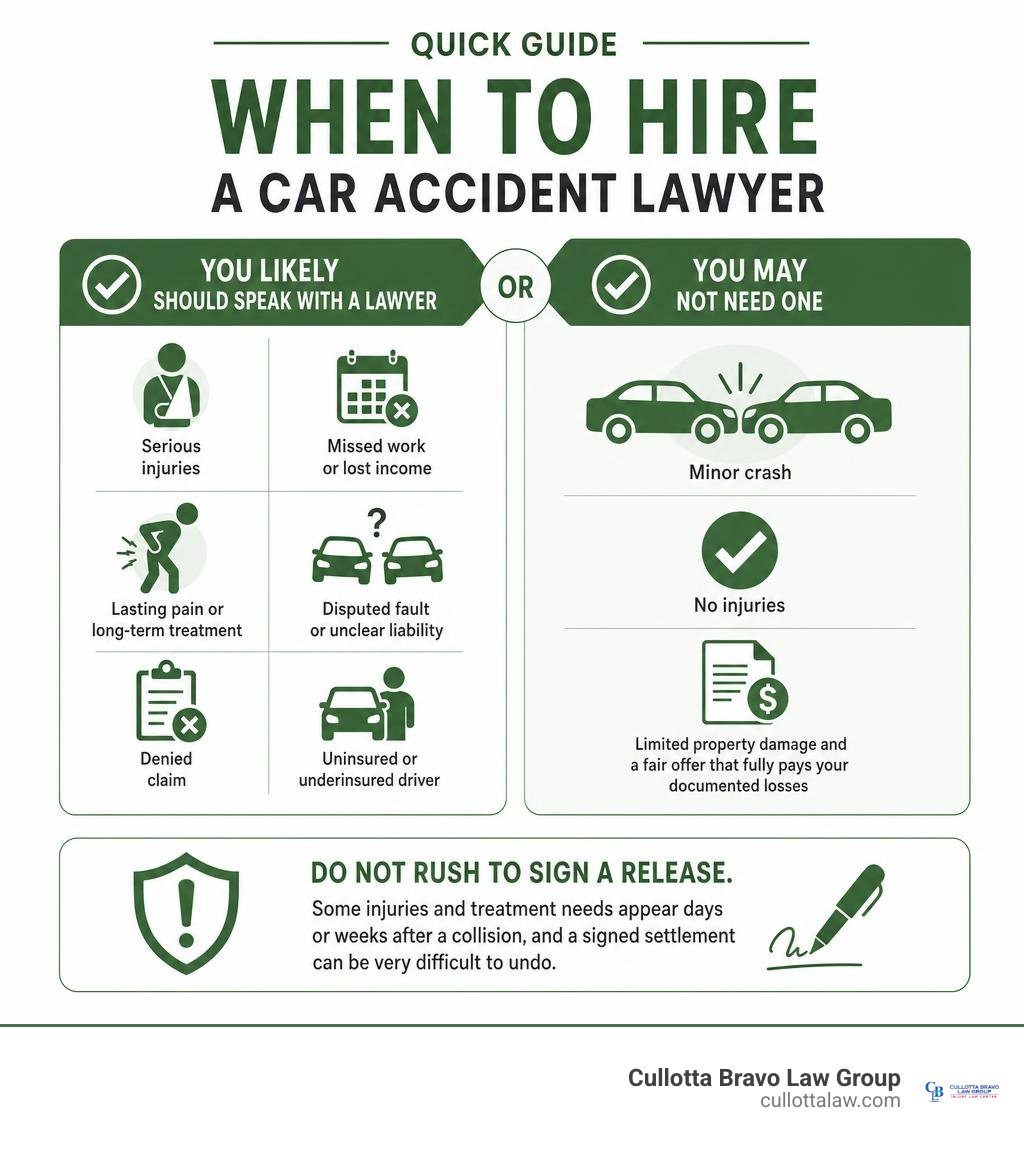
Car accident need lawyer is a question worth asking when you were injured, fault is unclear, or the insurance offer does not cover your real losses.
- You likely should speak with a lawyer if you have serious injuries, missed work, lasting pain, disputed fault, a denied claim, or an uninsured driver.
- You may not need one for a minor crash with no injuries, limited property damage, and a fair offer that fully pays your documented losses.
- Do not rush to sign a release. Some injuries and treatment needs appear days or weeks after a collision, and a signed settlement can be very difficult to undo.
I am Peter Cullotta, founding partner of Cullotta Bravo Law Group and a trial lawyer with more than 35 years of experience helping injured people evaluate whether a car accident need lawyer situation calls for a claim, negotiation, or litigation. This guide will help you weigh the facts before making that decision.
Handy car accident need lawyer terms:
Step 1: Immediate Post-Accident Actions and Fault Determination
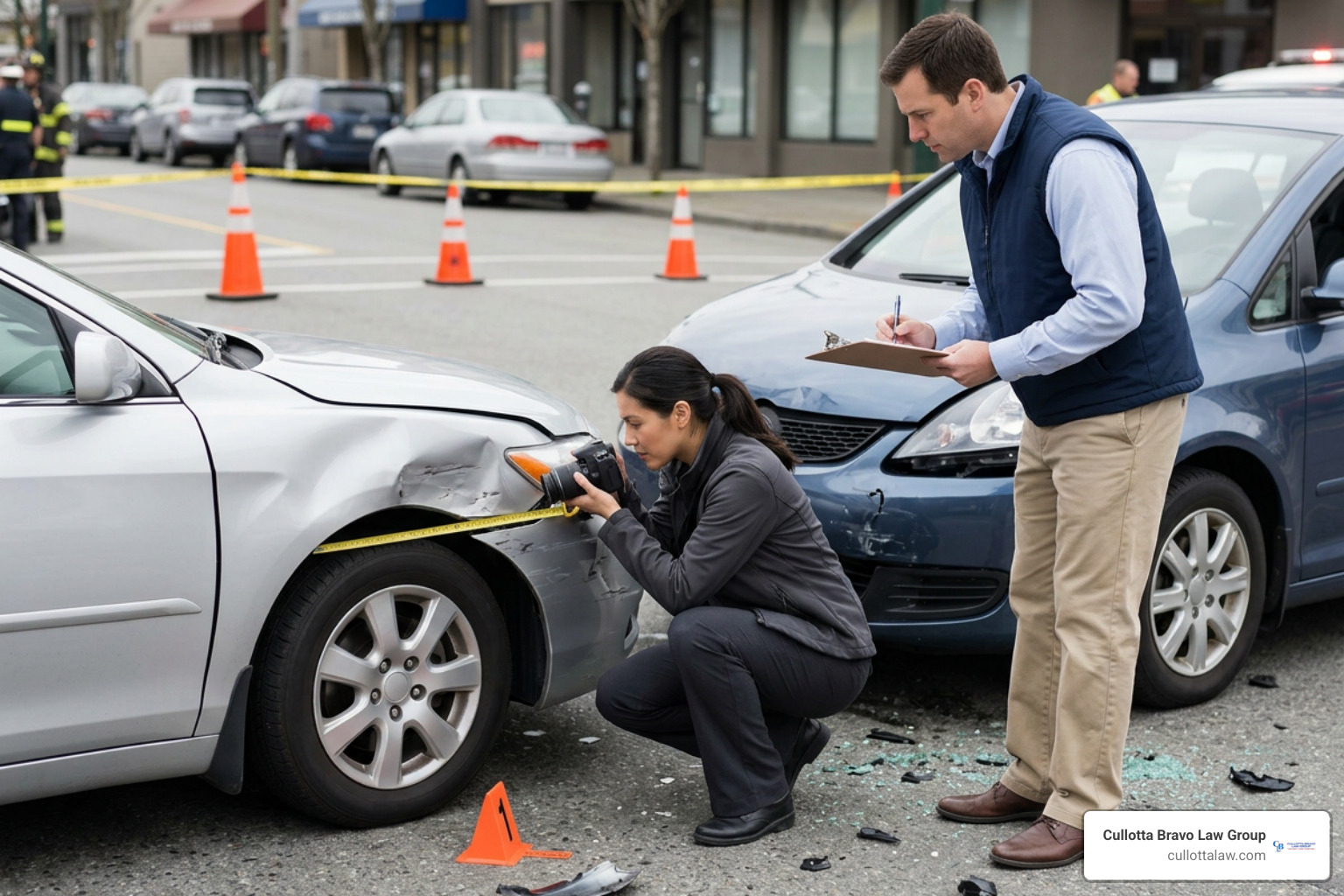
What you do in the immediate aftermath of a crash lays the foundation for your entire legal and insurance claim. When an accident occurs, emotions run high and adrenaline can easily mask physical pain. Taking clear, deliberate steps right away protects both your personal health and your legal rights.
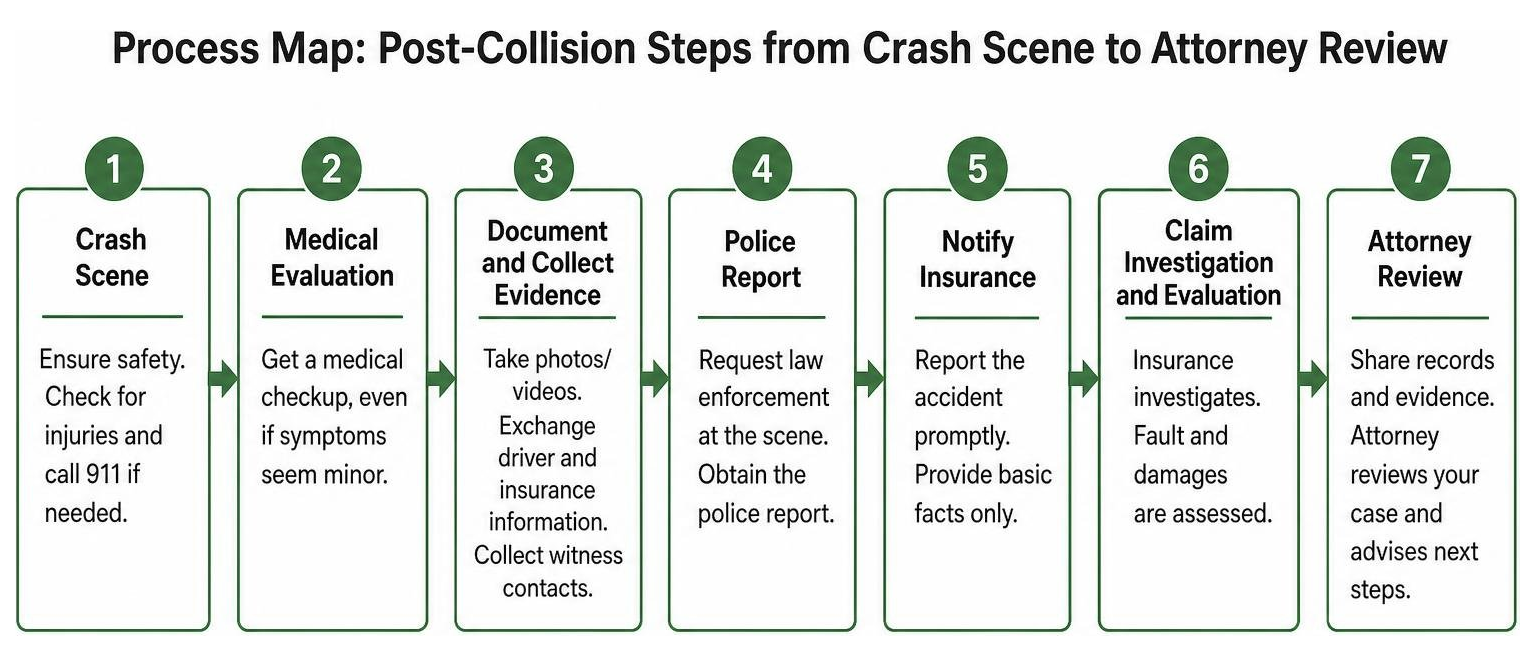
First, prioritize safety and medical attention. Even if you feel fine at the scene, seek a complete medical evaluation from a physician or emergency care provider as soon as possible. Soft tissue injuries, whiplash, internal bleeding, and concussions often present symptoms hours or days later. Obtaining an immediate medical assessment links your injuries directly to the collision, blocking insurance companies from arguing that your pain resulted from a pre-existing condition or a separate incident.
Second, document everything at the scene if you are physically able. Use your smartphone to capture:
- High-resolution photos and videos of all vehicle positions, property damage, skid marks, road conditions, traffic signs, and weather conditions.
- Contact information, driver’s license numbers, and auto insurance policy details from all drivers involved.
- Names and phone numbers of independent witnesses who saw the crash unfold.
Third, ensure local law enforcement is called to the scene to file an official police crash report. While police reports themselves are not always admissible as definitive proof of liability in court, they serve as crucial evidence during initial negotiations. Police reports document officer observations, citations issued, weather factors, and initial statements from drivers.
Understanding driver liability and comparative fault standards is critical when evaluating if after a car accident need lawyer assistance. In Illinois, crash claims follow a modified comparative fault system. Under this legal rule, you can recover financial compensation as long as you are determined to be less than 51 percent at fault for the accident. However, your total financial award is reduced by your exact percentage of responsibility. For example, if a jury determines your total losses equal $100,000 but assigns you 20 percent of the fault for speeding, your final payout would be $80,000. If you are found 51 percent or more at fault, you are legally barred from receiving any compensation.
Preserving physical and digital evidence is vital before conditions change or records disappear. Vehicles get repaired, traffic light footage gets overwritten within weeks, and physical road debris gets cleared. To learn more about securing vital evidence and establishing liability, review our Car Accident Attorney Complete Guide.
Step 2: Evaluating Your Case to Decide If After a Car Accident You Need a Lawyer
Deciding whether you need formal legal representation comes down to evaluating two core factors: injury severity and overall claim complexity. Not every fender bender requires a trial attorney, but miscalculating your need for legal help can cost you thousands of dollars out of pocket.
When evaluating your claim, consider this comparison between handling a claim on your own versus retaining experienced legal counsel:
| Claim Evaluation Factor | Self-Representation | Legal Representation |
|---|---|---|
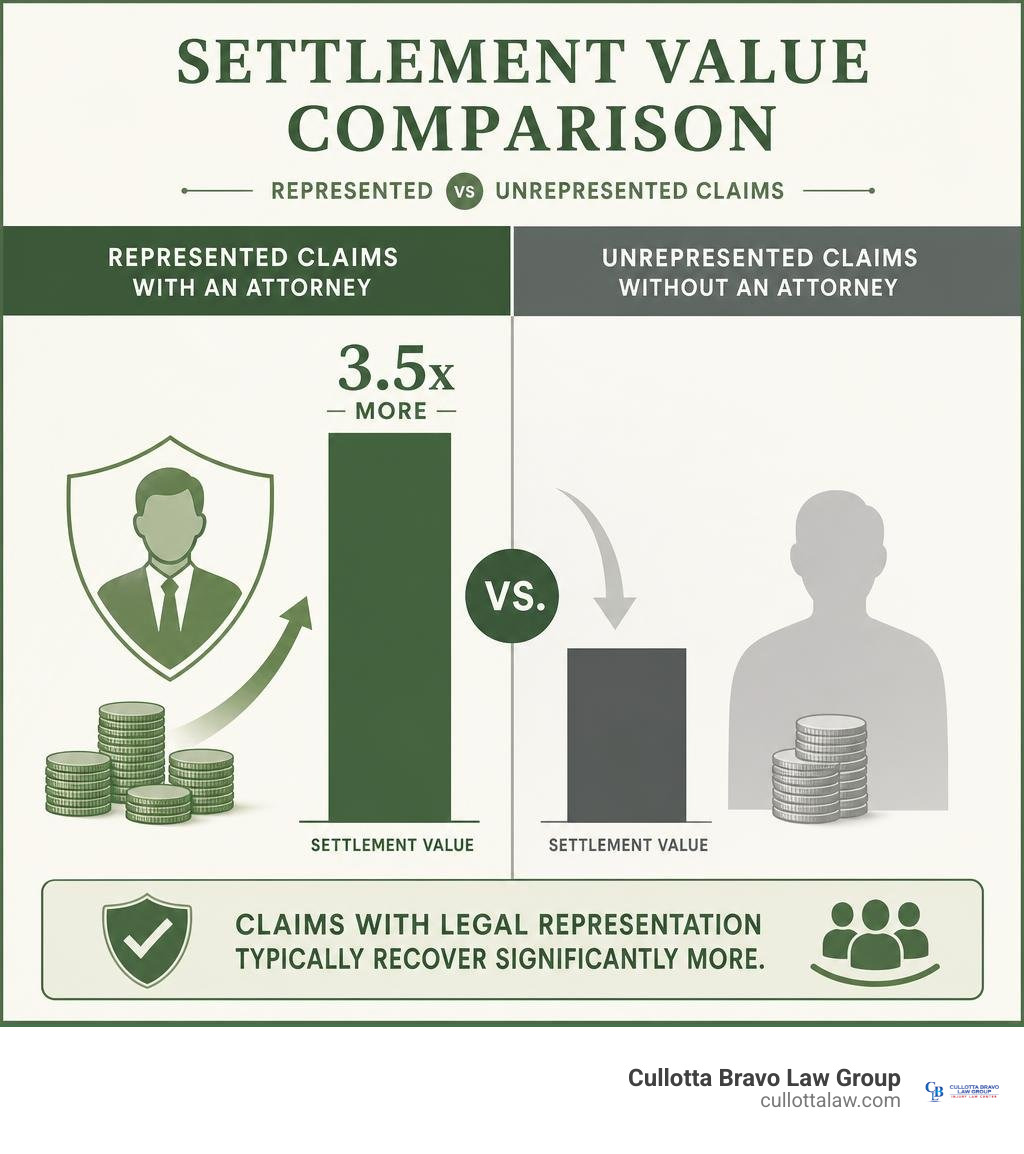
| Claim Value Potential | Payouts typically reflect basic out-of-pocket expenses; average unrepresented claims settle for significantly less. | Studies show represented claims settle for 2x to 3x more on average (and often higher in complex cases). |
| Handling Insurance Tactics | High risk of falling for lowball initial offers or recorded statement traps. | Experienced attorneys shield you from adjuster pressure and handle all communication directly. |
| Medical Evidence Gathering | Up to the victim to organize bills, records, and prove causation independently. | Attorneys organize medical liens, secure expert testimony, and calculate future medical care needs. |
| Fault & Liability Disputes | Difficult to counter insurance comparative negligence claims without professional investigation. | Reconstruction experts and legal discovery tools are deployed to establish clear fault. |
| Legal Deadline & Filing Protection | You must track and comply with strict statutory filing deadlines yourself. | Attorneys preserve critical evidence, adhere to statutes of limitations, and file court pleadings smoothly. |
When an Attorney Is Generally NOT Needed
You may not need to hire an attorney if your situation fits all of the following conditions:
- Zero Bodily Injury: No one involved in the collision suffered physical pain or required medical examination or treatment.
- Minor Property Damage: Vehicle damage is minimal, clear-cut, and easily covered by standard collision repair estimates.
- Undisputed Fault: The other driver’s insurance carrier readily accepts 100 percent liability without stalling or pushing back.
- Fair Direct Offer: The insurance company offers a prompt settlement that fully pays for direct repair costs and minor out-of-pocket expenses without demanding broad medical record releases.
Because a standard legal representation agreement typically operates on a 33.3 percent (one-third) contingency fee basis, an attorney must be able to increase your net recovery by more than 50 percent to make financial sense for a minor, low-value claim. For instance, if an insurer offers to directly cover a $1,000 bumper repair where no injuries occurred, hiring a lawyer is simply unnecessary.
Severe Injuries and Long-Term Damages: Why After a Car Accident You Need a Lawyer
When collisions result in severe, catastrophic, or long-term bodily injuries, the mathematical dynamic shifts dramatically. Insurance companies are for-profit corporations. Their claim adjusters are trained to minimize payout reserves and settle claims before the full financial impact of an injury becomes clear.
If you or a family member suffered broken bones, traumatic brain injury, spinal damage, joint dislocations, or permanent scarring, determining total claim value requires far more than adding up initial emergency room bills. You must account for:
- Maximum Medical Improvement (MMI): Reaching a state where your medical condition has stabilized and further recovery is predictable. Settling a claim before reaching MMI is a dangerous mistake because you cannot ask for more money later if you require additional surgery.
- Future Medical Care: Ongoing physical therapy, prescription medication, home modifications, and future surgical interventions.
- Lost Earning Capacity: Payouts covering not only lost past wages, but also the long-term reduction in your ability to earn a living due to physical limitations or disability.
- Non-Economic Damages: Fair financial compensation for physical pain, suffering, emotional distress, loss of enjoyment of life, and loss of consortium.
Navigating catastrophic claims requires structured economic modeling and detailed medical evidence. To understand how complex catastrophic claims are calculated, refer to The Ultimate Roadmap to Hiring Lawyers for Car Accident Injury.
Disputed Fault and Denied Claims: Why in a Car Accident You Need a Lawyer
Insurance companies frequently use liability disputes as leverage to reduce or deny claims entirely. An adjuster might claim you were speeding, distracted, or failed to yield, attempting to push your fault percentage past the 50 percent threshold to bar recovery under Illinois modified comparative fault laws.
Common insurer tactics include:
- Taking Distorted Recorded Statements: Asking leading questions designed to get you to admit partial fault or downplay your physical pain.
- Bad Faith Claim Denials: Delaying claims intentionally, refusing to conduct reasonable investigations, or offering flimsy justifications for claim denials.
- Initial Lowball Offers: Preying on financial vulnerability shortly after a crash by offering quick cash settlements in exchange for a full release of liability.
When an insurer disputes liability or denies a valid claim, a skilled attorney levels the playing field. Lawyers launch independent investigations, obtain surveillance footage, subpoena cell phone records, consult accident reconstruction experts, and force insurers to evaluate the claim based on court-admissible evidence rather than arbitrary adjuster assertions.
Step 3: Calculating Settlement Value and Recoverable Damages

How do insurance companies and trial attorneys calculate the true monetary value of a personal injury claim? There is no magic formula, but damages are generally categorized into three distinct buckets:
Economic Damages (Special Damages): Out-of-pocket financial losses that can be precisely documented through invoices, receipts, and pay stubs.
- Immediate ambulance, hospital, and emergency room expenses.
- Long-term physical therapy, diagnostic imaging (MRIs, CT scans), and specialist visits.
- Past lost wages and future loss of earning potential.
- Vehicle repair costs or fair market cash value for total losses.
Non-Economic Damages (General Damages): Intangible personal losses reflecting the human impact of an injury.
- Physical pain and physical suffering experienced during and after treatment.
- Emotional anguish, anxiety, depression, and post-traumatic stress.
- Permanent disability, disfigurement, or scarring.
- Loss of life enjoyment and inability to participate in family or recreational activities.
Exemplary or Punitive Damages: In rare instances involving extreme misconduct or gross negligence—such as severe drunk driving collisions or extreme drag racing—courts may award punitive damages. Punitive damages are designed to punish egregious behavior and deter similar reckless conduct in the community.
Insurance carriers often use internal computer software algorithms to establish initial settlement reserves. These programs calculate baseline figures by plugging in diagnostic codes and medical treatment durations. However, these automated systems deliberately undervalue subjective human losses like pain, suffering, and emotional trauma.
When an experienced personal injury trial lawyer enters the negotiation, insurance companies are forced to recalculate settlement offers based on their potential financial exposure in a court trial before a jury. Having a trial attorney who routinely takes cases to verdict signals to the insurer that lowball offers will be rejected. You can explore how local trial experience influences insurer payouts at Top Rated Car Accident Attorneys in Your Area.
Step 4: Understanding Legal Costs, Deadlines, and Special Coverage
Understanding the financial mechanics and legal timelines of an injury claim ensures you make informed decisions without unexpected surprises.
The Contingency Fee Model and ROI
Most personal injury law firms, including Cullotta Bravo Law Group, represent injured clients on a contingency fee arrangement. This means:
- You pay zero money upfront for legal representation.
- All investigation expenses, court filing fees, and expert witness costs are advanced by the law firm.
- The attorney receives an agreed-upon percentage (typically 33.3% to 40% depending on whether a lawsuit is litigated) only when we secure a favorable financial settlement or jury verdict for you.
- If no monetary recovery is obtained, you owe zero attorney fees.
Research from major insurance industry studies reveals that represented injury victims recover substantially higher net settlements than unrepresented individuals – even after accounting for attorney contingency fees. By thoroughly documenting damages, locating hidden insurance policies, and defeating comparative fault arguments, legal counsel delivers a strong return on investment (ROI).
Statutory Filing Deadlines (Statute of Limitations)
Every state enforces strict legal deadlines for filing personal injury lawsuits. In Illinois, the general statute of limitations for personal injury claims arising from a car accident is two years from the date of the collision. The Illinois General Assembly publishes the personal injury limitations statute at 735 ILCS 5/13-202.
If you fail to file a formal lawsuit in court before this statutory two-year clock expires, you permanently lose your legal right to seek compensation for your injuries – regardless of how severe your injuries are or how clear the other driver’s fault is. (Note: Claims involving government entities or public transit vehicles often have much shorter filing deadlines and mandatory notice requirements, sometimes as brief as six months to one year.) Regional statutory frameworks vary, as seen in other jurisdictions which may enforce different filing deadlines.
Handling Uninsured and Underinsured Motorist Coverage
What happens if the driver who hit you flees the scene, carries no insurance, or holds only state minimum liability coverage that fails to cover your medical bills?
In Illinois, vehicle owners are legally required to carry Uninsured Motorist (UM) coverage and Underinsured Motorist (UIM) coverage equal to their bodily injury liability limits.
- Uninsured Motorist (UM): Pays for your bodily injuries if you are struck by a hit-and-run driver or a driver who has no auto insurance.
- Underinsured Motorist (UIM): Steps in when the at-fault driver’s insurance liability policy limit is lower than your total damages. For example, if your medical bills equal $100,000 but the fault driver carries only $30,000 in liability limits, your UIM coverage can bridge the gap up to your personal policy limit.
Filing a UM or UIM claim requires negotiating directly against your own insurance policy. Even though you pay monthly premiums to your insurer, their claims department will still attempt to minimize your payout. Having an experienced attorney navigate UM/UIM policy nuances ensures you receive the full benefits you paid for.
Step 5: How an Attorney Maximizes Your Recovery and Handles Insurers
When you hire a personal injury law firm, the entire burden of managing a complex claim shifts off your shoulders, allowing you to focus completely on your medical recovery and family life. Here is how direct, aggressive legal representation protects and maximizes your financial recovery:
- Insulating You from Insurance Adjusters: Once retained, we notify all involved insurance carriers that we represent you. From that moment on, adjusters are legally prohibited from calling you, harassing you, or demanding recorded statements.
- Conducting In-Depth Accident Investigations: We obtain crash site telemetry, secure vehicle event data recorder (“black box”) data, gather video surveillance footage, and interview key witnesses.
- Managing Medical Liens and Expenses: Medical providers, health insurance carriers, and state agencies often assert legal liens against your eventual settlement. Our legal team reviews every lien for accuracy and aggressively negotiates reduction of medical bills to maximize the net cash amount placed directly in your pocket.
- Preparing Every Case for Trial: Insurance companies track which law firms actually take cases to court and which firms settle every case quickly for whatever is offered. By preparing every case as if it is heading to trial, we give you maximum leverage during settlement negotiations.
- Virtual and Flexible Case Onboarding: Modern personal injury practice allows seamless, secure communication. Whether through virtual phone consultations or secure electronic document signing, getting aggressive representation started is fast and accessible.
To explore step-by-step guidance on identifying and vetting top legal talent for your claim, consult our comprehensive Find Car Accident Lawyer Complete Guide.
Frequently Asked Questions About Car Accident Legal Claims
Navigating an auto accident claim brings up many immediate legal and financial questions. Below are detailed answers to the most common questions injured drivers ask when considering whether a car accident need lawyer situation applies to them. If you need dedicated representation, visit our dedicated page for an Attorney for Car Accident.
How do contingency fee agreements work for injury claims?
A contingency fee agreement links your attorney’s payment directly to the success of your case. Under this agreement, you pay no upfront retainers or out-of-pocket legal fees. The law firm advances all expenses necessary to investigate and litigate your claim—such as acquiring official police records, securing medical transcripts, and hiring expert witnesses.
When your case resolves successfully through a financial settlement or jury award, the legal fee is deducted as a pre-agreed percentage of the total recovery. If the case does not yield a financial recovery, you owe nothing for the attorney’s time or advanced legal expenses.
What is the statute of limitations for filing a lawsuit?
The statute of limitations is a strict statutory deadline setting the maximum timeframe you have to initiate formal legal action. In Illinois, the statute of limitations for personal injury claims arising from motor vehicle crashes is generally two years from the exact date of the crash.
If you miss this legal deadline, courts will dismiss your claim automatically, and insurance companies will close their files without paying a single dollar. Because gathering medical records and building a strong legal case takes several months, contacting an attorney early preserves vital evidence long before deadlines approach.
What happens if the at-fault driver is uninsured or flees?
If an at-fault driver lacks insurance or flees the scene in a hit-and-run crash, you seek compensation through the Uninsured Motorist (UM) coverage built into your auto insurance policy. UM coverage steps into the shoes of the missing driver’s insurance, covering your medical bills, lost income, and pain and suffering. If the at-fault driver has insurance but their liability limits are insufficient to pay for severe injuries, your Underinsured Motorist (UIM) policy provides supplemental coverage.
Navigating UM and UIM claims requires strict adherence to policy notifications and arbitration procedures, making attorney guidance invaluable.
Conclusion: Making the Right Choice for Your Injury Claim
Deciding whether to hire legal counsel after a collision is one of the most consequential decisions you will make for your health and financial security. While minor property damage claims can often be resolved independently, collisions involving bodily injury, wage loss, disputed fault, or uncooperative insurance companies demand proven trial experience.
At Cullotta Bravo Law Group, we represent injury victims across Aurora, Chicago, Naperville, Joliet, and surrounding Illinois communities. With more than 35 years of legal experience, our law firm is founded on aggressive courtroom representation, treating every client with dignity, and securing multi-million dollar settlements and verdicts for injured individuals and their families.
We welcome the opportunity to evaluate your case, answer your questions, and provide a clear legal roadmap with no cost and no obligation. Contact us today for a free case review to protect your rights by visiting our Personal Injury Legal Representation page.