

How a Specialized Boat Accident Law Firm Wins Your Claim
When a Boating Accident Turns Your Life Upside Down
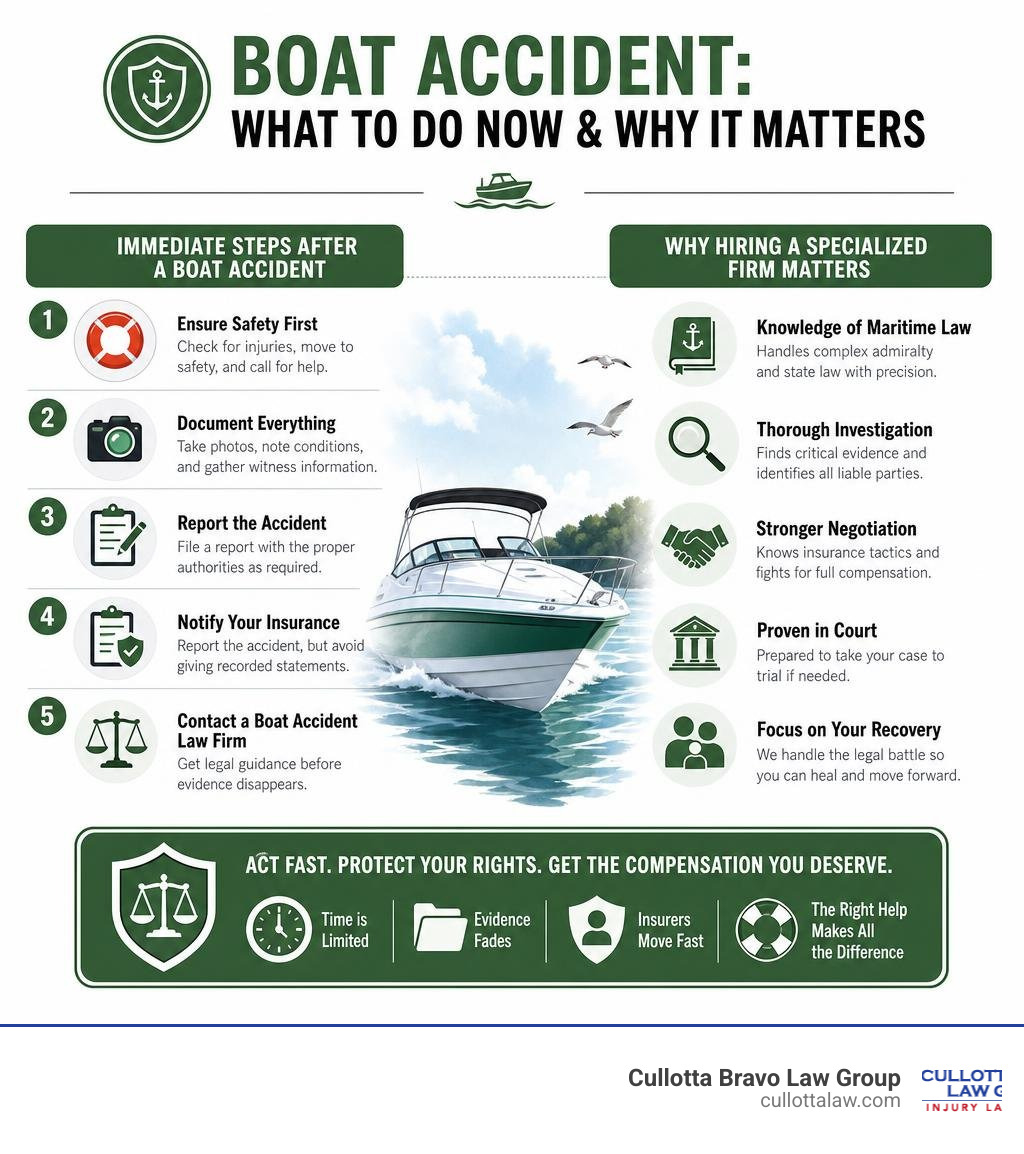
Hiring a boat accident law firm is one of the most important decisions you’ll make after a serious boating injury. The right firm can mean the difference between a fair settlement and walking away with nothing.
Here’s what you need to know right now:
- You have limited time to act. Statutes of limitations vary by state and claim type — some as short as one year.
- Evidence disappears fast. Witness accounts, vessel logs, and accident scene details fade quickly without proper preservation.
- Insurance companies work against you. Adjusters move fast to minimize payouts before you understand your rights.
- Maritime law is complex. Boating cases can fall under federal admiralty law, state law, or both — and the wrong approach can sink your claim.
- A specialized firm levels the playing field. Attorneys who focus on boating accidents know how to investigate, who to hold liable, and how to maximize your compensation.
Every year, tens of thousands of boating accidents cause serious injuries, financial hardship, and devastating loss. The U.S. Coast Guard estimates more than 60,000 non-fatal boating accidents occur annually, costing victims and families upward of $240 million. And yet, most victims don’t fully understand their legal rights — or how much they may be owed.
Boating accidents are not like car accidents. The laws are different. The liable parties are different. And the stakes are often much higher.
I’m Peter Cullotta, founding partner of Cullotta Bravo Law Group and a trial attorney with over 35 years of experience representing injured individuals across the Chicagoland area — including victims of boating and watercraft accidents where complex liability and insurance disputes are at the center of the claim. My experience handling serious personal injury cases, combined with admission to the federal trial bar, positions our boat accident law firm to pursue maximum compensation whether your case falls under state law or federal admiralty jurisdiction.
Boat accident law firm vocabulary:
Why You Need a Specialized Boat Accident Law Firm

Waterways like Lake Michigan, the Chicago River, and the Fox River offer incredible recreational opportunities for Illinois residents. However, navigating these waters comes with inherent risks. When a collision or capsizing occurs, victims are often left dealing with severe physical trauma and mounting financial stress. This is where a specialized boat accident law firm becomes indispensable.
Unlike typical car accidents, boating incidents are governed by a unique blend of state laws and federal maritime regulations. If you hire a general personal injury lawyer who rarely steps off dry land, they may miss critical jurisdictional nuances that could make or break your case.
An experienced maritime and boat injury team handles the complex insurance negotiations on your behalf. Marine insurance policies are notoriously difficult to read, often containing strict exclusion clauses and navigation limits. We know how to counter the tactics of insurance adjusters who try to shift the blame onto you. To learn more about how legal representation keeps you from getting overwhelmed by these corporations, read our guide on Why you need a boating accident attorney.
How a Boat Accident Law Firm Proves Negligence
To secure a settlement or court award, we must prove that another party’s negligence caused your injuries. Proving negligence in a boating context relies on establishing four primary elements:
- Duty of Care: The operator or owner of the vessel had a legal obligation to operate the boat safely and follow navigation rules.
- Breach of Duty: The operator breached that duty by acting recklessly, speeding, operating under the influence, or ignoring weather warnings.
- Causation: This specific breach of duty directly caused the accident and your subsequent injuries.
- Damages: You suffered measurable physical, emotional, or financial harm as a result.
Our team gathers crucial evidence to build this foundation, including navigation logs, GPS data, black box data (if available on larger vessels), and local law enforcement reports. For a deeper look into this investigative process, check out The role of a boat accident attorney.
What to Look for When Choosing a Boat Accident Law Firm
Choosing the right legal advocate is critical. When researching your options, look for the following qualifications:
- Trial Experience: Many personal injury firms prefer quick settlements, but you need a firm with federal and state trial experience that is ready to go to court if the insurance company refuses to play fair.
- Maritime Expertise: The firm must understand the differences between local Illinois state laws (such as IDNR regulations) and federal admiralty jurisdiction.
- Contingency Fees: You should never have to pay out of pocket to seek justice. Look for a firm that operates on a contingency fee model, meaning you pay nothing unless we win your case.
For practical advice on selecting an advocate who will stand by you, read our detailed guide on How to choose a boating accident attorney.
Common Causes and Liability in Boating Accidents
Most boating accidents are entirely preventable. They are rarely “accidents” in the truest sense; rather, they are the direct result of human error, distraction, or recklessness. According to the U.S. Coast Guard, over 80 percent of fatal boating accidents occur on vessels where the operator had no formal boating safety instruction.
Understanding what caused your accident is the first step toward identifying who is responsible. The table below highlights the most common causes of recreational versus commercial boating accidents:
| Recreational Boating Accident Causes | Commercial Boating Accident Causes |
|---|---|
| Operator inattention and lack of lookout | Inadequate crew training or understaffing |
| Operator inexperience on the water | Mechanical failure due to poor fleet maintenance |
| Excessive speed and reckless wake creation | Overloading cargo or passenger decks |
| Boating under the influence (BUI) | Failure to monitor marine weather reports |
| Failure to carry proper safety gear (life jackets) | Navigational errors in commercial shipping lanes |
Boating Under the Influence (BUI) and Alcohol Limits
Alcohol is the leading contributing factor in fatal recreational boating accidents. Many people do not realize that operating a boat under the influence is just as illegal as driving a car drunk. In Illinois, the legal blood alcohol concentration (BAC) limit for boat operators is 0.08%—matching the limit for motor vehicles.
However, the physical effects of alcohol are magnified on the water. Environmental stressors such as sun exposure, wind, engine noise, and the constant motion of the waves (known as “boating fatigue”) accelerate impairment. An operator with a BAC below the legal limit can still be dangerously impaired and held liable for an accident.
Law enforcement officers from the Illinois Department of Natural Resources (IDNR) or the Coast Guard can conduct field sobriety tests on the water or at the dock. If a boat operator was drinking, we will secure chemical test results, police reports, and eye-witness testimony to solidify your claim. Learn more about these strict rules in our article Understanding boating under the influence.
Determining Liability Among Multiple Parties
Liability in a maritime accident is rarely straightforward. Depending on the circumstances, multiple parties may share the blame:
- The Boat Operator: For reckless driving, speeding, or operating under the influence.
- The Vessel Owner: If they allowed an inexperienced or unlicensed individual to operate their watercraft (negligent entrustment).
- The Manufacturer: If a defective part, such as a failing steering system or engine component, caused the crash.
- Rental Companies: If they failed to maintain their fleet of jet skis or pontoon boats, or failed to provide basic safety instructions to renters.
Identifying all potential sources of financial recovery is essential to maximizing your compensation. If you need assistance determining who is at fault for your injuries, consult a dedicated Boating Accident Lawyer to review the specifics of your case.
Understanding Maritime Law vs. Standard Personal Injury Law
If you slip and fall in a grocery store in Aurora or get into a car accident in Naperville, your case is governed by Illinois civil law. However, if you are injured on a boat, the legal landscape changes dramatically.
Federal maritime law (also known as admiralty law) applies to accidents that occur on “navigable waters.” Navigable waters are bodies of water used for interstate or international commerce—which includes Lake Michigan and major commercial rivers in Illinois. If your accident occurs on a landlocked, private lake, state personal injury law applies instead.
This jurisdictional divide affects everything from how fault is determined to the statute of limitations. Navigating these overlapping legal systems requires a specialized boat accident law firm that understands how to file claims in both state and federal courts. For more information on this legal distinction, speak with an experienced Boating Accident Lawyer.
The Jones Act and Commercial Seamen Rights
For individuals who work on the water—such as deckhands, tugboat operators, barge workers, and commercial fishermen—standard workers’ compensation does not apply. Instead, their rights are protected under a powerful federal statute known as the Jones Act.
Under the Jones Act, injured seamen can sue their employers directly for negligence. To win a Jones Act claim, you only need to prove that your employer’s negligence played a small part in causing your injury. Additionally, injured workers are entitled to “maintenance and cure,” which requires employers to pay for daily living expenses and medical treatment during recovery. If you are a maritime worker injured on the job, contact a Boating Accident Lawyer to explore your options.
General Maritime Law and Recreational Boaters
Recreational boaters, jet ski riders, and cruise ship passengers are governed by general maritime law if their accident occurs on navigable waters. Under general maritime law, vessel owners have a duty to provide a reasonably safe environment.
If you are injured on a cruise ship or a charter boat, your claim may be subject to strict contractual limitations printed on your ticket. These contracts often shorten the time you have to file a claim to just one year and require you to file the lawsuit in a specific federal court. To protect your rights after an incident on a passenger vessel, read more about Cruise ship accident claims.
Compensation and Damages in Boating Injury Claims
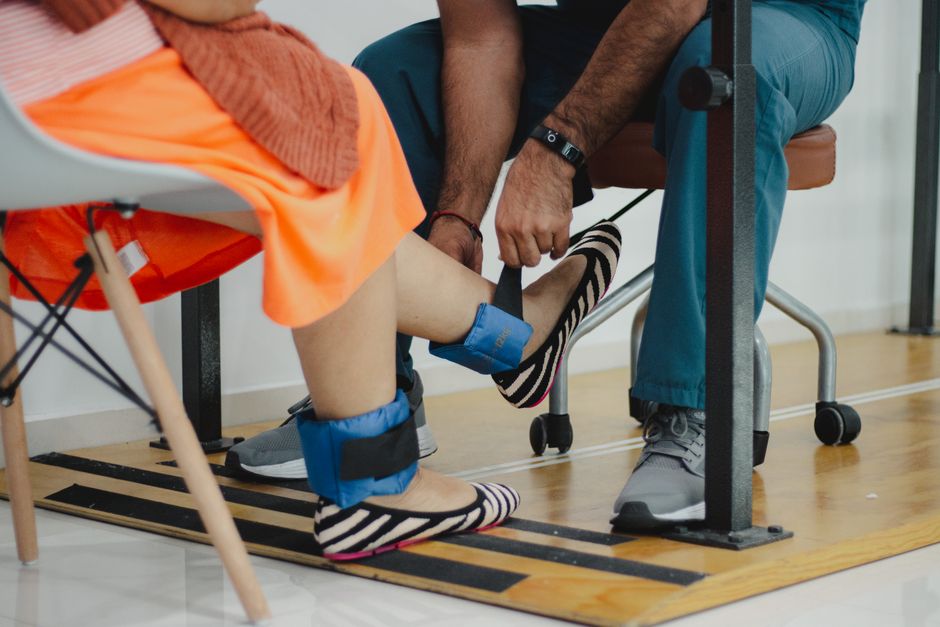
A serious boating accident can result in catastrophic injuries, including traumatic brain injuries (TBIs) from propeller strikes, spinal cord damage from hard wake impacts, broken bones, and severe burns. The financial impact of these injuries can quickly become overwhelming.
Through a personal injury claim, we help you pursue compensation for both your financial losses and the personal toll the accident has taken on your life. For a comprehensive breakdown of what your case might be worth, consult Your compass to compensation.
Economic vs. Non-Economic Damages
Your compensation package is divided into two primary categories:
- Economic Damages: These are quantifiable financial losses. They include immediate emergency room bills, ongoing rehabilitation costs, specialized medical equipment, lost wages, diminished earning capacity, and the cost to repair or replace your watercraft.
- Non-Economic Damages: These cover intangible losses that do not have a direct price tag. They include physical pain and suffering, emotional distress, post-traumatic stress disorder (PTSD), scarring or disfigurement, and loss of consortium (the negative impact of the injury on your relationship with your spouse).
How Surgery Impacts Your Settlement Value
If your boating injury requires surgical intervention—such as a spinal fusion, joint replacement, or hardware placement for broken bones—the value of your settlement will typically increase.
Statistically, personal injury cases involving surgery result in settlements that are 3.5 times higher on average than non-surgical cases. In Illinois, while a soft-tissue injury claim without surgery might settle for $10,000 to $25,000, cases requiring surgical treatment frequently exceed $100,000. This is because surgery represents concrete medical proof of a severe, life-altering injury, resulting in higher medical expenses and a longer, more painful recovery period.
Frequently Asked Questions About Boating Accidents
What should I do immediately after a boat accident?
Your priority must always be safety. Immediately check everyone on board for injuries and call for emergency medical assistance. If possible, move the vessel out of busy channels to prevent secondary collisions.
Exchange contact, insurance, and vessel registration information with all other operators involved. Take photos of the damage to all vessels, the surrounding water conditions, and your visible injuries. Finally, report the accident to the IDNR or the Coast Guard as required by law. For a complete step-by-step checklist, refer to our guide on What to do when involved in a boat accident.
What is the statute of limitations for a boating accident lawsuit?
In Illinois, the standard statute of limitations for a personal injury lawsuit is two years from the date of the accident. However, if your claim falls under federal maritime law, the statute of limitations is generally three years.
As mentioned previously, cruise ship tickets and charter contracts can legally shorten this window to one year. Because these deadlines vary so widely, it is critical to consult a Boating Accident Lawyer immediately to ensure you do not miss your window to file.
How much does it cost to hire a boat accident lawyer?
At Cullotta Bravo Law Group, we believe that high-quality legal representation should be accessible to everyone. We handle all boating accident claims on a contingency fee basis.
This means we offer free initial consultations to review your case, and we charge no upfront fees. We only get paid if we successfully secure a settlement or jury verdict on your behalf. If we do not win, you owe us nothing. Learn more about how this risk-free legal model works by reading about Finding a boating accident lawyer.
Conclusion
Navigating the aftermath of a serious watercraft crash can feel like steering through a heavy storm without a compass. Between physical recovery, mounting medical bills, and complex maritime laws, you should not have to carry this burden alone.
At Cullotta Bravo Law Group, we provide aggressive, compassionate legal representation to injury victims in Aurora, Chicago, Naperville, Joliet, and throughout Illinois. With over 35 years of combined legal experience, we treat our clients with the dignity they deserve while relentlessly pursuing the multi-million dollar settlements and verdicts they need to rebuild their lives.
If you or a loved one has been injured on the water, do not let the insurance companies leave you stranded. Contact Cullotta Bravo Law Group today or reach out online to schedule your free, no-obligation case evaluation with an experienced Boating Accident Lawyer. Let us fight for the compensation you deserve while you focus on your recovery.