
What to Do When You Get Injured at a Restaurant (And Why It Matters)
Knowing what to do when you get injured at a restaurant can be the difference between a successful compensation claim and walking away with nothing.
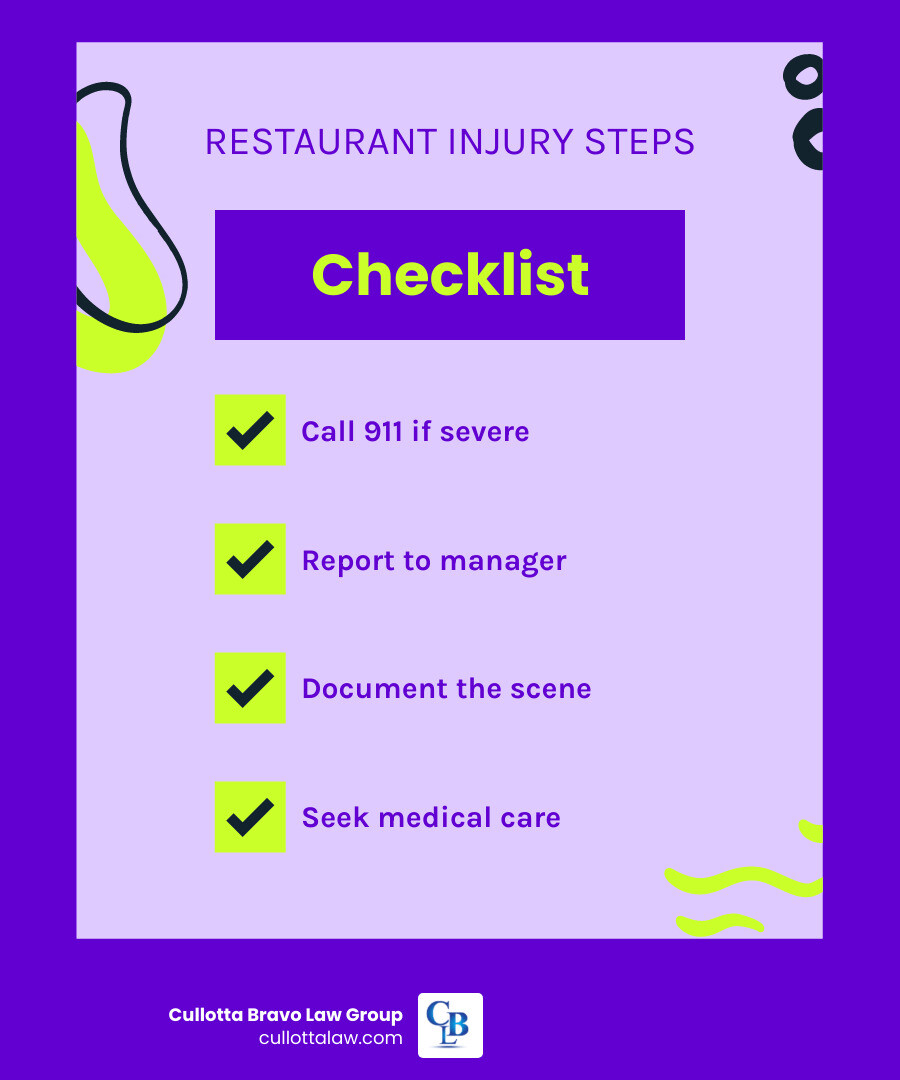
Here are the key steps to take right away:
- Call 911 if your injury is severe — don’t try to move if you suspect a spinal or head injury.
- Report the incident to the restaurant manager and request a written incident report.
- Document everything — take photos of the hazard, your injuries, and note the locations of any security cameras.
- Gather witness information — names and contact details from anyone who saw what happened.
- Seek medical attention — even if you feel okay, get evaluated the same day.
- Avoid recorded statements to insurance adjusters until you’ve spoken with an attorney.
- Contact a personal injury attorney as soon as possible to protect your legal rights.
Going out to eat is supposed to be a break — a chance to relax, enjoy good food, and leave the dishes to someone else. But restaurants are also surprisingly hazardous environments. Crowded dining rooms, freshly mopped floors, poor lighting, and rushed staff can all set the stage for a serious accident.
Slip and fall accidents alone account for at least 8 million emergency room visits in the United States every year. And restaurants are one of the most common places where these accidents happen.
The problem? Most people’s instinct after an accident is to brush it off — to say “I’m fine” out of embarrassment and walk out the door. That instinct can cost you. Evidence disappears fast. Surveillance footage gets overwritten. Spills get cleaned up. The window to protect your claim closes quickly.
I’m Peter Cullotta, founding partner at Cullotta Bravo Law Group, with over 35 years of experience representing injured individuals throughout the Chicagoland area — including people who had no idea what to do when you get injured at a restaurant and needed someone to fight for them. In the sections below, I’ll walk you through exactly what steps to take, what to avoid, and how Illinois law determines what compensation you may be owed.
Basic what to do when you get injured at a restaurant vocab:
Common Causes of Restaurant Accidents and Injuries
While we often associate restaurant dangers with the kitchen, the dining area is frequently just as risky for patrons. In the United States, slip and fall injuries are one of the leading causes of injury in public places, and restaurants are high-traffic hubs where hazards can materialize in seconds.
When we look at the data, a few culprits stand out as the primary causes for that trip to the emergency room:
- Greasy and Wet Floors: This is the number one cause. Whether it’s a spilled soda at a self-serve station, water tracked in near the restrooms, or kitchen grease tracked into the dining room by busy servers, a slick floor is a recipe for a Slip And Fall.
- Burn Injuries: From sizzling fajita plates to Hot Coffee Burns And Other Restaurant Injuries In Illinois, thermal injuries are common. Serving food or beverages at temperatures capable of causing second or third-degree burns is a serious safety violation.
- Broken or Defective Furniture: A chair that collapses under a guest or a booth with a protruding nail can cause puncture wounds, lacerations, or back injuries.
- Poor Lighting: Many restaurants dim the lights for “ambiance,” but if it’s so dark that you can’t see a step or a rug corner, the establishment has failed its safety duties.
- Falling Objects: Poorly secured decor or overhead storage can lead to head and shoulder injuries if items become dislodged.
- Food Poisoning: Negligent food handling, improper storage temperatures, or cross-contamination can turn a meal into a life-threatening illness.
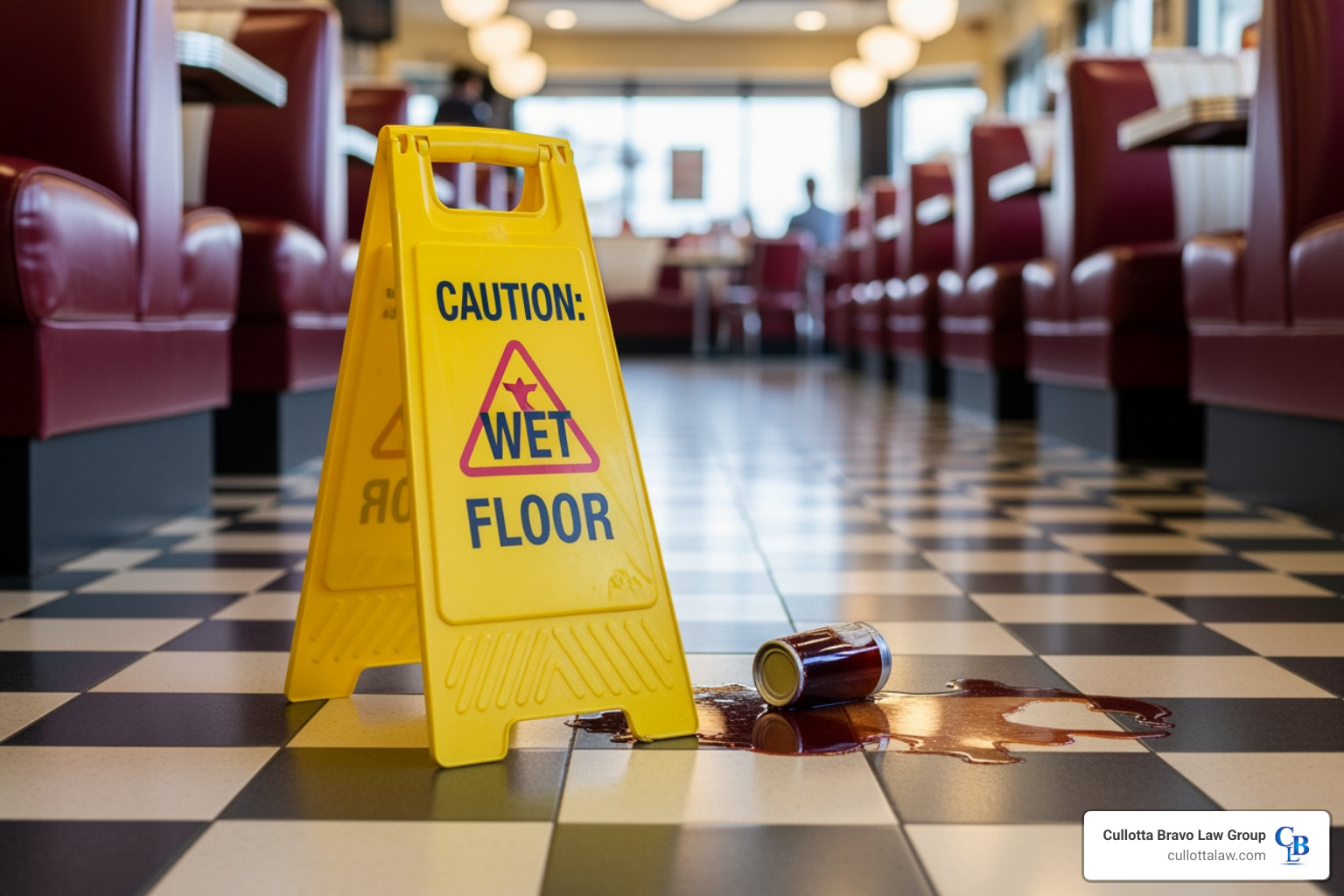
Common Hazards in Illinois Eateries
In locations like Aurora and Naperville, we face unique challenges. During the winter months, sidewalk ice is a major concern. A restaurant’s “duty of care” doesn’t stop at the front door; it extends to the parking lot and walkways. If a restaurant fails to salt their entrance, they may be liable for your injuries.
Inside, the hazards are often more subtle. A torn carpet in a high-traffic walkway or a loose floorboard can catch a heel in an instant. Our Aurora Slip Fall Accident Lawyers Guide highlights that many of these accidents are entirely avoidable if management follows basic safety standards, such as regular floor inspections and the immediate placement of warning signs.
What to Do When You Get Injured at a Restaurant: A Step-by-Step Guide
If you find yourself on the floor or nursing a burn, your adrenaline will be pumping. It is vital to stay calm and follow a specific protocol to protect your health and your potential legal claim.
- Notify Management Immediately: Do not just tell your server. Ask for the manager on duty. Ensure they are aware of exactly what happened and what caused the injury.
- Request an Incident Report: Most corporate and well-managed local restaurants have a formal process for this. Ask for a copy of the report before you leave. If they won’t give you a copy, take a photo of it with your phone.
- Watch Your Words: Avoid the natural urge to apologize. Saying “I’m so clumsy” or “I should have been looking” can be used against you later to prove you were at fault. Stick to the facts: “I slipped on that puddle of water.”
- Identify the Cause: Before the staff mops up the spill or fixes the broken chair, make sure you know exactly what caused your fall. Was it water? Grease? A loose rug?
Knowing what to do when you get injured at a restaurant means acting as your own investigator in those first few minutes. This is the foundation of any future Personal Injury claim.
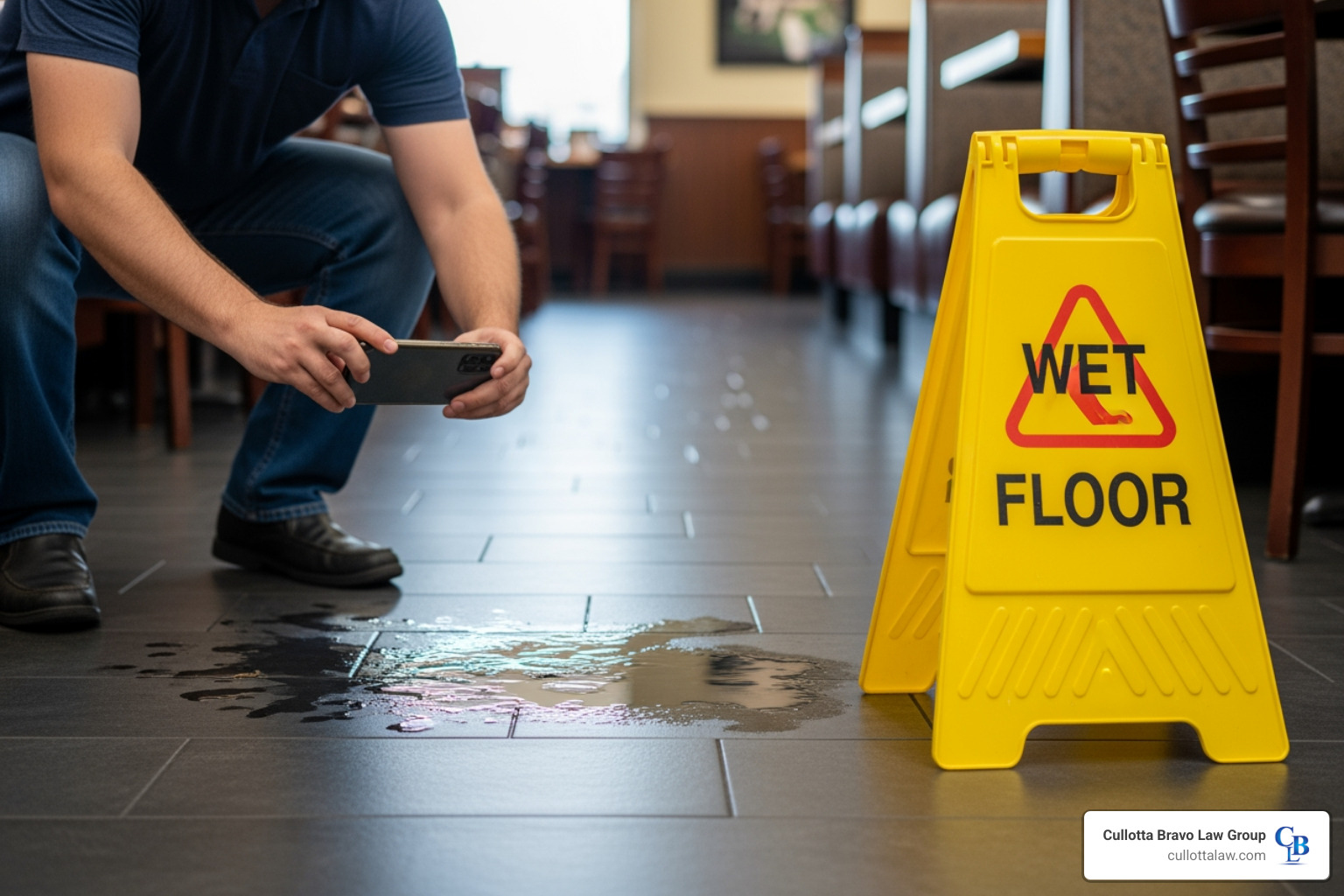
Immediate Medical Care After You Get Injured at a Restaurant
Even if you think you’ve only bruised your pride, you must seek medical attention. Adrenaline can mask the pain of a concussion, a hairline fracture, or a soft tissue tear that won’t “flare up” until the next morning.
By visiting an emergency room or urgent care in Aurora or Joliet immediately, you create a medical record that links your injury directly to the restaurant incident. If you wait three days to see a doctor, the restaurant’s insurance company will argue that you got hurt somewhere else in the meantime.
A Personal Injury Lawyer Aurora will tell you that the “gap in treatment” is the most common tool insurers use to deny claims. Ensure your doctor provides a full prognosis and documents all symptoms, no matter how minor they seem at the time.
Documenting the Scene and Gathering Evidence
Evidence in a restaurant is “perishable.” Spills are mopped within minutes, and surveillance footage is often overwritten within 24 to 72 hours.
- Take Photos and Video: Capture wide angles of the room and close-ups of the hazard. If you slipped on a liquid, try to capture the “trail” of the spill.
- Check for Cameras: Point out the locations of security cameras to your attorney. We can send a “spoliation letter” to the restaurant to legally require them to preserve that footage.
- Witness Information: Restaurant staff are rarely “independent” witnesses. Look for other diners who saw the fall. Get their names and phone numbers. Their unbiased account is gold for Legal Help For Hungry Plaintiffs Why You Need A Restaurant Negligence Lawyer.
- Cleaning Logs: Ask to see the cleaning log. If the floor hasn’t been checked in four hours, that’s a clear sign of negligence.
Understanding Premises Liability and Proving Negligence
In Illinois, restaurant patrons are considered “invitees.” This means the business owner owes you the highest level of care. They have an affirmative duty to inspect the premises and fix hazards or warn you about them.
Under the Slip And Fall Law Complete Guide, simply falling isn’t enough to win a case. You must prove the restaurant was negligent. This usually involves showing one of two things:
- Actual Notice: The restaurant knew about the hazard (e.g., a server saw the spill) and didn’t fix it.
- Constructive Notice: The hazard existed for so long that the restaurant should have known about it if they were doing reasonable inspections.
Proving Negligence When You Get Injured at a Restaurant
Proving a breach of duty requires showing that the restaurant’s actions (or lack thereof) directly caused your damages. For example, if a kitchen entrance is caked in grease that staff tracks into the dining area, that is a failure of reasonable care.
Whether you are a guest or an employee looking into Serving Up Justice How Restaurant Workers Get Compensation, the core question remains: Did the establishment follow safety protocols that a “reasonably prudent” owner would follow? If they ignored a leaking sink for two weeks, they have breached their duty.
Illinois Modified Comparative Negligence Rules
Illinois uses a “modified comparative negligence” system. This means you can still recover money even if you were partially at fault for your own injury — as long as you are not more than 50% responsible.
If you are found to be 20% at fault (perhaps because you were walking a bit too fast), your total compensation is simply reduced by 20%. However, if a jury decides you were 51% at fault, you get nothing. This is why the restaurant will try very hard to blame you.
| Percentage of Fault | Original Award | Final Compensation |
|---|---|---|
| 0% At Fault | $100,000 | $100,000 |
| 10% At Fault | $100,000 | $90,000 |
| 25% At Fault | $100,000 | $75,000 |
| 50% At Fault | $100,000 | $50,000 |
| 51% At Fault | $100,000 | $0 (Barred from recovery) |
Recovering Compensation and Dealing with Insurance Adjusters
A successful claim can cover more than just your immediate doctor’s visit. We fight to recover:
- Medical Expenses: Past, present, and future treatments.
- Lost Wages: Time missed from work, including future earning capacity.
- Pain and Suffering: Compensation for the physical and emotional toll of the injury.
- Loss of Enjoyment of Life: If you can no longer participate in hobbies or activities you loved.
When dealing with Naperville restaurant accident claims, you will eventually be contacted by an insurance adjuster. They may seem friendly, but their job is to save the insurance company money. They will often ask for a recorded statement. Do not give one.
Adjusters use these statements to “lock you in” to a story before you know the full extent of your injuries. They might ask, “How are you today?” and if you say “Fine,” they will use that to argue you aren’t actually hurt. Always refer the adjuster to your attorney.
Frequently Asked Questions about Restaurant Injuries
What is the statute of limitations for a restaurant injury in Illinois?
In Illinois, you generally have two years from the date of the accident to file a personal injury lawsuit. If you were injured in May 2024, your deadline to file would be in May 2026. However, some exceptions apply (especially if the property is government-owned), so it is critical to consult a lawyer immediately to ensure your claim is preserved.
Should I speak to the restaurant’s insurance adjuster?
No. You are not legally required to give a recorded statement to the other side’s insurance company. These adjusters are trained to lead you into “liability traps” where you inadvertently admit fault. The best course of action is to tell them that you are represented by counsel and provide them with our contact information.
Can I still recover damages if I was looking at my phone during the fall?
Yes, potentially. This falls under “distracted walking,” a common defense used by restaurants. While looking at your phone might mean you carry a percentage of the fault under Illinois’ comparative negligence rules, it does not automatically disqualify you from receiving compensation—especially if the hazard was one that shouldn’t have been there in the first place.
Conclusion
A meal out shouldn’t end in a hospital bed, but when it does, you deserve to be treated with dignity and respect. At Cullotta Bravo Law Group, we bring over 35 years of experience to the table, providing aggressive legal representation for our neighbors in Aurora, Chicago, Naperville, and Joliet. We understand the tactics restaurants and insurance companies use to avoid responsibility, and we know how to counter them.
If you are wondering what to do when you get injured at a restaurant, the most important step you can take right now is to seek professional legal advice. We offer free consultations and work on a contingency fee basis—meaning you don’t pay us unless we win your case.
Request a Free Consultation with a Personal Injury Expert by calling us today. Let us handle the legal heavy lifting so you can focus on your recovery.