

Know Your Lines: A Guide to Property Title Searches and Boundary Surveys
Why a Property Title Search Can Make or Break Your Real Estate Deal
A property title search is the process of reviewing public records to confirm who legally owns a property — and to uncover anything that could threaten that ownership.
Here’s what a property title search reveals at a glance:
| What It Checks | Why It Matters |
|---|---|
| Ownership history (chain of title) | Confirms the seller has the legal right to sell |
| Mortgages and liens | Reveals debts attached to the property |
| Easements and encumbrances | Shows rights others may have over the land |
| Tax status | Flags unpaid property taxes you could inherit |
| Judgments | Uncovers court-ordered claims against the owner |
| Boundary and legal description | Confirms the property lines match what’s being sold |
Buying a property without a title search is like buying a car without checking if it’s stolen. Everything can look fine on the surface — until it isn’t.
Title problems are more common than most buyers expect. Unpaid liens, ownership disputes, and boundary encroachments can surface long after closing, leaving new owners to deal with costly legal battles they never saw coming.
I’m Peter Cullotta, founding partner at Cullotta Bravo Law Group, and with over 35 years of trial experience handling real estate and property rights matters across Illinois, I’ve seen how a missed step in the property title search process can upend an otherwise clean transaction. This guide walks you through exactly what to look for — and what to do when something goes wrong.
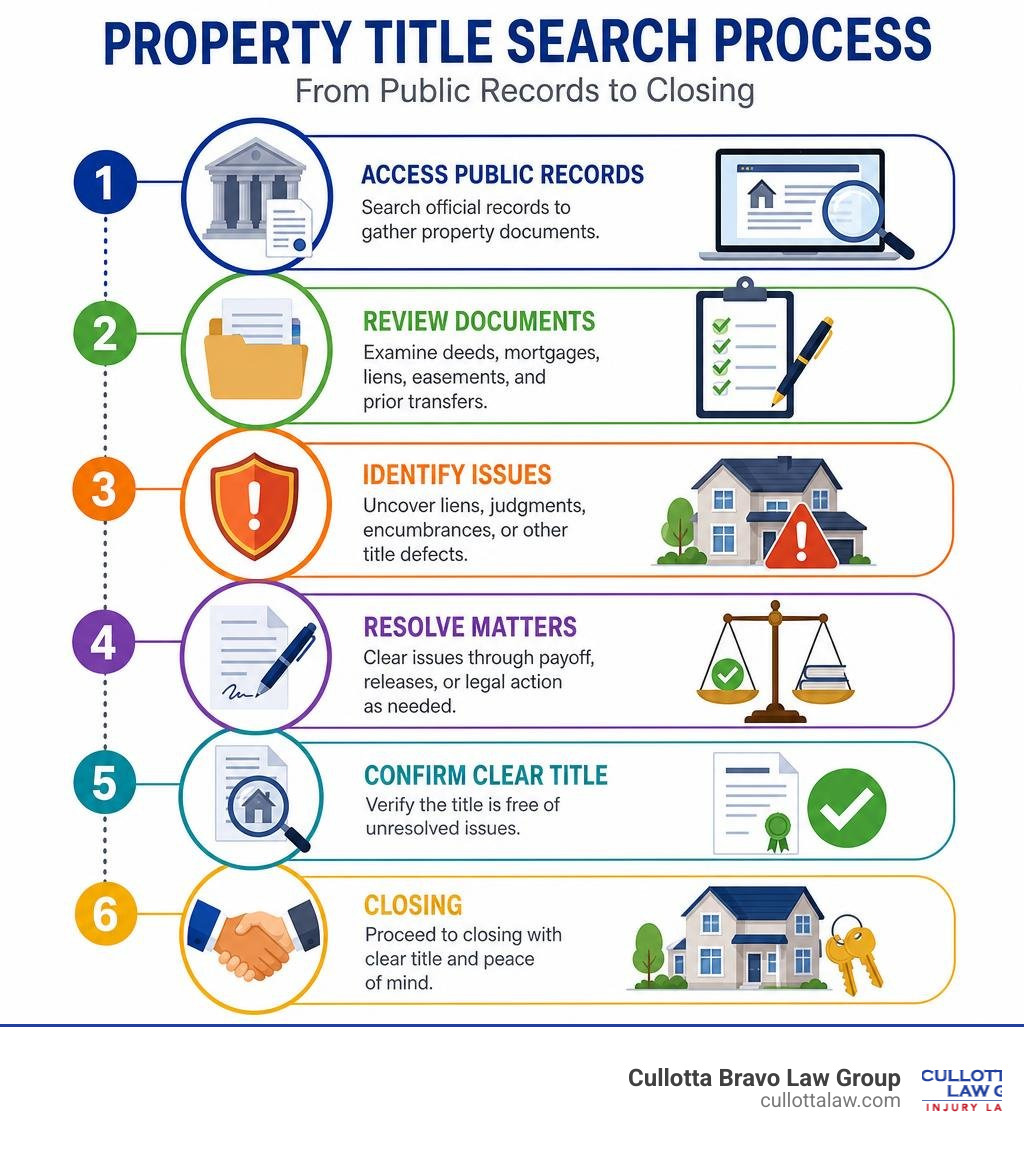
Property title search word guide:
Understanding the Essentials of a Property Title Search
At its core, a property title search is a thorough historical investigation. When you buy a home or commercial building in Illinois, you aren’t just purchasing the physical structure of wood, brick, and concrete; you are buying the legal right to possess and use the land.
This legal right is represented by the “title.” However, a seller cannot give you a cleaner title than what they actually own. If there are old mortgages, unpaid contractor bills, or unresolved estate disputes attached to the land, those “clouds” stay with the property.
To prevent inheriting someone else’s financial or legal headache, we must establish a clear chain of title. This is the chronological history of ownership, tracing the property from the current seller back through previous owners—sometimes going back many decades.
A thorough search also verifies the legal descriptions of the property. Unlike a simple street address, a legal description uses precise geographic markers, lot numbers, or metes-and-bounds measurements to define exactly what parcel of earth is being transferred. If the legal description in the deed is flawed, you might accidentally buy less land than you bargained for—or land that belongs to your neighbor.
Before you even reach the closing table, your purchase is governed by a contract. Understanding What is a Real Estate Contract? is critical because this document outlines who is responsible for providing a clean title. Navigating this journey requires careful oversight, which is why we recommend reviewing From Contract to Keys: The Buyer’s Guide to Legal Support to understand how professional advocates protect your interests at every step.
Key Information Revealed in a Property Title Search
When we dive into the public records for a property in Cook, DuPage, or Will County, we are looking for anything that limits your ownership rights. These limitations generally fall into a few categories:
- Mortgages: The current owner’s outstanding home loans. These must be paid off and formally released at closing.
- Property Tax Liens: Unpaid local property taxes. In Illinois, unpaid taxes can result in a tax sale, meaning a third party could eventually claim title to your property.
- Easements: Legal agreements that allow others to use a portion of your land—such as a utility company running power lines or a neighbor using a shared driveway.
- Judgments and Mechanics’ Liens: If the seller lost a court case or failed to pay a roofing contractor, a lien may be placed on the property. These debts must be cleared before the title can transfer cleanly.
To get a clear snapshot of these issues, buyers often rely on Current Owner Searches & Reports, which identify the active owner, current tax status, and any outstanding encumbrances or judgments tied to the property.
How Title Defects and Boundary Disputes Threaten Ownership
A “title defect” is any claim, lien, or legal hurdle that invalidates or calls into question your sole ownership of the property. For example, if a previous owner passed away and their heirs never properly signed off on a past sale, those heirs might still have a legal claim to your home.
Boundary disputes are equally disruptive. Imagine moving into your new home in Naperville, only to find out your neighbor’s fence sits two feet inside your property line. Over time, if a neighbor uses a portion of your land openly, continuously, and without your permission, they might attempt to claim legal ownership under Illinois law. If you find yourself facing this highly complex scenario, consulting an experienced Adverse Possession Attorney is essential to defending your property lines.
Navigating Public Records Systems and County Recorder Offices
In Illinois, property records are maintained at the county level. There is no single, centralized state database where you can look up every deed. Instead, you must access the specific county recorder of deeds office where the property sits.
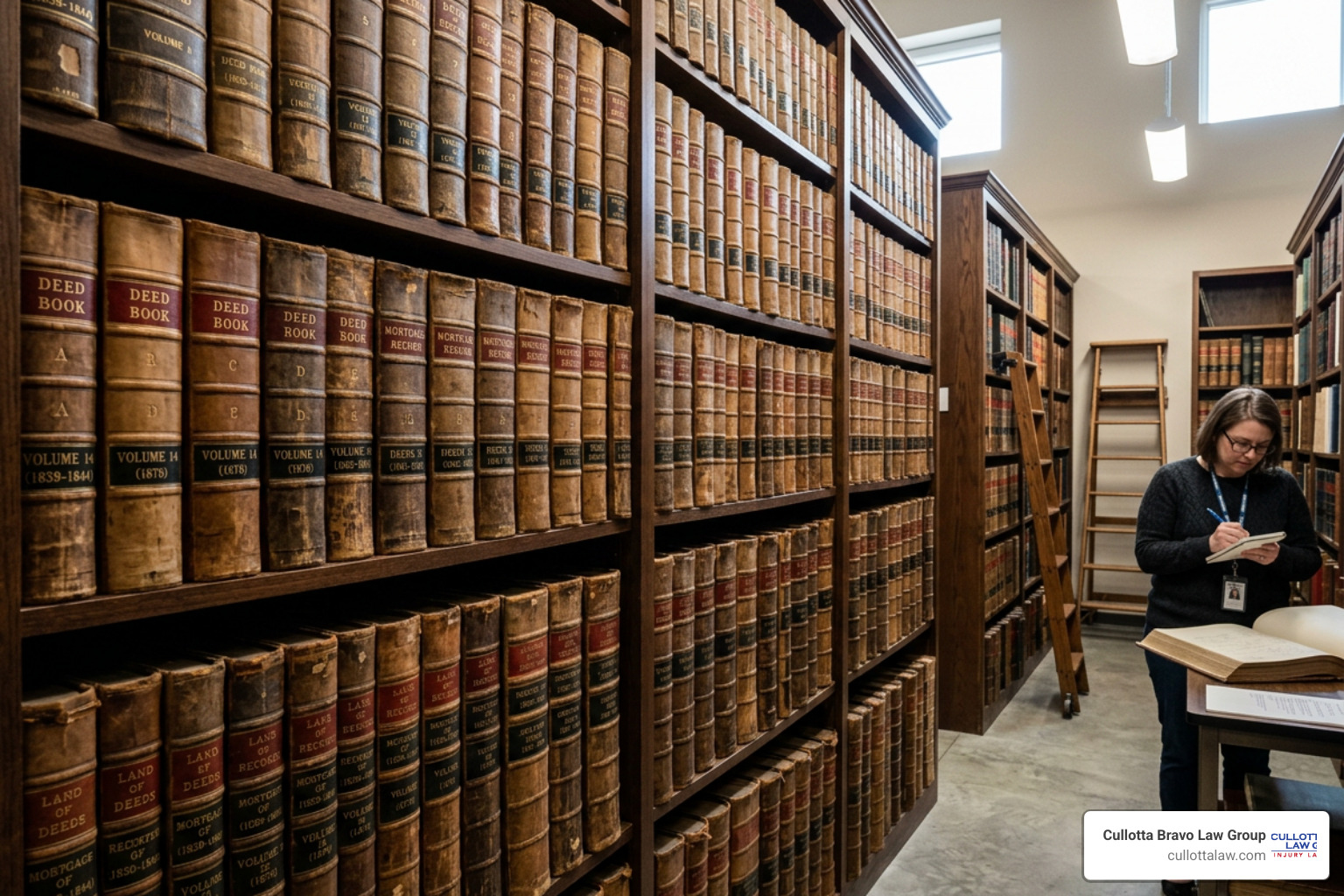
These offices house millions of historical documents, including deeds, mortgages, plat maps, and lien releases. For properties located in the Chicago metropolitan area, you will primarily interact with:
- The Recorder of Deeds – Cook County, which manages property records for Chicago and its surrounding suburbs.
- The DuPage County, IL Property Tax Information portal, which is invaluable for verifying tax assessments and ensuring there are no delinquent tax liabilities waiting to surprise you.
- The office of Karen A. Stukel | Recorder of Deeds, Will County, IL, which tracks land transactions for southern suburbs like Joliet.
Local vs. State Property Records Access
Because land records are hyper-localized, searching them requires knowing exactly which jurisdiction holds the authority. If you are researching a property in Aurora, for instance, you may need to use the Property Search – AuroraTownship tool to verify local assessment and parcel data.
While some states use centralized digital portals, Illinois relies heavily on these county-specific systems. Navigating them requires searchers to look up documents using the property’s Permanent Index Number (PIN) or Property Index Number, rather than just the street address, to ensure 100% accuracy.
The Role of Surveys in Verifying Property Boundaries
While a property title search checks the legal history of ownership on paper, a boundary survey checks the physical reality on the ground.
A licensed land surveyor physically visits the property to measure and map its exact boundaries. They locate physical markers, verify dimensions against the legal description, and identify any physical encroachments—such as a neighbor’s driveway, shed, or retaining wall crossing onto your land.
Without a survey, you cannot be certain where your land ends and your neighbor’s begins. Most mortgage lenders require a survey before funding a loan to ensure the home they are financing actually sits entirely within the legal lot lines.
Comparing Title Search Reports, Abstracts, and Preliminary Reports
Not all title reports are created equal. Depending on your needs, you might order different levels of documentation:
| Report Type | What It Includes | Best Used For |
|---|---|---|
| Basic Title Search | Current owner, active mortgages, and outstanding tax status. | Quick due diligence or preliminary property evaluation. |
| Preliminary Title Report | Initial findings by a title insurance company outlining what they will and won’t cover. | Prepared prior to closing a standard home purchase. |
| Full Title Abstract | A complete, comprehensive historical record of all recorded deeds, wills, mortgages, and legal proceedings. | Complex commercial deals, estate disputes, or historical research. |
For buyers looking to perform quick, initial research across multiple jurisdictions, nationwide search aggregators like Property Records by State Property Records by State | Nationwide can compile essential land and lien records into a single, easy-to-read report.
Traditional Manual Searches vs. Automated API Platforms
Historically, performing a title search meant a human “abstractor” had to physically walk into a county recorder’s office, pull dusty leather-bound books from shelves, and manually trace the chain of title.
Today, technology has transformed this landscape. Modern platforms like Property Title Search & Records | PropertyTitles.com leverage massive databases to index billions of document images, allowing users to pull up deeds and lien records in a matter of seconds.
For developers, real estate platforms, and law firms handling high volumes of transactions, integrating directly with public records via tools like the API Documentation — REST API Reference | PropertyTitles.com allows for automated, instant data retrieval, drastically reducing turnaround times and manual errors.
When to Order a Comprehensive Property Title Search
While a standard home purchase always involves a title search, there are specific situations where an exhaustive, professional search is absolutely non-negotiable:
- Commercial Real Estate Transactions: Commercial properties often have complex histories involving corporate entities, utility easements, environmental liens, and tenant leases. Working with a dedicated Commercial Real Estate Attorney ensures these multi-layered issues are thoroughly vetted.
- Property Inheritance: When a property is passed down through generations, title lines can easily become blurred. Unresolved estates, missing heirs, and old family agreements can create massive title defects. Consulting a Passing It On: Finding the Right Property Inheritance Lawyer is the best way to clean up the title before trying to sell or transfer inherited land.
- Foreclosures and Tax Sales: Buying a foreclosed home can be highly profitable, but these properties frequently carry surviving junior liens, municipal code violations, or association dues that do not automatically disappear.
Additionally, if you are dealing with multi-unit properties or managing rentals, understanding local regulations is key. For example, our team can help you navigate Understanding Landlord Liability in Chicago Aurora IL or manage complex structural and governance issues via a From Disputes to Docs: The Condominium Law Attorney’s Expertise.
How to Resolve Title Issues and Boundary Discrepancies
Discovering a “cloud” on your title or a boundary dispute can feel overwhelming, but most issues can be resolved with the right legal strategy:
- Clearing Liens: If an old contractor lien or paid-off mortgage was never formally released, we can track down the creditor or file a quiet title action in court to clear the cloud.
- Boundary Agreements: If a survey reveals a minor encroachment (like a shared fence), neighbors can sign a formal boundary line agreement to legally establish the agreed-upon boundary.
- Title Insurance: This is your ultimate safety net. If a title defect slips through the search and emerges after you buy the property, your title insurance policy pays to resolve the issue or compensate you for the loss.

Before closing, always ensure you have a robust Title Insurance policy in place. Furthermore, if the property is part of a managed community, you should be aware of how local associations govern property use. Understanding these rules is easier when Navigating HOA Legal Representation: What Every Board Member Should Know to prevent potential conflicts over common areas and property boundaries.
Frequently Asked Questions About Title and Boundary Issues
How long does a property title search take in 2026?
Thanks to modern digital records, a basic property search can often be initiated instantly. While automated platforms on the East Coast, such as the NY Title Search — Free NYC & NY State Property Title Lookup | RegWatch, can generate abstracts in seconds using digital feeds, local Illinois searches in Cook, DuPage, or Will County typically take between 1 to 3 business days to compile, verify, and review manually for absolute accuracy.
What is the difference between a title search and a boundary survey?
A title search is a legal review of ownership documents to confirm who owns the land and what debts are attached to it. A boundary survey is a physical, on-the-ground measurement by a licensed land surveyor to determine the physical boundaries of the property and identify any physical encroachments.
Can I perform a property title search on my own?
Technically, yes—public records are open to the public. However, searching them effectively requires specialized knowledge. Missing a single recorded document, such as a junior mortgage or a municipal lien, can leave you legally responsible for thousands of dollars in debt. It is always safest to rely on professional abstractors and real estate attorneys.
Protect Your Investment with Cullotta Bravo Law Group
Buying real estate is one of the most significant financial investments you will ever make. Don’t leave your property rights to chance.
At Cullotta Bravo Law Group, we provide aggressive, high-quality legal representation to clients across Aurora, Chicago, Naperville, and Joliet. Whether you need an experienced Aurora Real Estate Attorney to guide you through a complex closing, or you are looking for The Best Real Estate Lawyers in Aurora on a Budget to protect your hard-earned money, we are here to help.
We treat every client with the dignity they deserve, bringing our 35+ years of legal experience to your side of the table. Secure Your Property Rights Today by contacting our office in Aurora, IL, for a comprehensive consultation. Let us handle the legal fine print so you can move into your new property with complete peace of mind.