

Finding Legal Help After an 18-Wheeler Crash
If you were hurt in a truck crash, get medical care, call the police, and save photos, witness details, and records of your expenses. An injured truck lawyer can then help preserve truck data and driver records, identify who may be responsible, and assess your medical costs, lost income, and other losses. Speak with a lawyer promptly: evidence can disappear, and Illinois limits the time you have to file a lawsuit.
I’m Peter Cullotta, founding partner of Cullotta Bravo Law Group in Aurora. For more than 35 years, I’ve represented injured people in the Chicagoland area; as an injured truck lawyer, I bring that personal injury and trial experience to the work of protecting your claim.
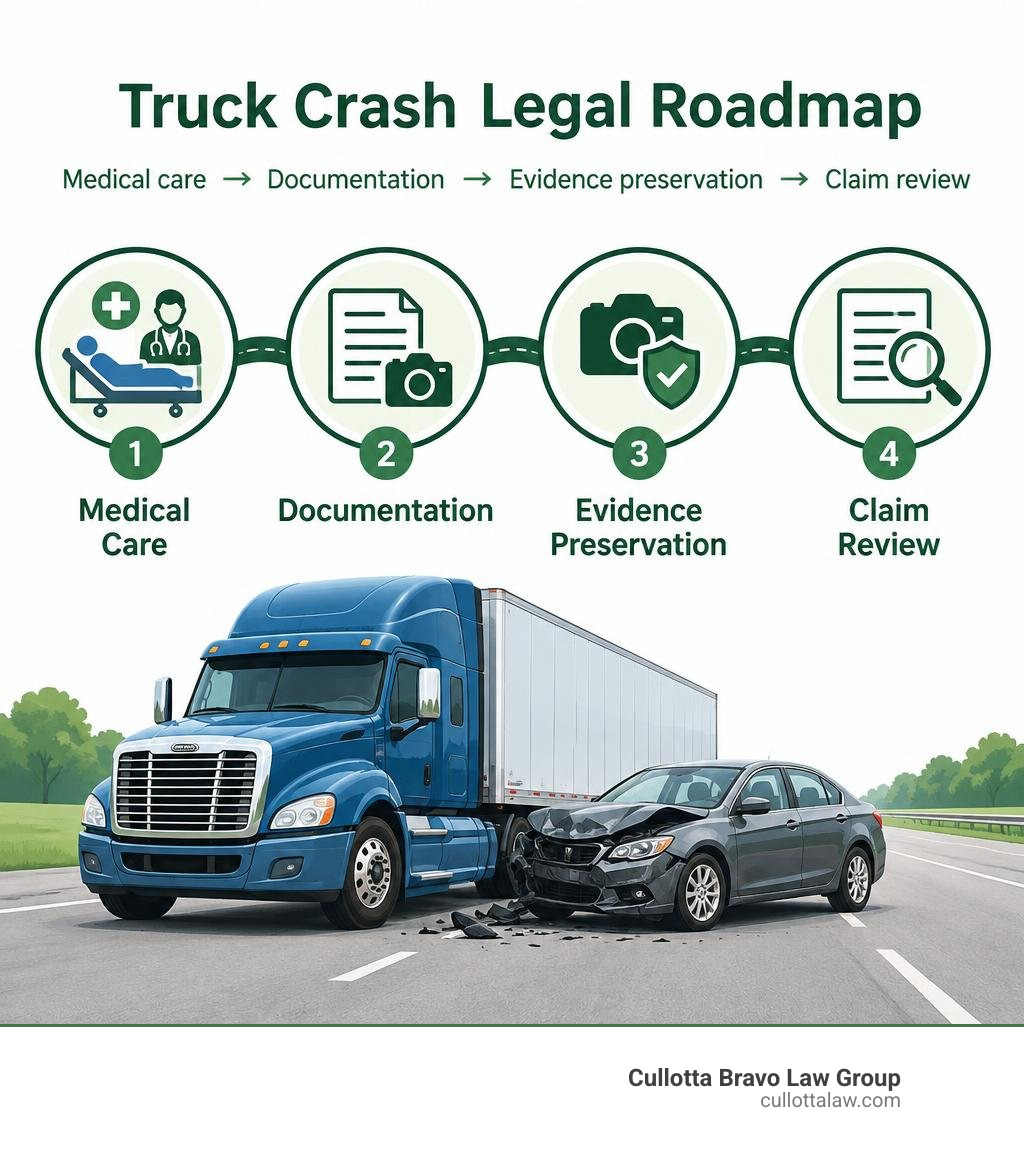
Basic injured truck lawyer terms:
Why Commercial Big Rig Collisions Differ from Passenger Car Crashes
When you share the road with an 18-wheeler along busy Illinois corridors like I-88, I-55, or I-80, the laws of physics are not on your side. A standard passenger car weighs around 3,500 pounds. In stark contrast, a fully loaded commercial tractor-trailer can legally weigh up to 80,000 pounds. When these two collide, the passenger vehicle absorbs the vast majority of the kinetic energy, leading to catastrophic physical trauma.
Beyond the sheer weight difference, the stopping distance requirements of a commercial semi-truck are staggering. At typical highway speeds, a loaded big rig takes up to 525 feet to come to a complete stop—almost the length of two entire football fields. When an unexpected traffic slowdown occurs, a distracted or speeding truck driver simply cannot stop in time.
Understanding how to proceed after surviving a commercial truck wreck requires knowing that commercial collision claims are governed by federal mandates that do not apply to regular car crashes. Comprehensive data from the Large Truck Crash Causation Study LTCCS Analysis Series: Using LTCCS Data for Statistical shows that human error, mechanical breakdown, and environmental hazards combine in unique ways during commercial wrecks.
| Factor | Standard Passenger Car Accident | Commercial 18-Wheeler Crash |
|---|---|---|
| Gross Vehicle Weight | Approx. 3,500 lbs | Up to 80,000 lbs |
| Stopping Distance (Highway) | Approx. 300 feet | Up to 525 feet |
| Insurance Policy Limits | Typically $25,000 – $100,000 | $750,000 to multiple millions |
| Regulatory Oversight | State traffic codes | State laws & Federal (FMCSA) safety rules |
| Liable Parties | Usually just the at-fault driver | Driver, carrier, broker, cargo loader, manufacturer |
| Black Box / Telemetry | Basic event data recorders | Advanced ELDs, ECMs, and fleet telematics |
Critical Factors in Commercial Vehicle Accidents
Tractor-trailer crashes rarely stem from simple bad luck; they almost always trace back to negligence, regulatory non-compliance, or corporate pressure. Some of the most frequent causes we uncover include:
- Driver Fatigue: Commercial operators often face intense delivery schedules, leading some to push past legal driving hours and fall asleep behind the wheel.
- Hours of Service (HOS) Violations: Federal regulations strictly cap daily driving hours, yet drivers and carriers sometimes cut corners to boost profits.
- Massive Blind Spots (“No-Zones”): Semi-trucks have significant blind spots on all four sides, especially on the right passenger side and directly behind the trailer.
- Brake and Equipment Failure: Worn brake pads, improper air-brake adjustments, or bald tires can cause complete mechanical failure under heavy braking.
- Shifting and Overweight Loads: Unsecured freight can shift during turns, causing dangerous rollovers or jackknifes. Learn more about overloaded cargo dangers to see how improper loading threatens every motorist on the road.
When to Consult an Injured Truck Lawyer
You should consult a dedicated attorney immediately after stabilizing your emergency medical care. Trucking companies and their corporate insurers do not wait to build their defense. Within hours of a major crash, corporate motor carriers routinely dispatch rapid-response teams, accident reconstructionists, and insurance adjusters directly to the scene to control the narrative and minimize payouts.
Engaging experienced counsel ensures your rights are guarded against aggressive adjusters who want you to make recorded statements before you understand the full extent of your injuries. Seeking timely legal action levels the playing field, ensuring critical roadside evidence does not mysteriously disappear.
Establishing Liability and Gathering Critical Evidence
Unlike typical two-car fender benders where fault lies with one negligent driver, a commercial truck accident often involves a complex web of corporate entities.

Trucking companies frequently attempt to shield themselves from financial responsibility by classifying their drivers as independent owner-operators. However, under federal safety rules, carriers generally maintain non-delegable duties to ensure safe operations, making trucking company liability a central pillar of your compensation claim.
Identifying Liable Parties in Complex Truck Wrecks
Our investigation explores every entity in the transportation chain to uncover all available avenues of insurance recovery:
- The Truck Driver: For reckless driving, speeding, distraction, or operating under the influence.
- The Motor Carrier (Trucking Company): For negligent hiring, inadequate driver training, pressuring drivers to exceed federal hours, or failing to maintain their fleet.
- Third-Party Cargo Loaders: For improperly securing, balancing, or overloading freight inside the trailer.
- Freight Brokers and Logistics Coordinators: For hiring unvetted, unsafe carriers with known safety violations.
- Maintenance and Repair Facilities: For performing substandard inspections or signing off on faulty mechanical components.
- Parts Manufacturers: For defective truck components, such as blown steering tires or failed braking systems.
Reviewing a comprehensive commercial truck accident guide can help you better understand how these multi-layered claims are constructed.
Preserving Black Box and Telemetry Data
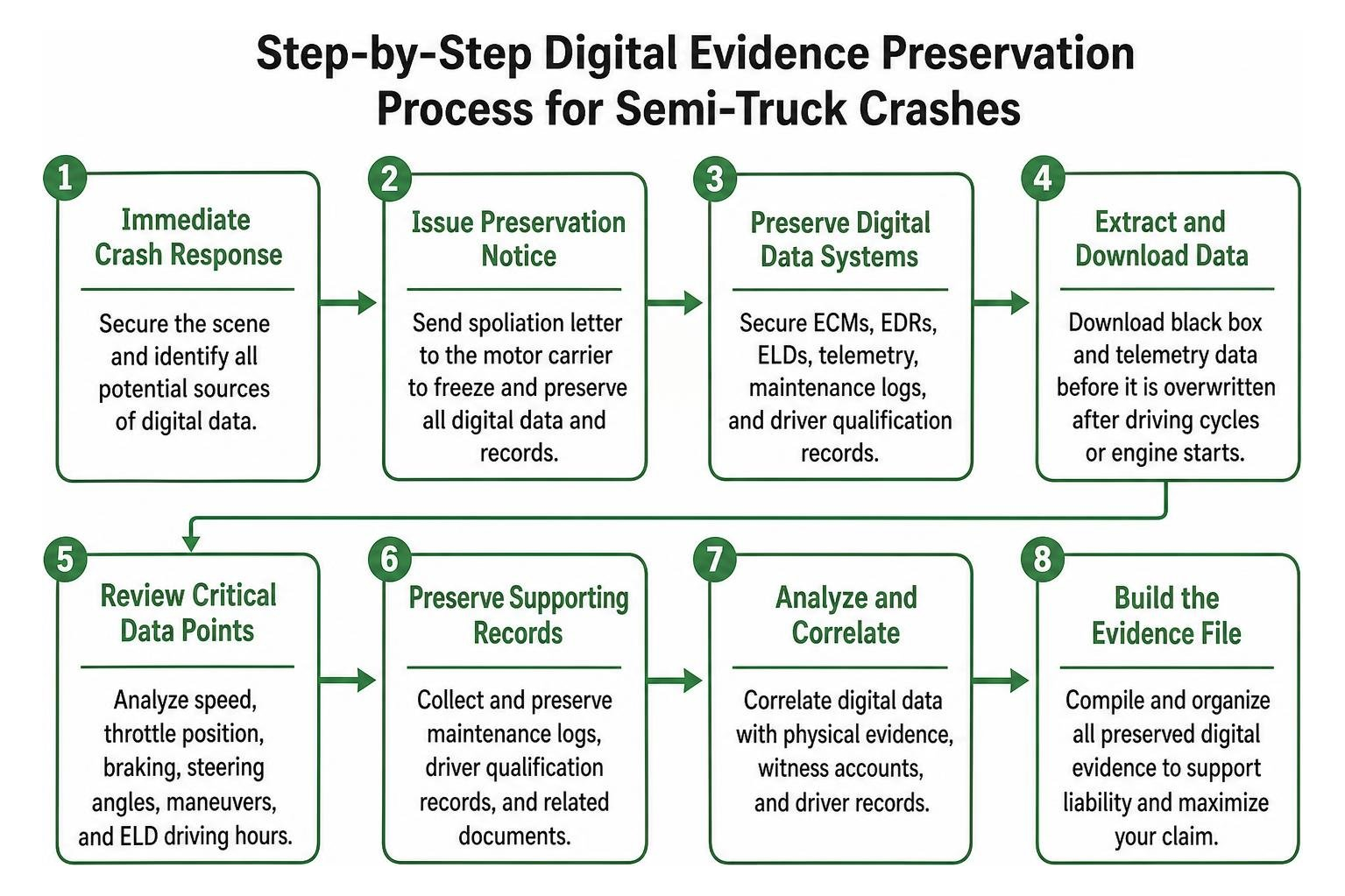
Modern semi-trucks are equipped with sophisticated digital tools, including Electronic Control Modules (ECMs), Event Data Recorders (EDRs), and Electronic Logging Devices (ELDs). These systems track critical real-time information leading up to a crash, including:
- Vehicle travel speed right before impact
- Exact throttle position and engine RPMs
- Whether the driver applied the brakes (and how hard)
- Steering angles and sudden evasive maneuvers
- Continuous driving hours logged on the ELD
Because black box systems routinely overwrite data after a certain number of driving cycles or engine starts, we issue formal legal preservation notices (spoliation letters) immediately. This obligates the motor carrier to freeze and preserve digital telemetry, maintenance logs, and driver qualification records under strict federal safety regulations.
How an Injured Truck Lawyer Maximizes Your Claim Value
Because large commercial vehicles present extreme risks, federal laws mandate that interstate motor carriers carry significantly higher liability insurance limits than regular motorists—often ranging from $750,000 to $5 million or more per incident.
Insurance companies protect these high-dollar policies with experienced legal teams. Having dedicated 18-wheeler accident attorney support ensures your claim is thoroughly documented with life-care plans, vocational assessments, and economic forecasts that capture your full lifetime losses.
Recoverable Economic and Non-Economic Damages
Victims of commercial truck crashes face life-altering trauma, ranging from spinal cord injuries and traumatic brain damage to multiple bone fractures. A comprehensive claim seeks recovery for both tangible financial losses and intangible personal suffering:
- Past and Future Medical Expenses: Emergency room visits, surgeries, intensive care, physical rehabilitation, home modifications, and lifelong medical supplies.
- Lost Wages and Diminished Earning Capacity: Compensation for income lost while recovering, as well as the loss of your future ability to earn a living.
- Pain and Suffering: Physical pain, discomfort, and bodily limitations caused by your injuries.
- Emotional Distress: Trauma, anxiety, depression, and post-traumatic stress disorder (PTSD) stemming from the collision.
- Loss of Normal Life and Consortium: The inability to enjoy hobbies, participate in family activities, or maintain marital companionship.
- Wrongful Death Damages: In the most tragic instances involving fatal collisions, surviving family members can pursue funeral expenses, lost financial support, and grief damages through fatal truck accident claims.
Navigating Comparative Negligence and Statutory Deadlines
Under Illinois law (735 ILCS 5/2-1116), injury claims are governed by modified comparative fault. This rule allows you to recover compensation as long as your share of responsibility for the crash is 50% or less.
If you are assigned partial fault, your final financial recovery is reduced proportionally by that percentage. For instance, if your total damages equal $1,000,000 but you were found 10% responsible for the crash, you would receive $900,000. However, if you are found to be 51% or more at fault, you are completely barred from recovering compensation. Trucking insurers routinely try to shift blame onto passenger car drivers to cross this threshold, making sound truck accident legal advice essential.
Additionally, Illinois imposes a strict two-year statute of limitations for personal injury lawsuits (735 ILCS 5/13-202). Missing this deadline permanently forfeits your right to seek justice in court.
Selecting the Right Legal Representation and Understanding Costs
Commercial trucking litigation is far more complex than standard personal injury work. It requires an in-depth understanding of the Federal Motor Carrier Safety Regulations (FMCSRs), commercial insurance structures, and digital accident reconstruction techniques.
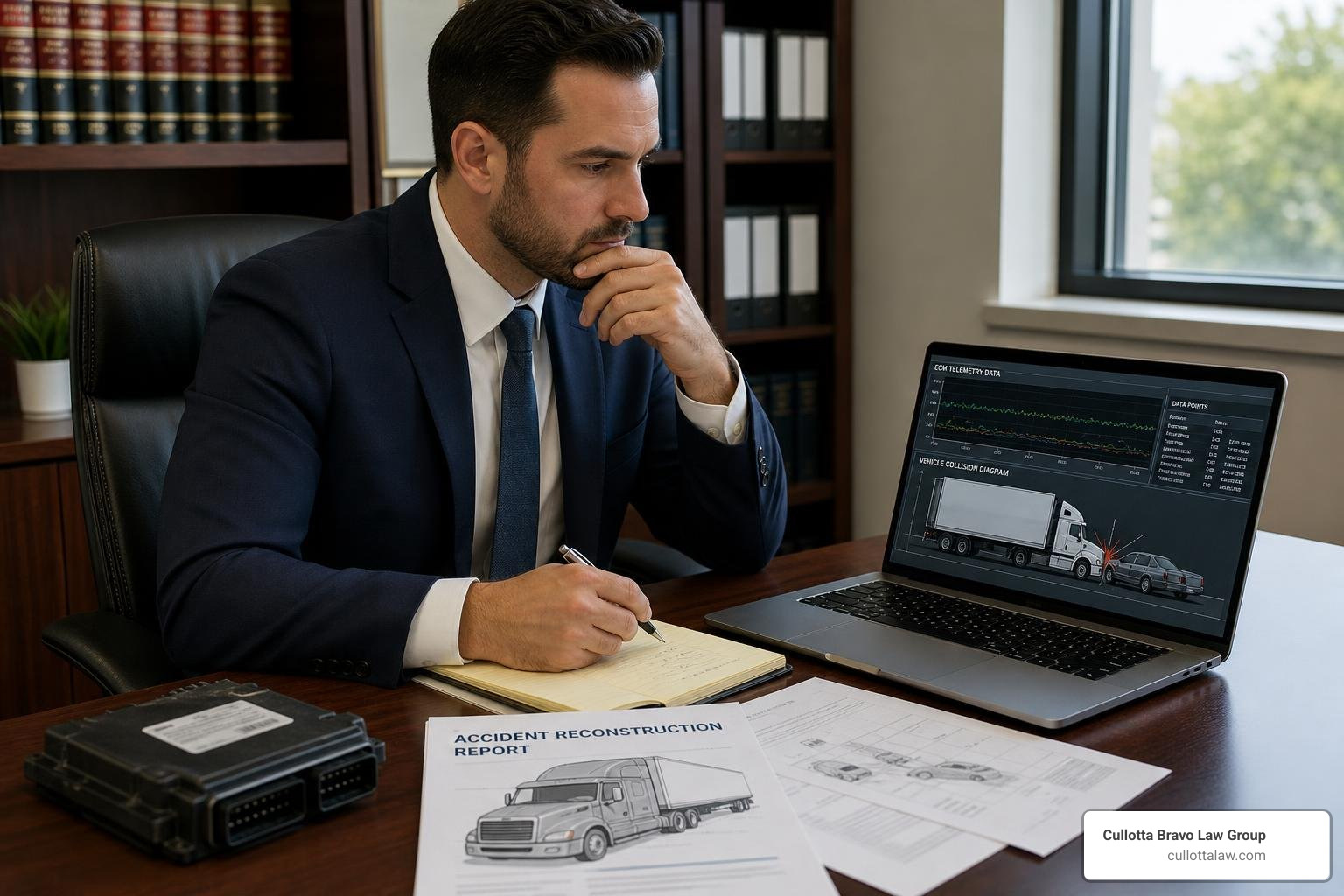
Taking time to evaluate your options using a trusted guide on choosing the best truck accident attorney will help you find a firm equipped to take on corporate carriers.
What to Look for in an Injured Truck Lawyer
When meeting with prospective lawyers for an initial consultation, look for the following qualifications:
- A Proven Track Record: Demonstrated experience handling high-stakes commercial vehicle claims and securing multi-million dollar settlements.
- Investigative Resources: The financial strength to immediately hire top accident reconstructionists, trucking compliance specialists, and medical experts.
- Trial Readiness: Insurers know which lawyers settle cheaply and which ones are ready to take a case to a jury verdict.
- Compassionate Client Care: A legal team that treats you like a person with dignity, not just another file number. Use an attorney qualification checklist to help evaluate potential firms.
Contingency Fee Structures and Litigation Expenses
You do not need deep pockets to hire experienced legal representation after a crash. Reputable truck accident law firms work on a contingency fee basis.
Under this model:
- You pay zero upfront legal fees.
- The attorney’s legal fee is collected as an agreed-upon percentage (typically ranging between 25% and 40%, depending on whether the case resolves through negotiation or formal trial litigation) deducted directly from the final settlement or court verdict.
- The law firm advances all necessary case disbursement expenses, including court filing fees, expert witness costs, and medical record retrieval.
- If your attorney does not successfully recover compensation for you, you owe nothing in attorney fees.
To learn more about how expenses and fee percentages operate, explore our breakdown on understanding legal fees.
Frequently Asked Questions About Truck Accident Claims
What should I do immediately after being hit by an 18-wheeler?
Your immediate priority is safety and emergency medical care. Call 911 so local police and paramedics respond to the scene. If you are physically able, take photographs and videos of the vehicle positions, property damage, skid marks, road conditions, and the commercial truck’s DOT markings. Collect names and phone numbers from independent witnesses. Avoid apologizing or discussing fault at the scene, and do not provide recorded statements to the trucking company’s insurance adjuster before consulting an attorney.
How long do I have to file a commercial truck injury lawsuit?
In Illinois, the statute of limitations for personal injury lawsuits is generally two years from the date of the collision. However, waiting to take legal action can severely damage your claim. Critical digital evidence from the truck’s black box can be overwritten within weeks, physical road marks fade, and driver logbooks can be discarded if a formal spoliation letter is not served promptly.
Can I still recover damages if I was partially at fault for the crash?
Yes. Under Illinois’ modified comparative negligence law, you can recover financial compensation as long as your fault does not exceed 50%. Your final payout will simply be reduced by your percentage of fault. If you are found to be 51% or more responsible, you cannot recover any damages, which is why commercial insurers fight hard to shift fault onto injured drivers.
Conclusion
A collision with an 80,000-pound commercial vehicle can upend your life in an instant, bringing severe physical injuries, emotional shock, and mounting financial burdens. You do not have to confront corporate trucking companies and their insurance adjusters alone.
At Cullotta Bravo Law Group, we have spent over 35 years providing aggressive legal advocacy while treating our clients with the respect and dignity they deserve. We have a long history of securing multi-million dollar recoveries for crash victims across Aurora, Chicago, Naperville, Joliet, and throughout Illinois. If you or a loved one has suffered harm in an 18-wheeler wreck, reach out to our team today for dedicated Illinois truck accident attorney representation to protect your rights and pursue the full compensation you deserve.