
Three-Lane Highway Rules at a Glance
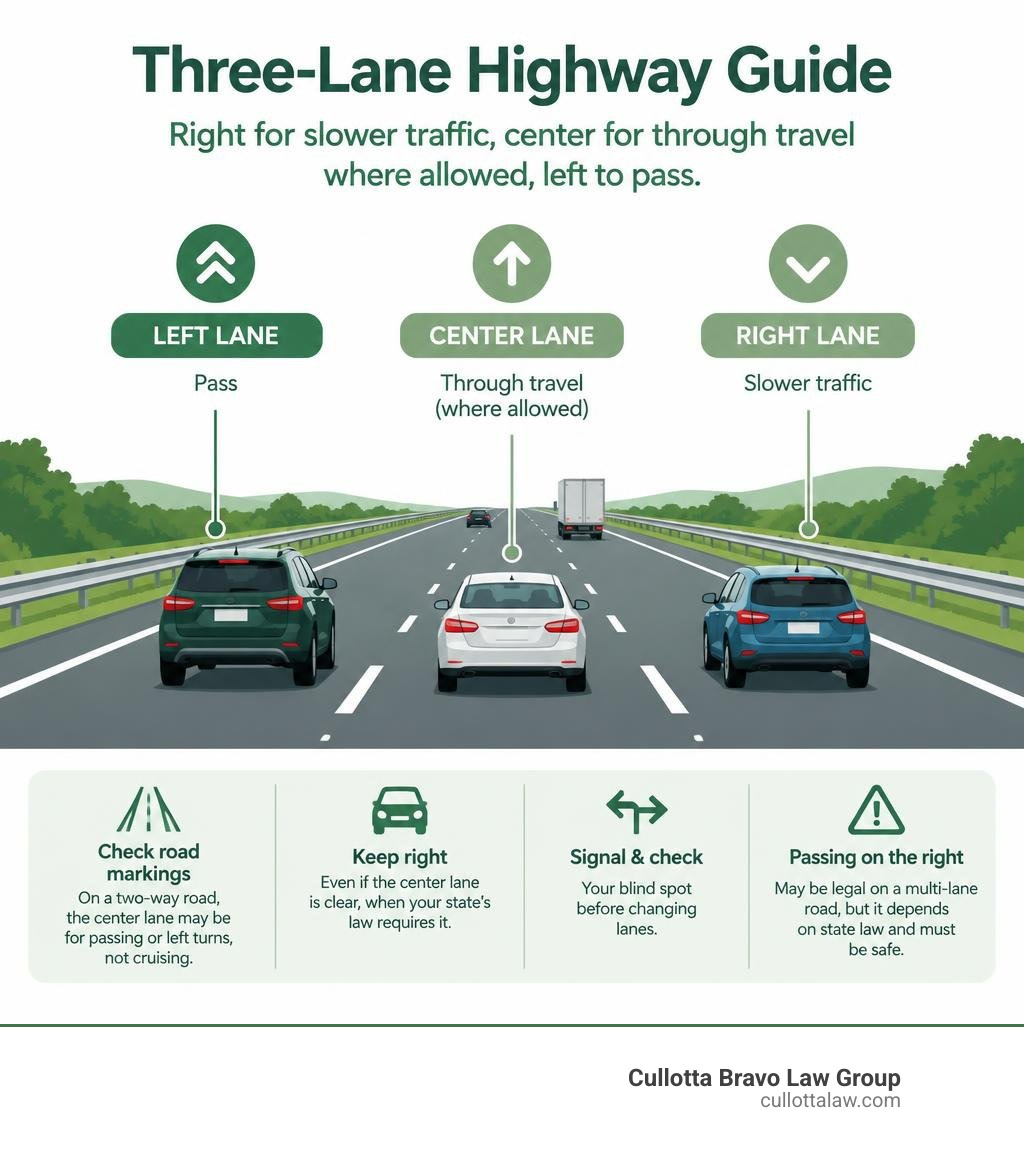
On a highway with three lanes going your way, use the right lane for slower travel, the center lane for steady through traffic where allowed, and the left lane mainly to pass. Keep right when your state’s law requires it, even if the center lane is clear. Signal and check your blind spot before changing lanes. Passing on the right may be legal on a multi-lane road, but it depends on state law and must be safe.
First, check the road markings: on a two-way road with three lanes total, the center lane may be reserved for passing or left turns, not cruising.
I’m Peter Cullotta, founding partner of Cullotta Bravo Law Group and a trial lawyer with more than 35 years of experience representing injured people. I’ll explain how 3 lane highway rules affect everyday driving and what may matter after a crash.
Key 3 lane highway rules vocabulary:
Understanding 3 Lane Highway Rules: Role and Purpose of Each Lane
Navigating multi-lane expressways requires a clear understanding of lane discipline. On any three-lane expressway, each lane serves a distinct purpose designed to maintain uniform traffic flow and manage speed differentials safely. When drivers misunderstand these roles, traffic bottlenecks form, frustration mounts, and severe collisions occur.

To prevent confusion, transportation agencies establish specific guidelines for lane designations. Familiarizing yourself with these principles through our beginners guide to highway lane types and rules helps ensure you stay compliant and avoid hazardous maneuvers.
Right Lane Usage for Merging, Exiting, and Slower Traffic
The rightmost lane is designated primarily for entry, exit preparation, and slower-moving traffic. Commercial trucks, vehicles towing trailers, and drivers traveling below the normal speed of traffic should generally stay in this lane.
Under many state codes, including Iowa roadway traffic statutes, vehicles operating at less than the normal speed of traffic must keep as close to the right curb or edge of the roadway as practicable. When entering or exiting, the right lane acts as the buffer where drivers accelerate to match expressway speeds or decelerate before entering an off-ramp. Drivers already in the right lane should anticipate entering vehicles and create safe merging gaps.
Center Lane Driving: Cruising vs. Passing Regulations
The center lane is widely regarded as the smoothest travel lane for through traffic. Because it is buffered from merging vehicles entering from the right and high-speed overtaking maneuvers occurring on the left, it allows drivers traveling at a steady, legal cruising speed to maintain uninterrupted momentum.
However, state regulations differ when dealing with undivided three-lane roads (where the center lane is shared between two opposing directions) versus a divided three-lane expressway. Under statutes such as the Virginia highway traffic code, driving in a center lane on a two-way roadway is restricted strictly to overtaking, preparing for a left turn, or traveling where official traffic control devices allocate the lane exclusively to traffic moving in the same direction. On divided expressways, the middle lane serves steady through traffic, but drivers must still yield to faster traffic by shifting right when conditions permit.
Left Lane Etiquette and 3 Lane Highway Rules for Overtaking
The leftmost lane is intended primarily for overtaking and passing slower vehicles. Lingering or “camping” in the left lane creates dangerous speed differentials and forces other motorists into hazardous maneuvers.
Statutory frameworks like Mississippi multi-lane highway regulations explicitly state that a vehicle cannot be driven continuously in the outermost left lane when it impedes the normal flow of traffic. The left lane should only be occupied when:
- Actively overtaking and passing another vehicle
- Preparing for an authorized left-side highway exit ramp
- Navigating around road hazards, construction closures, or emergency vehicles stopped on the shoulder
Legal Rules for Passing on Three-Lane Highways
Safe passing requires situational awareness, proper distance, and an understanding of state traffic laws. While passing on the left is the standard driving protocol nationwide, multi-lane highways introduce scenarios where passing on the right may occur.
| Factor | Passing on the Left | Passing on the Right |
|---|---|---|
| Standard Legal Status | Universal default passing procedure | Permitted only under specific statutory conditions |
| Driver Visibility | Highest visibility; standard mirror line of sight | Larger passenger-side blind spots |
| Driver Expectation | Expected by general motorists | Unexpected; higher collision risk |
| Common Hazard | Head-on risks on undivided roads | Vehicles merging right into blind spots |
The Illinois Rules of the Road mandate that a driver must not overtake another vehicle unless the movement can be made safely without interfering with the safe operation of any other vehicle.
When Passing on the Right Is Permissible Under 3 Lane Highway Rules
Passing on the right is legally permissible under select circumstances on multi-lane roadways. Most jurisdictions permit right-side passing when:
- The vehicle overtaken is making or signaling an intention to make a left turn.
- The roadway provides unobstructed pavement of sufficient width for two or more lanes of vehicles moving lawfully in the same direction.
Despite being legally allowable on three-lane divided expressways, passing on the right carries elevated risks. Passenger-side blind spots are significantly larger, and drivers occupying the middle lane often do not anticipate vehicles accelerating past them on the right. Motorists must never drive onto the paved shoulder or unpaved road edge to execute a right-side pass.
Proper Procedures for Being Overtaken by Faster Traffic
When you notice a faster vehicle approaching from behind, maintain a steady course and do not accelerate. State traffic laws typically require drivers being overtaken to give way to the right upon hearing an audible signal or noticing passing traffic, without increasing speed until the overtaking vehicle has completely passed.
If you are traveling in the center or left lane and notice traffic queueing behind you, signal and move safely into the right lane when traffic permits.
Maneuvering Safely: Merging, Changing Lanes, and Navigating Special Lanes
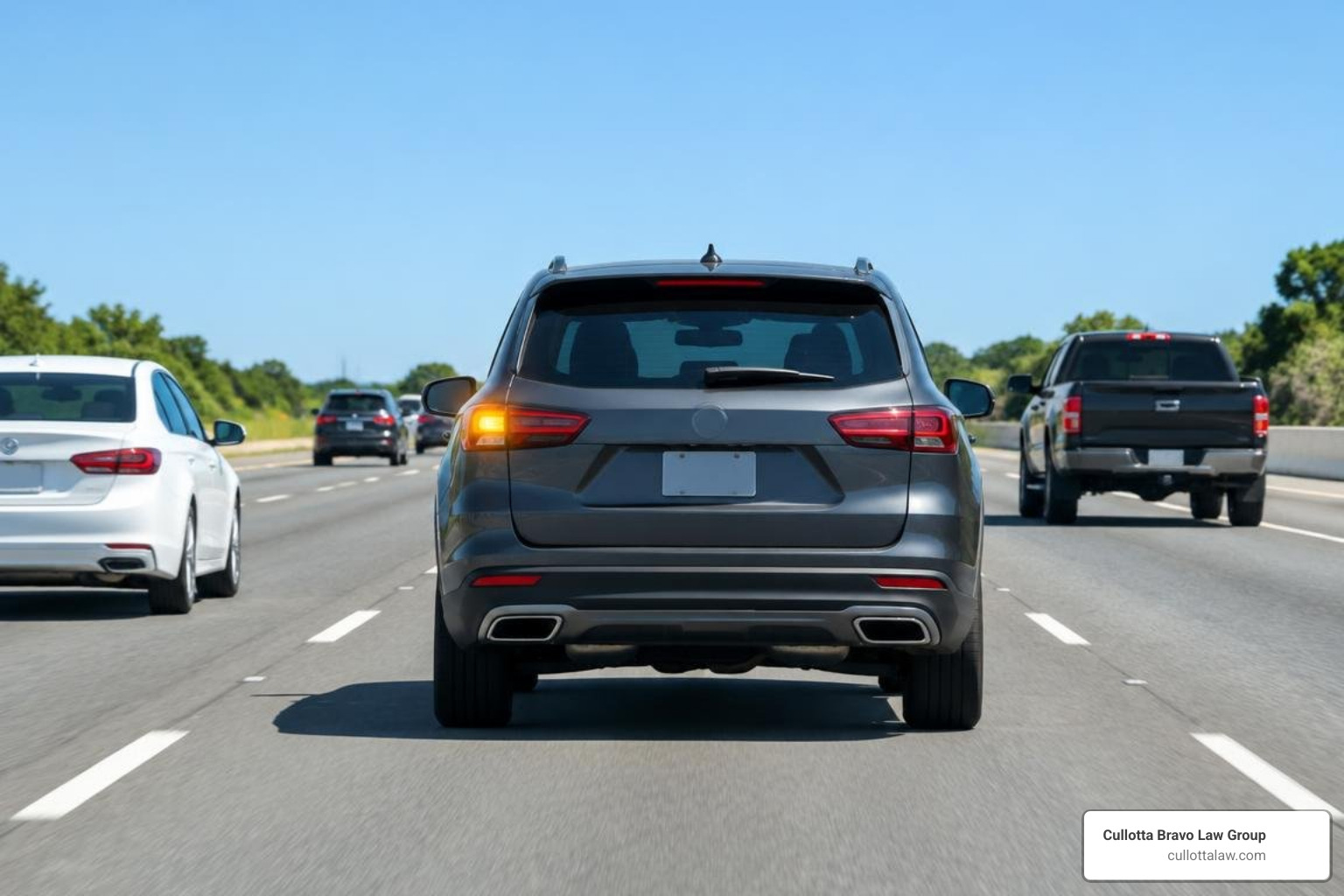
Proper lane changes require deliberate execution. Misjudging vehicle distance or failing to signal remains a leading cause of highway accidents.
Understanding road markings is just as vital. You can refresh your knowledge by checking out our guide on how to stay in your lane by learning what each highway strip actually means.
Step-by-Step Lane Change and Merging Protocols
Changing lanes safely on a three-lane highway requires executing a structured sequence. When multiple vehicles attempt to move into the center lane at the same time from opposite sides, blind-spot collisions often follow.
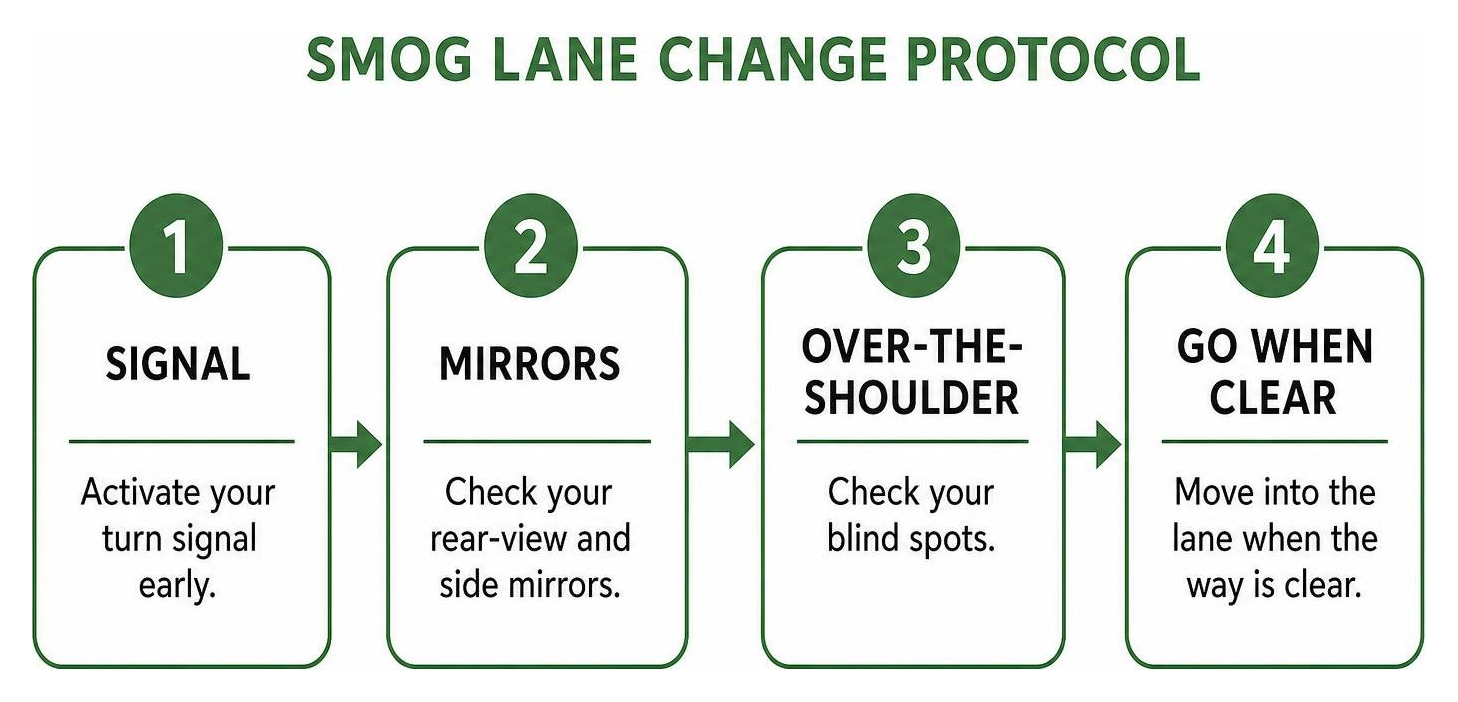
To execute a safe lane change or highway merge:
- Signal Early: Activate your turn signal at least 100 feet before beginning your lane transition.
- Check Mirrors: Review your rear-view and side-view mirrors to assess the speed and proximity of surrounding traffic.
- Check Blind Spots: Perform an over-the-shoulder head check to verify no vehicle is lurking in your quarter-panel blind zone.
- Select a Safe Gap: Identify a 3-to-4-second opening in the target lane.
- Smoothly Transition: Maintain your speed and ease into the lane without sudden steering inputs, then deactivate your signal once fully centered.
Navigating Carpool (HOV) Lanes and Highway Shoulders
On many urban expressways, the far-left lane may be designated as a High-Occupancy Vehicle (HOV) or carpool lane during peak commuting hours. These lanes are marked with diamond pavement symbols and specific occupancy requirements (such as two or more passengers).
Under traffic frameworks like the Wisconsin statutory rules of the road, drivers must follow lane designations established by official traffic control devices. Crossing solid or double-solid lines entering an HOV lane is illegal and carries traffic fines. Additionally, the highway shoulder is reserved strictly for emergency breakdowns and authorized emergency vehicles.
Penalties, Violations, and Civil Liability for Improper Lane Usage
Failing to follow lane rules can lead to moving violation citations, fines, and points on your driving record. However, the civil legal consequences of an improper lane change can be far more serious.
When a driver weaves between lanes, tailgates in the left lane, or fails to check blind spots before merging, they risk causing devastating multi-vehicle collisions. You can review the most frequent causes of road accidents to see how improper lane changes contribute to serious injuries.
If a motorist violates a statutory traffic rule and causes a crash, that violation can establish negligence per se in a civil claim. In such cases, the injured party may pursue compensation for medical bills, lost wages, and pain and suffering by filing a car accident lawsuit against the at-fault driver.
Frequently Asked Questions About Three-Lane Highway Driving
Which lane should a driver choose on a three-lane highway to maintain a steady cruising speed?
The center lane is generally the most practical choice for maintaining a steady cruising speed on a three-lane divided expressway. It keeps your vehicle clear of merging and exiting traffic in the right lane while leaving the left lane open for overtaking vehicles.
Are there exceptions to the ‘keep right except to pass’ rule on multi-lane highways?
Yes. Exceptions include:
- Preparing to make a lawful left turn or left-side highway exit
- Navigating around road construction, debris, or disabled vehicles on the right shoulder
- Yielding right-of-way to emergency vehicles
- Driving during heavy, bumper-to-bumper traffic congestion where all available lanes are used to maintain flow
What should you do if an aggressive driver tailgates you in the center or left lane?
Never brake-check or attempt to block an aggressive tailgater. Safely signal and transition to the lane to your right when an opening appears, allowing the aggressive driver to pass. De-escalating the situation protects everyone on the road.
Conclusion
Mastering lane discipline on three-lane highways protects you, your passengers, and your fellow motorists. By reserving the left lane for passing, utilizing the center lane for cruising, and using the right lane for merging and exiting, commuters can reduce traffic friction and prevent preventable crashes.
If you or a family member has been injured in a highway collision caused by an unsafe lane change or aggressive driving, our team at Cullotta Bravo Law Group is here to help. For further insights on defensive positioning, explore our guide on what is the safest lane to travel on the highway.