

When to Hire a Real Estate Attorney Before Closing
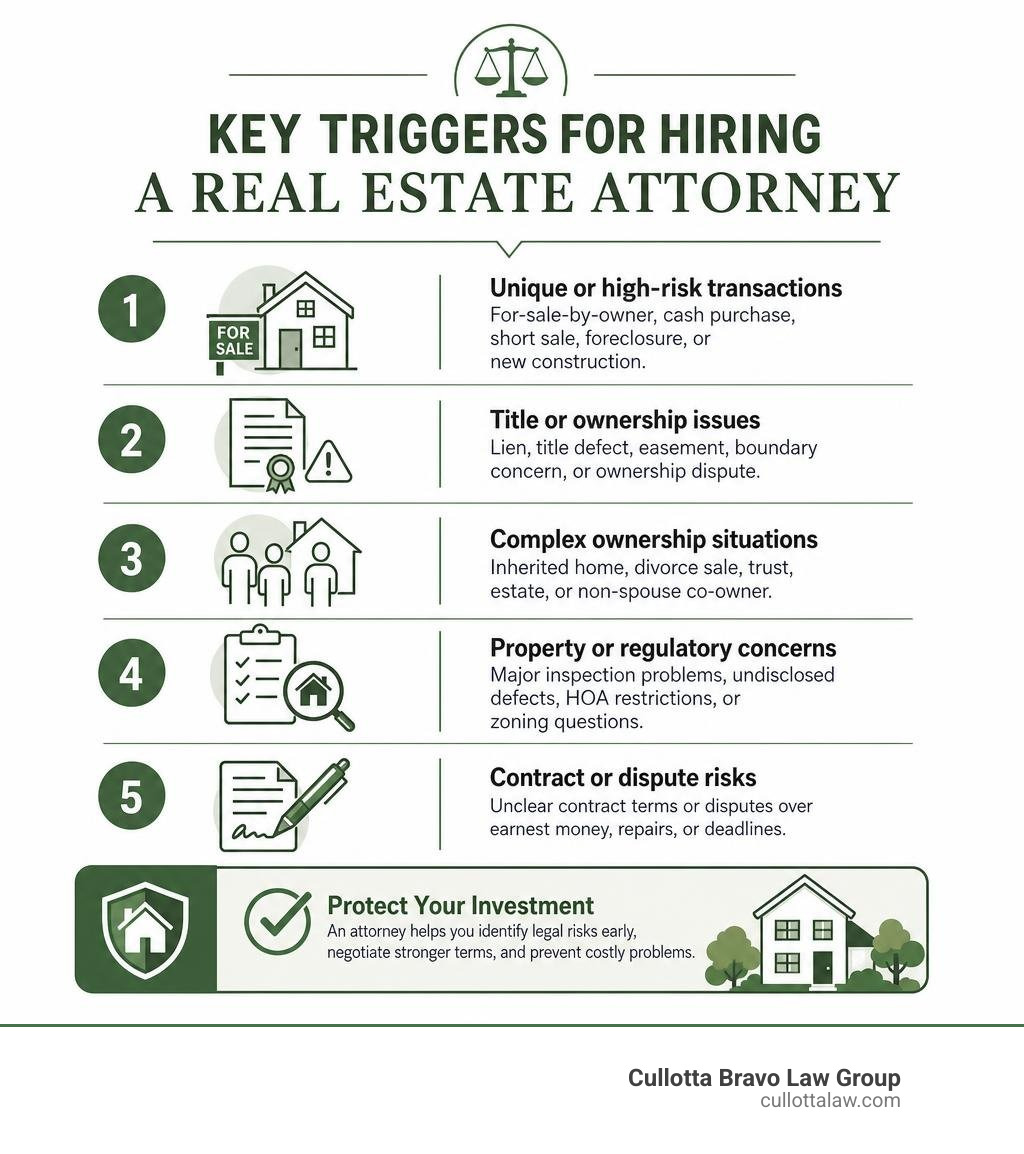
Hire a real estate attorney before you sign a binding purchase or sale contract if the deal involves a legal risk, not just routine paperwork. Key triggers include:
- A for-sale-by-owner transaction, cash purchase, short sale, foreclosure, or new-construction contract
- A lien, title defect, easement, boundary concern, or ownership dispute
- An inherited home, divorce sale, trust, estate, or non-spouse co-owner
- Major inspection problems, undisclosed defects, HOA restrictions, or zoning questions
- Contract terms you do not understand or a dispute over earnest money, repairs, or deadlines
An agent can help market a home and negotiate a deal. A title company can research title and issue insurance. But neither can give you personal legal advice, draft custom legal protections, or represent you in a dispute. In Illinois, an attorney review period is also a valuable early chance to revise or reject a contract before problems become expensive.
I am Peter Cullotta, founding partner of Cullotta Bravo Law Group, with more than 35 years of legal and trial experience in Illinois and the Chicagoland area. Knowing when to hire a real estate attorney can help you spot legal exposure early and make informed decisions before closing.
Understanding the Legal Difference: Real Estate Attorney vs. Agent and Title Company
Purchasing or selling a home involves several professionals, each playing a specific role. However, buyers and sellers often confuse the duties of real estate agents, title companies, and attorneys.
A real estate agent is an invaluable marketing and negotiation partner. Licensed agents assess market values, schedule showings, and coordinate communications between parties. However, in Illinois, drafting non-standard contract terms or advising clients on legal liability constitutes the unauthorized practice of law. Agents are legally prohibited from interpreting complex legal clauses or resolving legal disputes.
Title companies act as neutral third parties. They examine public land records to confirm chain of title and issue title insurance policies protecting the mortgage lender (and optionally the buyer). Crucially, a title company’s fiduciary duty is to its underwriting insurer—not to you. If a title search uncovers an unreleased mortgage, an illegal mechanic’s lien, or a probate defect, a title agent cannot advocate for your financial interests or negotiate contract modifications on your behalf.
By contrast, an independent real estate lawyer provides dedicated legal advocacy. Our fiduciary obligation is solely to you. We examine contracts for dangerous clauses, draft enforceable contingencies, clear clouded titles, ensure statutory compliance, and protect your earnest money. For a comprehensive overview of how legal counsel guides buyers step by step, read From Contract to Keys: The Buyer’s Guide to Legal Support.
| Professional Role | Core Responsibilities | Fiduciary Duty To | Can Provide Legal Advice? |
|---|---|---|---|
| Real Estate Agent | Pricing analysis, MLS listings, property showings, standard offer submission | Client (Buyer/Seller) | No |
| Title Company | Title search, closing document administration, insurance policy issuance | Title Insurance Underwriter | No |
| Real Estate Attorney | Contract drafting, custom addenda, title defect cure, legal advocacy, closing execution | Retained Client | Yes |
State Mandates and Regional Closing Customs
Across the United States, closing procedures vary significantly. In 21 states and the District of Columbia, hiring a licensed attorney to supervise or conduct the real estate closing is legally mandated.
In Illinois, while state law does not strictly mandate attorney attendance at closing, regional legal customs—especially across Cook, DuPage, Kane, and Will counties—make hiring legal counsel the standard operating procedure. Standard residential contracts used throughout the Chicago, Aurora, Naperville, and Joliet areas incorporate an explicit 5-business-day attorney review period. During this window, your attorney can review the executed contract, propose modifications, clarify contingencies, or cancel the deal if legal risks are discovered.
Critical Triggers: When to Hire a Real Estate Attorney

According to data from the National Association of REALTORS®, roughly 5% of real estate purchase contracts fall through before closing due to financing, inspection, or contractual disputes. Recognizing when a transaction requires legal intervention allows you to protect your assets before earnest money is forfeited.
Whether using the Ultimate Checklist for Real Estate to evaluate a property or navigating Real Estate Documents 101: Crafting Your Property Sale Agreement, specific red flags should immediately prompt a call to legal counsel.
When to Hire a Real Estate Attorney for Complex Contract Negotiations
Standard form real estate agreements work well for straightforward transactions. However, when a deal involves non-standard financial structures or unusual seller terms, relying on standard boilerplate forms creates severe legal exposure.
You should hire legal counsel when facing:
- For-Sale-By-Owner (FSBO) Transactions: Unrepresented private sales lack professional brokerage oversight. An attorney ensures earnest money is held in an authorized escrow account rather than paid directly to a seller, and drafts compliant closing instruments.
- Short Sales and Foreclosures (REO): Distressed sales involve non-negotiable bank addenda, strict “as-is” waivers, anti-deficiency considerations, and third-party lender approval contingencies.
- Builder and New Construction Contracts: Developer purchase agreements are drafted by corporate lawyers to favor the builder. Legal counsel ensures warranty protections, completion milestones, and delay penalties are enforceable.
- Leaseback or Rent-Back Agreements: If a seller needs to remain in the property post-closing, a formal occupancy agreement must be structured to define security deposits, daily rental rates, utility responsibilities, and eviction terms.
When to Hire a Real Estate Attorney for Title and Property Disputes
The American Land Title Association reports that approximately 36% of real estate transactions encounter title problems requiring curative action.
Common title and survey triggers include:
- Unreleased Liens: Prior mortgages, tax liens, municipal utility debts, or unrecorded mechanic’s liens filed by general contractors.
- Boundary Encroachments: A neighbor’s newly installed fence, driveway, or outbuilding extending across the surveyed property line. For detailed guidance on boundary lines, read Know Your Lines: A Guide to Property Title Searches and Boundary Surveys.
- Easements and Access Rights: Prescriptive easements or municipal utility corridors that restrict future expansions, deck construction, or pool installation.
- Active Property Disputes: When disagreements escalate into potential breach-of-contract claims or boundary litigation, consult The Complete Legal Guide to Resolving Residential and Commercial Property Disputes.
Estate Planning, Inherited Properties, and HOA Communities
Property transactions frequently intersect with family law, estate administration, and common-interest community covenants:
- Probate and Inherited Properties: Selling real estate owned by a deceased family member requires navigating probate court approvals, identifying lawful heirs, and executing appropriate executor deeds. For assistance with estate transfers, consult Passing It On: Finding the Right Property Inheritance Lawyer.
- Unmarried Co-Buyers: When buying a home with a non-spouse partner or investor, an attorney drafts a clear co-ownership agreement defining equity splits, buyout mechanisms, and partition rights to avoid future litigation.
- HOA and Condominium Governance: Buying into a managed association means agreeing to recorded covenants, conditions, and restrictions (CC&Rs). An attorney reviews reserve fund studies (flagging underfunded reserves below 30%) and owner delinquency rates (warning signs if above 10%) to protect you against sudden special assessments. For more on association governance, read Navigating HOA Legal Representation: What Every Board Member Should Know.
Optimal Timing: When in the Transaction Process to Engage Counsel
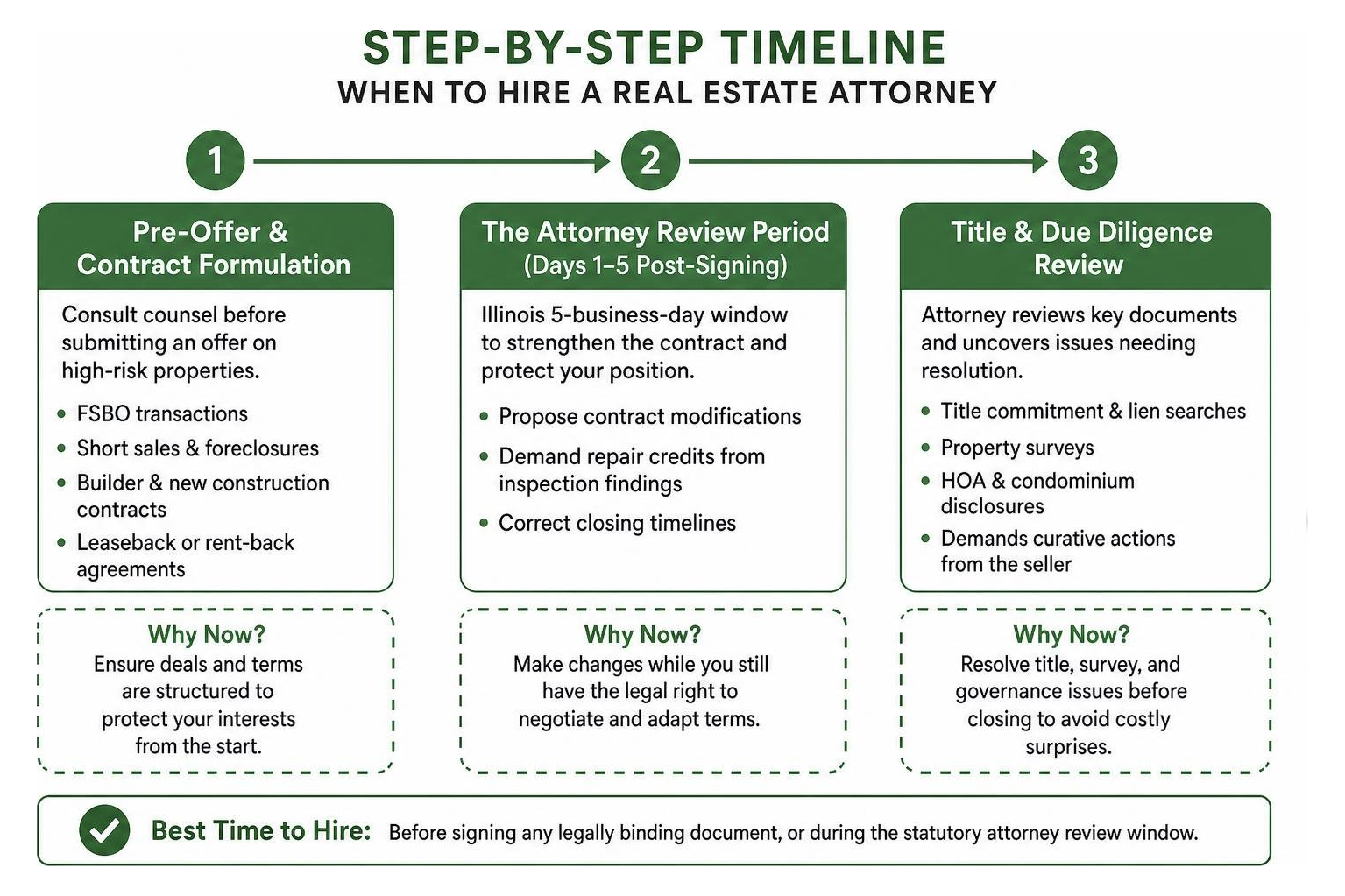
Engaging legal counsel late in the closing process limits your attorney’s ability to protect you. The best time to hire a property attorney is before signing any legally binding document, or during the statutory attorney review window.
- Pre-Offer & Contract Formulation: Consult counsel before submitting an offer on high-risk properties (FSBO, commercial assets, unpermitted builds, or cash purchases).
- The Attorney Review Period (Days 1–5 Post-Signing): In Illinois, this 5-business-day window allows your lawyer to propose contract modifications, demand repair credits from inspection findings, and correct closing timelines.
- Title and Due Diligence Review: Your attorney reviews the title commitment, municipal lien searches, property surveys, and HOA disclosures, demanding curative actions from the seller.
- Closing Disclosure and Settlement (3 Days Prior to Close): Federal rules require lenders to provide your Closing Disclosure three days prior to signing. Your attorney cross-references every fee and credit against the original purchase agreement.
- The Closing Table: Your attorney examines deeds, affidavits of title, and transfer tax declarations, ensuring funds are not disbursed until clean title is legally recorded.
If you are buying or selling property in Kane, DuPage, Will, or Cook County, retaining an experienced Aurora Real Estate Attorney ensures your local transaction adheres to every county and municipal ordinance.
Real Estate Attorney Costs and Fee Structures
Prospective buyers and sellers often worry about legal fees. However, residential real estate legal representation is generally straightforward and cost-effective.
- Flat Fee Pricing: For standard residential closings, most real estate attorneys charge a flat fee ranging from $500 to $2,000 (typically averaging $800 to $1,200). This fee covers contract review, title examination, communication with lenders and agents, and closing attendance.
- Hourly Rate Billing: For complex commercial properties, zoning variances, partition lawsuits, or contested contract litigation, attorneys bill at hourly rates ranging from $150 to $350+ per hour.
To explore affordable representation options across the Chicagoland area, review our guide on The Best Real Estate Lawyers in Aurora on a Budget.
Frequently Asked Questions About Real Estate Legal Support
Do I need a real estate attorney if I am paying in cash?
Yes. When purchasing a property with cash, you do not have a mortgage lender conducting institutional due diligence, ordering title underwriting reviews, or demanding property surveys. The entire burden of title verification, lien searches, and contract enforcement falls solely on you. An attorney serves as your independent safety net.
Can one real estate attorney represent both the buyer and the seller?
In Illinois and most jurisdictions, an attorney cannot ethically represent both the buyer and the seller in the same transaction. Doing so creates an inherent conflict of interest under legal ethics rules. The buyer wants the lowest price and widest repair concessions; the seller wants the highest net payout and “as-is” terms. Each party should retain separate, dedicated legal counsel.
What should I look for when vetting a local property lawyer?
Look for three primary criteria:
- Direct Real Estate Practice Experience: Ensure the attorney routinely handles real estate transactions in your specific county and municipality (e.g., Aurora, Naperville, Joliet, or Chicago).
- Transparent Fee Structures: Ask for an engagement letter detailing exactly what is included in the flat closing fee versus what triggers additional hourly billing.
- Turnaround Time: Real estate deadlines are strict. Confirm that the attorney has the capacity to review documents within the standard 5-day review window.
Conclusion
A home or commercial property is often the largest financial investment you will make. While the vast majority of real estate transactions proceed without major disruptions, contractual oversights, undisclosed liens, and boundary disputes can turn a dream purchase into costly litigation.
At Cullotta Bravo Law Group, we bring more than 35 years of legal and courtroom experience to safeguard your property rights and financial interests. Whether you are purchasing your first home in Aurora, selling an inherited estate in Naperville, or closing on an investment in Joliet, our team provides the aggressive representation and personal dignity you deserve.
Contact our team today to learn how our comprehensive real estate legal services can protect your next transaction from contract to closing.