

Can You Sue a Restaurant for Food Poisoning? Start With Proof
Yes, you may be able to sue a restaurant for food poisoning if you can show that its food was contaminated, the contamination caused your illness, and you suffered real harm such as medical bills, lost income, or lasting health problems.
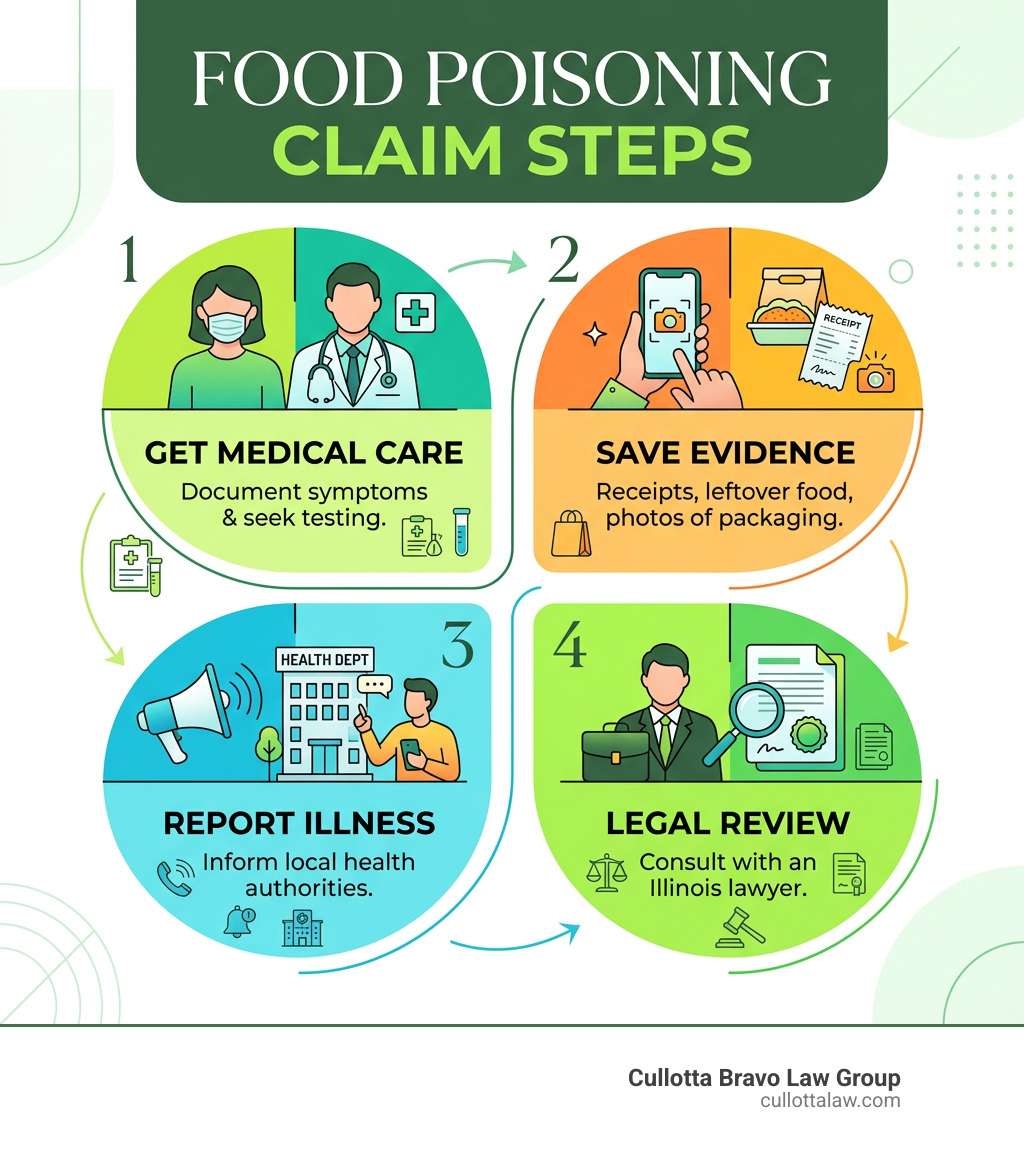
Take these steps right away:
- Get medical care and ask whether testing can identify the pathogen.
- Save your receipt, leftover food, packaging, photos, and a list of everything you ate.
- Write down when you ate, when symptoms began, and anyone else who got sick.
- Report the suspected illness to your local health department.
- Speak with an Illinois personal injury lawyer before evidence disappears or a filing deadline passes.
Feeling sick after one meal is not always enough to prove a legal claim. Medical records, lab results, restaurant records, and reports of other sick diners can help connect the illness to a specific restaurant and show whether unsafe food handling played a role.
I am Peter Cullotta, a trial lawyer with more than 35 years of experience representing injured people in Illinois and other states. If you are asking, can you sue a restaurant for food poisoning, I can help explain how evidence, damages, and Illinois injury law may affect your options.
Essential can you sue a restaurant for food poisoning terms:
Can You Sue a Restaurant for Food Poisoning Under Illinois Law?
When you sit down at a dining establishment in Chicago, Naperville, Aurora, or Joliet, you expect a satisfying meal—not a frantic trip to the emergency room. Under Illinois law, food providers must prepare, store, and serve items in compliance with strict sanitation standards. If an establishment violates these safety measures, patrons have clear legal rights to hold them accountable for resulting foodborne injuries.
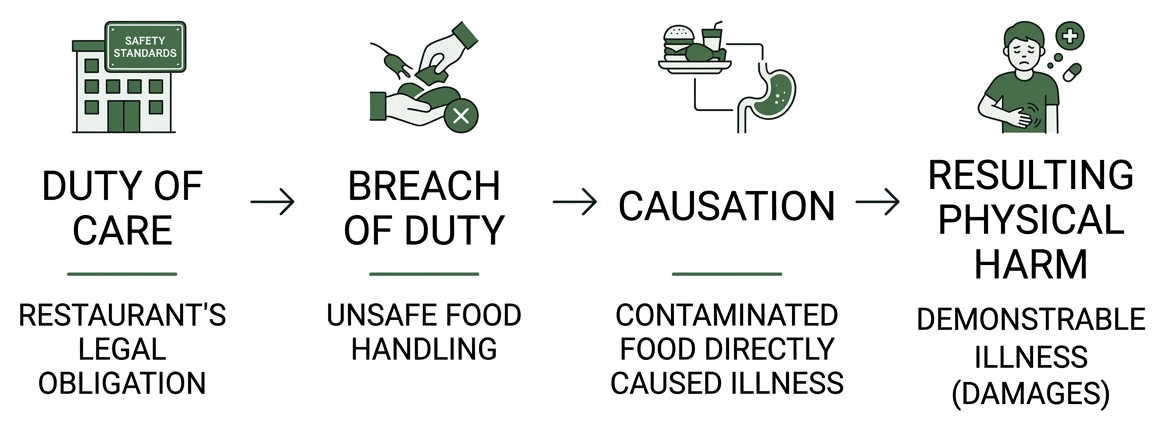
Filing a successful personal injury lawsuit requires establishing that the restaurant’s contaminated food directly caused your gastrointestinal or systemic illness. Our team often assists clients seeking legal help from a restaurant negligence lawyer to unravel the complexities of health department regulations and commercial insurance policies. You can also explore a comprehensive legal rights overview via LawyerHelpNow to learn how contaminated meal claims are evaluated in civil courts.
When Can You Sue a Restaurant for Food Poisoning After Mild Symptoms?
A common question injured diners ask is whether an afternoon of nausea or an upset stomach warrants a formal lawsuit. The legal system evaluates claims based on demonstrable harm, commonly referred to as “damages.” If an illness resolves within twenty-four hours without formal medical intervention, lost wages, or hospital bills, pursuing a personal injury lawsuit is rarely practical due to the costs associated with gathering expert medical testimony and testing.
However, when mild initial symptoms escalate into prolonged dehydration, high fevers, missed work shifts, or underlying organ distress, the legal landscape changes dramatically. Establishing a severe medical diagnosis backed by diagnostic testing makes it practical to pursue compensation. For victims dealing with mounting clinic invoices or prolonged absences from work, seeking personal injury claim help ensures their damages are properly documented before pursuing the liable restaurant.
Establishing Strict Liability and Negligence in Dining Establishments
To prevail in an Illinois dining illness lawsuit, plaintiffs generally rely on one of two primary legal doctrines:
- Negligence: You must prove the establishment breached its legal duty of care by failing to act as a reasonably prudent kitchen operator. Examples include undercooking raw poultry, storing perishables at unsafe temperatures, allowing cross-contamination between raw meats and fresh produce, or permitting sick staff members to handle meals.
- Strict Product Liability & Implied Warranty: Under Illinois commercial law, food sold to the public carries an implied warranty of merchantability—meaning the product is fit for human consumption. Under strict liability, you do not necessarily need to prove the exact careless act committed by a chef; rather, you must prove the food product left the restaurant in a defective, contaminated state that directly injured you.
Essential Steps to Take When Building a Food Contamination Claim
Winning a dining injury claim requires acting quickly to gather and preserve perishable evidence. Defense insurance adjusters routinely argue that a plaintiff’s stomach flu was caused by an unrelated meal or a stomach virus picked up elsewhere.
To preserve the chain of custody and bolster your claim, keep detailed notes and consult independent legal resources, such as the guidance on food poisoning claims from Forbes Advisor, to understand standard evidence-gathering protocols.
Preserving Medical Evidence and Diagnostic Lab Reports

The cornerstone of any food safety lawsuit is scientific proof. If you suspect severe food poisoning, see a medical provider immediately and request specific stool or blood culture testing.
- Stool Cultures and PCR Panels: These laboratory tests identify specific bacterial strains, such as Salmonella, Escherichia coli (E. coli), Campylobacter, or Listeria monocytogenes.
- Matching Pathogen Strains: When state or municipal laboratories confirm the exact genetic fingerprint of a pathogen found in your system, investigators can match that strain directly to contaminated food lots, restaurant prep stations, or widespread distributor recalls.
- Medical Documentation: Retain all emergency room intake forms, diagnostic lab summaries, and prescription receipts detailing the medications prescribed for anti-nausea, rehydration, or antibacterial care.
Reporting Contamination Outbreaks to Local Health Departments
Individual complaints gain substantial leverage when paired with regulatory findings. In Illinois, local health agencies—such as the Chicago Department of Public Health, the DuPage County Health Department, or the Will County Health Department—routinely investigate suspected foodborne illness clusters.
When an official complaint is filed, health inspectors conduct unannounced audits of the restaurant’s refrigeration units, sanitization logs, and food handler certifications. If the health department discovers violations or connects your sickness to a broader cluster of patrons, their official public health report serves as powerful evidence of liability in settlement negotiations or at trial.
What Compensation and Damages Can You Recover?
Victims of severe food poisoning often face unexpected intensive care bills, missed paychecks, and painful physical suffering. Illinois personal injury law allows injured diners to seek full compensatory damages to restore their financial and physical well-being.
When pursuing justice against commercial liability insurers, maximizing a personal injury settlement involves calculating both tangible economic losses and intangible personal trauma.
| Damage Category | Examples of Recoverable Losses | Necessary Supporting Documentation |
|---|---|---|
| Economic Damages | ER visits, ICU stays, diagnostic labs, doctor copays, lost wages, out-of-pocket medications | Billing invoices, lab receipts, pay stubs, W-2 forms, employer lost-time letters |
| Non-Economic Damages | Severe physical pain, abdominal cramping, emotional distress, PTSD from severe illness, loss of life enjoyment | Personal symptom journals, psychological records, testimony from family members |
| Punitive Damages | Penalties assessed for intentional food adulteration or gross disregard for health codes | Health inspection citation logs, internal restaurant emails, prior sanitization warnings |
Calculating Economic Damages for Medical Bills and Lost Wages
Economic damages account for direct out-of-pocket losses. Even a brief hospital stay for severe dehydration or sepsis can generate thousands of dollars in medical costs. In severe cases involving complications like Hemolytic Uremic Syndrome (HUS) from E. coli or chronic reactive arthritis, ongoing medical care and physical therapy may be required.
Additionally, your claim should calculate all lost earnings from missed work, including used sick leave, lost overtime, and reduced future earning capacity if the illness causes long-term organ damage.
Securing Non-Economic Restitution for Pain and Suffering
Severe foodborne illness takes a heavy physical and emotional toll. Non-economic damages compensate you for:
- Excruciating abdominal pain, joint inflammation, and bodily distress
- Emotional anxiety and sleep disruption resulting from traumatic hospitalizations
- Lasting gastrointestinal complications, such as Post-Infectious Irritable Bowel Syndrome (PI-IBS)
- Loss of daily enjoyment and inability to participate in family or social activities during recovery
Illinois Deadlines: How Long Do You Have to File a Lawsuit?

Under the Illinois personal injury statute of limitations (735 ILCS 5/13-202), you generally have two years from the date the injury occurred to file a lawsuit in civil court. While two years may seem like plenty of time, delaying can jeopardize your case:
- Restaurant security video footage may be erased.
- Kitchen refrigeration and sanitation records might be discarded.
- Crucial witnesses, such as line cooks or servers, may relocate.
- Leftover food items and diagnostic samples can degrade or be destroyed.
To avoid missing these strict legal timeframes, dont let the clock run out on your illinois injury claim before consulting with our legal team to preserve essential evidence.
Frequently Asked Questions About Restaurant Foodborne Illness Claims
Exactly How Can You Sue a Restaurant for Food Poisoning Without Leftover Food?
Many people throw away bad food before realizing it made them sick. Fortunately, you do not need the physical leftover meal to file a successful claim.
You can establish liability through circumstantial and scientific evidence:
- Credit card receipts, online delivery app confirmations, or itemized restaurant tickets proving you purchased the meal
- A strict medical timeline showing the pathogen’s incubation period aligns with your dining time
- Health department reports identifying health code violations or identical bacterial infections among other patrons who ate at the same venue during the same timeframe
- Witness statements from dining companions who shared the meal and developed similar symptoms
How Much Is the Average Settlement Value for Severe Foodborne Illness?
Settlement values vary significantly based on the severity of the illness, the total cost of medical treatment, and the presence of permanent physical complications.
- Mild to Moderate Claims: Settlements for foodborne illnesses requiring urgent care visits and a few missed workdays typically range from $5,000 to $30,000.
- Severe or Catastrophic Claims: Cases involving prolonged intensive care, kidney failure, neurological damage from Listeria, or wrongful death frequently yield settlements or jury verdicts ranging from several hundred thousand dollars to multi-million dollar recoveries.
What Pathogens Most Commonly Lead to Successful Dining Injury Lawsuits?
The Centers for Disease Control and Prevention (CDC) tracks dozens of foodborne pathogens, but several regularly form the basis of civil dining claims:
- Salmonella: Frequently linked to undercooked poultry, unpasteurized dairy, or contaminated raw produce. Symptoms appear within 6 hours to 6 days.
- E. coli (STEC): Often found in contaminated ground beef, unpasteurized juices, and leafy greens. It can trigger Hemolytic Uremic Syndrome, a severe condition that causes kidney failure.
- Listeria monocytogenes: Dangerous for pregnant women, newborns, and older adults. Listeria has an incubation period of up to several weeks and can contaminate deli meats, soft cheeses, and unpasteurized items.
- Norovirus: A highly contagious virus often spread when infected kitchen staff fail to wash their hands properly before handling ready-to-eat foods.
- Campylobacter: Commonly transmitted through raw or undercooked poultry and contaminated food prep surfaces.
Conclusion
Suffering from a severe foodborne illness can upend your health, drain your finances, and leave you with substantial medical bills. When dining establishments ignore mandatory food safety standards, they must be held responsible for the harm they cause.
At Cullotta Bravo Law Group, our attorneys have spent more than 35 years providing experienced personal injury representation to injured individuals across Illinois. We handle claims on a true no win no fee structure, meaning you pay no out-of-pocket legal expenses unless we successfully recover financial compensation for your case.
If you or a loved one suffered severe illness after eating contaminated restaurant food, schedule a consultation with our personal injury legal team today to discuss your rights and start building your claim.