

Your Injury Claim Deadline Can Decide Whether You Recover
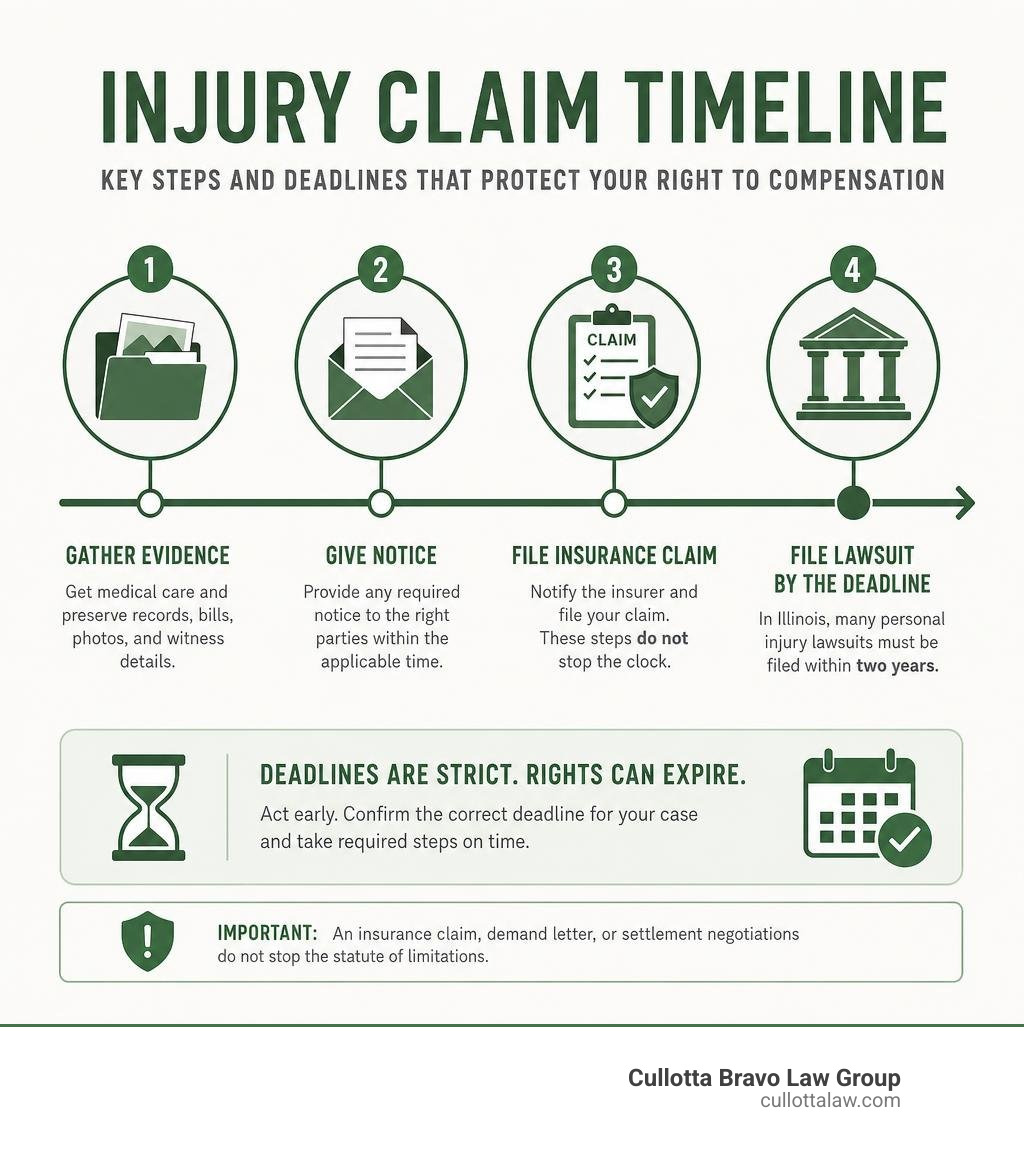
An injury claim deadline is the last day to take the legal step required to protect your right to compensation, usually by filing a lawsuit. In Illinois, many personal injury lawsuits must be filed within two years, but different rules can apply to medical malpractice, workers’ compensation, wrongful death, claims involving children, and claims against public entities.
Do not assume an insurance claim, a demand letter, or settlement talks stop the clock. They usually do not. To protect your rights:
- Get medical care and save records, bills, photos, and witness details.
- Identify every person, company, or government body that may be responsible.
- Confirm the exact deadline early and file any required notice or lawsuit on time.
Missing the correct deadline can allow the other side to seek dismissal of the case, even when the injury and fault are clear. The deadline may also start later in limited situations, such as a hidden injury discovered after the event, but relying on an exception is risky.
I am Peter Cullotta, founding partner of Cullotta Bravo Law Group and a trial lawyer with more than 35 years of experience handling Illinois personal injury, workers’ compensation, and nursing home abuse matters. I have seen how an overlooked injury claim deadline can put an otherwise valid case at risk, which is why early review matters.
Understanding Your Injury Claim Deadline and Statute of Limitations
When you suffer harm due to someone else’s negligence, the legal system provides a path to financial recovery. However, that right does not last indefinitely. Every civil action is governed by strict procedural rules known as statutes of limitations. These statutes establish a rigid countdown: from the moment an accident occurs, a formal clock starts ticking.
Under procedural law, don’t let the clock run out on your Illinois injury claim because failing to file your legal complaint in a civil court before time expires gives the defense an absolute shield. Once the period ends, the defendant will file a motion to dismiss, and judges are legally required to dismiss the action with prejudice. “With prejudice” means your claim is permanently extinguished—you cannot refile, you cannot negotiate, and you cannot recover a single dollar, no matter how severe your injuries or how blatant the other party’s fault.
Statute of Limitations vs. Statute of Repose
It is crucial to understand the distinct difference between a standard statute of limitations and a statute of repose. While both act as legal cutoffs, they function differently:
- Statute of Limitations: This time limit begins when the harm occurs or when the injury is discovered (the accrual date). It can sometimes be paused or “tolled” under specific legal exceptions, such as when the victim is a minor.
- Statute of Repose: This creates an absolute outer barrier. A statute of repose runs from the specific date of a defendant’s act, omission, or sale of a product, rather than the date you were injured. Once a statute of repose expires, no lawsuit can be initiated under any circumstances—even if an injury manifests afterward or tolling rules would otherwise apply.
Knowing the strict statutory limitations on personal action and property injury helps prevent unexpected jurisdictional bars from destroying a valid case.
When the Clock Starts Ticking
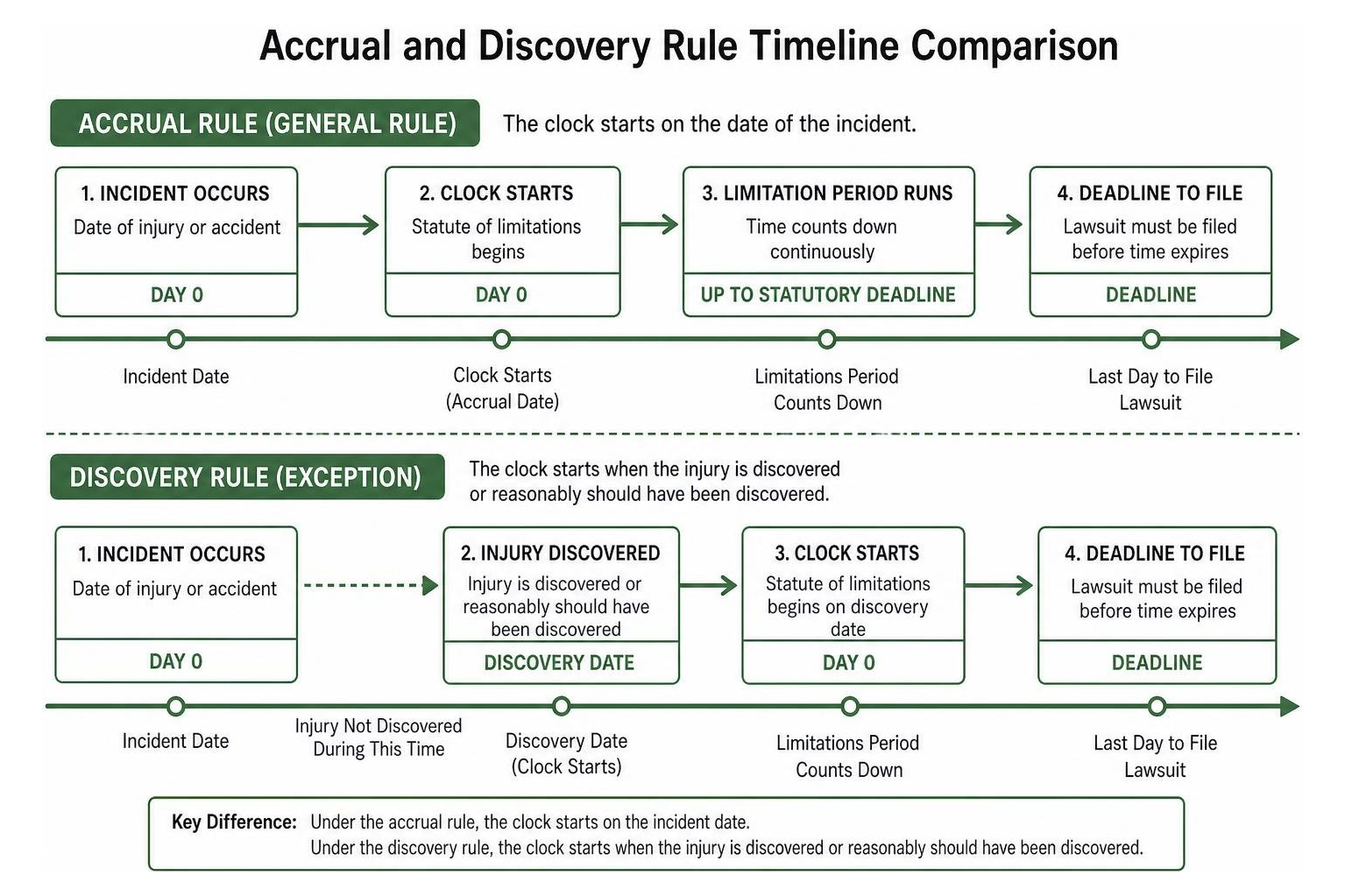
For the vast majority of personal injury cases, the statutory clock starts ticking on the exact calendar day the incident happens. This is known as the accrual date. Whether you are involved in a collision at an intersection or slip on ice outside a commercial storefront, the timestamp of the event serves as day zero.
While bodily harm claims often share standard limitation periods, property damage claims can sometimes carry different statutory windows depending on state codes.
| State / Jurisdiction | Standard Bodily Injury Deadline | Notable Repose / Secondary Caps |
|---|---|---|
| Illinois | 2 Years (735 ILCS 5/13-202) | 4-year limit / 8-year repose for med mal |
| National Norm (25 States) | 2 Years | Varies by state statute |
| Extended States (17 States) | 3 Years | Discovery caps apply |
| Short-Window States (2 States) | 1 Year | Strict pre-suit notice rules |
| Long-Window Outliers (7 States) | 4 to 6 Years | Subject to manufacturing repose limits |
Statutory Deadlines Across Major Injury Claim Types
Different types of personal injuries carry distinct legal standards, evidentiary burdens, and statutory windows under tort law. Navigating these rules requires examining a comprehensive 50-state guide to personal injury statutes of limitations alongside state-specific codes.

Motor Vehicle and Slip and Fall Accidents
Car crashes, truck collisions, and pedestrian accidents represent some of the most common causes of civil litigation. When filing an auto accident claim, bodily injury claims generally adhere to a two-year statutory window from the date of the collision. The same two-year limitation governs premises liability cases when navigating slip and fall injury law.
In these actions, comparative fault principles apply. Under Illinois modified comparative negligence rules, an injured party can recover compensation as long as they are 50% or less at fault for the accident. If you are found to be 51% or more responsible, you are barred from financial recovery. Moving swiftly to secure scene photographs, surveillance video, and witness statements ensures evidence is preserved long before filing a car accident lawsuit in civil court.
Medical Malpractice and Product Liability
Medical negligence and defective product claims involve complex procedural hurdles:
- Medical Malpractice: Claims against doctors, nurses, and hospitals must generally be filed within two years of when the patient knew or reasonably should have known of the injury. When navigating medical malpractice limitation periods, an absolute four-year statute of repose applies to adults, meaning no claim can be filed more than four years after the date the treatment occurred.
- Product Liability: If a poorly engineered machine, auto part, or consumer product injures you, strict product liability and toxic exposure deadlines apply. Product liability suits often involve a 10-to-12-year statute of repose based on the date the product was first sold into the stream of commerce.
Workers’ Compensation and Wrongful Death Claims
Workplace injuries and fatal accidents follow their own independent procedural tracks:
- Workers’ Compensation: When hurt on the job, you must formally notify your employer within 45 days of the injury. To preserve your right to benefits, an official claim must be filed with the Illinois Workers’ Compensation Commission (IWCC) within three years from the date of the injury or two years from the date of the last indemnity payment. When navigating denied workers’ compensation claims, strict administrative review timelines apply.
- Wrongful Death: If an individual dies due to negligent conduct, the personal representative of the estate must file under statutory wrongful death filing timelines, which require filing within two years from the actual date of death rather than the date of the initial accident.
- Specialized Claims: Nursing home abuse and animal attacks also feature strict filing windows. Complying with legal deadlines for nursing home abuse claims under the Nursing Home Care Act and tracking strict timelines for dog bite claims ensures vulnerable victims maintain their right to hold negligent parties accountable.
Legal Exceptions That Extend or Shorten Time Limits
While statutory deadlines are strictly enforced, specific statutory exceptions can toll (pause) or shorten the time limit.
How the Discovery Rule Affects an Injury Claim Deadline
The discovery rule is an equitable doctrine designed to protect victims of latent harm. Under this rule, the statutory clock does not begin on the date the negligent act occurred, but rather on the date the plaintiff discovered—or through the exercise of reasonable diligence should have discovered—that they were injured and that the injury was wrongfully caused.
Common applications of the discovery rule include:
- Latent Toxic Exposure: Gradual illness caused by chemical exposure or contaminated environments that manifest years after initial contact.
- Retained Foreign Objects: Surgical instruments, sponges, or hardware inadvertently left inside a patient during a medical procedure.
- Undiagnosed Medical Conditions: Diagnostic errors, such as a missed cancer screening, where the harm only becomes noticeable after significant disease progression.
Tolling for Minors and Legal Disability
The law provides protections for individuals who lack the legal capacity to file a lawsuit on their own:
- Minors: If a victim is under the age of 18 at the time of the injury, the statute of limitations is tolled until their 18th birthday. The standard two-year clock then begins running, meaning an injured minor generally has until their 20th birthday to file an action. In medical malpractice cases involving minors, Illinois law allows claims to be brought up to eight years after the negligent act, provided the lawsuit is filed before the individual turns 22.
- Legal Incompetence or Mental Incapacity: If an individual is suffering from a recognized legal disability or mental incapacity at the time the cause of action accrues, the statutory clock is suspended until the legal disability is formally removed.
Strict Pre-Suit Notice Rules for Government Entities

When an injury is caused by a public entity—such as a city bus, municipal public works truck, public school district, or state department—sovereign immunity doctrines alter the standard rules.
Under the Illinois Local Governmental and Governmental Employees Tort Immunity Act, the statute of limitations to sue a local public entity or its employees is cut down to one year from the date of the incident. Furthermore, many jurisdictions enforce administrative pre-suit notice rules that require a formal written notice of claim within 60 to 180 days. Missing these tight windows will permanently bar an action against a government agency, even if the standard private citizen deadline has not expired.
Practical Steps to Meet Your Filing Deadlines
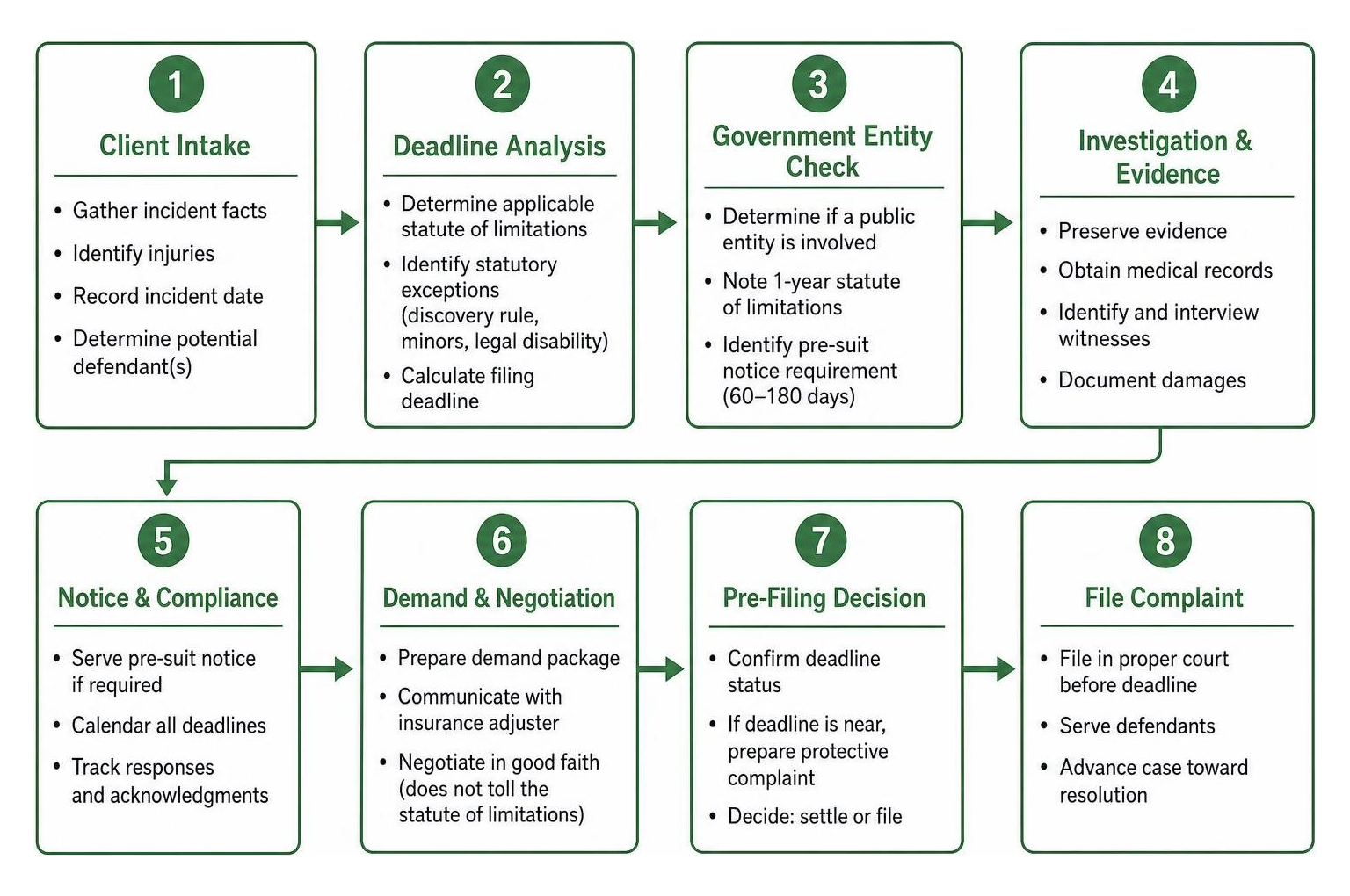
Meeting your statutory deadline requires an organized, proactive approach to case management and investigation.
The Risk of Ongoing Insurance Settlement Negotiations
One of the most dangerous traps for injured victims is assuming that open communication with an insurance adjuster protects their legal rights. Settlement negotiations do not pause or toll the statute of limitations.
Insurance companies are profit-driven corporations. Adjusters may intentionally prolong conversations, request duplicate medical authorizations, or make vague promises of a fair settlement as the statutory deadline approaches. If the deadline passes while you are still negotiating, the insurer will immediately terminate all discussions and close the file without paying a dime. The only way to stop the statutory clock is to file a formal complaint in a court of competent jurisdiction. When negotiations are ongoing near a deadline, an attorney will file a protective complaint to safeguard your claim.
Protecting Your Rights Before an Injury Claim Deadline Expires
To ensure your case is filed properly and within statutory limits, take the following steps immediately after an accident:
- Seek Medical Attention Immediately: Prompt medical care creates a clear record linking your injuries directly to the incident.
- Preserve Tangible Evidence: Maintain copies of police reports, scene photographs, witness contact information, medical bills, and discharge summaries.
- Identify All Potentially Liable Parties: Multi-vehicle accidents or commercial premises injuries often involve several negligent actors, property managers, or corporate parent companies that must be identified.
- Engage Legal Counsel Early: Building an airtight legal complaint requires thorough investigation, expert witness reviews, and precise drafting. Contacting an attorney well before the deadline guarantees sufficient time to prepare your court filings.
Frequently Asked Questions About Injury Claim Deadlines
What happens if I file my personal injury lawsuit after the deadline?
If you file your lawsuit even one day after the statute of limitations expires, the defendant’s legal counsel will file a motion to dismiss under civil procedure rules. The presiding judge has no legal discretion to forgive an untimely filing, and your case will be dismissed with prejudice, permanently barring any financial recovery.
How long do I have to file a claim against a city or local government?
Claims against local public entities in Illinois are subject to a shortened one-year statute of limitations under the Tort Immunity Act. Additionally, formal administrative notices of claim may need to be served within 60 to 180 days of the injury depending on the specific municipal agency involved.
Does filing an insurance claim stop the statute of limitations clock?
No. Submitting an insurance claim, speaking with an adjuster, or exchanging settlement offers has no effect on the civil court statute of limitations. The only action that legally halts the ticking clock is filing a formal lawsuit in a court of proper jurisdiction.
Conclusion
Understanding your legal rights after an injury means understanding the clock that governs your recovery. Statutory limitation periods, repose barriers, and government notice requirements are absolute legal cutoffs. Waiting to seek legal advice puts your entire case at risk of permanent dismissal.
At Cullotta Bravo Law Group, we bring over 35 years of trial experience to protect injury victims in Aurora, Chicago, Naperville, and Joliet. We provide aggressive legal representation, treat our clients with dignity, and maintain a proven track record of multi-million dollar settlements in car accidents, workers’ compensation, and nursing home abuse cases.
If you or a loved one has suffered an injury, contact our team immediately to find out exactly how long you have to file a personal injury claim and ensure every critical filing deadline is protected.