

How to Choose a Good Workers Compensation Lawyer for a Denied Claim
A good workers compensation lawyer focuses on work injury claims, understands your state’s deadlines and benefit rules, and can clearly explain how they would challenge a denial. Before hiring anyone, verify their active bar license and disciplinary history, ask about experience with cases like yours, and get the fee agreement in writing.
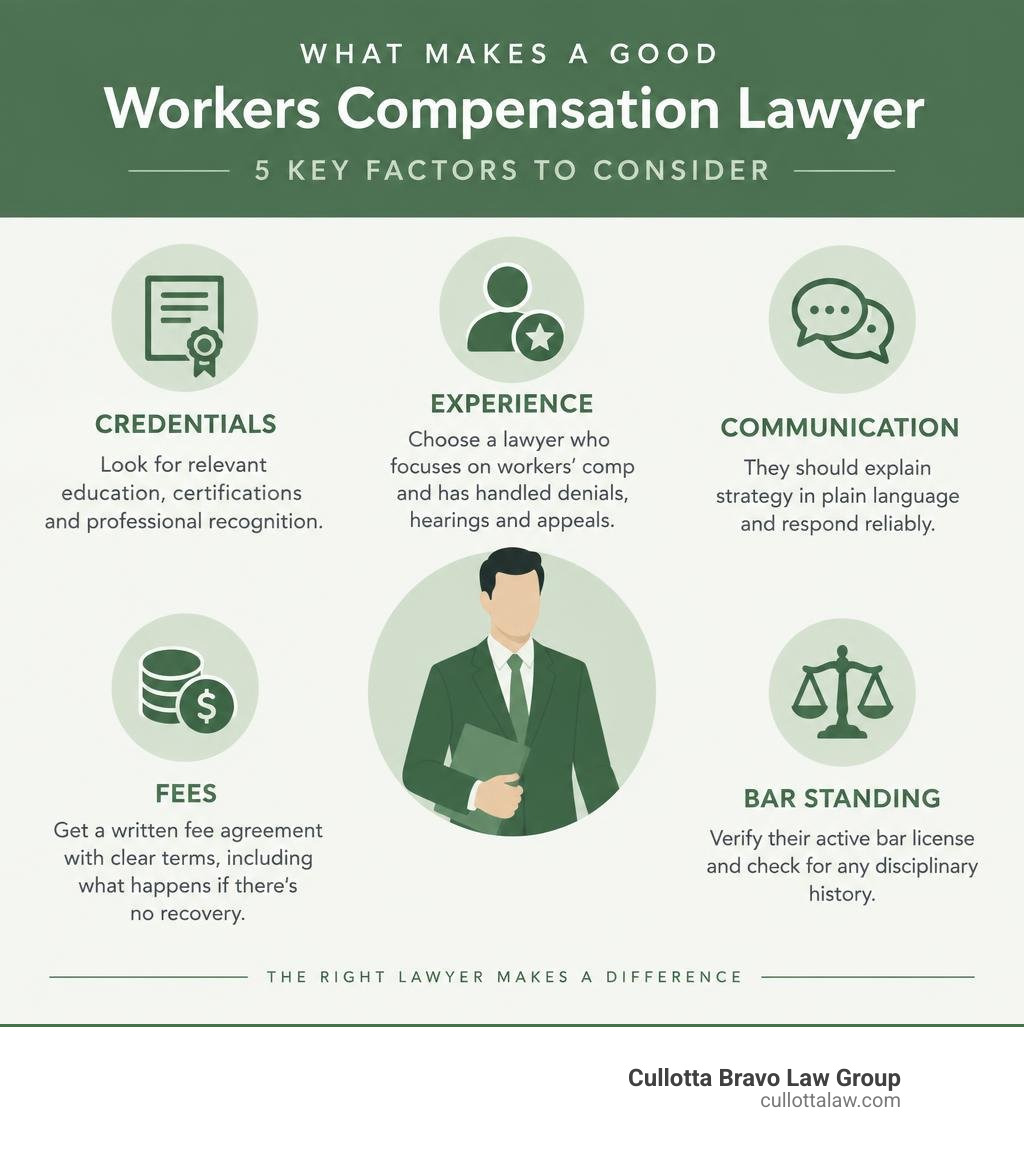
Look for these practical signs:
- Workers’ comp is a major part of their practice, not an occasional case type.
- They have handled denials, hearings, and appeals, not just easy settlements.
- They explain the strategy in plain language and return calls or messages reliably.
- They are upfront about contingency fees and case costs, including what happens if there is no recovery.
- They have credible credentials, such as relevant board certification where available, professional recognition, and a clean standing with the state bar.
Workers’ compensation is often a no-fault system, but that does not mean every claim is approved or every benefit is paid correctly. Legal help can be especially valuable when an insurer denies treatment, disputes whether your injury happened at work, delays wage-loss checks, pushes a low settlement, or raises a pre-existing-condition issue. For a broader overview of how these systems work, the workers’ compensation entry on Wikipedia explains the history and structure of no-fault workplace injury benefits.
I am Peter Cullotta, founding partner of Cullotta Bravo Law Group, and I have spent more than 35 years representing injured people in workers’ compensation and personal injury matters throughout Chicagoland. My experience helps clients understand what to expect from a good workers compensation lawyer when an insurer or employer challenges a work injury claim.
Key good workers compensation lawyer vocabulary:
Critical Credentials: What Makes a Good Workers Compensation Lawyer?
Finding legal representation after suffering a disabling workplace injury is not about flipping open a phone book or clicking the first flashy billboard advertisement you see. You need a dedicated advocate who knows how administrative agencies operate, understands courtroom dynamics, and can counter insurance company tactics. When you evaluate workplace injury lawyers near me and how to choose one, several baseline credentials separate high-performing advocates from general practitioners who only take the occasional injury case.
Workplace injury law involves a separate administrative court system with distinct evidentiary rules, rigid deadlines, and intricate benefit calculation formulas. An attorney who handles divorce or estate planning on Monday cannot simply walk in on Tuesday and know how to present an arbitration case before an administrative law judge or commissioner.
Board Certification and Trial Experience
Specialized credentials reflect an attorney’s command over statutory guidelines and trial advocacy. In jurisdictions offering formal specialist accreditation, earning board certification requires demonstrated trial mastery, rigorous peer evaluations, and substantial continuing legal education. For example, in states like Ohio, only a select few of the more than 44,000 licensed attorneys hold specialized board certification in workers’ compensation law.
Litigation history is just as critical. Many injury claims settle through negotiation, but having an attorney with an extensive record of formal arbitration hearings and appellate practice provides immediate leverage. Insurance claims adjusters know which lawyers settle for pennies on the dollar to avoid a courtroom and which counsel will aggressively pursue full financial recovery through every layer of administrative review. To better understand legal terminology and processes, review workers comp lawyer terms demystified.
Peer Recognition and Industry Standing
Objective, third-party vetting confirms an attorney’s reputation among judges, colleagues, and adversaries. Look for recognized peer evaluation honors:
- Super Lawyers Selection: Only the top 5% of attorneys are selected to the Super Lawyers list each year following rigorous peer nominations and independent evaluations.
- Rising Stars Recognition: The top 2.5% of emerging attorneys are selected for the Rising Stars list each year.
- Martindale-Hubbell Ratings: Look for AV Preeminent ratings, which show the highest level of professional excellence and ethical standards as determined by peer reviews.
- Avvo Ratings and Client Feedback: A 10.0 Superb rating reflects verified legal experience, disciplinary standing, and client satisfaction.
You should always verify that your prospective counsel maintains an active license in good standing without ethical violations or disciplinary suspensions. Reading detailed reviews of the top 10 workers compensation attorneys offers deep insight into client experiences and case management standards.
When to Retain Counsel for Contested Workplace Injury Claims

If your injury was minor, required only an initial clinic visit, and your employer promptly paid for your medical expenses with no lost time, you might not require legal counsel. However, the moment your claim encounters resistance, having skilled legal representation is essential.
Insurance carriers frequently attempt to minimize exposure by delaying weekly disability checks, disputing diagnostic testing, or issuing outright claim denials. If you are struggling with a disputed claim in Will County, learning how to choose a workers compensation attorney Joliet can trust helps you take action before critical statutory filing windows lapse.
How a Good Workers Compensation Lawyer Overturns Claim Denials
When an insurer issues a denial, they count on you walking away in defeat. An experienced work injury attorney investigates the root reason for the denial and builds the medical and factual record needed to overturn it at an administrative hearing.
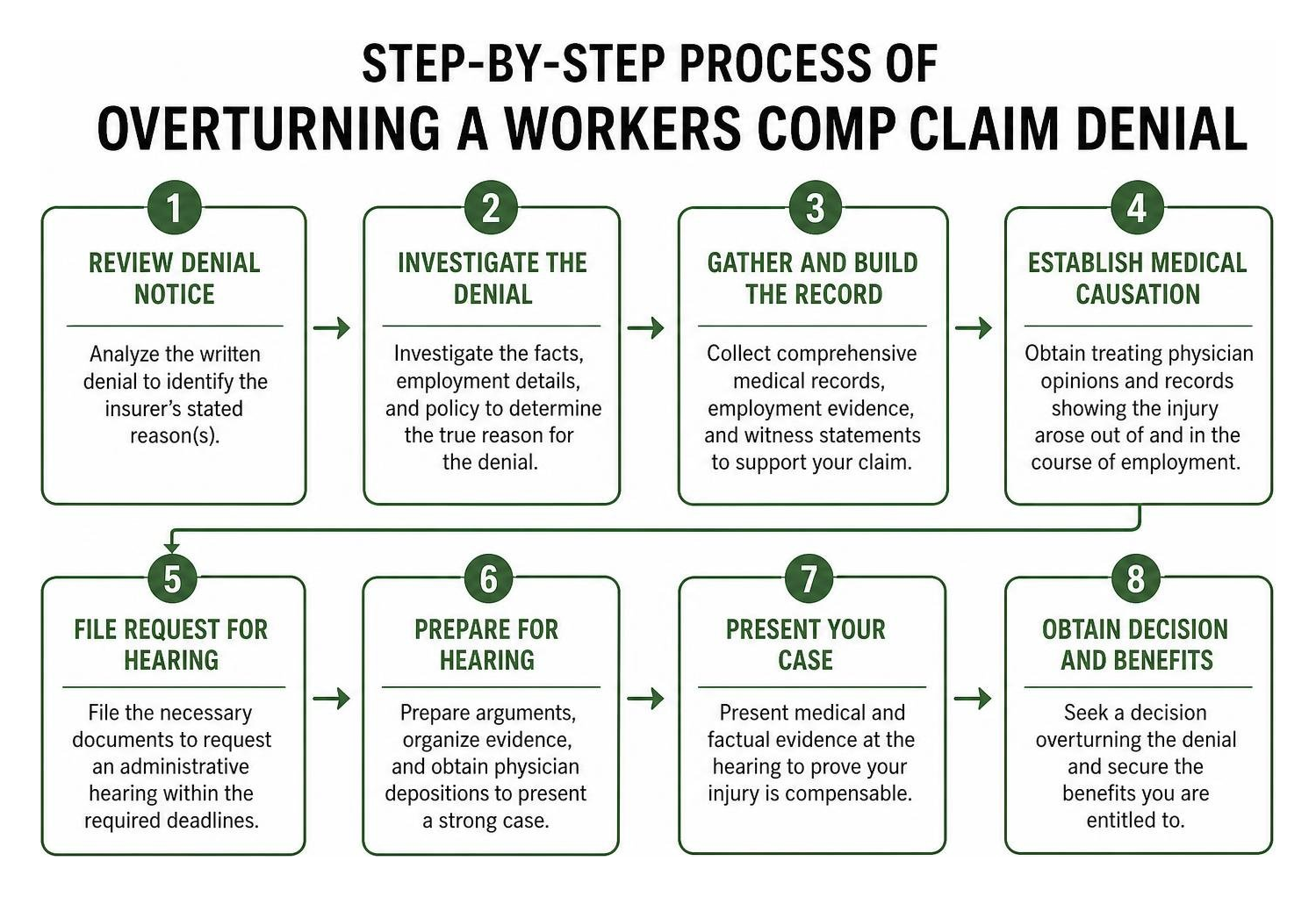
Overturning a denial requires assembling comprehensive medical documentation, obtaining treating physician depositions, and establishing formal medical causation showing the injury arose directly out of employment duties. We know how to prove claim validity even when employers allege delayed reporting or argue that your condition is entirely degenerative. If you are facing a formal denial, our denied workers comp guide 2026 outlines the immediate legal steps necessary to protect your rights, including complex claims involving stress at work and mental health workers comp claims.
Handling Complex and Catastrophic Workplace Injuries
Severe workplace incidents require specialized valuation models to account for lifelong medical care and substantial wage impairment. Catastrophic injuries often involve multidisciplinary care teams, life-care planners, and vocational experts.
Our practice routinely manages high-stakes workplace trauma, including:
- Traumatic Brain Injuries (TBIs): Head trauma requires long-term neurological documentation, cognitive rehabilitation, and life-care planning. Explore our essential guide to navigating workers comp for brain injuries to understand benefit structures.
- Repetitive Stress & Orthopedic Damage: Gradual conditions like carpal tunnel syndrome, torn rotator cuffs, and herniated spinal discs are fiercely contested by insurers. Learn more about pursuing a repetitive stress injury claim.
- Commercial Transportation & Industrial Accidents: Heavy machinery and vehicular collisions present complex liability considerations. Read our breakdown on workers compensation for truck drivers.
How to Find and Vet Skilled Injury Representation

Finding a reliable attorney starts with gathering recommendations from trusted sources, including past clients, local labor unions, and municipal bar association referral services. However, personal referrals should only be your starting point. You must thoroughly vet any potential attorney during an initial consultation. For additional insight on locating quality legal support locally, explore finding the best workers compensation lawyers.
Questions to Ask a Good Workers Compensation Lawyer
An initial consultation is your opportunity to interview the attorney. Never hesitate to ask pointed questions about how they will handle your file:
- What percentage of your active caseload is dedicated exclusively to workers’ compensation? Ensure the firm focuses substantially on work injury litigation rather than general civil disputes.
- How often do you take cases to formal trial or arbitration hearings? An attorney who never litigates may lack the leverage needed to negotiate maximum settlements.
- Who will handle my day-to-day communications? Clarify whether you will communicate directly with your attorney or solely with paralegals and support staff.
- What is your assessment of my average weekly wage (AWW) calculation? An inaccurate calculation reduces every disability check you receive.
- What are your past trial results and settlement records with similar injuries? Reputable firms with proven track records, such as those with top rated Joliet workers compensation lawyers, will openly discuss prior case resolutions.
Recognizing Red Flags and Common Claimant Mistakes
Injured workers sometimes make critical errors when hiring counsel or navigating their claims. Being aware of these pitfalls protects both your physical recovery and financial future.
| Common Mistake | Legal & Financial Risk | How a Dedicated Lawyer Resolves It |
|---|---|---|
| Delayed Injury Reporting | Insurers use delays exceeding statutory notice periods to dispute whether the incident was work-related. | Establishes prompt written notice and gathers immediate witness testimony to verify timing. |
| Accepting Lowball Settlements | Closes medical rights permanently before future surgical needs or permanent restrictions are known. | Audits full medical history to calculate lifetime care costs and permanent wage impairment. |
| Hiring a General Practice Lawyer | Misses critical administrative filing deadlines, statutory appeal windows, and benefit classes. | Applies deep procedural knowledge of administrative dockets and appellate case law. |
| Poor Attorney Communication | Leaves you unaware of upcoming Independent Medical Exams or crucial settlement offers. | Provides direct access, regular case updates, and thorough pre-hearing preparation. |
Understanding Legal Costs, Contingency Fees, and Representation Changes
Injured employees are often already coping with missed paychecks and mounting household bills, making out-of-pocket legal fees impossible. Fortunately, workers’ compensation attorneys operate on a contingency fee model. This means you pay zero upfront retainers or hourly rates. Your attorney receives payment only if they secure a financial recovery or overturn a disputed benefit on your behalf.
In Illinois, attorney fees in workers’ compensation matters are strictly capped by state statute, generally at 20% of the disputed recovery or settlement amount, subject to administrative approval by an arbitrator. To learn how these safeguards protect your income, read our guide on demystifying Illinois workers compensation benefits.
Contingency Fee Structures and Statutory Caps
The contingency framework ensures that injured workers have access to top-tier legal representation regardless of their current bank balance. All litigation expenses—such as ordering medical records, hiring expert witnesses, and taking doctor depositions—are advanced by the law firm and reimbursed only upon successful case resolution. Every fee agreement must be transparent, written in plain language, and approved by the presiding workers’ compensation commission before any funds are distributed.
Switching Attorneys and Managing Fee Liens
If your current attorney has stopped returning your calls, missed crucial deadlines, or is pressuring you to accept an inadequate settlement, you have the absolute legal right to discharge them at any time.
When you switch legal counsel:
- You Do Not Pay Double Fees: The statutory contingency fee cap remains the same. You will never pay two separate legal fees.
- Attorney Liens Are Resolved Internally: Your former attorney may file an attorney’s lien for the reasonable value of the work they completed. That lien is paid out of the final attorney fee portion, not your personal settlement proceeds.
- Seamless File Transfer: Your new law firm handles all paperwork, requests your complete case file, and files a formal Substitution of Counsel with the administrative commission.
The Workers’ Compensation Dispute Process and Case Valuation
Navigating a contested injury claim requires knowing how administrative litigation moves through each phase of the legal process. For a complete overview of regional claim handling, consult the Aurora workers compensation complete guide.
Navigating Appeals, MMI, and Independent Medical Exams
Insurance carriers often order an Independent Medical Examination (IME) with an insurance-selected doctor to argue that you have reached Maximum Medical Improvement (MMI) or that your ongoing restrictions are unrelated to your job duties.
MMI is a major turning point in your claim. It signifies that your medical condition has stabilized and no further curative treatment will improve your health. Once MMI is reached, temporary total disability payments end, and the case transitions to determining permanent disability, vocational rehabilitation, or wage-differential benefits. An experienced lawyer will prepare you for the IME, challenge biased medical reports, and ensure that your treating physician’s clinical opinions are properly presented to the arbitrator.
Lump-Sum Settlements vs. Ongoing Disability Benefits
Resolving your claim involves deciding between structured ongoing disability checks and a lump-sum settlement, also known as a commutation of benefits. When evaluating a settlement offer, a dedicated workers comp settlement attorney evaluates several financial elements:
- Past Unpaid Medical Bills: Ensuring all outstanding hospital, therapy, and surgical costs are paid in full by the insurer.
- Future Medical Allocations: Properly funding anticipated surgeries, medications, and physical therapy without leaving you exposed to out-of-pocket costs.
- Medicare Set-Aside (MSA) Accounts: Complying with federal Medicare secondary payer regulations when lifetime medical care is settled.
- Permanent Partial or Total Disability: Securing maximum compensation for permanent loss of bodily function or long-term reduction in earning capacity.
Frequently Asked Questions About Hiring Workplace Injury Lawyers
In what situations is hiring legal counsel mandatory?
While state law allows individuals to represent themselves, retaining experienced counsel is essential whenever an insurer denies a claim, cuts off weekly disability checks, refuses to authorize surgery, or disputes permanent impairment ratings. Employers and insurance carriers are represented by veteran defense attorneys; proceeding without experienced counsel places you at an immediate disadvantage before an administrative arbitrator.
How can I afford legal representation after missing paychecks?
You can afford representation because reputable workers’ compensation attorneys work on a pure contingency fee basis. There are zero upfront retainers, zero hourly billing charges, and no out-of-pocket costs while your case is pending. The statutory attorney fee is deducted directly from the final settlement or award only after your attorney successfully recovers benefits for you.
Can I fire my lawyer if my workers’ comp case stalls?
Yes. You have the right to terminate your attorney-client relationship if your lawyer fails to communicate, ignores your questions, or mismanages your file. Your new attorney will handle the transition, obtain your case files, and resolve any fee liens with your prior attorney through commission-approved fee division, ensuring you never pay more than the statutory maximum fee.
Conclusion
Suffering a serious workplace injury disrupts your health, your family’s financial stability, and your career. When insurance carriers dispute legitimate claims, delay essential medical procedures, or push lowball settlements, you need an aggressive, trial-ready legal team in your corner. With over 35 years of dedicated advocacy across Aurora, Chicago, Naperville, and Joliet, Cullotta Bravo Law Group fights relentlessly to hold insurance companies accountable and secure the multi-million dollar settlements our injured clients deserve. Contact our team today for dedicated workers’ compensation legal counsel and let us protect your rights.