

How to Find Lots for Sale Near You
To find lots for sale near me in Aurora, Illinois, start with a map search of Aurora and nearby communities. Filter by your budget, acreage, and intended use. Then check each promising lot’s zoning, road access, utilities, and listing status before you visit. The cheapest listing is not always the cheapest lot to use: a low price may come with costly site work or limits on what you can build.
I’m Peter Cullotta, founding partner of Cullotta Bravo Law Group in Aurora, where I’ve represented injured people for more than 35 years. My practice focuses on injury cases, not land purchases, but this guide gives anyone searching for lots for sale near me a clear way to narrow the options and spot questions worth asking before buying.
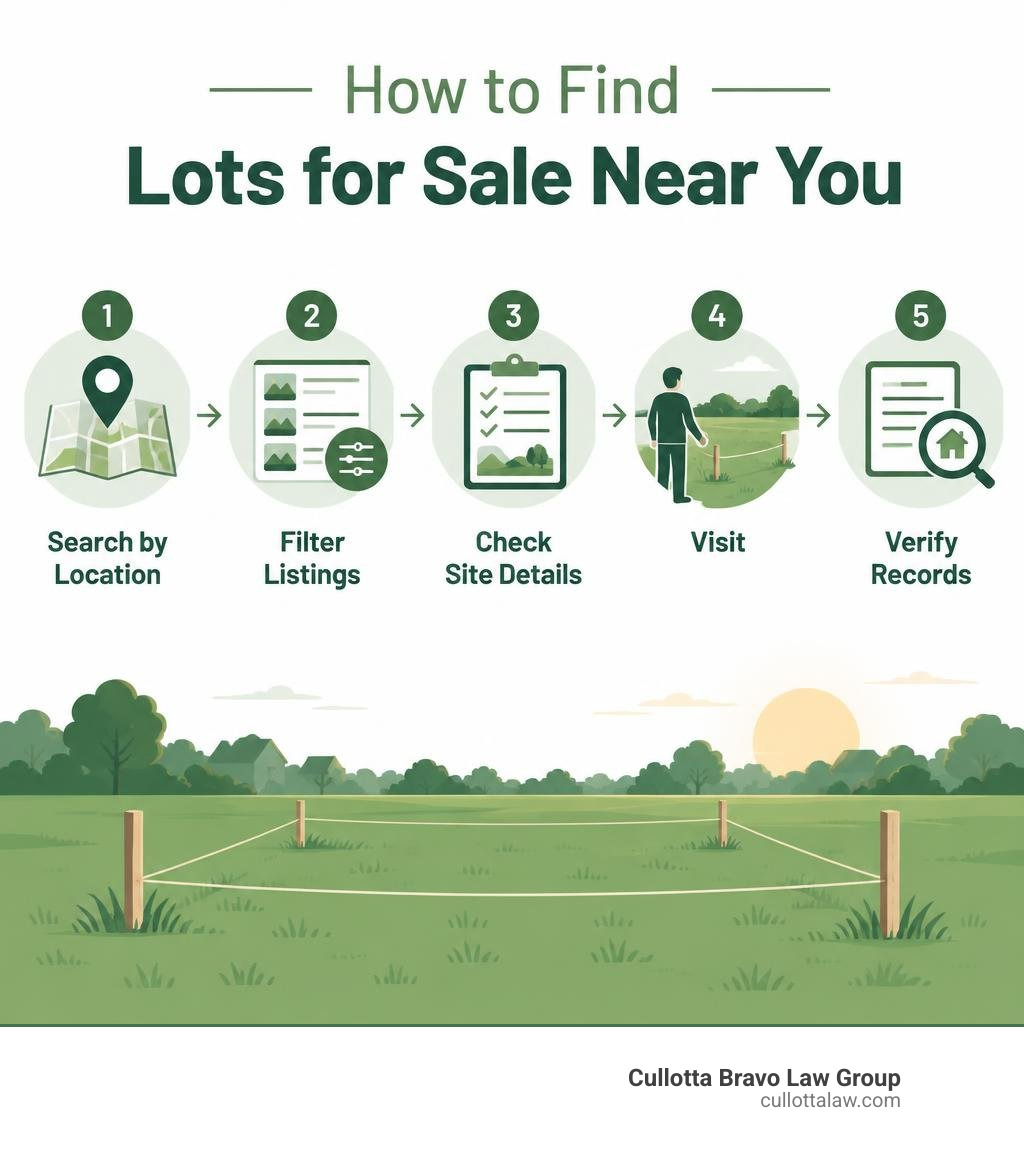
Quick look at lots for sale near me:
Understanding Land Categories and Current Market Pricing
Finding the right property begins with identifying exactly what type of parcel matches your long-term plans. Across Illinois, prospective buyers encounter an expansive spectrum of real estate, spanning dense urban infill in Chicago to sprawling acreage throughout Kane, DuPage, and Will counties.
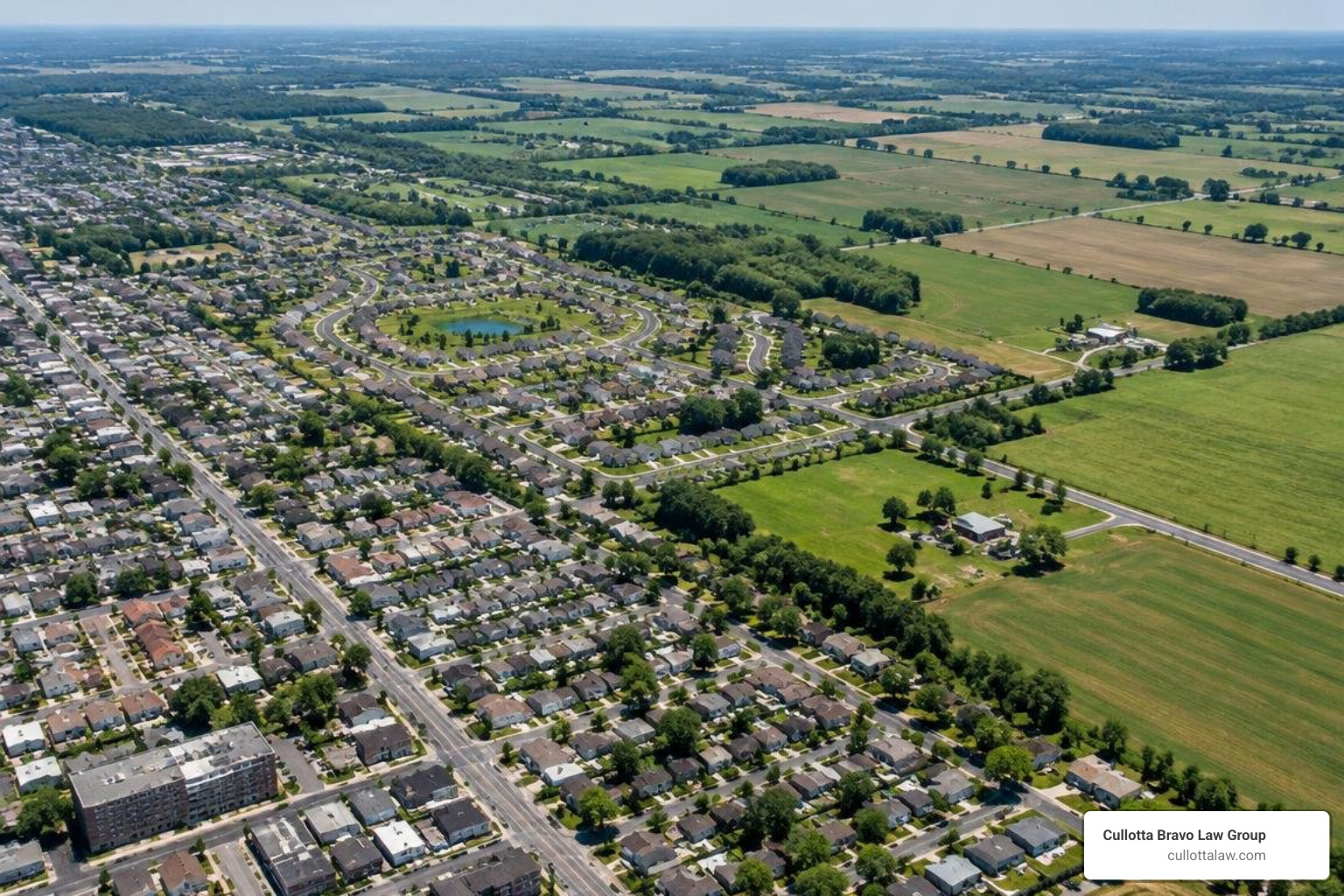
When browsing statewide inventories, such as the Illinois land market listings, you will quickly notice that raw land values do not follow simple pricing formulas. A 0.25-acre parcel in an established suburban neighborhood can command five times the price of a 10-acre parcel located farther out in rural territory. Navigating this marketplace requires understanding parcel classifications, zoning baselines, and initial utility costs before putting money down. For a comprehensive overview of early-stage acquisition, consult our guide on how to buy vacant land.
| Land Category | Typical Acreage Range | Standard Zoning Classifications | Primary Utility Requirements | Relative Cost Considerations |
|---|---|---|---|---|
| Residential Infill | 0.1 to 0.75 Acres | R-1, R-2, R-3 Single-Family / Multi-Family | Municipal water, sewer, grid power | Highest cost per square foot; minimal infrastructure development needed |
| Suburban Acreage | 1 to 10 Acres | R-E (Residential Estate), Low-Density Res | Private well, septic field, extended power lines | Moderate-to-high cost; site prep and percolation tests required |
| Agricultural Land | 10 to 100+ Acres | A-1 Agricultural, Conservation | Agricultural drainage, irrigation, off-grid power | Low cost per acre; high capital requirement overall; potential roll-back taxes |
| Commercial Lots | 0.5 to 20+ Acres | B-1, B-2, C-1, M-1 Light Industrial | High-capacity three-phase electric, commercial sewer | High cost; valuation driven by traffic counts and frontage |
Evaluating Residential, Agricultural, and Commercial Land Uses
Every parcel carries designated zoning codes enforced by municipal or county authorities. These codes govern building envelopes, setbacks, maximum lot coverage ratios, and allowable daily operations.
- Residential Lots: Designed for single-family residences, accessory dwelling units, or duplexes. Key considerations include architectural review committee rules and front, side, and rear setback lines.
- Agricultural Parcels: Geared toward crop production, livestock, farmsteads, or equestrian operations. These properties often enjoy favorable tax valuations under specialized assessments, but building non-agricultural residential dwellings may require rezoning.
- Commercial and Industrial Land: Intended for retail pads, office parks, distribution hubs, or light manufacturing. Siting requires in-depth feasibility analyses regarding traffic engineering and environmental impacts. If you are exploring commercial development, retaining seasoned commercial real estate legal guidance early helps ensure you secure proper municipal variances and permit approvals.
What Drives Price Disparities Across Local Parcels
Land values reflect more than raw square footage. Key elements shaping regional pricing include:
- Location and Proximity: Proximity to transit corridors (such as I-88, I-55, or Metra commuter lines) commands significant premiums.
- Road Frontage and Legal Access: A lot with extensive frontage on a publicly maintained municipal street costs substantially more than an interior parcel relying on an access easement.
- Utility Availability: Bringing municipal water, sewer, and high-voltage electricity to an unserviced lot can easily add tens of thousands of dollars to your overall budget.
- Topography and Environmental Conditions: Parcels situated within designated floodways or encumbered by regulated wetlands require expensive engineering studies and structural grading.
Strategic Methods to Search for Lots for Sale Near Me
Locating prime parcels requires moving beyond general online searches. Serious buyers use modern digital tools, filter options, and public land record systems to uncover active and off-market opportunities.

Whether you are looking at Naperville land listings or checking available Aurora real estate properties, using a structured search approach prevents you from wasting time on unsuitable properties. If your goal is building a custom single-family home from scratch, reviewing this practical roadmap to finding residential lots will keep your search organized.
Setting Filters to Pinpoint High-Value Lots for Sale Near Me
Online platforms aggregate thousands of entries. Use targeted filtering techniques to surface viable opportunities quickly:
- Acreage Boundaries: Set strict minimums and maximums (for example, 0.5 to 2.5 acres) to eliminate tiny unusable slivers or unmanageably large tracts.
- Listing Age & Status: Focus on active listings while filtering out properties already under contract or pending final approval.
- Specific Land Features: Filter for attributes like public water access, paved frontage, or clear title status.
- Targeted Municipalities: Explore regional hubs by searching Chicago vacant land listings for urban infill, or browse Joliet land opportunities when seeking larger suburban development parcels.
Identifying Affordable Lots for Sale Near Me with Owner Financing
Buyers navigating restrictive traditional bank loans often look for alternative purchase arrangements. Vacant land loans typically require down payments of 20% to 50% and carry higher interest rates than residential mortgages.
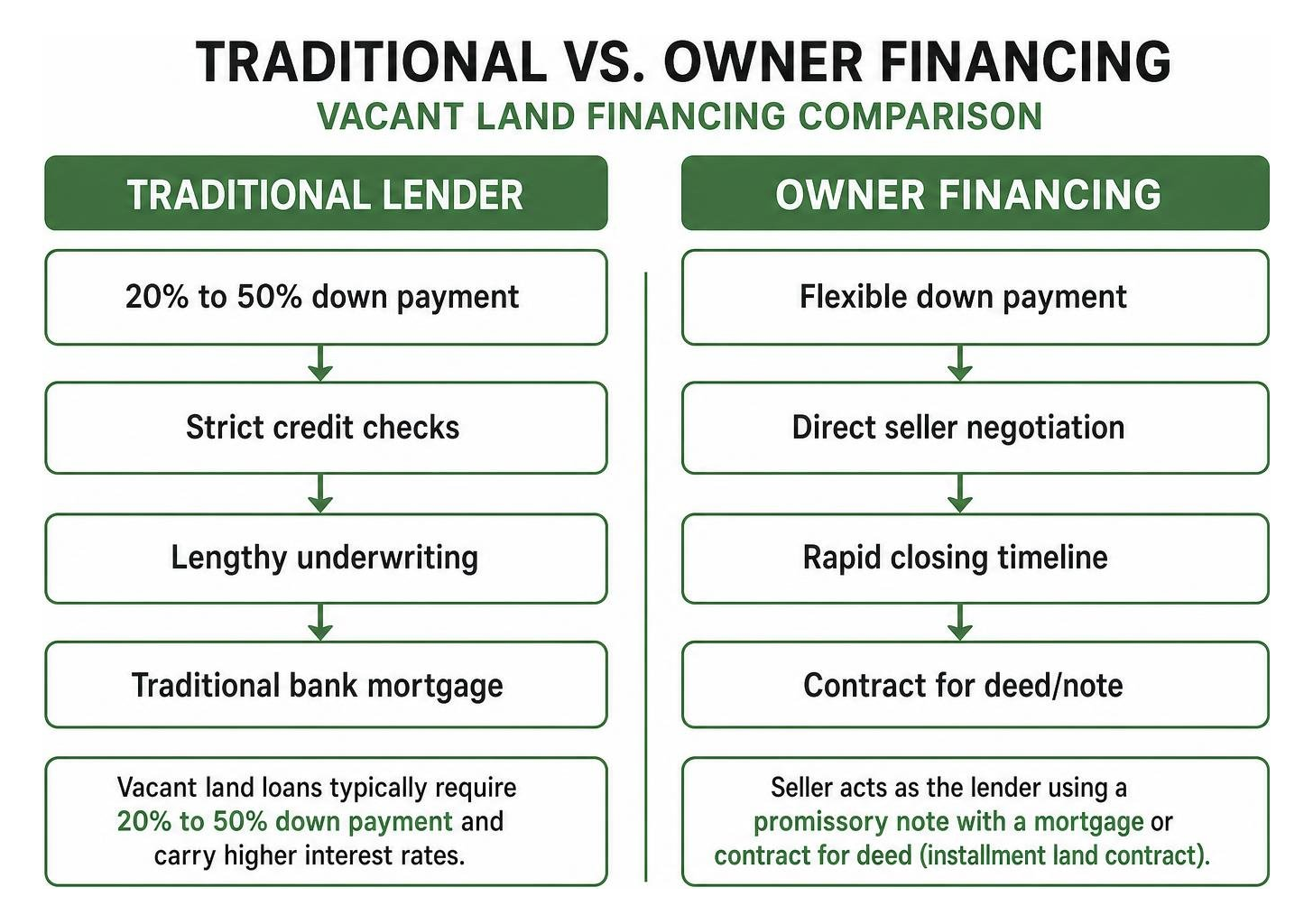
Many investors seek owner finance listings and terms to acquire property without institutional underwriting. In an owner-financed arrangement, the seller acts as the lender, executing a promissory note paired with a mortgage or a contract for deed (installment land contract).
While these arrangements offer fast closings and flexible terms, buyers must review contract stipulations carefully. Ensuring balanced, legally binding sale agreement contract terms protects your financial investment and guarantees clear title conveyance once the loan is paid in full.
Critical Due Diligence Before Purchasing Vacant Land
Buying land without thorough due diligence is one of the riskiest moves in real estate. An open, grassy field might look ready for immediate construction, but hidden legal encumbrances, soil conditions, or environmental protections can quickly stall your project.
Before releasing non-refundable earnest money, conduct a comprehensive title review and boundary confirmation. Reviewing complete title searches and boundary surveys helps identify boundary discrepancies, unrecorded utility paths, and ancient rights-of-way. Using a thorough real estate transaction due diligence checklist ensures you do not overlook critical municipal and physical assessments.
Utilities, Road Access, and Site Topography
You cannot build without verified access to utilities and stable ground:
- Water and Wastewater: Determine whether public connections exist or if you must drill a private well and install a septic system. A percolation (“perc”) test is vital; if soil drainage fails local health department standards, you cannot install a standard septic absorption field.
- Electrical and Communications: Contact local utility providers to verify line capacities, transformer locations, and connection fees.
- Legal vs. Physical Road Access: A parcel visible from a highway might lack dedicated, legal curb-cut rights. Never buy landlocked real estate without a recorded, transferable ingress/egress right-of-way easement.
- Grading and Soil Bearing Capacity: Review local flood zone maps. Steep slopes, rock outcroppings, or high water tables can dramatically increase foundation construction costs.
Zoning, Subdivision Rules, and HOA Restrictions
Municipal codes dictate how property may be developed. If you plan to divide a larger tract into distinct building parcels, you must follow local platting procedures. Learning the steps for subdividing land without legal complications protects you from fines and stalled development approvals.
Additionally, verify whether the parcel falls under the jurisdiction of a Homeowners Association (HOA) or specific deed covenants. Restrictive covenants can enforce minimum square-footage thresholds, restrict outbuilding construction, prohibit livestock, or ban parking recreational vehicles on site.
Legal Protection and Finalizing the Property Closing
Closing a land deal requires careful coordination between title agents, municipal recording offices, and legal professionals. Unlike standard home purchases that rely on standardized residential forms, land contracts must address soil testing contingencies, zoning variances, and clear title delivery.
Retaining dedicated buyer legal representation during acquisitions ensures your legal and financial interests remain protected from contract drafting to deed recording. Buyers across Northern Illinois frequently collaborate with experienced Aurora real estate attorneys to guide their transactions. Understanding the distinct real estate attorney vs broker responsibilities helps ensure your team handles every phase of the acquisition correctly.
Resolving Title Defects and Boundary Disputes
Title searches routinely uncover issues that must be addressed prior to closing:
- Unrecorded Liens and Tax Judgments: Unpaid property taxes or contractor liens attached to former owners.
- Encroachment Issues: Neighboring fences, driveways, or outbuildings constructed across your lot line.
- Easement Conflicts: Ambiguous utility easements that prevent you from building your planned foundation.
If you encounter conflicting property lines, legal strategies for resolving property boundary disputes can establish quiet title. Addressing these conflicts early prevents long-term exposures, including potential adverse possession risks, where unauthorized third-party use ripens into a permanent legal claim.
Structuring the Final Closing and Deed Transfer
During final settlement, the seller executes a deed transferring title to the buyer. You will generally encounter two primary forms:
- General Warranty Deed: The gold standard of real estate transfers. The seller guarantees they hold clear title, free of undisclosed encumbrances, throughout the property’s entire chain of title.
- Quitclaim Deed: Conveys whatever interest the grantor holds without any warranties regarding title defects. Quitclaim deeds are common in family transfers, but buyers purchasing open-market land should avoid them unless paired with title insurance.
Understanding the proper timing for legal support during closing ensures that municipal transfer stamps, escrow disbursements, and final title policies are verified before funds leave escrow.
Frequently Asked Questions about Buying Local Lots
What is the most important factor when evaluating a vacant lot?
Zoning allowances and utility feasibility rank as the most critical factors. A competitively priced parcel has little value if local zoning ordinances prohibit your intended structure, or if installing water, septic, and electrical services exceeds your construction budget. Always verify buildability and utility access before waiving purchase contingencies.
How do owner-financed land purchases work?
In an owner-financed land sale, the buyer makes payments directly to the property owner rather than securing an institutional bank mortgage. The buyer provides a down payment, and both parties sign a promissory note outlining the principal loan amount, interest rate, repayment schedule, and default remedies. Title may transfer immediately with a seller-held mortgage, or upon final payoff through an installment land contract.
Can I build on vacant land immediately after closing?
No. You cannot break ground simply because the deed has recorded. Before beginning construction, you must submit architectural blueprints, secure site plan approvals, obtain municipal building permits, pay required utility tap fees, and verify soil stability. Depending on the municipality and site complexity, this permitting process can take anywhere from a few weeks to several months.
Conclusion
Securing the ideal piece of land lets you build a custom home, establish a commercial facility, or build long-term equity. However, turning a raw parcel of land into a completed project requires balancing market research with strict due diligence, environmental checks, and legal reviews.
Every parcel presents unique opportunities and potential liabilities. Taking the time to verify zoning codes, perform soil tests, review boundary surveys, and secure clear title insurance protects your capital at every step. If you are preparing to acquire land or need trusted guidance through complex property transactions, secure your investment by partnering with comprehensive real estate legal counsel. Clear guidance today lays a solid foundation for your build tomorrow.